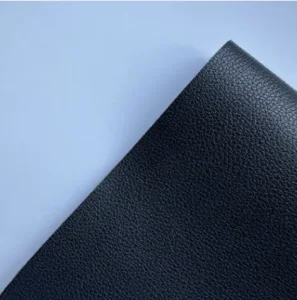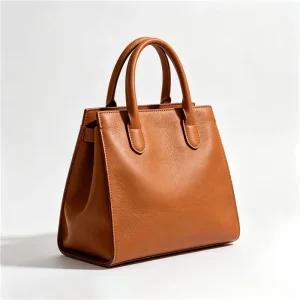
Sustainable Material Architecture
Primary Sourcing Formulations for Pakistan Manufacturing
Engineered to replace conventional chromium-tanned hides and standard PU systems without compromising flex-crack resistance or seam integrity.
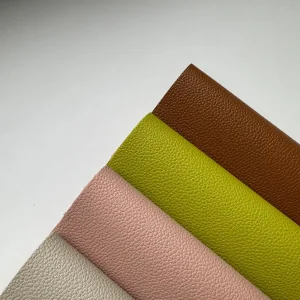
High-Quality Sustainable Eco-Friendly Faux Leather Supplier, Suppliers - Pakistan Footwear Ready
View Specifications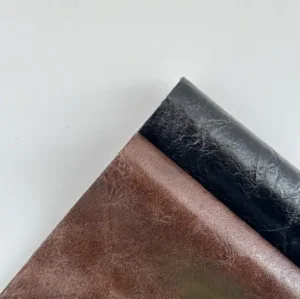
Wholesale Eco-Friendly Sustainable Synthetic Leather-0212 Manufacturer, Suppliers - High Tenacity
View Specifications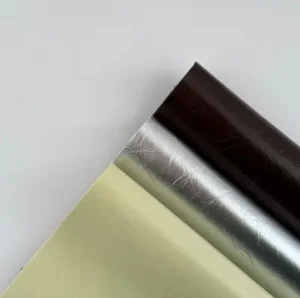
OEM Sustainable Eco-Friendly Faux Leather-0195 Manufacturers, Supplier - Automotive & Bags
View SpecificationsGeographic Demand Matrix
Pakistan's Industrial Decarbonization & Leather Paradigm Shift
An in-depth perspective on the industrial evolution across Punjab and Sindh manufacturing clusters under evolving global sustainability governance.
Sialkot Export Resilience
As the international capital for hand-stitched soccer balls, combat sports gloves, and specialized motorcycling garments, Sialkot is undergoing strict vendor audits. Tier-1 brands in the EU and North America increasingly disqualify conventional materials with high carbon-water footprints, demanding compliant water-borne PU and bio-attributed composites.
Lahore Footwear Modernization
The footwear manufacturing base clustered around Lahore is pivoting swiftly from legacy heavy footwear toward ultra-lightweight, high-flex lifestyle athletic uppers and technical work shoes. Our RCS-certified recycled backings deliver the dimensional stability and stitch-tear strength essential for high-throughput automated shoemaking.
Karachi Logistic Advantage
Karachi’s vast export-oriented garment and industrial workwear sectors require frictionless customs clearance and documented compliance. By aligning with solvent-free PU chemistry and REACH Annex XVII parameters, Karachi mills can ensure zero-quarantine entry into North American and European ports.
Macro Industry Solutions
Engineered Material Solutions for Global Brand Sourcing
Bridging physical lab validations with scalable, automated mass manufacturing to resolve complex chemical restriction bottlenecks.
Advanced Chemical Safety: Zero VOC & DMFa-Free
Traditional synthetic leather production heavily utilizes dimethylformamide (DMFa), an organic solvent under strict ECHA restrictions in Europe. Our waterborne PU dispersion (PUD) lines and 100% solvent-free casting processes eradicate hazardous emissions. This guarantees full conformity with EU REACH Annex XVII entry 72, allowing apparel and equipment manufacturers in Pakistan to export without fear of customs rejections or end-market consumer liability.
Circularity via GRS and RCS Chain of Custody
Achieving verifiable material circularity requires uncompromised supply chain traceability. We engineer high-tenacity microfiber bases derived from post-consumer recycled PET bottles. Supported by standard Transaction Certificates (TC), our RCS-certified fabrics enable Pakistani finished-good suppliers to substantiate exact post-consumer recycled percentages directly to downstream buying conglomerates like Inditex, Nike, and Adidas.
Innovation Trajectory
Material Engineering Roadmap (2025–2030)
Empowering the next generation of eco-materials through deep chemical decarbonization and plant-based synthesis.
Phase 1: Bio-Polyols (ASTM D6866)
Systematic replacement of petroleum-based polyols with bio-based alternatives synthesized from non-food agricultural waste, castor oil, and industrial corn starch, reaching bio-carbon content levels exceeding 40% without compromising peeling strength.
Phase 2: Closed-Loop Recyclability
Developing mono-material synthetic leather configurations where the skin layer and the woven microfiber base share an identical polyurethane or polyester polymer chain, unlocking 100% mechanical and chemical circular recyclability at end-of-life.
Phase 3: Smart Carbon Tracking
Integrating cryptographic roll-level QR codes tied to validated Life Cycle Assessments (LCA). Providing precise Scope 1, 2, and 3 emission datasets required for EU Digital Product Passports (DPP) directly to purchasing agents in Pakistan.
Regulatory & Logistics Assurance
Turnkey Support for Pakistan Exporters & Buying Houses
Minimizing lead-time variance and ensuring flawless customs processing across Karachi, Port Qasim, and air freight networks.
Complete RSL Dossier Pre-Clearance
Every shipment is accompanied by comprehensive testing panels executed by third-party certifiers (SGS, TÜV, Intertek), verifying non-detectable levels of phthalates, alkylphenol ethoxylates (APEO), organotins, and short-chain chlorinated paraffins (SCCP).
Efficient Direct-to-Factory Shipping
Consolidated maritime lanes from Guangdong to Karachi Port Qasim within 12–14 days transit, complemented by bonded air couriers for urgent sample swathes and rapid lab-dip physical confirmations directly to Sialkot and Lahore industrial zones.
Flexible FX & Sourcing Contracts
Providing multi-currency commercial settlement options (USD, RMB/CNY, EUR) with flexible Letter of Credit (L/C) structures engineered to assist Pakistani manufacturers in navigating foreign exchange volatility and ensuring smooth supply chain continuity.
Procurement Knowledge Base
Frequently Asked Questions by Pakistan Sourcing Teams
Authoritative technical, environmental, and commercial answers for manufacturing executives and sourcing directors.
How does eco-friendly synthetic leather handle Pakistan's humid climate and thermal variations?
Our synthetic leather formulations feature advanced anti-hydrolysis crosslinkers, achieving standard Jungle Test ratings of 5 to 10 weeks (simulating 5 to 10 years of tropical environmental exposure at 70°C and 95% relative humidity). This completely eliminates surface flaking, tackiness, or fungal mildew even during South Asian monsoon conditions.
Can your materials directly replace real leather in Sialkot combat sports and ball production?
Yes. Our specialized high-resilience microfiber substrates mirror the three-dimensional collagen structure of cowhide. They match or exceed traditional leather in tensile strength (>250 N), seam slippage resistance, and low-temperature flexibility (down to -30°C for winter sports gloves), while providing superior cutting yields exceeding 95% due to uniform thickness and absence of natural hide flaws.
What third-party documentation is issued with certified recycled (RCS) shipments to Karachi?
For all RCS-certified products, our facility issues an official Transaction Certificate (TC) through an accredited certification body (such as IDFL or Control Union) for each specific commercial order. This TC links our raw recycled resin inputs directly to your factory’s purchase invoice, meeting the strict supply-chain verification criteria of tier-1 global brands.
How does the total procurement cost compare to local animal leather in Pakistan?
While unit prices vary by technical backing and surface grade, synthetic leather reduces net finished product cost by 25% to 40%. The savings stem from precise automated laser cutting, consistent continuous roll lengths without trimming losses, zero waste from hide scars, and the avoidance of high chemical compliance testing failure rates associated with chrome tanning.
What are the minimum order quantities (MOQ) and lead times for custom colors and grains?
For standard catalog articles, our typical MOQ is 300 to 500 linear meters per color. Custom Pantone-matched hues, specialized grains, or specific backing fabric modifications (e.g., Kevlar-reinforced or brushed circular knit) require 500 to 1,000 meters. Lab-dip swatches are formulated in 3-5 days, with bulk roll production completed within 10-14 days.
Technical Grade Portfolio
Specialized Material Catalogue for Global Applications
Explore technical synthetic leather articles tailored for high abrasion resistance, delicate apparel draping, and demanding automotive requirements.
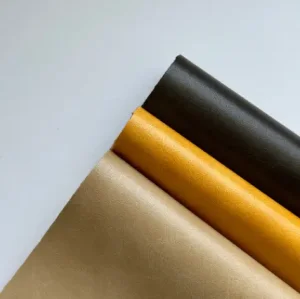
Custom Eco-Friendly Sustainable Synthetic Leather-0251 Suppliers, Factories
View Specifications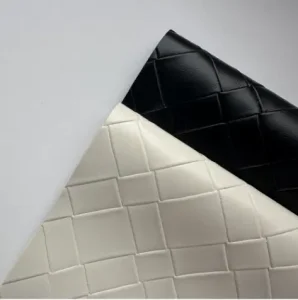
Custom Green Sustainable Man-Made Leather-9338 Manufacturers, Suppliers
View Specifications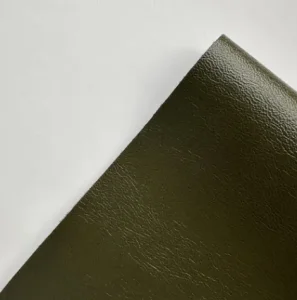
Custom Eco-Friendly Sustainable Synthetic Leather-0230 Manufacturer, Suppliers
View Specifications
High-Quality Eco-Friendly Sustainable Synthetic Leather-9081 Manufacturer, Factory
View Specifications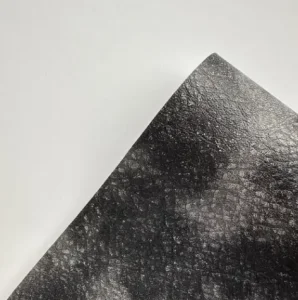
Wholesale Low-Carbon Eco Sustainable Synthetic Leather-0045 Manufacturers, Factory
View Specifications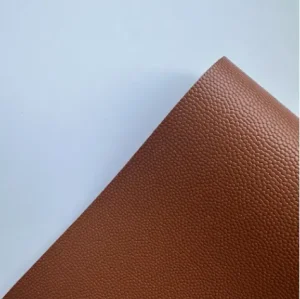
Wholesale Sustainable Eco-Conscious Synthetic Leather-9142 Manufacturer, Supplier
View Specifications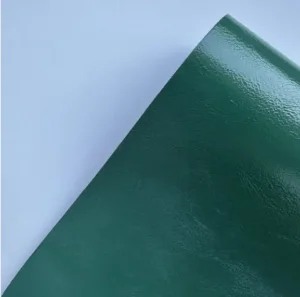
High-Quality Low‑Impact Green Sustainable Synthetic Leather-9333 Manufacturers, Factories
View Specifications