

Casablanca Tier-1 Series
Pre-engineered bio-based and recycled PU alternatives delivering exact physical performance requirements for Moroccan automotive assembly, luxury leather goods, and high-turnover footwear.
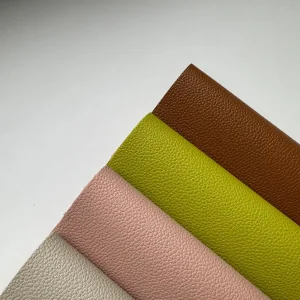
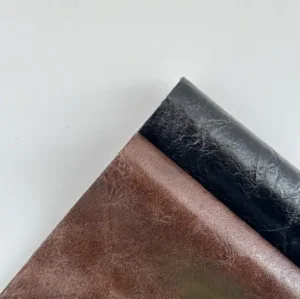
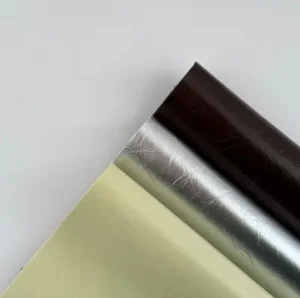
A rigorous examination of operational advantages, nearshoring trends, and environmental policies driving high-performance polymer adoption across the Kingdom.
Morocco has emerged as the gateway nearshoring platform for European fashion, lifestyle, and automotive OEMs. Under the EU Corporate Sustainability Due Diligence Directive (CSDDD) and the Carbon Border Adjustment Mechanism (CBAM), Moroccan manufacturers must pivot from heavy-polluting chrome-tanned animal leathers and petrochemical PVC to traceable, biobased synthetic alternatives that reduce upstream Scope 3 greenhouse gas emissions.
Traditional leather tanneries in historical districts such as Dokkarat and Ain Nokbi in Fès face stringent environmental restrictions due to water scarcity and heavy metal wastewater discharges into the Sebou river basin. Solvent-free waterborne PU (WPU) eliminates wastewater chromium hazards entirely, aligning with Moroccan Department of Environment targets while drastically cutting water footprints per square meter.
The industrial ecosystem at Tangier Med, Kenitra Automotive City, and Atlantic Free Zone hosts major European Tier-1 automotive seat builders and dashboard fabricators. Our ultra-durable, flame-retardant solvent-free polyurethane skins are engineered to pass rigorous hydrolytic stability (Jungle Test up to 10 weeks) and Martindale abrasion exceeding 100,000 cycles, fulfilling OEM technical matrices.
Traditional synthetic leather relies on Dimethylformamide (DMFa), which is strictly regulated under EU REACH Annex XVII (with limits below 500 mg/kg, and stricter brand RSL thresholds below 5 mg/kg). Our proprietary water-based and 100% solid solvent-free coating technologies eliminate DMFa, toluene, and plasticizing ortho-phthalates at molecular origin, ensuring immediate customs and laboratory clearance for Moroccan exports destined for European retail racks.
| Performance / Compliance Vector | Legacy Chrome Tanned Leather | Standard Petrochemical PVC | JiangXin Waterborne Eco-PU (JX.ECO) | ASTM D6866 Biobased PU |
|---|---|---|---|---|
| Carbon Footprint (kg CO₂e/m²) | 17.0 - 25.0 | 6.5 - 9.0 | 2.8 - 4.2 | 1.5 - 2.9 (Negative bio-uptake) |
| Hazardous Solvents (DMFa / Toluene) | High chemical usage (Chromium VI risk) | High plasticizer migration risk | Zero (100% Waterborne) | Zero Solvent-Free Formula |
| EU REACH / Moroccan NM Certification | Frequent failures on Cr(VI) oxidation | Subject to RoHS Phthalate Bans | Exceeds All EU RSL Standards | Certified BioPreferred / OEKO-TEX |
| Cutting Yield Efficiency | 65% - 75% (Flaws, irregular contours) | 90% - 92% | 98% - 99% (Uniform Roll Topology) | 98% - 99% (Precision Roll Caliper) |
| Hydrolysis Resistance (10-wk Tropical) | Susceptible to hardening/cracking | Plasticizer brittle fracture | Grade 4-5 (ISO 1419 Method C) | Grade 4-5 (ISO 1419 Method C) |
Our ongoing synthetic biology and clean chemical synthesis roadmap empowering Moroccan manufacturers to stay ahead of global eco-regulations.
Replacement of petroleum adipic acids and polyols with corn- and agricultural waste-derived carbon, achieving 30% to 50% renewable biocarbon verified via ASTM D6866.
100% Recycled Claim Standard (RCS) sea-island microfibers derived from post-consumer PET bottles, delivering identical tensile yield to traditional bovine split dermis.
Commercializing non-isocyanate chemical pathways via cyclocarbonates and polyamines, entirely decoupling production from occupational safety hazards and VOC catalysts.
Industrial compostable synthetic leather architectures engineered to degrade under aerobic industrial soil conditions within 180 days without microplastic residue.
How JiangXin’s solar-powered megacampus in Yingde, Guangdong secures unbeatable economies of scale, physical consistency, and rapid maritime connectivity to Moroccan ports.
Spanning 135,733 m² with 4.68 MW rooftop photovoltaic solar panels, our automated continuous coating and dry-process lines output over 16 million meters annually. This immense scale lowers unit conversion costs, insulating our Moroccan partners from volatile raw material spot-market price spikes.
Positioned along South China’s central transport hubs, we provide direct maritime freight schedules from Guangzhou Nansha and Shenzhen Yantian to Tanger Med Port within 22–26 days. We furnish full documentation sets—including Certificate of Origin, Bill of Lading, and ISO 9001/14001 testing audits—for frictionless customs clearance.
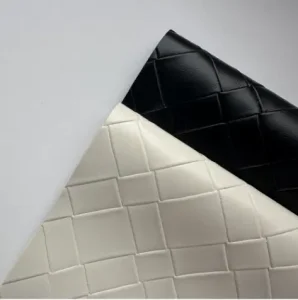
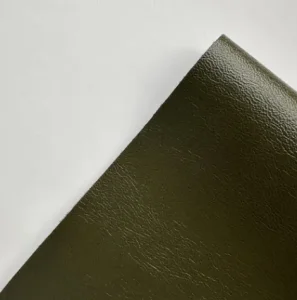
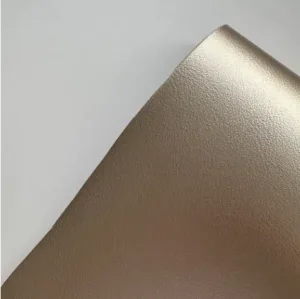
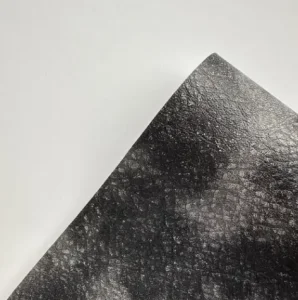
Moroccan designers require quick turns between spring/summer and autumn/winter collections. Our computerized colorimetry labs match Pantone and physical swatches in 72 hours, delivering tailored grain textures, micro-perforations, and mechanical hand-feel (from butter-soft nappa to structured pebble) within 7 business days.
Comprehensive regulatory coverage verifying that every meter supplied meets mandatory regional, European, and North American consumer safety guidelines.
Independently verified testing via SGS and TÜV Rheinland confirms non-detectable levels across all Substances of Very High Concern, including azo colorants, organotins, short-chain chlorinated paraffins (SCCPs), and per- and polyfluoroalkyl substances (PFAS/PFOA).
For brands targeting circular economy marketing labels, our post-consumer recycled series provides batch-specific Transaction Certificates (TCs). Every meter traces back through certified plastic flake recovery plants, ensuring third-party audit credibility.
Our dedicated international trade documentation desk coordinates directly with Moroccan transitaires and customs brokers through PortNet, ensuring prompt issuance of HS code declarations (5903.20 Polyurethane Impregnated/Coated Textiles) with zero classification bottlenecks.
Detailed technical and operational answers compiled by our chemical engineers and commercial trade managers.
Comprehensive article matrix covering low-carbon, biobased, and circular synthetic leathers for diverse industrial applications across Morocco.
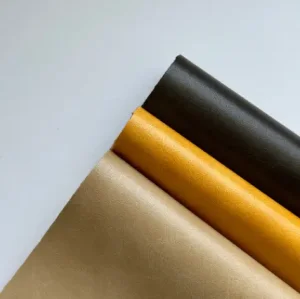
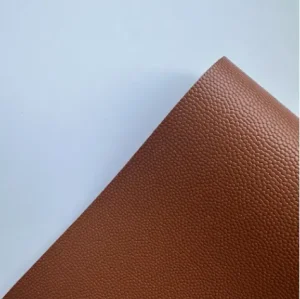
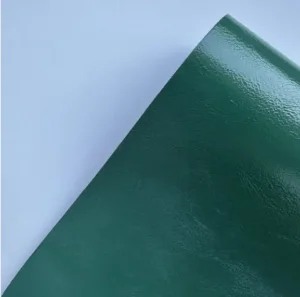
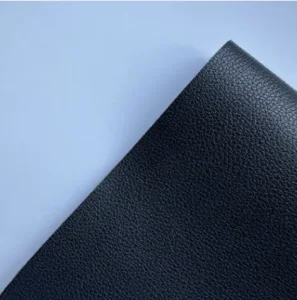
Partner with an internationally certified manufacturer producing over 16 million meters of bio-based and recycled synthetic leather annually. Fast sampling and dedicated support for Moroccan enterprises.