
High-Performance Sustainable PU Solutions Serving India
Engineered to withstand extreme ambient temperatures and tropical humidity across Delhi NCR, Tamil Nadu, Maharashtra, and Karnataka manufacturing corridors.

OEM Eco-Friendly Sustainable Synthetic Leather Serving India
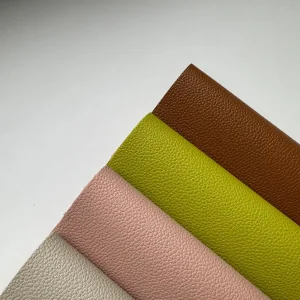
High-Quality Sustainable Eco-Friendly Faux Leather - India Export Hub
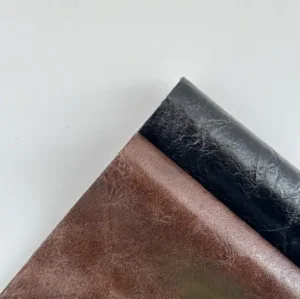
Wholesale Eco-Friendly Sustainable Synthetic Leather-0212 for India

OEM Sustainable Eco-Friendly Faux Leather-0195 for Indian Brand OEM
India's Decarbonization Imperative & Industrial Leather Transition
India is rapidly establishing itself as the world’s powerhouse for manufacturing under national strategic initiatives such as "Make in India" and the Production Linked Incentive (PLI) scheme. However, traditional leather tanning clusters in Kanpur (Uttar Pradesh), Ambur and Ranipet (Tamil Nadu), and Kolkata (West Bengal) are encountering unprecedented regulatory restrictions driven by severe effluent discharge controls from the Central Pollution Control Board (CPCB) and rigorous zero-liquid-discharge (ZLD) mandates.
Concurrently, multinational footwear OEMs, consumer luxury brands, and India's burgeoning domestic automotive tier-1 supply chains (concentrated across Pune-Chakan, Chennai-Oragadam, and Gurugram-Manesar) are compelled to abandon toxic PVC vinyl and fossil-heavy synthetic substrates to align with Scope 3 greenhouse gas reporting, EU CBAM carbon border mechanisms, and consumer demand for cruelty-free vegan formulations.
- Seamless BIS Compliance: Manufactured strictly within Bureau of Indian Standards guidelines, completely exempt from banned organotin compounds, pentachlorophenol (PCP), and chromium VI.
- Tropicalized Hydrolysis Resistance: Formulated specifically with aliphatic and polycarbonate-based PU resins resistant to the harsh tropical humidity (85%+ RH at 45°C) prevalent across South Asia.
- Customs & Logistics Advantage: Direct, optimized container shipments routed seamlessly to Nhava Sheva (Jawaharlal Nehru Port, Mumbai), Chennai Port, and Mundra Port with fast-track green-channel clearance.
Global Enterprise Sourcing Architecture & Material Audits
Global corporations operating production facilities in India are governed by standardized Restricted Substance Lists (RSL) and stringent ESG disclosure standards. Procuring eco-friendly synthetic leather is no longer just a purchasing decision—it is an engineering qualification process requiring complete transparency across raw material polymer synthesis, carrier fabric weaving, and surface finishing.
Our Yingde manufacturing campus operates a verified vertically integrated value chain. From bio-polyol condensation polymerization to high-speed transfer coating and post-embossing, our material architectures guarantee batch-to-batch color delta (ΔE < 0.5) consistency, zero batch-level plasticizer migration, and automated thickness profiling that optimizes automated CNC nesting yields for footwear die-cutting and automotive seat sewing lines.
Tri-Platform Green Material Architecture
A comprehensive technological matrix developed to address Scope 1, Scope 2, and Scope 3 greenhouse gas reductions without compromising physical tensile strength or luxurious tactile ergonomics.
Plant-Derived Bio-Based PU
Engineered by synthesizing agricultural feedstocks—specifically non-food grade industrial castor oil, corn starch polyols, and bio-succinic acid—replacing traditional petrochemical crude oil fractions. Achieves 20% to 75% certified renewable carbon content verified via carbon dating.
RCS/GRS Recycled Substrates
Combines post-consumer rPET polyester microfiber substrates with closed-loop recycled polyurethane top coats. Every linear meter directly diverts plastic bottles and textile waste from landfills, verified through complete chain-of-custody Transaction Certificates (TC).
100% Waterborne & Solvent-Free
Completely eliminates hazardous chemical solvents such as Dimethylformamide (DMFa), Dimethylacetamide (DMAC), and Toluene during wet polyurethane synthesis. Delivers ultra-low VOC emissions compliant with the strictest automotive interior air quality standards.
Comprehensive Technical Specification & Compliance Matrix
Quantitative material benchmarking comparing our eco-friendly synthetic leather portfolio against conventional PVC and traditional solvent-based PU substrates.
| Evaluation Parameter | JiangXin Bio-Based PU | JiangXin Waterborne Solvent-Free | Conventional Solvent PU | Traditional PVC Rexine |
|---|---|---|---|---|
| Carbon Footprint (LCA kg CO₂ eq/m²) | 1.4 – 2.1 (-62%) | 1.8 – 2.5 (-54%) | 4.8 – 5.9 | 7.2 – 9.8 |
| DMFa Residue Content | Non-Detectable (<1 ppm) | Zero (0 ppm) | 30 – 150 ppm | N/A (Contains DOP/DINP) |
| Tropical Hydrolysis Resistance (Jungle Test) | 7 to 10+ Weeks (70°C, 95% RH) | 8 to 12 Weeks (70°C, 95% RH) | 2 to 4 Weeks | Brittle crack after 18 mos |
| Martindale Abrasion Cycle (ISO 12947-2) | > 100,000 Revs (Dry/Wet) | > 150,000 Revs (Dry/Wet) | 30,000 – 50,000 Revs | 20,000 Revs (Delamination) |
| Bally Flexometer Endurance (ISO 5402) | > 100,000 cycles at 23°C | > 150,000 cycles at 23°C | 50,000 cycles | < 20,000 cycles |
| Cold Crack Temperature | -25°C to -35°C | -30°C to -40°C | -15°C | 0°C to -5°C |
| Indian Regulatory Compliance | BIS / CPCB Clean Exempt | BIS / CPCB Clean Exempt | Subject to Strict VOC Review | Phthalate Restrictive |
Material Engineering Roadmap (2025–2030)
Continuous fundamental research driving the transition toward completely circular, non-fossil synthetic materials engineered for scalable industrial deployment.
100% Carbon-Neutral Feedstocks
Scaling bio-based carbon concentration from the current 40%-60% threshold to a certified 85%+ level through next-generation lignin, industrial microalgae lipids, and CO₂-based polyether polyols (CCU technology), completely eliminating reliance on petroleum cracking streams.
Monomer-Level Chemical Recycling
Developing catalytic glycolysis and enzymatic depolymerization pathways that allow discarded synthetic leather uppers and production trims to be broken down into pristine diols and diamines, establishing genuine closed-loop, infinity-cycle polyurethane loops.
Smart Multifunctional Self-Healing
Integrating thermo-reversible Diels-Alder chemical crosslinkers and natural plant-derived antimicrobial nanocoatings that eliminate silver-ion toxicity while enabling micro-abrasion self-healing under warm ambient air, doubling material operational lifespan in hot Indian climates.
Dedicated Supply Chain & Port Logistics Protocols for India
Importing technical performance materials into India requires precision logistics handling, transparent HS code classification (under Chapter 5903: Textile fabrics impregnated, coated, covered or laminated with plastics), and absolute compliance with Indian customs valuations to prevent port demurrage.
We provide full container load (FCL) and consolidated less-than-container load (LCL) programs engineered specifically for rapid transit times from Guangzhou and Shenzhen maritime hubs to key Indian oceanic entry points:
- JNPT / Nhava Sheva (Mumbai Port): 14–18 Days Transit. Direct feeder access serving the Maharashtra automotive hub (Pune, Chakan, Talegaon) and Gujarat manufacturing corridors.
- Chennai Port / Ennore (Tamil Nadu): 12–16 Days Transit. Immediate proximity to the Ambur, Ranipet, and Vaniyambadi footwear manufacturing belts and Sriperumbudur industrial zones.
- ICD Tughlakabad / Dadri (Delhi NCR): Direct multi-modal rail dispatch serving Agra shoe exporters, Gurugram automotive suppliers, and Noida electronics manufacturers.
- Documentation Transparency: Every shipment arrives with complete Certificate of Origin (Form B / APTA where eligible), Mill Test Certificates (MTC), MSDS, and third-party lab verification for expedited clearance.
Specialized Sustainable Synthetic Leather Formulations
Explore customized textures, embossing grains, backing fabrics, and technical finishes optimized for high-volume contract manufacturing across India.
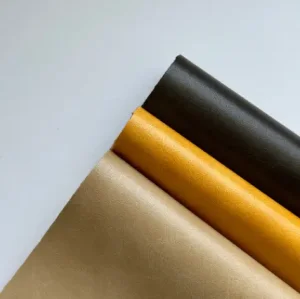
Custom Eco-Friendly Sustainable Synthetic Leather-0251 for India
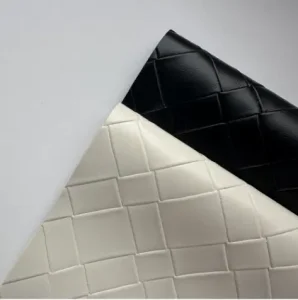
Custom Green Sustainable Man-Made Leather-9338 for Indian Market
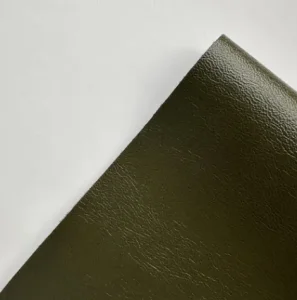
Custom Eco-Friendly Sustainable Synthetic Leather-0230 for India

High-Quality Eco-Friendly Sustainable Synthetic Leather-9081 India
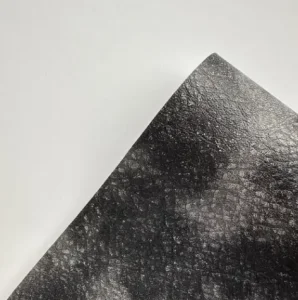
Wholesale Low-Carbon Eco Sustainable Synthetic Leather-0045
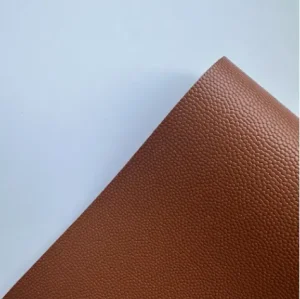
Wholesale Sustainable Eco-Conscious Synthetic Leather-9142

High-Quality Low-Impact Green Sustainable Synthetic Leather-9333
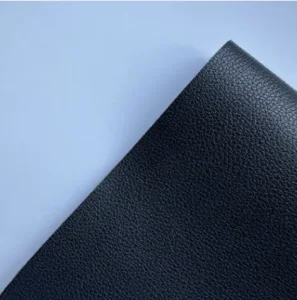
High-Quality Green Low-Carbon Sustainable Synthetic Leather-9077
Frequently Asked Questions by Indian Procurement Teams
Addressing core technical, regulatory, commercial, and logistical inquiries from factory managers and brand supply directors across India.
How does your synthetic leather solve India's monsoon hydrolysis degradation?
Tropical conditions in regions like Mumbai, Chennai, and Kolkata subject synthetic materials to sustained high relative humidity and ambient temperatures exceeding 40°C, causing conventional ester-based PU to crumble within 12–18 months. We engineer our export formulations using specialized polycarbonate and aliphatic polyols backed with mildew-inhibiting treatments, withstanding 8 to 10+ weeks of harsh Jungle Testing (70°C, 95% RH), ensuring 5 to 10 years of peel-free service life.
Are your synthetic leather materials fully exempt from Indian BIS mandatory QCO restrictions?
Yes. India's Ministry of Commerce and Industry and the Bureau of Indian Standards (BIS) have instituted Quality Control Orders (QCOs) on various synthetic leather and footwear components to eliminate hazardous chemicals. Because our materials are formulated entirely without banned phthalates (6P/16P-free), organotin stabilizers, alkylphenol ethoxylates (APEO), and lead pigments, they smoothly clear BIS testing protocols and standard customs port laboratory audits.
What is the minimum order quantity (MOQ) and lead time for shipments to Indian ports?
For custom color matches and customized emboss grain designs, our standard production MOQ is typically 500 to 1,000 linear meters per color/thickness specification. For catalog stock collections, lower MOQs are available. Production cycle times are typically 10 to 14 days, with oceanic transit to Nhava Sheva (JNPT) or Chennai Port taking approximately 14 to 18 days, facilitating seamless just-in-time inventory replenishment.
Can you provide official Transaction Certificates (TC) for GRS and RCS audits in India?
Absolutely. Every production run utilizing recycled carrier yarns (such as 100% post-consumer recycled polyester microfiber) or recycled PU matrixes is covered under our accredited Textile Exchange chain of custody. We provide complete Transaction Certificates issued by accredited auditing bodies (such as Control Union or Intertek) directly tagged to your Indian commercial invoice and bill of lading.
How does your factory accommodate automotive Tier-1 requirements (e.g., Tata, Mahindra, Maruti Suzuki)?
Automotive interiors demand strict VOC, fogging, and flame retardancy standards. Our waterborne and solvent-free PU leather formulations comply directly with automotive test standards such as VDA 278 (VOC/FOG emission limits), DIN 75201 (Gravimetric & Reflectometric Fogging), and FMVSS 302 / IS 15061 (flammability for automotive upholstery). All articles maintain superior UV aging stability under Florida/Kalahari cycle weathering tests.
What backing fabrics are offered to optimize footwear lasting and upholstery tensile strength?
We tailor the carrier backing to match the physical stress of your manufacturing process. Options include high-density coagulated sea-island microfiber (mimicking genuine suede collagen fiber networks for Agra shoe upper pulling and lasting), woven recycled polyester for high-tensile tear resistance, circular knit jersey for 4-way stretch seat ergonomics, and non-woven spunlace for smooth luxury handbag assembly.