
Featured Eco-Friendly Synthetic Materials for Swiss Procurement
Calibrated strictly for high-end Swiss commercial manufacturing, luxury watch presentation enclosures, alpine architectural hospitality, and bespoke consumer goods.
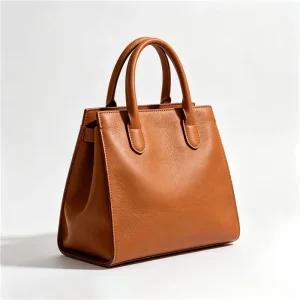
OEM Eco-Friendly Synthetic Leather for Swiss Luxury Goods
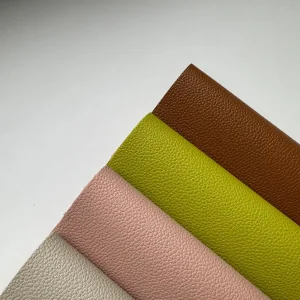
High-Quality Sustainable Eco-Friendly Faux Leather for Swiss Timepieces
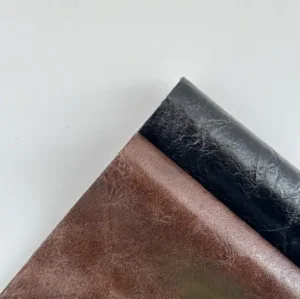
Wholesale Eco-Friendly Sustainable Synthetic Leather-0212 for Zurich Retail
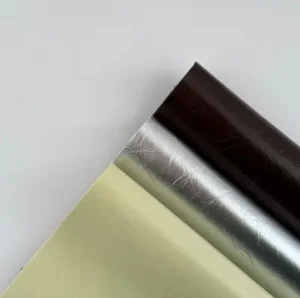
OEM Sustainable Eco-Friendly Faux Leather-0195 for Alpine Interiors
The Swiss Industrial Landscape & Climate Mandates
Switzerland maintains some of the most rigorous chemical, circular, and carbon-accounting criteria worldwide. Governed by the revised Swiss Federal Act on the Reduction of CO2 Emissions (CO2 Act) and the Chemicals Ordinance (ChemO), Swiss manufacturers operating across Geneva, Zurich, Basel, and the Jura Watch Valley face intense legislative pressure to eliminate fossil-locked footprints and hazardous compounds.
Swiss enterprises do not merely purchase artificial textiles; they procure auditable lifecycle analyses (LCA) and zero-toxicity guarantees. Conventional synthetic leathers synthesized via wet-dimethylformamide (DMF) or solvent-heavy PU processes are systematically excluded under Swiss RSL (Restricted Substances Lists) due to volatile organic compound off-gassing and carcinogenic residue risks.
- Swiss ChemO & EU REACH Alignment: Guaranteed zero detection of DMFa, toluene, phthalates, and organotin compounds across every master batch.
- Scope 3 Carbon Accounting: Transparent Product Carbon Footprint (PCF) reports derived from our 4.68 MW solar-powered manufacturing base.
- Precision Surface Tolerances: Dimensional stability within ±0.05mm required for automated die-cutting in horological presentation modules.
Compliance Verification Protocol for Switzerland
Every export roll dispatched to Swiss logistical terminals (Basel EuroAirport, Zurich Freight Hub) carries verified third-party laboratory documentation:
Global Sustainable Sourcing vs. China Factory 4.0 Resilience
Navigating global feedstock volatility, European energy cost escalation, and the operational precision of JiangXin's 135,733 m² smart production ecosystem.
EUDR & Bovine Leather Divestment
The implementation of the EU Deforestation Regulation (EUDR) has fundamentally disrupted bovine leather value chains. European brands are pivoting toward traceable bio-based synthetics that completely unlink material sourcing from deforestation, heavy-metal chrome tanning, and excessive water waste.
Smart Factory 4.0 Automation
JiangXin integrates high-speed optical digital inspection scanners detecting imperfections as small as 0.02mm in real time. Closed-loop automated viscosity regulators and computerized dry-process coating guarantee batch-to-batch color delta E < 0.6—essential for Swiss luxury luxury quality consistency.
Circular Thermal Energy Loops
Equipped with state-of-the-art Regenerative Thermal Oxidizers (RTO) boasting 98.5% heat recovery efficiency, our Yingde campus converts process vapors into clean thermal energy for production drying tunnels, drastically reducing primary fossil grid dependence.
Technical Comparison Matrix: Bio-Based & Eco PU vs. Traditional Tiers
Direct data comparison highlighting mechanical durability, chemical footprint, and environmental audit metrics.
| Evaluation Parameter | JiangXin Bio-Based PU | JiangXin Solvent-Free Waterborne | Traditional Bovine Leather | Legacy DMF-Solvent PU |
|---|---|---|---|---|
| Renewable / Recycled Content | 30% – 50% Bio-Carbon (ASTM D6866) | Up to 100% Recycled Base (RCS) | 0% Renewable Polymer | 0% (100% Petrochemical) |
| VOC Emissions (ISO 16000-6) | < 10 µg/m³ (Undetectable) | Zero Off-Gassing | Variable (Chromium / Tanning Odor) | High DMF/Toluene Residuals |
| Martindale Abrasion (ISO 12947-2) | > 120,000 Cycles (No Delamination) | > 150,000 Cycles | 80,000 – 100,000 Cycles | 30,000 – 50,000 Cycles |
| Cold-Flex Resilience (Bally Flex) | 100,000 flexes at -30°C | 80,000 flexes at -25°C | Stiffens / Micro-Cracking below -15°C | Fails / Brittles below -10°C |
| Hydrolysis Resistance (Jungle Test) | 7 to 10 Years Tropical Chamber | 8 to 10 Years Guaranteed | Degrades with moisture/mold | 2 to 3 Years (Hydrolysis breakdown) |
| Compliance for Swiss Import | Full ChemO / REACH / OEKO-TEX | GRS / RCS / Blue Angel Compatible | Strict EUDR Due Diligence Risk | High SVHC Border Rejection Risk |
Bespoke Commercial Scenarios Across Switzerland
Precision-tailored synthetic leather configurations engineered to solve exact environmental and functional challenges across Swiss industry hubs.
Haute Horlogerie & Luxury Enclosures
Designed for the watchmaking maisons of Geneva and the Jura region. Featuring zero-plasticizer migration, anti-tarnish gas resistance, and ultra-plush tactile lining surfaces that protect high-polish precious metals and delicate sapphire crystals.
Alpine Hospitality & Resort Architecture
Custom interior upholstery installed in luxury chalets, mountain hotels, and panoramic rail lounges in Zermatt and St. Moritz. Engineered with Swiss VKF / DIN 4102 B1 fire rating, stain repellency, and antimicrobial hygienic topcoats.
Swiss Technical Mobility & Rail Interiors
Engineered for high-throughput public transit systems, commercial transport vehicles, and electric fleets. Our waterborne synthetic substrates comply with demanding automotive abrasion, sweat-resistance, and zero fogging standards.
Certified Sustainable Synthetic Leather References
Explore 8 precision-engineered material specifications. All references support bespoke thickness, customized grain texture, and brand-specific color formulation.
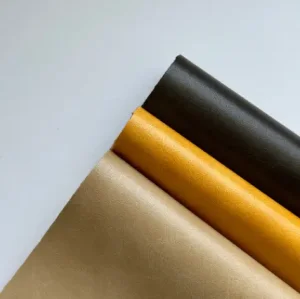
Custom Eco-Friendly Sustainable Synthetic Leather-0251
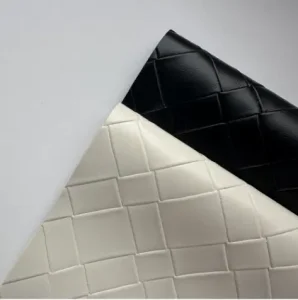
Custom Green Sustainable Man-Made Leather-9338
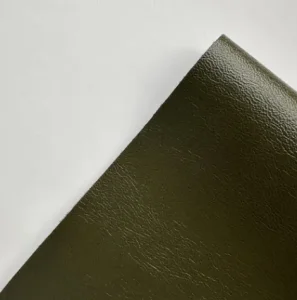
Custom Eco-Friendly Sustainable Synthetic Leather-0230
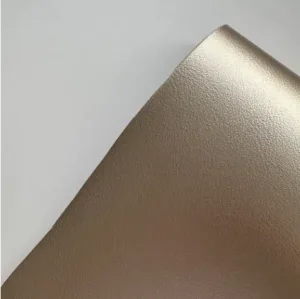
High-Quality Eco-Friendly Sustainable Synthetic Leather-9081
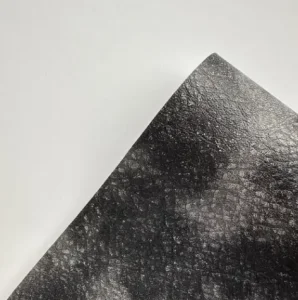
Wholesale Low-Carbon Eco Sustainable Synthetic Leather-0045
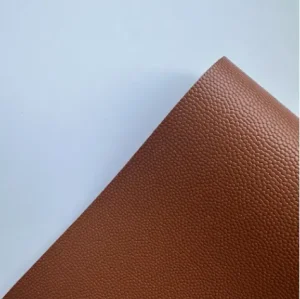
Wholesale Sustainable Eco-Conscious Synthetic Leather-9142
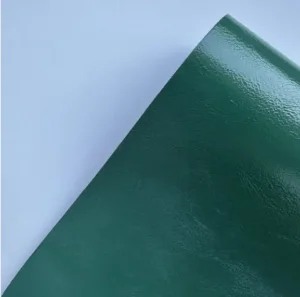
High-Quality Low-Impact Green Sustainable Synthetic Leather-9333
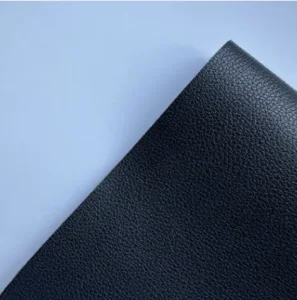
High-Quality Green Low-Carbon Sustainable Synthetic Leather-9077
Questions Sourcing Directors Ask Our Technical Engineers
Detailed answers regarding Swiss customs compliance, chemistry, minimum order thresholds, and logistical transit times.
How does JiangXin comply with Swiss ChemO & EU REACH standards?
We operate dedicated solvent-free and waterborne polyurethane coating lines that eliminate N,N-Dimethylformamide (DMFa), toluene, and toxic plasticizers. Each batch dispatched to Switzerland is accompanied by an SGS or TÜV compliance certificate verifying non-detection of all Substances of Very High Concern (SVHC) according to Swiss ChemO and EU REACH annexes.
How is plant-derived bio-based content proven for hangtag claims?
Bio-based content is measured using radiocarbon isotope analysis under ASTM D6866. This procedure differentiates renewable biological carbon (derived from non-food agricultural feedstocks) from petrochemical carbon. We deliver certified test reports showing biological carbon shares between 30% and 50% for your hangtags and ESG filings.
What are the minimum order quantities (MOQ) and bespoke matching capabilities?
Standard catalog reference swatches and stock rolls have an MOQ of 500 meters per color/grain. For bespoke Swiss luxury developments requiring Pantone/NCS spectrophotometer matching, custom embossing grains, and specialized backings (recycled microfiber or organic cotton), the initial development MOQ is 1,000 meters per article.
How are materials delivered to Switzerland and what is the transit timeline?
We manage door-to-door (DDP) or CIF logistics directly into Zurich, Geneva, Basel, or Chiasso. Sample swatch yardages are dispatched via air freight (FedEx/DHL) within 48 to 72 hours (4–6 business days delivery). Commercial container orders typically route via multimodal rail (China-Europe Express, 18–22 days) or ocean freight via Rotterdam/Antwerp to Rhine barges or rail into Basel (28–35 days).
Accelerate Your Sustainable Swiss Material Engineering
Connect directly with our technical polymers team in Guangdong. Receive comprehensive ASTM D6866 bio-based test certificates, RCS chain-of-custody documentation, and customized Swiss specifier sample binders.