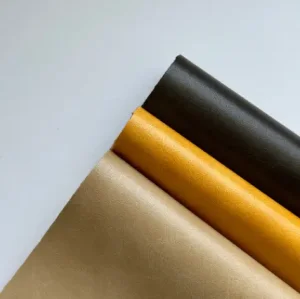
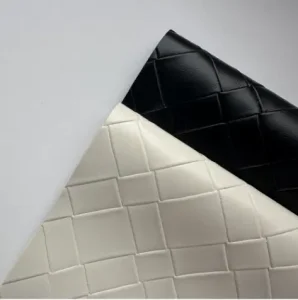
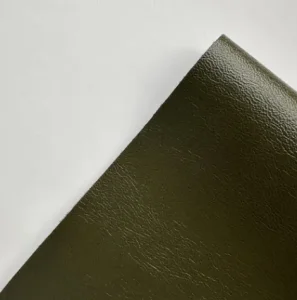
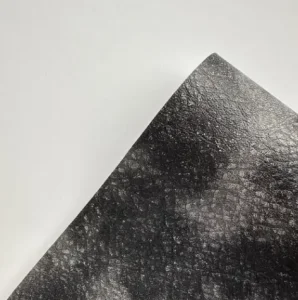
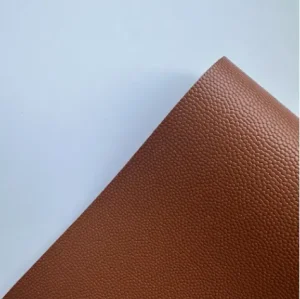
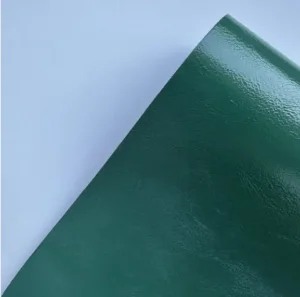
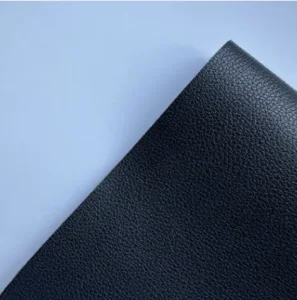
Export-Approved Synthetic Leathers Serving Sri Lanka Manufacturing
Specially calibrated for Sri Lanka's high-humidity ambient production environments, meeting zero-solvent discharge demands for global retail brand partners.
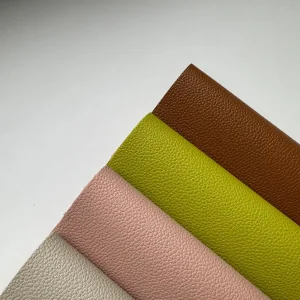
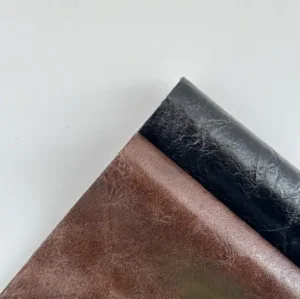
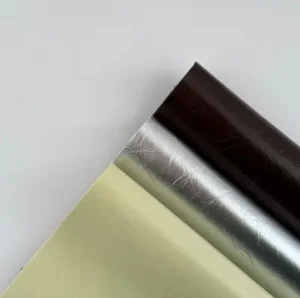
Sri Lanka Industrial Reality: Garments Without Guilt in the EU-CBAM Era
Sri Lanka's textile and apparel export economy stands as one of South Asia’s most sophisticated, commanding over $5.5 billion in annual outbound merchandise. With major hubs across Katunayake, Biyagama, and Seethawaka export processing zones, Sri Lankan contract manufacturers produce for global brands including Marks & Spencer, Victoria's Secret, Nike, and PVH.
Apparel & Intimate Trim Transition
Sri Lankan apparel leaders are transitioning from traditional PVC/fossil-PU overlays to bio-based and breathable water-based PU films. These materials eliminate toxic solvent emissions in garment trims, waistbands, and performance activewear.
Footwear Modernization in Gampaha
Footwear manufacturers in Colombo and Gampaha districts are upgrading leather footwear lines to high-tensile, hydrolytically stable synthetic leathers. This matches EU GSP+ criteria and insulates exports from sudden supply chain volatility.
Ecolabel & Higg FEM Readiness
Global buyers require Scope 3 emissions reductions. Sourcing synthetic leather produced via closed-loop wastewater recovery and rooftop solar energy directly lowers the Product Carbon Footprint (PCF) for Sri Lankan exporters.
Macro Solutions: Replacing Fossil Feedstocks with Circular Polymer Architectures
For decades, synthetic leather manufacturing relied heavily on petroleum-derived polyurethane and plasticized polyvinyl chloride, carrying substantial greenhouse gas burdens and residual DMFa chemistry. Our engineered alternatives deploy three complementary tracks.
1. Bio-Based Renewable Polyols
We synthesize polyether and polyester polyols derived from non-edible agricultural mass, including castor oil and industrial corn starch residue. Verifiable up to 30%-70% bio-carbon content under ASTM D6866, cutting cradle-to-gate greenhouse emissions by over 40% compared to conventional petrochemical coatings.
2. RCS Traceable Recycled Matrix
Substrates and microfibers engineered utilizing post-consumer rPET bottles and industrial polymer waste streams. Operating under the strict chain-of-custody protocols of Textile Exchange's Recycled Claim Standard (RCS), our batches provide Transaction Certificates (TC) that protect brands from greenwashing risks.
3. 100% Solvent-Free & Waterborne PU
Eliminating Dimethylformamide (DMFa), toluene, and methyl ethyl ketone (MEK) entirely. Our aqueous polyurethane dispersions and 100% solids solvent-free polyurethane curing lines guarantee zero VOC degassing, ensuring direct compliance with ZDHC MRSL v3.1 Level 3 standards.
Localized Support for Sri Lankan Operations & Port of Colombo Logistics
Navigating global supply chain friction requires speed, compliance accuracy, and dedicated logistical routing. JiangXin provides end-to-end support for manufacturing clusters across the Western and Southern Provinces of Sri Lanka.
Direct Ocean Corridors to Port of Colombo (CMB)
Shipments originate from Nansha/Shekou deepwater ports in Guangdong, reaching the Port of Colombo within 10 to 14 days. We provide complete documentation for Sri Lanka Customs, Board of Investment (BOI) enterprises, and TIEP (Temporary Importation for Export Processing) schemes to maintain clear duty exemptions on raw export materials.
Comprehensive Brand Chemical Compliance Dossiers
Every shipment includes lot-specific testing certificates. Our leathers pass EU REACH SVHC lists (under 240+ substances), RoHS 3, California Proposition 65, 6P/16P Phthalate Restrictions, and OEKO-TEX Standard 100 Class I (safe for infant skin contact), preventing container rejections or laboratory re-testing delays.
Engineered Application Scenarios for the Sri Lankan Domestic & Export Market
From active performance garments to high-salinity coastal luxury boutique resorts, our materials are adapted to specific physical and climatic conditions.
High-Stretch Activewear & Lingerie Trim
Ultra-thin (0.35mm - 0.55mm) breathable PU film engineered on four-way stretch recycled microfiber bases. Retains flex memory through 100,000+ Martindale rub cycles and 50+ industrial washes, ideal for technical athletic apparel and seamless intimate apparel trims.
Export Luggage, Leather Goods & Footwear
Substantial, supple hand feel with puncture and scratch resistance. Engineered with jungle-test hydrolysis resistance (Jungle Test 5 to 10 weeks at 70°C and 95% relative humidity), ensuring shoes and accessories resist peeling in tropical maritime climates.
Hospitality & Luxury Eco-Resort Furnishing
Customized for Sri Lanka’s hospitality belt from Bentota to Tangalle. Treated for anti-mildew (ASTM G21 zero fungal growth), stain-resistance against sunscreen and wine, UV resistance, and fire retardancy to BS5852 Crib 5 and California TB117 standards.
Technology Roadmap (2026-2030): Towards Fully Circular Bio-Polymers
Our ongoing R&D partnerships with international polymer laboratories target three key technical milestones over the next five years.
Phase 1: Mycelium & Agri-Residue Hybrids
Integrating mycelium network cellular structures and agricultural waste fibers (such as tea waste and pineapple leaf fibers) into the backing matrices, boosting bio-based content beyond 80% without degrading tear resistance.
Phase 2: Monomaterial Closed Loops
Developing monomaterial thermoplastic polyurethane (TPU) leather assemblies wherein both the surface coating and backing fabric consist of identical chemical families, permitting 100% mechanical recyclability at product end-of-life.
Phase 3: Digital Product Passports (DPP)
Embedding unique QR/RFID digital passports directly into material selvages, recording carbon metrics, chemical batch integrity, and supply chain origin to meet the European Union's Ecodesign for Sustainable Products Regulation (ESPR).
Frequently Asked Questions for Sri Lankan Sourcing Professionals
Clear operational and technical guidance addressing lead times, import procedures, and compliance certifications.
What are the lead times and shipping schedules from your Guangdong factory to Colombo?
How do you handle Board of Investment (BOI) and TIEP duty-free import documentation for Sri Lankan manufacturers?
Does your eco-friendly synthetic leather pass global brand Restricted Substance Lists (RSL)?
How does your synthetic leather resist high tropical humidity and fungal growth in Sri Lanka?
What are your Minimum Order Quantities (MOQ) for custom color matching and custom emboss development?
Accelerate Your Sustainable Leather Sourcing for Sri Lanka
Request material spec sheets, full physical sample swatches, and batch chemical certification packages tailored to your exact manufacturing requirements.
Send Inquiry NowSpecialty Sustainable Synthetic Leather Catalog for Sri Lankan Production
RCS-certified recycled backings, waterborne coatings, and bio-based resin formulations engineered for footwear, apparel, upholstery, and luxury lifestyle exports.