
High-Spec RCS Synthetic Leather for Saudi Arabian Commercial Programs
Selected material formulations specifically calibrated for high-temperature durability, severe UV resistance, and verified post-consumer / post-industrial recycled feedstock tracking.
-
RCS Verified · Bulk Export
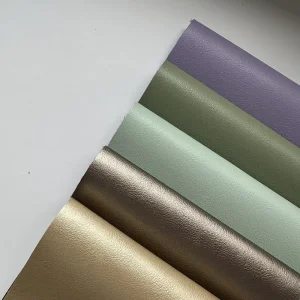
-
OEM Custom · Vision 2030
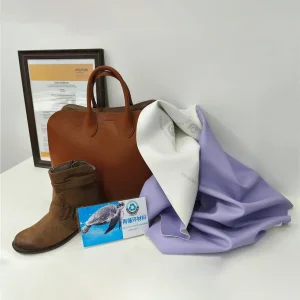
-
Ultra-Durability · Ref 9213
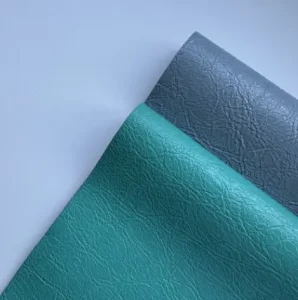
-
Luxury Hand Feel · Ref 0212
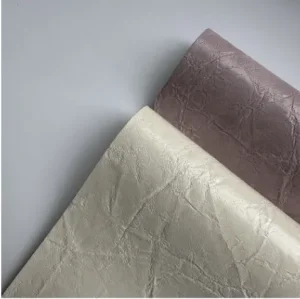
Navigating the Sustainable Material Transformation Under Saudi Vision 2030
The Kingdom of Saudi Arabia (KSA) is undergoing an unprecedented socio-economic evolution. The Saudi Green Initiative (SGI) and the expansive development mandates of Vision 2030 have established clear benchmarks: reducing carbon footprints, eliminating hazardous industrial chemicals, and driving comprehensive circular economy compliance across all tier-one mega infrastructure projects.
From the futuristic mega-city of NEOM and The Red Sea Project to the ultra-luxury hospitality corridors of Diriyah Gate and Qiddiya, conventional petroleum-heavy PVC and traditional chromium-tanned genuine leathers are facing strict regulatory and developer-driven phase-outs. Giga-project engineering directors and procurement heads now mandate certified traceability down to the raw recycled resin feedstocks.
Under SASO (Saudi Standards, Metrology and Quality Organization) guidelines and international LEED/WELL green building building accreditations, tier-1 suppliers must furnish formal Recycled Claim Standard (RCS) Transaction Certificates (TCs) confirming verified input origins for synthetic leather installations.
JiangXin New Material delivers direct factory-level supply lines connecting Chinese smart chemical engineering with the rapid procurement demands of Riyadh, Jeddah, and the Eastern Province industrial hubs.
Decarbonization Dynamics in KSA
Traditional synthetic leather production relies heavily on virgin dimethylformamide (DMF) processes and fossil-fuel virgin polyols. Our factory shifts the paradigm by serving Saudi Arabia through:
- Post-Consumer Recycled (PCR) PET Backings: Derived from audited post-consumer bottle flakes, reducing virgin fossil resin consumption by up to 68%.
- Solvent-Free & Water-Based PU Layers: Total compliance with SASO hazardous chemical limits, zero VOC emissions in enclosed building/vehicle interiors.
- LEED v4.1 & Mostadam Alignment: Enabling Saudi developers to claim maximum materials & resources credits through verified Scope 3 footprint data.
- Resilience to Arid Environments: Enhanced cross-linking systems engineered to withstand relentless thermal cycles ranging from winter night drops (4°C) to peak summer heat (+54°C).
Climatic Engineering: Formulated for the Extreme Arabian Peninsula Environment
Synthetic leather that succeeds in temperate climates often fails catastrophically in Saudi Arabia within 18 months due to plasticizer migration, photo-oxidation, and polymer delamination. Here is how our chemistry solves these GCC challenges.
Extreme UV Resistance (QUV-A 1000h+)
Saudi Arabia experiences some of the highest solar irradiance levels on earth (over 2,200 kWh/m² annually). Our RCS-certified PU utilizes advanced Hindered Amine Light Stabilizers (HALS) and nano-zinc oxide UV blocking agents integrated throughout the skin layer, preventing yellowing, chalking, and micro-cracking.
- ISO 105-B02 Blue Wool Scale Grade 7+
- QUV accelerated weathering: no cracking at 1,200 continuous hours
- Zero sticky polymer breakdown under intensive solar glass glare
Jungle Hydrolysis Testing (7 to 10 Weeks)
Coastal developments such as the Jeddah Waterfront, Yanbu Industrial City, and Red Sea islands experience extreme ambient humidity paired with high salinity. Conventional PU leathers undergo rapid hydrolytic cleavage, leading to surface peel.
- Polycarbonate-modified PU resin architectures
- Resists 70°C @ 95% relative humidity for 7-10 weeks (equivalent to 8-10 years real use)
- Salt-fog corrosion resistance (ASTM B117) for seaside marine seating
Civil Defense Fire Retardancy (Civil Defense KSA)
Safety regulations from the Saudi General Directorate of Civil Defense enforce stringent fire propagation limits for public commercial facilities, mass transit, and residential towers.
- BS 5852 Crib 5 and IMO A.652(16) compliant
- US Cal TB 117-2013 and FMVSS 302 flame safety
- Halogen-free fire retardants generating low smoke toxicity
| Performance Parameter | Standard Test Method | JiangXin RCS High-Spec PU | Commercial Benchmark PU | KSA Project Compliance |
|---|---|---|---|---|
| Recycled Feedstock Proportion | Textile Exchange RCS Standard | 20% to 75% Certified Recycled Content | Uncertified / Claim-based | Eligible for GBCI LEED & Mostadam Credits |
| Martindale Abrasion Resistance | ISO 12947-2 (12 kPa Load) | 100,000 to 150,000 Rubs (No Breakdown) | 25,000 Rubs | Saudi Commercial Seating & Transit Spec |
| Hydrolysis Resistance (Jungle Test) | 70°C, 95% Relative Humidity | 7 to 10 Weeks Guaranteed | 2 to 3 Weeks | Red Sea Marine & Coastal Durability Spec |
| Flammability Rating | BS 5852 Crib 5 / EN 1021-1&2 | Pass (Halogen-Free Formulation) | Requires High-Toxicity Additives | KSA Civil Defense Public Venue Certified |
| Restricted Chemical Screening | EU REACH 240+ SVHC, RoHS, 6P | Zero Detectable Lead, Cadmium, DMF, Phthalates | Often contains trace plasticizers | SASO Conformity Certificate Cleared |
Why Leading Middle Eastern Enterprises Direct-Source from JiangXin New Material
Yingde City JiangXin New Material Co., Ltd. represents the cutting edge of industrial synthetic leather engineering. Operating out of our specialized 135,733 m² clean-tech production park in Guangdong, China, we remove intermediaries to grant Saudi developers, OEM manufacturers, and procurement conglomerates direct factory access.
Our integrated campus incorporates wet and dry precision polyurethane coating lines, advanced computerized surface embossers, automated color-matching spectrophotometers, and fully closed-loop solvent recovery units that recycle upwards of 95% of industrial processing media.
- Scale & Output Security: An annual manufacturing capacity surpassing 16 million meters ensures reliable, unbroken delivery streams for mega-scale hospitality and corporate developments.
- Comprehensive Chain-of-Custody Integrity: Certified under the Recycled Claim Standard (RCS) and Global Recycled Standard (GRS) by internationally recognized third-party auditing bodies (such as Control Union / IDFL).
- Direct Shipping Corridors: Seamless logistics from Nansha, Yantian, and Shekou ports direct to King Abdulaziz Port (Dammam) and Jeddah Islamic Port within 16-22 transit days.
- Competitive Cost Efficiency: Chinese chemical integration allows 25-40% cost efficiency advantages compared to European high-spec bio and recycled leather imports, without sacrificing a millimeter of technical quality.
Verified Eco-Campus Credentials
We do not just formulate sustainable leather—we produce it in a certified sustainable industrial facility:
High-Impact Application Scenarios Across Saudi Arabia's Key Industries
Engineered flexibility enables our RCS recycled synthetic materials to replace conventional leathers across four primary industrial and commercial market pillars in the Kingdom.
1. Luxury Hospitality & Architectural Interiors
Saudi Arabia’s booming luxury hotel market (Riyadh Season, Red Sea eco-resorts, AlUla sanctuaries) requires wall claddings, bespoke headboards, and executive lounge seating that align with net-zero sustainability mandates while exhibiting flawless luxury aesthetics.
- Stitched and quilted architectural panel configurations
- Custom micro-embossed textures mirroring full-grain Nappa calf
- Stain-resistant and antimicrobial top coatings for high-turnover guest spaces
2. GCC Automotive Interior Retrofitting & EV Fleets
With Saudi Arabia accelerating electric vehicle adoption via Ceer Motors and Lucid Motors local manufacturing plants, the demand for high-performance vegan, circular automotive interiors is soaring.
- Low fogging values (DIN 75201) ensuring windshield clarity under intense desert heat
- High flex fatigue resistance down to -20°C for sub-zero desert night winter excursions
- Perforated breathable seat options tailored for active ventilation systems
3. Footwear, Handbags & Lifestyle Accessories
Regional Saudi footwear brands, traditional leather sandal designers, and contemporary regional luxury handbag ateliers are pivoting away from heavy cattle leather to lower-carbon recycled alternatives.
- Exceptional tensile and tear strength for automated high-speed die-cutting
- Color-fastness against persistent sweat and skin friction (ISO 11640)
- Available in custom metallic, patent, and matte designer sheens
Enterprise Sourcing Workflow: From Initial Tech Pack to Saudi Customs Clearance
A rigorous five-stage industrial protocol designed to eliminate supply chain variance, guarantee batch-to-batch color match, and deliver 100% compliant export consignments.
Spec Alignment
Client submits thickness (0.5mm - 2.2mm), backing (woven, non-woven, microfiber), grain texture, and target RCS % threshold.
Lab Dip & Swatch
Color laboratory creates custom Pantone/CIE lab matching within 3-5 days. Physical strike-off swatches dispatched via DHL/FedEx to KSA.
Pilot Batch Test
Full mechanical stress testing in our CNAS-standard testing lab: Taber abrasion, cold crack, tensile elongation, and flammability validation.
Bulk Production
Automated optical inspection machines check roll-by-roll consistency at 100 meters/minute, ensuring zero surface defects or grain drift.
TC & Export Release
Official RCS Transaction Certificate applied via certifying body; Saber CoC issued; container sealed for direct transit to Dammam or Jeddah.
Frequently Asked Questions by Sourcing Directors & Specifiers in Saudi Arabia
Authoritative answers addressing compliance, material durability, transaction documentation, and logistics for GCC procurement teams.
What is the explicit difference between GRS and RCS certification for synthetic leather?
Both standards are governed by the global non-profit Textile Exchange and utilize chain-of-custody tracking. The Recycled Claim Standard (RCS) focuses specifically on verifying the presence and exact percentage of recycled content (from 5% to 100%) through all manufacturing stages. The Global Recycled Standard (GRS) imposes the same traceability requirements but adds rigorous criteria for environmental management, social labor conditions, and chemical usage. JiangXin is certified under both standards, allowing clients to order specific articles with full Transaction Certificates (TCs) matching their exact CSR or architectural tier requirements.
How does your synthetic leather resist high thermal cycles up to +55°C in Saudi Arabia?
Standard synthetic leathers utilize monomeric plasticizers that volatize and migrate out of the polymer when exposed to temperatures exceeding 45°C, causing the surface to become brittle, tacky, or crack within months. JiangXin solves this through solvent-free polyurethane chemistry with high-molecular-weight polymeric polyols that are cross-linked into a 3D thermoset matrix. This prevents thermal plasticizer evaporation, retains supple elasticity, and eliminates the unpleasant pungent odor inside vehicles or sealed architectural spaces parked under direct Arabian sun.
Can you provide the Transaction Certificate (TC) required by Saudi customs and project consultants?
Yes. Upon completion and shipping of each bulk order, our compliance team applies to the independent accredited certification body (such as Control Union) for an official Transaction Certificate (TC) specifically made out to the importer/buyer’s name. This document legally proves the origin and exact percentage of certified recycled material in that specific batch, making it fully admissible for SASO conformity verification and LEED green building certification reviews.
What is the standard lead time from production in Guangdong to arrival in Saudi ports?
Custom color-matching and physical lab swatch development requires approximately 3 to 5 business days. Once the technical pack and physical strike-offs are approved, standard mass production for a 20ft or 40ft container (15,000 to 35,000 meters) takes between 12 to 18 manufacturing days. Direct sea freight from South China maritime ports (Nansha/Yantian/Shekou) to King Abdulaziz Port in Dammam or Jeddah Islamic Port requires approximately 16 to 22 transit days. Urgent air shipments of pilot roll yardages can arrive in Riyadh (RUH) in 4-6 days.
What Minimum Order Quantities (MOQ) apply for customized colors and grains?
For standard catalog references in stocked base rolls, our trial MOQ starts at 500 meters per color/grain. For completely bespoke formulations involving customized thickness (e.g., 0.8mm to 1.8mm), customized anti-flame Crib 5 finishes, and specific recycled content percentages, our production threshold is 1,000 to 1,500 meters per production run. Multi-color development orders within unified roll structures are readily accommodated to support varied collection launches.
How does your material support fire safety compliance with Saudi Civil Defense?
We incorporate non-toxic, halogen-free organophosphorus and expandable graphite flame retardant mechanisms within both the PU skin layer and the recycled knitted/woven backer. Materials tested according to British Standard BS 5852 Crib 5 and European Standard EN 1021 Part 1 & 2 self-extinguish within seconds of flame contact without dripping burning molten droplets, satisfying the mandatory life safety codes enforced in Saudi commercial venues and hospitality resorts.
Specialized RCS Synthetic Leather References Serving Saudi Projects
Explore our extended series of certified recycled synthetic leather articles. Every roll is fully customizable in grain, thickness, backing fabric, and mechanical performance specifications.
-
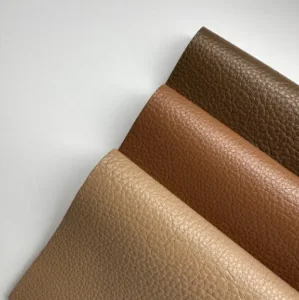
RCS · Ref 9078
-
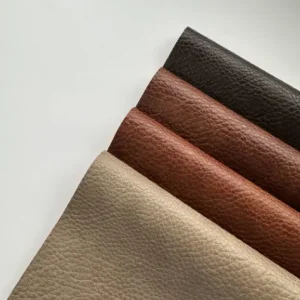
RCS · Ref 9088
-
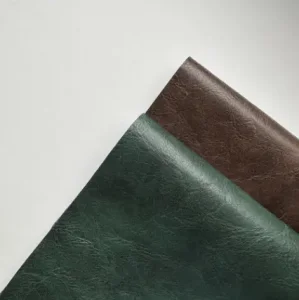
Official RCS · Ref 9240
-
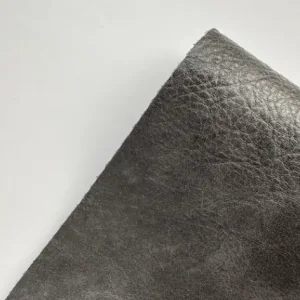
Eco PU · Ref 9271
-
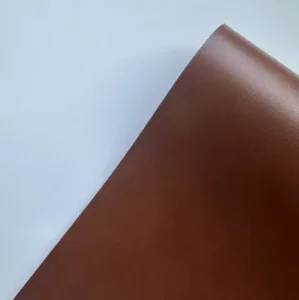
High Spec · Ref 0138
-
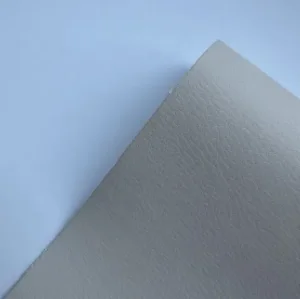
Wholesale · Ref 2058
-
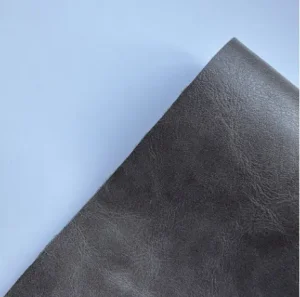
OEM Verified · Ref 0084
-
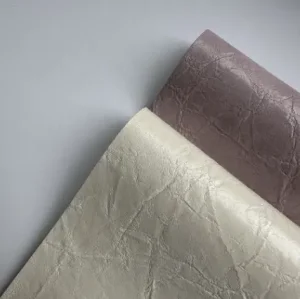
RCS Approved · Ref 0212
Connect with our Engineering Team Serving Saudi Arabia
Partner directly with JiangXin New Material Co., Ltd. for factory-direct wholesale pricing, custom physical sample books, and complete SASO/RCS technical compliance documentation for your upcoming Middle Eastern developments.