

Core Materials Portfolio
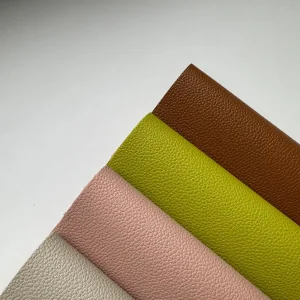
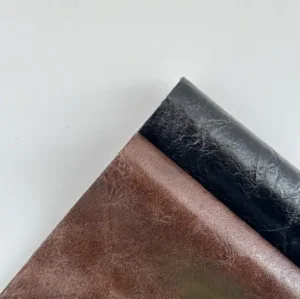
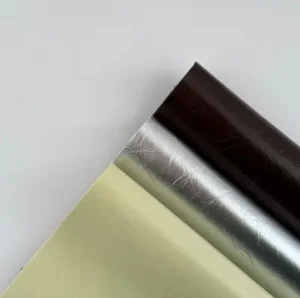
Chicago Specification Series: Prime Sustainable Synthetics
Engineered to satisfy rigorous North American durability thresholds while achieving tangible decarbonization for enterprise procurement programs.
Regional Industrial Intelligence
Chicago’s Commercial Landscape: Decarbonizing the Midwest Manufacturing Corridor
Analyzing the convergence of high-durability contract design, cold-crack resistance logistics, and municipal circularity mandates in the Greater Chicagoland economic area.
The Merchandise Mart & Contract Furniture
Greater Chicago represents the global epicenter of architectural interior specification. With the Merchandise Mart (THE MART) anchoring contract furniture networks across Fulton Market and Oak Brook, design directors increasingly reject toxic, solvent-heavy PVC and standard DMF-cast polyurethanes. Sourcing mandates now demand strict Health Product Declarations (HPDs), LEED v4.1 emissions eligibility, and Cradle-to-Cradle circular credibility.
Transportation & Freight Corridor Stress
Operating as North America’s largest Class-I railroad hub and home to premier Tier-1/Tier-2 automotive upfitters, Chicago demands materials resilient to severe climatic variance. Synthetic substrates must pass -30°F (-34°C) cold-crack tests (ASTM D2136) to endure polar-vortex freeze cycles while meeting FMVSS 302 flame safety during cross-continental transit across the Interstate 80/90 logistics corridor.
Midwest Green Chemistry Directives
Illinois regulatory structures and Midwestern corporate sustainability metrics heavily target scope 3 supply chain decarbonization. Enterprises are systematically eradicating poly-fluoroalkyl substances (PFAS "forever chemicals"), ortho-phthalates, and hazardous air pollutants (HAPs). Our closed-loop waterborne production models eliminate trace solvents, offering clean supply chain assurance.
Information Gain: Why Conventional "Marine-Grade" Vinyl Is Failing Modern Specifications
For decades, Midwestern commercial upholstery relied on heavy antimicrobial PVC formulations loaded with chlorinated paraffins and heavy-metal heat stabilizers. Under revised OSHA indoor air guidelines, Healthcare Without Harm standards, and ANSI/BIFMA e3 Furniture Sustainability Standards, these legacy polymers face phase-outs due to bioaccumulation and plasticizer migration. Our bio-derived polyurethane architectures eliminate plasticizer migration while sustaining 200,000+ Wyzenbeek double rubs.
Polymer Architecture & Clean Chem
Macro Industry Solutions: Decoupling Luxury from Petrochemicals
A breakdown of JiangXin New Material’s tri-platform technical synthesis: Bio-derived Polyols, RCS-certified Post-Consumer Substrates, and Zero-DMF Aqueous Polyurethanes.
ASTM D6866 Radiocarbon Biobased Polyols
Traditional PU leather synthesizes polyols strictly from fractional distillation of crude oil. Our biobased range substitutes up to 50% of fossil petrochemicals with renewable, non-food agricultural biomass (castor bean derivatives, industrial corn starch, and non-GMO agricultural residues). Carbon isotope radiocarbon analysis verifies renewable atmospheric carbon capture, directly decreasing upstream Scope 3 lifecycle impact without compromising tensile tear threshold.
RCS Certified Post-Consumer Polyester Scrims
Structural integrity depends upon backing fabric dynamics. Instead of virgin petroleum-derived polyester and nylon knit backings, we integrate Recycled Claim Standard (RCS) certified rPET yarn salvaged from post-industrial waste and post-consumer polyethylene terephthalate bottles. Every production batch links directly to Textile Exchange transaction certificates for authentic chain-of-custody documentation.
100% Waterborne & Solvent-Free Polyurethane Chemistry
Traditional artificial leather factories deploy Dimethylformamide (DMF), Dimethylacetamide (DMAC), and Toluene to solubilize urethane resins, requiring aggressive thermal degassing that can leave toxic residue. Our clean-room coating lines deploy purely waterborne PU dispersions (PUD) and hot-melt solvent-free reactive polyurethane chemistry, achieving near-zero VOC emissions and exceeding OEKO-TEX Standard 100 criteria.
Fluorocarbon-Free Surface Protection
To resist stubborn oil-based stains, hospital-grade disinfectant bleaches, and ultraviolet yellowing, industrial coatings traditionally applied C6 and C8 fluorinated stain repellents. We utilize modified silicon-polycarbonate crosslinked topcoats, presenting dense molecular surface shielding that prevents ink, mustard, and betadine penetration while maintaining breathability.
| Performance Criteria | Standard Test Method | JiangXin Eco Synthetic Leather | Standard Commercial Vinyl (PVC) |
|---|---|---|---|
| Surface Abrasion Resistance | ASTM D4157 (Wyzenbeek / Cotton Duck) | Exceeds 200,000 Double Rubs | 50,000 - 100,000 Double Rubs |
| Hydrolysis Resistance | ASTM D3690-02 (Jungle Test / 70°C, 95% RH) | Grade 5 / 10+ Weeks (No Delamination) | 3 - 5 Weeks (Plasticizer Breakdown) |
| Sub-Zero Cold Cracking | CFFA-6 / ASTM D2136 (-30°F / -34°C) | Pass (No Cracking / Flaking) | Fails / Stiffens Below 0°F |
| Total VOC Outgassing | EPA 24 / CDPH Standard v1.2 | < 10 µg/m³ (LEED Zero VOC Compliant) | > 500 µg/m³ (Persistent Chemical Odor) |
| Bio-Derived Content Share | ASTM D6866 Radiocarbon Dating | 25% - 50% Verified Bio-Carbon | 0% (100% Fossil / Petrochemical Base) |
Supply Chain Architecture
Macro Dynamics vs. Localized Support: Bridging Asia & Chicago
Combining mega-campus manufacturing efficiency with dependable supply-chain integration across the North American heartland.
16M+
Annual Output Capacity (Meters)
135,733
Sq. Meter Eco-Industrial Campus
4.68 MW
On-Site Rooftop Solar Power
50+
Export Nations Efficiently Served
The Guangdong Mega-Factory Advantage
Yingde City JiangXin New Material Co., Ltd. (JX.ECO) anchors the global green leather transition. Operating an enterprise campus equipped with proprietary thermal recovery, on-site industrial wastewater treatment, and advanced continuous coating lines, we deliver unparalleled scale economics, master-batch pigment stabilization, and millimeter-precise dimensional stability across massive multi-thousand-meter roll orders.
Midwest Fulfillment & DDP Logistics Protocols
Navigating oceanic freight lines directly to Chicago’s inland ports (Port of Chicago / Calumet Harbor) and major intermodal freight terminals in Elwood and Joliet, Illinois. We structure end-to-end Delivered Duty Paid (DDP) logistics programs, providing local Midwest manufacturers, custom millwork studios, and automotive sub-assemblers with pre-cleared customs, predictable port-to-warehouse delivery times, and buffer stocking options.
Midwest Implementation Matrix
Precision Applications: Purpose-Built for Chicago Industry
From executive suites across Wacker Drive to performance marine craft navigating Lake Michigan, explore how our technical leathers perform under specialized regional demands.
High-Traffic Corporate & Hospitality Seating
Engineered for corporate headquarters across the Chicago Loop and high-density dining developments across Fulton Market and River North. Our materials provide exceptional skin-feel and micro-perforated acoustic absorption while passing CAL TB 117-2013 and NFPA 260 flammability tests without chemical flame retardant additives.
Great Lakes Marine & Outdoor Waterfront
Yachting, open-cockpit boating, and architectural outdoor installations along Lake Michigan and the Chicago Riverwalk face severe micro-climate swings. Our engineered marine grades resist pink-stain fungal growth (ASTM G21), feature 1,000+ hour QUV weather resistance (ASTM G154), and maintain flexible hand-feel in freezing fresh-water winds.
Specialty EV Fleet & Autonomous Transit
As the greater Chicago and Northern Illinois manufacturing belt expands electric vehicle upfitting and public transit innovation, interiors require low-fogging performance (DIN 75201) to eliminate chemical windshield haze. Our zero-solvent substrates guarantee ultra-low emission cabins and superior long-term seam-fatigue resistance.
Verified Compliance Framework
Audited Standards & Chain-of-Custody Integrity
Third-party verified documentation guaranteeing immediate approval during architectural specification and commercial onboarding.
USDA BioPreferred® Program
Certified verification under ASTM D6866 standards quantifying precise biobased carbon contents. This enables our enterprise partners to fulfill US Federal procurement priorities under Section 9002 of the Farm Security and Rural Investment Act.
Recycled Claim Standard (RCS)
Administered via Textile Exchange protocols, tracking post-consumer polyester content through audited chain-of-custody verification. Every consignment includes official transaction certificates (TCs) validating your brand's circular claims.
EU REACH & California Proposition 65
Strict laboratory testing ensures full absence of Substances of Very High Concern (SVHC), banned phthalates (DEHP, BBP, DBP, DINP), lead, cadmium, and chemical plasticizers subject to California Prop 65 warning labels.
Next-Generation Material Science
Technical Roadmap: The Future of Circular Polyurethanes
Explore our engineering pipeline through 2030 as we pioneer closed-loop depolymerization and mycelium composite matrices.
Phase 1
100% Bio-Carbon Monomer Transition
Advancing our proprietary polymerization formulations to replace not only polyols but also isocyanate precursors with 100% bio-derived vegetable building blocks, working toward completely petrochemical-free polyurethane resin networks.
Phase 2
Enzymatic Closed-Loop Recycling
Collaborating with global polymer research hubs to commercialize industrial enzymatic separation, enabling post-consumer upholstery fabrics to be chemically depolymerized back into pure monomer feeds without downcycling degradation.
Phase 3
Self-Healing Mycelium Hybrid Coatings
Integrating agricultural mycelium fungal scaffolding into waterborne surface coatings to create micro-abrasion self-healing surfaces with organic leather-grain touch qualities and accelerated aerobic biodegradability at product end-of-life.
Full Architectural & Manufacturing Range
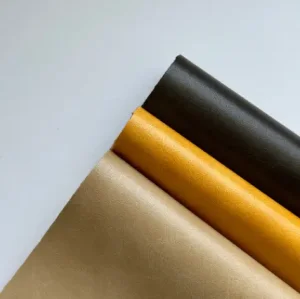
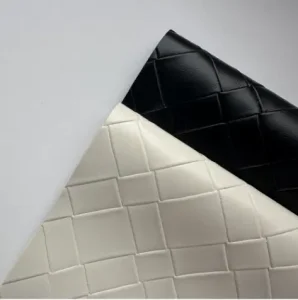
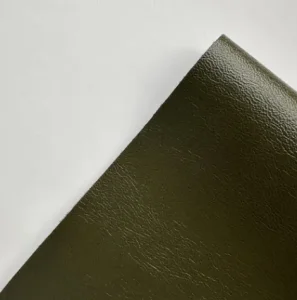
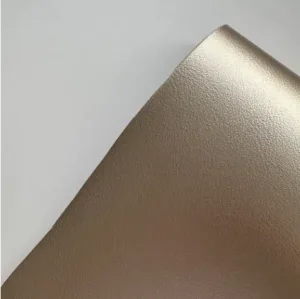
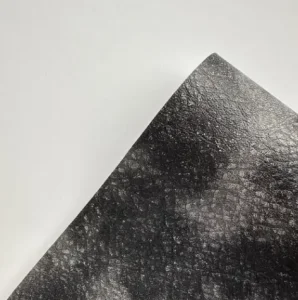
Extended Eco-Synthetic Leather Specifications
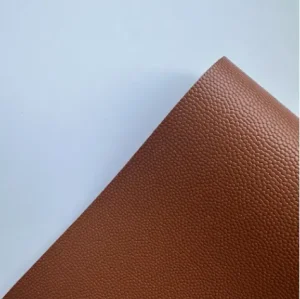
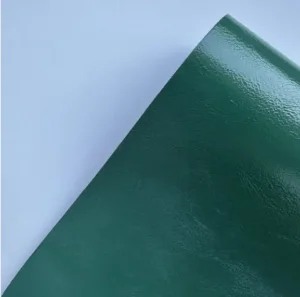
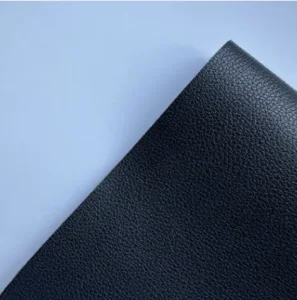
Explore specialized textures, structural caliper variations, and verified ecological grades engineered for Chicago OEM product integration.
Technical Clarifications
Frequently Asked Questions: Commercial & Industrial Sourcing
Direct answers covering testing protocols, shipping logistics to the Midwest, and custom compounding options.
How does JiangXin manage freight transit times and customs clearance into Chicago?
We operate established DDP (Delivered Duty Paid) shipping routes servicing the Chicago metropolitan area. Ocean transit routes deploy via West Coast intermodal rail corridors (Long Beach/Seattle direct to Chicago rail ramps in Elwood and Joliet) or direct water transit to Midwest hubs. Typical door-to-door transit schedules average 18 to 24 business days from production packaging, with all US Customs brokerage, tariff classifications (HTS), and bonded cargo hand-offs professionally managed.
Can your synthetic leather achieve CAL TB 133 and BIFMA standards without toxic FR chemicals?
Yes. By integrating non-halogenated organophosphorus char-forming systems and dense reactive barrier chemistry directly into the polyurethane back-coating, our contract upholstery formulations comfortably clear NFPA 260 Class 1, CAL TB 117-2013, and ASTM E84 Class A requirements without relying on banned chlorinated Tris, PBDEs, or toxic halogenated flame retardants.
What is the minimum order quantity (MOQ) for custom color-matching and embossed textures?
For standard catalog articles, minimum production orders start at 500 meters per colorway. For bespoke development—including custom Pantone or lab-dip color targets, proprietary grain embossing rolls, specified backing fabrics (such as recycled fleece, woven twill, or micro-fiber velvet), and adjusted biobased percentages—our engineering minimum is 1,000 linear meters. Prototyping swatches and sample yardage (5-10 meters) are dispatched via air express within 5 to 7 days.
How do your biobased formulations withstand winter polar vortexes in Illinois?
Unlike traditional vinyls (PVC) that stiffen, lose elasticity, and shatter along seams in freezing temperatures due to plasticizer migration, our aliphatic and polyether-based polyurethane resins maintain elastomer chain mobility down to -30°F (-34°C). The material easily passes the CFFA-6 Roller Cold Crack and ASTM D2136 sub-zero impact tests.
What specific chain-of-custody documentation accompanies RCS-certified roll deliveries?
Each delivery under our RCS program includes an official Transaction Certificate (TC) issued by an accredited third-party certification body (such as IDFL or Control Union) verifying the post-consumer recycled content source, lot number, batch weight, and strict processing adherence from polymer yarn extrusion to finished synthetic roll goods.
Accelerate Your Material Transition
Equip Your Midwest Product Pipeline with Future-Proof Eco Synthetics
Connect directly with JiangXin New Material’s technical engineering department. Request customized physical sample swatches, review comprehensive ASTM test certificates, and receive volume-tiered manufacturing quotes tailored for Chicago enterprise integration.