
Custom Eco-Friendly Synthetic Leather Manufacturers & Factories for the United States Market
Engineered to exceed US regulatory benchmarks: California Proposition 65, ASTM D6866 biobased verification, and RCS-traceable circular polymers for Tier-1 automotive, luxury footwear, contract upholstery, and consumer tech brands.
Featured Sustainable Leather Reference Articles
Engineered for immediate sampling and turnkey mass-production. Verified for tensile resistance, cold-crack resistance, low-VOC emission profiles, and seamless integration into US supply matrices.
-
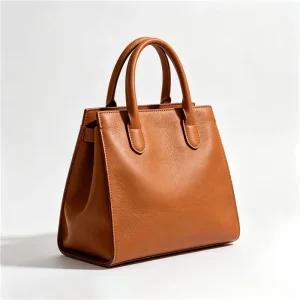
US Spec OEM
-
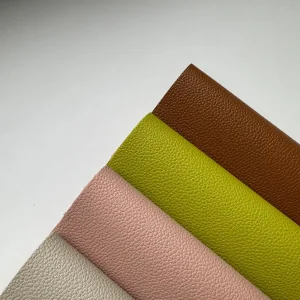
Heavy-Duty Contract
-
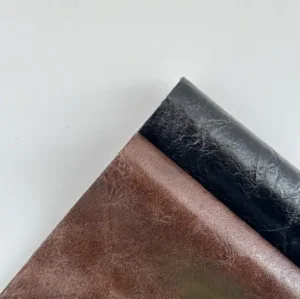
Bio-Engineered PU
-
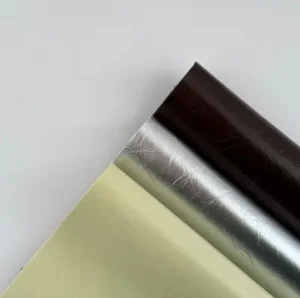
Solvent-Free
The United States Commercial & Industrial Landscape for Eco Synthetic Leather
Accelerating regulatory restrictions on petro-virgin polymers, combined with corporate decarbonization mandates, have transformed the North American synthetic leather ecosystem into a high-specification frontier.
Electric Vehicle (EV) Interiors & Tier-1 Tier Demands
The rapid shift of American automakers (Detroit OEMs, Texas, and West Coast EV innovators) toward 100% animal-free, low-emission interiors requires next-generation polyurethane (PU) that eliminates Dimethylformamide (DMFa) while passing rigorous DIN 75201 windshield fogging and taber abrasion testing.
- Low Fogging Indices: Gravimetric condensate < 0.5 mg, preserving driver vision.
- VOC Elimination: Strict alignment with GMW3059 and SAE J1756 interior air standards.
- Extreme Thermal Cycles: Resilient performance tested between -35°C and 110°C.
PFAS-Free & California Prop 65 Chemical Mandates
With US federal actions under the Toxic Substances Control Act (TSCA) and state-level bans on "forever chemicals" (PFAS/PTFE/PFOA) in apparel and furniture (e.g., California AB 1817, Maine, New York), American brands require guaranteed clean chemistries that maintain water-repellent performance without fluorinated polymers.
- Zero Added PFAS: 100% fluorochemical-free hydro-repellent surface finishes.
- Prop 65 Cleared: Phthalate-free (DEHP, DBP, BBP < 50 ppm) verified by SGS / Intertek.
- Heavy Metal Safeguard: Zero lead, cadmium, or chromium residues for juvenile contact.
Commercial Hospitality & Contract Furniture
Contract furniture specifiers and interior design architects across major US hospitality corridors demand materials that comply with the Association for Contract Textiles (ACT) heavy-duty abrasion guidelines, CAL 133 flammability resistance, and compatibility with EPA-registered quaternary hospital disinfectants.
- Severe Abrasion: 100,000+ double rubs on Wyzenbeek (ASTM D4157) wire screen.
- Chemical Resistance: Impervious to 10% sodium hypochlorite (bleach) dilutions.
- Hydrolysis Longevity: 7-to-10-year tropical chamber aging without delamination.
Technical Roadmap: Waterborne PUD, Bio-Carbon & Solvent-Free PU
Breaking the trade-off between environmental sustainability and industrial durability through three validated engineering platforms manufactured at our Yingde campus.
Transitioning from Petrochemical Dependency to High Bio-Mass Yields
Traditional PU synthetic leathers consume significant petroleum fractions and rely on dimethylformamide (DMFa) solvent baths for phase-inversion coagulation. JiangXin New Material has developed a closed-loop reactive extrusion process and waterborne polyurethane dispersion (PUD) architecture that fundamentally eliminates toxic emissions while integrating biobased organic carbons.
| Performance Metric | Petro-Solvent PU | JiangXin Biobased PU | JiangXin 100% Solvent-Free |
|---|---|---|---|
| Biobased Carbon (%) | 0% (Petro Feedstock) | 30% - 75% (ASTM D6866) | Optional 20% - 50% |
| Residual DMFa Content | 30 - 300 ppm | < 5 ppm (ND) | 0.00 ppm (Solventless) |
| Carbon Footprint (LCA) | Baseline (High) | -42% vs Conventional | -58% (Photovoltaic Line) |
| Hydrolysis Resistance | 3 - 5 Years (Jungle Test) | 7 - 10 Years (10-Week) | 10+ Years (ISO 1419) |
| Tensile & Tear Matrix | Standard (DIN 53356) | Reinforced rPET Microfiber | Ultra-High Micro-cellular |
| Substrate Integrity | Virgin Polyester | RCS Traceable Recycled | GRS Post-Consumer Yarn |
Need Custom Texture Matching for your US Tech Pack?
Send our senior engineering team your target master swatch or Pantone color code. We fabricate custom laboratory hand-swatches within 72 hours, complete with raw material certificates and RSL testing validation.
Engineered Application Verticals Across the United States
Tailored grain structures, tactile soft-touch profiles, and backing textiles mapped directly to high-volume North American manufacturing specifications.
Performance Footwear & Athleisure
High flex-fatigue life under dynamic walking stress is non-negotiable for Portland and Boston-based footwear developers. Our biobased microfibers withstand over 150,000 Bally flex cycles at room temperature and 50,000 cycles at -10°C without micro-fissures.
- Bally Flex Endurance: > 100,000 flexes (ASTM D6182).
- Bonding Adhesion: Optimized for cold-cement and water-based PU glues.
- Breathability Control: Microporous matrix supporting natural vapor transfer.
Consumer Tech Sleeves & Protective Hardware
Silicon Valley hardware brands and accessory manufacturers prioritize ultra-slim calipers (0.5 mm - 0.8 mm) with exceptional dimensional stability, high stain resistance against cosmetics and skin sebum, and anti-yellowing UV resistance under ASTM G154 cycles.
- Dimensional Caliper: ± 0.03 mm uniform tolerance along entire roll width.
- Skin Sebum Immunity: Tested with synthetic sebum over 72-hour exposure.
- UV Weatherability: Blue Wool Scale Grade 4+ after 200 hours QUV.
Luxury Handbags, Luggage & Fashion Goods
New York fashion houses and designer accessory brands require authentic full-grain or smooth calfskin drape without ethical compromise. Our solvent-free formulations produce deep, dimensional embossing with high edge-burnishing capability and luxury hand-feel.
- Edge-Paint Compatibility: High thermal anchorage during edge-coating.
- Creep & Sag Resistance: Excellent recovery after sustained tension.
- Surface Tactility: Silky, matte, or wax-pull finishes customized to order.
China Supply Chain Resilience: The JiangXin Manufacturing Advantage
Combining capital-intensive advanced polymer equipment, fully consolidated domestic supply ecosystems, and dedicated renewable energy infrastructure to eliminate lead-time bottlenecks for American procurement teams.
Solar-Powered Clean Campus in Yingde, Guangdong
Spanning 135,733 square meters in Yinghong Industrial Park, our production campus is engineered for low-carbon manufacturing. A massive 4.68 MW rooftop photovoltaic array offsets clean electrical power across automated coagulation, dry-process PU lines, and automated surface treatment rooms, visibly lowering Scope 3 carbon allocations for our international partners.
- Automated Waste Management: On-site chemical recovery and biological wastewater purification.
- Daylit Energy-Saving Architecture: Floor-to-ceiling tempered glass workshops minimizing artificial lighting.
- Patented Heat Recovery: Exhaust thermal exchangers recycling up to 74% of curing energy.
End-to-End Vertical Supply Chain Integration
Unlike converters or assembly workshops that outsource resin synthesis and substrate knitting, JiangXin oversees base microfiber spinning, circular knitting, resin formulation, surface transfer roll etching, and topical coating under one roof. This upstream control gives US buyers rock-solid lot-to-lot batch consistency (Delta E < 0.5) and agility.
- Capacity Scalability: 16+ million linear meters per year guarantees uninterrupted container supply.
- Rapid Color Matching: Computerized spectrophotometers deliver approved lab dips in 72 hours.
- Textile Heritage: GRS and RCS-certified woven, non-woven, and recycled fleece backings.
Compliance Safeguards, Trade Tariffs & US Logistics Integration
Streamlining the procurement pipeline from factory gate to US East and West Coast distribution centers with transparent chain-of-custody documentation.
Traceable Chain of Custody (RCS & GRS)
Greenwashing risks can cause catastrophic brand damage. For recycled lines, every commercial container is backed by official Transaction Certificates (TC) issued by accredited certification bodies under Textile Exchange protocols, proving recycled origin down to raw post-consumer PET bottles.
HTS Classification & Tariff Advisory
Navigating Section 301 tariffs requires precise product classification. Our export compliance desk assists US importers in properly declaring Harmonized Tariff Schedule (HTS) codes (Chapter 5903 vs Chapter 3921) based on exact resin weight ratios and textile substrate construction.
DDP / CIF Freight to US Hubs
Whether your freight routes through the Port of Los Angeles / Long Beach, Oakland, Savannah, or New York / New Jersey, JiangXin coordinates seamlessly with leading freight forwarders to provide stable container bookings, moisture-controlled ocean packing, and complete customs clearance packages.
Frequently Asked Questions by US Sourcing Teams
Direct technical answers addressing physical testing, restricted substance lists (RSL), MOQ parameters, and laboratory verification.
How does JiangXin synthetic leather comply with California Proposition 65? +
Our eco-friendly synthetic leather formulations are engineered strictly free of intentionally added phthalates (DEHP, DBP, BBP, DINP, DIDP, DnOP) and heavy metals (lead, cadmium, hexavalent chromium). Every production lot can be accompanied by independent third-party test reports from ISO 17025 accredited laboratories (such as SGS, Intertek, or TÜV) proving concentration limits well below safe harbor levels, eliminating the requirement for Prop 65 warning labels on your finished consumer products.
What is the difference between Biobased PU and Recycled (RCS) synthetic leather? +
Biobased Synthetic Leather utilizes renewable plant-based monomers (such as castor beans or agricultural starches) to synthesize the polyurethane polyol chains, displacing fossil-fuel carbon fractions. Biobased content is verified via radiocarbon dating in accordance with ASTM D6866.
RCS/GRS Recycled Leather focuses on the substrate and polymer layers utilizing post-consumer or post-industrial recycled materials (such as recycled polyester fibers derived from PET bottles). Recycled claims are audited through a strict chain-of-custody Transaction Certificate (TC) tracking system.
How do your materials meet upcoming US state bans on PFAS ("Forever Chemicals")? +
In response to legislation in California (AB 1817), Maine, and New York prohibiting intentionally added per- and polyfluoroalkyl substances (PFAS) in apparel and textile products, JiangXin utilizes advanced organosilicone and modified waterborne polyurethane surface chemistry. This provides oil-repellency, water-repellency (spray ratings > 90 on AATCC 22), and stain barrier performance with 0.00% fluorochemical additives, confirmed by total fluorine combustion analysis (< 50 ppm limit of detection).
What are the standard Minimum Order Quantities (MOQs) and lead times for custom orders? +
For stock collection articles and catalog reference grains, our MOQ is as low as 300 linear meters per color. For fully custom color matching (Pantone TPX/TCX) and specialized functional treatments (e.g., specific cold-crack resistance, antimicrobial, or Cal 133 flame retardancy), standard MOQ is 500 to 1,000 meters. Lab swatches take 3 to 5 business days, trial sample rolls (50-100m) take 7 to 10 days, and full 40-foot container bulk production runs are typically completed in 15 to 20 business days.
Can your synthetic leather achieve CAL 133 or FAA flammability specifications? +
Yes. By formulating non-halogenated, environmentally sound flame retardant additives directly into the polyurethane matrix and pairing with inherently flame-resistant backing fabrics (such as treated aramid or glass-fiber scrims), our materials achieve compliance with California Technical Bulletin 133 (CAL 133), TB 117-2013, NFPA 260 Class 1, and Federal Aviation Regulation (FAR) 25.853 vertical flammability requirements.
How is cold crack and hydrolysis resistance evaluated for automotive and outdoor goods? +
We perform rigorous climate chamber simulations in-house. Cold-crack resistance is tested via cold mandrel bend or Bally flex testing inside sub-zero chambers down to -30°F (-35°C) to ensure materials do not fracture in northern North American winter conditions. Hydrolysis is evaluated using accelerated aging (Jungle Test) at 70°C and 95% relative humidity for 5 to 10 weeks, simulating up to 10 years of real-world subtropical service without bubbling, peeling, or tackiness.
Comprehensive Eco-Friendly Synthetic Leather Catalog for North America
Explore our full line of specialized textures, high-performance grains, and ultra-low carbon formulations engineered for Tier-1 brand programs.
-
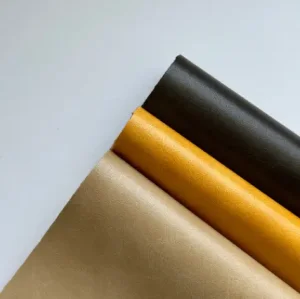
Bio-Polyol Matrix
-
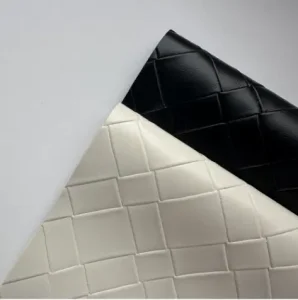
100% Animal-Free
-
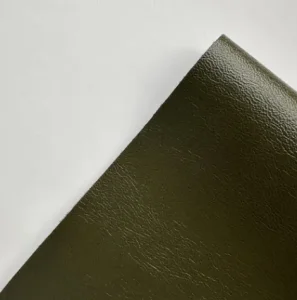
RCS Recycled Base
-
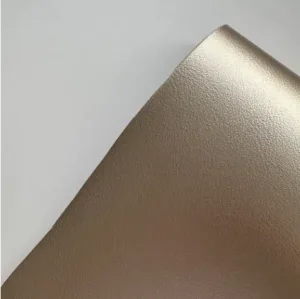
Hydrolysis 10-Yr
-
Low-Carbon Footprint
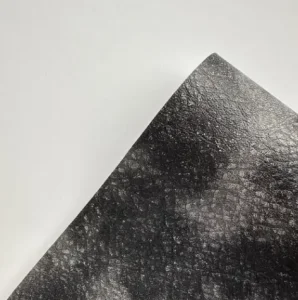
-
Waterborne System
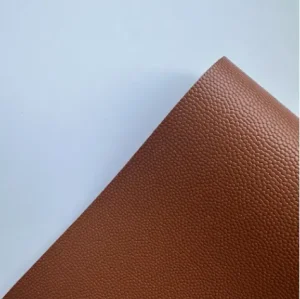
-
Anti-Scratch Shield
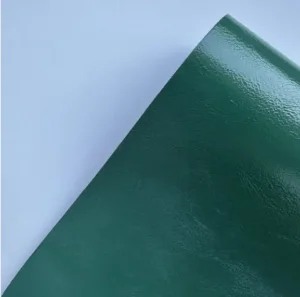
-
Biobased Grain
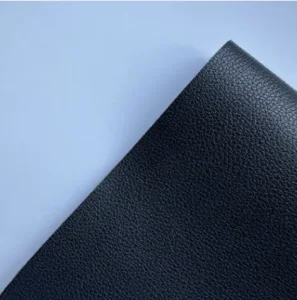
Elevate Your Sustainable Material Standard in the United States
Join over 300 forward-thinking international brands that rely on JiangXin New Material for verified biobased carbon, zero-DMFa chemistry, and resilient ocean freight fulfillment. Contact our sales engineering desk today to order customized sample books, physical color cards, and third-party RSL audit dossiers.