High-Performance Synthetic Leathers & Substrates
Verified structural consistency, high tensile micro-matrices, and low VOC footprint suited for high-throughput automated manufacturing.
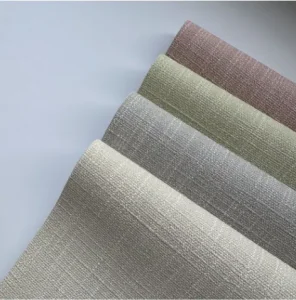
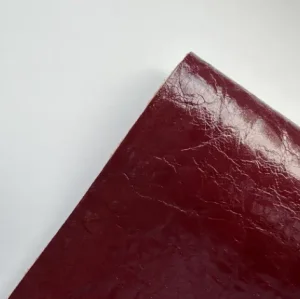
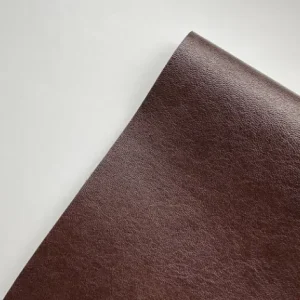
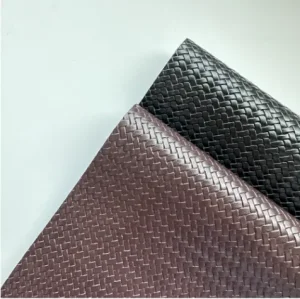
Macro Dynamics & Ultra-Fine Fiber Evolution
From legacy wet-coagulated PVC to sea-island conjugate bi-component microfibers: how technical performance metrics are outpacing natural leather hide.
Three-Dimensional Bundle Microstructure
Ultra-fine fiber synthesizes the histological geometry of natural collagen bundles. Utilizing island-in-the-sea composite spinning technology, individual filaments achieve diameters below 0.05 denier (approx. 2 to 4 microns), creating an interconnected 3D porous nonwoven matrix that delivers exceptional flex-endurance and tear resistance.
Solvent-Free & Water-Borne Polyurethane
The historical reliance on N,N-Dimethylformamide (DMFa) coagulation is superseded by advanced water-borne polyurethane (WPU) dispersion and solvent-free reactive polyurethane hot-melt coatings. This prevents VOC outgassing, eliminates hazardous occupational runoff, and yields zero extractable organic solvents.
Decarbonization via Biobased Polyols
Next-generation ultra-fine synthetic skins replace petroleum-derived polyols with industrial-grade, non-food crop vegetable fatty acids, succinic acids, and corn-derived bio-diols. This drop-in green chemistry achieves verified biogenic carbon content while maintaining hydrolytic stability exceeding 5–10 years under tropical test parameters.
Enterprise Sourcing Demands & Specification Thresholds
Tier-1 automotive, luxury accessory, and consumer electronic procurement divisions navigate distinct technical hurdles when adopting microfibers.
Automotive Interior Durability
Demands resistance to UV degradation up to 1200 kJ/m² (DIN EN ISO 105-B06), low-fogging behavior under DIN 75201 to eliminate windscreen haze, flammability rating compliance per FMVSS 302, and cold-crack tolerance below -30°C.
Footwear & Athletic Performance
Requires Martindale rub resistance surpassing 100,000 dry cycles and 50,000 wet cycles (ISO 12947-2), Bally flex durability exceeding 150,000 rotations at room temperature, and moisture vapor permeability over 3.0 mg/cm²·h.
Consumer Tech & Wearables
Focuses on synthetic perspiration resistance, oleophobic surface finishes to prevent sebum degradation, chemical tolerance against 75% isopropyl alcohol wipe-down tests, and tight colorimetric tolerances (ΔE < 0.5).
Luxury Handbags & Apparel
Requires natural drape coefficient, specific edge-burnishing capability, non-directional surface tension for optimal edge-dye absorption, zero grain-delamination under stitching tension, and customized grain definition.
End-to-End Enterprise Material Implementations
Engineered technical solutions resolving compliance friction, production bottlenecks, and carbon auditing mandates.
Chain-of-Custody Mass Balancing
We supply complete physical trace-mapping for all post-consumer recycled (PCR) polyesters. Every production run is cross-referenced with Textile Exchange Transaction Certificates (TCs), ensuring your brand fulfills Scope 3 emissions disclosure protocols without risk of greenwashing liabilities.
Automated In-Line Defect Interception
Conventional natural leather yields poor cutting efficiencies (averaging 60–70%) due to biological surface scarring. Our continuous roll-to-roll ultra-fine fiber delivers clean, defect-free rolls up to 1.40 meters in width, increasing automatic CNC knife and laser cutting yields beyond 95%.
Surface Micro-Topography Engineering
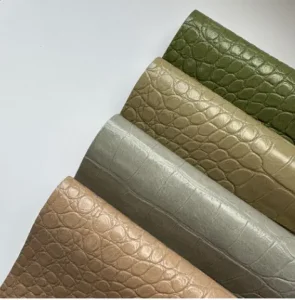
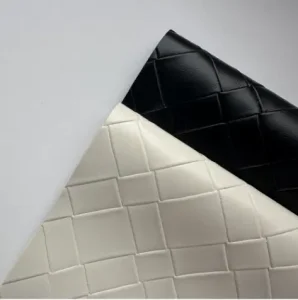
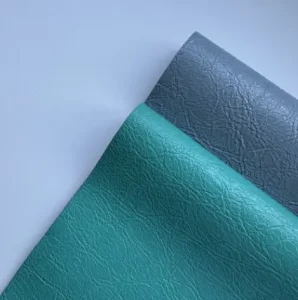
Utilizing high-precision silicon release paper and micro-engraved steel embossing cylinders, we tune touch dynamics from silky nappa hands to dense pull-up oil-waxes and structured pebbled textures, while tailoring surface gloss indices across 1.0 to 15.0 Gardner gloss units.
Global Compliance Architecture & Local Execution
Proactive regulatory monitoring ensures zero disruption across changing EU, North American, and Asia-Pacific import barriers.
EU REACH & SVHC Screening
Formulations undergo strict screening across more than 230 Substances of Very High Concern (SVHC) per EU Regulation (EC) No 1907/2006. Production is verified free of restricted azo dyes, organotin compounds, short-chain chlorinated paraffins (SCCPs), and per- and polyfluoroalkyl substances (PFAS).
USDA BioPreferred & ASTM D6866
Our biobased series undergoes accelerated mass spectrometry radiocarbon analysis (ASTM D6866 Method B) to verify biogenic carbon fraction vs. fossil-derived content, providing indisputable third-party validation for consumer carbon labeling.
Higg FEM & amfori BSCI Clean Facilities
Manufacturing operations at our 135,733 m² Yingde facility operate under the Higg Facility Environmental Module (Higg FEM) for energy, water, and chemical emissions transparency, supported by amfori BSCI auditing for ethical labor practices.
R&D Strategic Roadmap (2026–2030)
Continuous investment in clean chemistry, molecular upcycling, and smart surface engineering.
100% Solvent-Free WPU
Eliminate residual organic cosolvents in topcoat polymers, transitioning to 100% solids water-blown reactive PU chemistry across all lines.
Circular Monomer Depolymerization
Integrate chemical glycolysis recycling to convert post-consumer microfiber off-cuts back into virgin-grade polyester chips.
Mycelium & Bacterial Cellulose Hybrids
Deploy bio-fabricated hybrid matrices blending ultra-fine bi-component filaments with structural mycelium networks for circular biodegradability.
Self-Healing Smart Microfiber Surfaces
Integrate microencapsulated dynamic polymers for thermal self-repair of fine micro-scratches and embedded thermal management coatings.