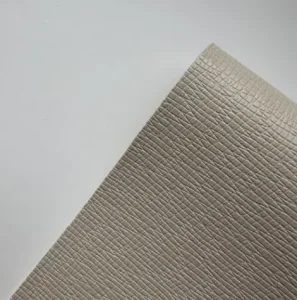
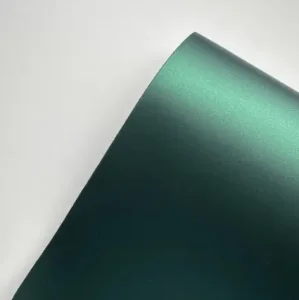
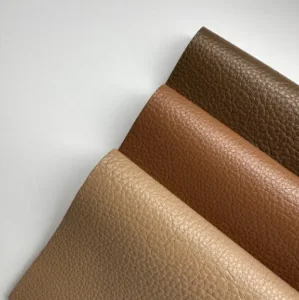
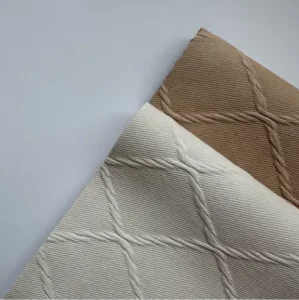
High-Performance Eco Leather Specifications
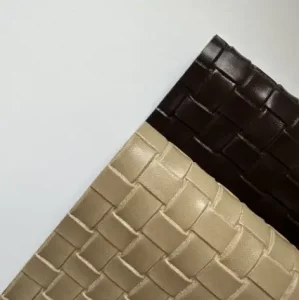
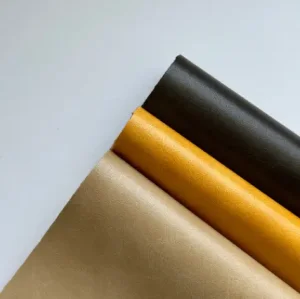
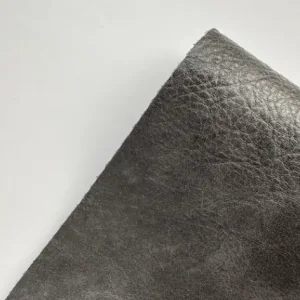
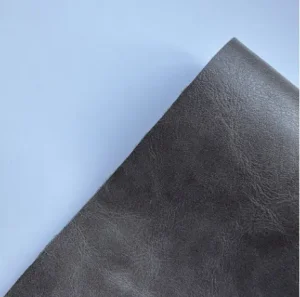
Explore our laboratory-verified, solvent-free synthetic leather substrates ready for custom surface graining, technical backing adaptations, and commercial bulk production.
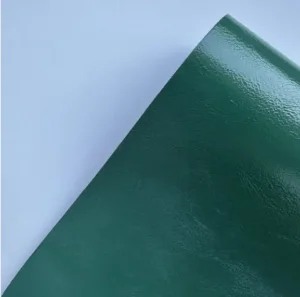
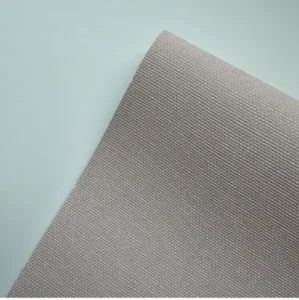
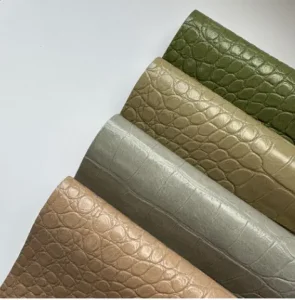
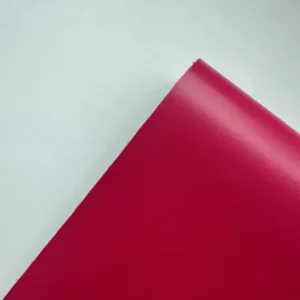
The Global Shift: Eliminating Solvents from Artificial Surfaces
Enterprise procurement mandates are moving beyond superficial eco-claims toward quantifiable lifecycle decarbonization and strictly non-toxic manufacturing processes.
Zero-DMF/DMAC Mandates
Traditional wet-process PU synthesis relied extensively on Dimethylformamide (DMFa), an organic solvent classified under EU REACH as a Substance of Very High Concern (SVHC). Major retail conglomerates now require zero trace concentrations in contact goods.
- Total avoidance of reproductive toxicity hazards
- Elimination of solvent distillation & leakage exposure
- Odor-free, ultra-low total VOC emission ceilings
Scope 3 Emissions Reduction
Procurement executives face stringent carbon tracking under the Corporate Sustainability Due Diligence Directive (CSDDD). Solvent-free chemistry avoids high-temperature thermal ovens required for solvent recovery, drastically dropping energy use per meter.
- Up to 45% reduction in production thermal consumption
- Integration with plant-based biobased feedstocks
- Calculated Product Carbon Footprint (PCF) reports
Severe Mechanical Durability
Early water-borne synthetics faced criticism for premature hydrolysis. Modern solvent-free polyurethane systems employ 100% solid prepolymers, forming dense cross-linked matrix nets that surpass conventional PU in wear and weather resistance.
- 10+ Year Jungle Hydrolysis Resistance (Bally & Taber)
- Extreme Cold-Crack Thresholds (-30°C performance)
- Enhanced peel adhesion across woven and non-woven backs
Material Class Comparison Matrix
A technical side-by-side evaluation between standard chemical process leather and our next-generation solvent-free polymer systems.
| Evaluation Parameter | Traditional Solvent PU | Water-Based Polyurethane | Solvent-Free Hot Melt (100% Solids) |
|---|---|---|---|
| VOC & Odor Level | High (>100 ppm residual DMFa) | Very Low (<10 ppm VOC) | Undetectable (Zero VOC / Odor-Free) |
| Hydrolysis Resistance (Jungle Test) | 3 - 5 Years Average | 5 - 7 Years Standard | 10 - 15 Years High Polycarbonate |
| Peel Adhesion Strength | Moderate (3.0 - 4.0 kg/3cm) | Good (3.5 - 4.5 kg/3cm) | Superior (>5.5 kg/3cm Interlocking) |
| Energy Use in Production | High (Solvent evaporation towers) | Moderate (Water removal dry cycles) | Ultra-Low (Direct reaction extrusion) |
| REACH / California Prop 65 | Requires regular SVHC waivers | Fully Compliant | Inherently Compliant & Food-Grade Safe |
Cross-Sector Turnkey Solutions
Supplying Tier-1 contract manufacturers with verified supply-chain traceability, documented chemical transparency, and localized compliance support.
Athletic Footwear & Apparel
Engineered for high dynamic flex fatigue and sweat acidity tolerance. Backed with post-consumer recycled (rPET) textile bases certified under Textile Exchange RCS.
- High-frequency welding and stitch-line integrity
- Cold-flex resistance surpassing 100,000 cycles
- Customized microfiber backings matching real nubuck grain
Automotive & Mass Transit
Designed to comply with rigorous passenger cabin air quality directives, eliminating glass hazing and harsh chemical outgassing in closed cockpits.
- Meets OEM requirements for FMVSS 302 flame retardancy
- ISO 105-B06 Xenon arc accelerated UV weathering stability
- Anti-soil, dye-transfer block, and disinfectant cleanability
Luxury Handbags & Contract Upholstery
Balancing supple tactile drapery with abrasion resistance up to 300,000 Martindale rubs, providing brands with high-yield cutting surfaces.
- Consistent roll-to-roll color fidelity (Delta E < 0.5)
- Deep embossed grains without thermal deformation
- Bio-based polyurethane blends derived from industrial field corn
Yingde Campus: Clean Synthesis at Industrial Scale
Spanning 135,733 square meters in Guangdong, China, JiangXin New Material operates automated lines built under petrochemical standards with closed-loop green engineering.
Solar Integration
4.68 MW rooftop photovoltaic installation generating millions of kWh of renewable clean power annually, substantially offsetting carbon per production unit.
Audit-Ready Dossiers
Full support for Transaction Certificates (TCs), Higg Index FEM reporting, USDA BioPreferred labels, and restricted substance chemical declaration packs.
Global Export Logistics
Direct supply to factories in Vietnam, Cambodia, Indonesia, Mexico, Europe, and the US with consolidated customs clearance and standardized roll packaging.
Fast Rapid Sampling
Rapid 3 to 5 day laboratory color-matching, custom roller graining, and physical test strip dispatch for pre-production approval.
R&D Roadmap: Circular Bio-Polymers
How our material laboratories are progressing synthetic leather from reduced fossil fuels to complete closed-loop circular systems.
Phase 1: Bio-Carbon Escalation
Elevating renewable carbon content in polyol formulations from the current baseline of 30% to over 70% using agricultural non-food byproduct polyols, minimizing competition with global food supplies.
Phase 2: Recyclable Monomaterial Assemblies
Eliminating separation bottlenecks at post-consumer lifecycles by developing pure thermoplastic polyurethane (TPU) skin layers combined with 100% rPET backings, enabling mechanical circular re-pelletization.
Phase 3: Digital Product Passports (DPP)
Embedding batch-specific blockchain metadata directly into physical rolls, providing end consumers and recycling processors with immediate data regarding chemical purity and carbon footprints.
Frequently Asked Questions
Clear, definitive answers directly addressing engineering, chemistry, international logistics, and testing criteria.
What distinguishes 100% solvent-free synthetic leather from waterborne PU?
Waterborne PU disperses polymer resins in water rather than harsh solvents, requiring intense thermal drying to evaporate the water. 100% solvent-free PU involves high-solid prepolymers that react directly on the substrate with zero volatile dispersion agents. This creates a denser polymer structure, uses less energy, and leaves zero solvent residues.
How do you verify biobased carbon content for retail product labeling?
We test biobased content using ASTM D6866 standard radiocarbon (C14) dating. This measures the exact ratio of modern plant-derived carbon versus fossil carbon. Our certified articles supply verifiable percentages acceptable for the USDA BioPreferred Program and DIN CERTCO label registrations.
Can you provide Transaction Certificates (TCs) for RCS-certified articles?
Yes. Our manufacturing facilities are fully audited under the Recycled Claim Standard (RCS) chain of custody by accredited third-party certification bodies. We supply official Transaction Certificates (TCs) linking your purchase order to certified recycled feedstocks.
Does solvent-free PU meet automotive flammability and odor benchmarks?
Yes. By formulating without volatile organic compounds, solvent-free PU passes strict passenger cabin tests, including VDA 270 odor evaluation and ISO 6452 fogging tests. It can also be formulated with non-halogenated flame retardants to pass FMVSS 302 specifications.
What is the standard Minimum Order Quantity (MOQ) and production lead time?
Standard production runs start at 500 to 1,000 linear meters per color and grain specification. Custom development swatches and pilot trials take 5 to 7 working days, while full container bulk orders ship within 15 to 20 days.
Which backing fabrics are available for specialized shoe and furniture designs?
We laminate our solvent-free skins across a wide range of substrates, including post-consumer recycled rPET woven fabrics, circular knitted jerseys, ultra-fine microfibers, and fire-resistant twills, matched to your elongation and tensile requirements.
Commercial Solvent-Free & Upcycled Series
Explore our additional wholesale product lines, engineered for volume manufacturing, strict chemical safety, and durable performance across diverse applications.