
High-Performance Industrial Sewing Faux Leather Collections
Engineered for high-yield cut-and-sew operations. Our materials feature micro-tensile grain stability, non-fraying edge profiles, and full compatibility with high-speed automated sewing and CNC cutting machinery.
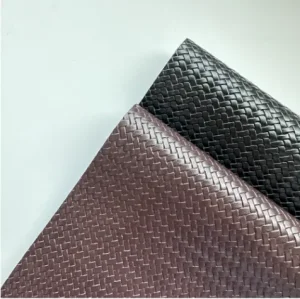
OEM Eco-Friendly Sustainable Synthetic Leather-9348
Explore Specification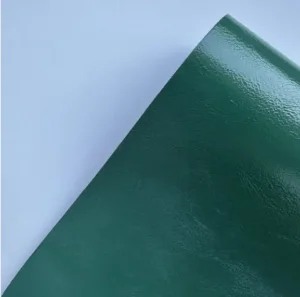
High-Quality Low-Impact Green Synthetic Leather-9333
Explore Specification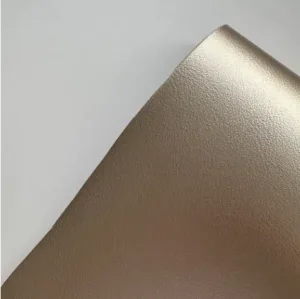
High-Quality Eco-Friendly Sustainable Synthetic Leather-9081
Explore Specification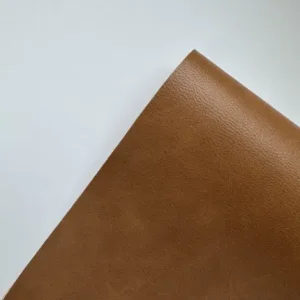
OEM Renewable Bio-Based Synthetic Leather-9020
Explore Specification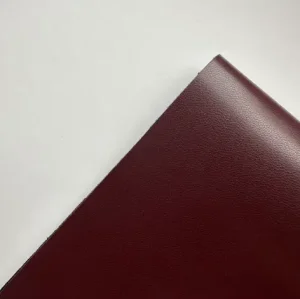
Custom Sustainable Bio-Based Vegan Leather-2002
Explore Specification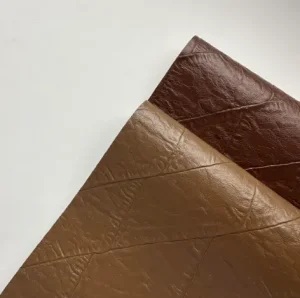
OEM Non-Toxic Vegan Eco Synthetic Leather-9266
Explore Specification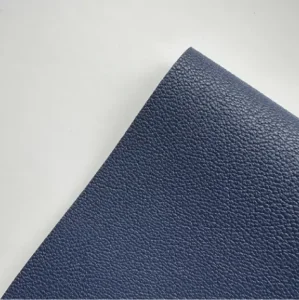
Wholesale Green Circular Synthetic Leather-9168
Explore Specification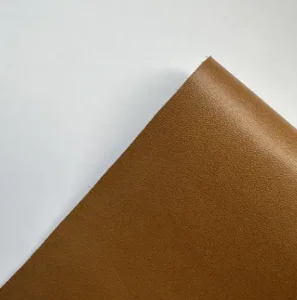
Custom Plant-Sourced Bio-Based Synthetic Leather-9164
Explore SpecificationEngineering Structural Integrity into Sewing Faux Leather
In automated cut-and-sew operations, mechanical failure usually occurs at needle entry points. Yingde City JiangXin New Material Co., Ltd. (JX.ECO) integrates high-density microfiber substrates with cross-linked aqueous polyurethane matrices to ensure unmatched seam strength and tensile stability.
Micro-Needle Puncture Resistance
Sewing faux leather requires exceptional tear resistance at the needle perforations. Our formulations provide a dense fiber lock that prevents stitch slippage and hole widening under persistent multi-directional mechanical stress.
Solvent-Free Aqueous Processing
By eliminating DMF, toluene, and plasticizers from our production lines, our sewing faux leather remains consistently supple across -20°C to 80°C environments, eliminating brittle fracture along seam lines.
Optimized Surface Slip for CNC Feeds
Specially calibrated top-coat friction coefficients eliminate stick-slip vibrations in automated multi-axis industrial sewing machines, drastically reducing thread breakage and needle heat build-up.
Shifting Sourcing Requirements for Sewing Faux Leather
Tier-1 automotive interior brands, contract furniture makers, and luxury accessory fashion houses face stringent supply-chain auditing. Material procurement must balance technical performance with transparent carbon reporting.
Carbon Traceability
Global brands demand Scope 3 emission verification. JX.ECO leverages on-site solar energy (4.68 MW) and Life Cycle Assessment (LCA) data to prove significant carbon reduction across our biobased lines.
RCS Chain-of-Custody
To eliminate greenwashing risks, our recycled synthetic leathers are certified under the Recycled Claim Standard (RCS), delivering unbroken traceability from post-consumer PET chips to finished sewing yardage.
Zero-RSL Chemical Safety
Complete compliance with EU REACH SVHC lists, RoHS, OEKO-TEX 100, and 6P phthalate-free requirements protects brands from cross-border customs holds and consumer product recalls.
Lot-to-Lot Color & Grain Match
Automated spectral colorimetry and digital embossing precision guarantee that bulk rolls match pilot master swatches within Delta E < 0.8, avoiding panel mismatches on sewing assembly lines.
Macro-Industry Solutions for Demanding Applications
Sewing faux leather demands varied stress profiles depending on whether it is bound for high-abrasion seating, dynamic athletic footwear, or tactile luxury apparel.
| Application Category | Primary Engineering Hurdle | JX.ECO Material Solution | Key Verification Standard |
|---|---|---|---|
| Contract Furniture & Automotive Upholstery | Seam slippage under repetitive cyclic tension; degradation from sweat and hydrolytic cleaning agents. | Multi-axial knitted recycled backing paired with cross-linked polycarbonate-polyurethane coating. | Martindale Abrasion > 100,000 cycles (ISO 12947); Hydrolysis resistance > 10 years (Jungle Test). |
| Athletic Footwear & Boot Uppers | Needle hole elongation, high-stress flex cracking at toe box, low-temperature brittle fracture. | Biobased thermoplastic polyurethane (bio-TPU) integrated with non-woven ultra-fine microfiber matrices. | Bally Flexometer > 100,000 cycles at -20°C (ISO 5423); Seam Strength > 250 N (ISO 13936-2). |
| Luxury Bags & Small Leather Goods | Edge fraying during clean cut-and-turn construction; stiffness during tight perimeter topstitching. | Solvent-free waterborne PU with balanced plasticizer-free polymer soft segments on densified microfiber. | Tear Strength > 60 N (ISO 3377-2); Taber Abrasion CS-10 (ASTM D3884); REACH SVHC non-detectable. |
| Protective Apparel & Heavy Outerwear | Wind penetration at seam punctures, stiff hand feel, and surface peeling in wet environments. | High-breathability microporous aqueous PU barrier applied to GRS-certified recycled polyester fleece. | Hydrostatic Head > 10,000 mm (ISO 811); Stitch Pull-Out Force > 180 N; OEKO-TEX Standard 100 Class I. |
Localized Support & International Compliance Assurance
Operating a 135,733 m² campus in Yingde, Guangdong, JX.ECO functions as a direct extension of your brand’s technical engineering and compliance departments.
Full Dossier Documentation
Every shipment is delivered with verified certificates of analysis (COA), RCS Transaction Certificate (TC) eligibility, ASTM D6866 biobased carbon fraction test data, and localized customs clearance paperwork.
Rapid Sampling Lab-to-Line
Our dedicated rapid-prototyping lines formulate customized grains, gauges (0.6mm – 2.2mm), colors, and backing cloth options within 5–7 business days, shortening the transition from tech pack approval to bulk roll out.
On-Site Social & Eco Audit Support
We invite brand procurement teams and third-party inspectors to review our Higg Index FEM assessment, amfori BSCI working condition records, on-site biological wastewater facility, and clean energy arrays.
Explore Biobased, Recycled & Specialized Formulations
Select from our industry-proven references below to match your tech pack requirements for tensile modulus, stitch hold, grain geometry, and international eco-certifications.
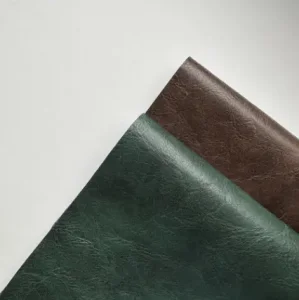
Sustainable Recycled Synthetic Leather with RCS-9240
Explore Specification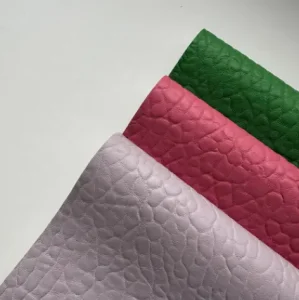
Wholesale Bio-Based Renewable Synthetic Leather-9293
Explore Specification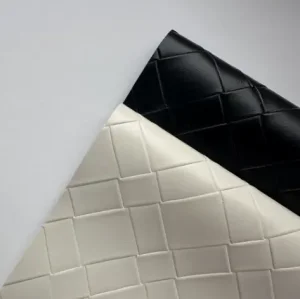
OEM Plant-Derived Bio-Based Synthetic Leather-9338
Explore Specification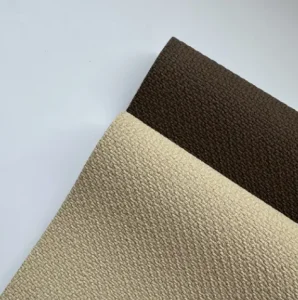
High-Quality RCS Recycled Green Synthetic Leather-9321
Explore Specification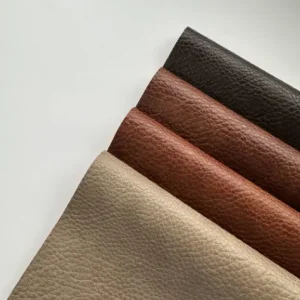
Custom RCS Recycled Synthetic Leather-9088
Explore Specification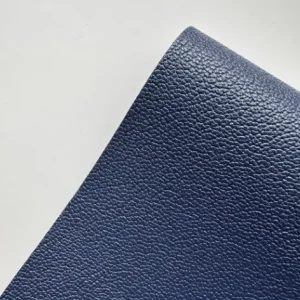
OEM RCS Certified Recycled Synthetic Leather-9168
Explore Specification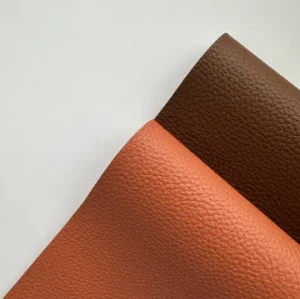
Custom Bio-Based Renewable Synthetic Leather-9109
Explore Specification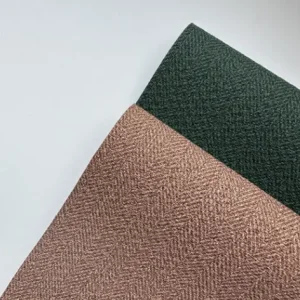
High-Quality Eco-Certified Synthetic Leather-9323
Explore SpecificationFrequently Asked Questions on Wholesale Sewing Faux Leather
Critical answers for sourcing executives, lead patternmakers, and factory engineering managers regarding specifications, machinery tolerances, and compliance.
How does sewing faux leather prevent needle perforations from tearing?
Tear failure occurs when needle penetrations sever loose base fibers. Our sewing synthetic leathers incorporate high-density spunlace or micro-denier filament backing substrates saturated with an aqueous polyurethane lock coat. This structure allows needle entry while maintaining omnidirectional tensile cohesion, preventing stitch blowout under high tension.
What needle gauges and thread combinations work best with your materials?
For medium-weight grades (0.9mm – 1.2mm), we recommend titanium-coated needles (size 90/14 to 110/18) with a light ballpoint (SES) or narrow wedge (PCL) point to pierce cleanly without slicing polymer chains. Pair with continuous filament bonded nylon or recycled polyester threads (V-69 or Tex 70) for maximum seam endurance.
How do you verify the authenticity of biobased and recycled content?
Biobased formulations are verified through ASTM D6866 standard radiocarbon (C14) testing, quantifying the exact renewable plant-derived carbon content. Recycled materials are backed by formal Recycled Claim Standard (RCS) chain-of-custody transaction certificates from Textile Exchange accredited registrars.
Can materials be custom formulated for extreme cold or fire safety?
Yes. Functional chemical systems can be added to the polyurethane formulation during coating. We achieve cold-crack resistance down to -30°C for sub-zero outdoor gear, and integrate non-halogenated flame retardants complying with California TB 117-2013, BS 5852 Crib 5, and FMVSS 302 automotive standards.
What is the standard production lead time and minimum order quantity (MOQ)?
Standard color lab dips and swatches take 3 to 5 business days. Full production trial batches are completed within 10 to 14 days. Our minimum order quantity for custom thickness, emboss, or shade formulation is typically 500 to 1,000 running meters per specification, with volume scaling up to 16M+ meters annually.
How does your factory ensure compliance with EU REACH and zero-solvent laws?
Our 135,733 m² campus was built around clean-technology principles. We replace traditional DMF-based wet coagulation lines with solvent-free hot-melt and waterborne dispersion systems. All pigments and additives are pre-screened against the ECHA SVHC list, ensuring full compliance for EU, North American, and Asian import markets.