
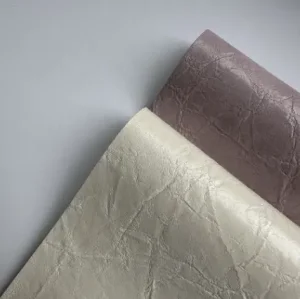
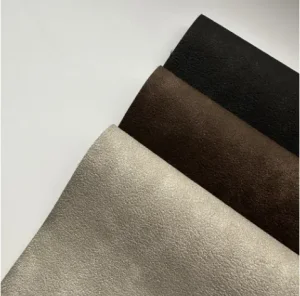
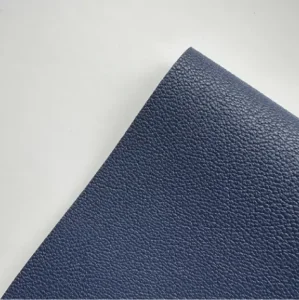
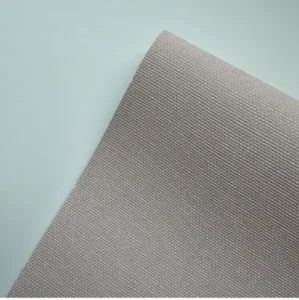
Certified Sustainable PU Synthetic Series (Batch I)
Direct-from-plant certified substrates engineered for demanding tensile specifications, continuous flex testing, and verified eco-attribute standards.
Global Procurement Realities: Transitioning from Petrochemical PU to Low-Carbon Substrates
An engineering perspective on the structural shift across European and North American industrial supply chains, driven by decarbonization targets, extended producer responsibility (EPR), and chemical safety regulations.
DMFa Elimination & VOC Compliance
Traditional wet-coagulation PU relied historically on Dimethylformamide (DMFa), now tightly regulated under EU REACH SVHC limits (<50 ppm). Sourcing managers must shift to waterborne PU (WPU) dispersions and solvent-free PU reactive systems to eliminate occupational risk and consumer outgassing without forfeiting peel strength.
- Zero DMFa, DMAC, and NMP solvent release
- Stringent German VDA 278 thermal desorption standards
- Elimination of hazardous wastewater generation
Supply Chain Decarbonization & CBAM
Under the European Carbon Border Adjustment Mechanism (CBAM) and Corporate Sustainability Due Diligence Directive (CSDDD), enterprise tier-1 suppliers must present quantifiable product carbon footprints (PCF). JiangXin embeds rooftop photovoltaics and regenerative thermal oxidizers to slash Scope 1 and Scope 2 emissions.
- ISO 14067 aligned Life Cycle Assessment (LCA) data
- 4.68 MW solar capacity offsetting fossil grid draw
- Verifiable Higg Index FEM validated manufacturing
Traceable Chain of Custody (RCS & GRS)
Greenwashing scrutiny demands incontrovertible physical proof of recycled feedstock. Our Recycled Claim Standard (RCS) product lines utilize certified post-consumer recycled (PCR) polyester yarn backings and upcycled polyurethane scrap, backed by formal Transaction Certificates (TC) per manufacturing lot.
- 20% to 70% certified recycled rPET base fabrics
- Third-party audited mass-balance tracking
- Complete batch genealogy from polymer to finished roll
Engineering Benchmark: Physical, Mechanical & Hydrolytic Standards
How our polyether, polycarbonate, and bio-derived PU formulations stack against traditional market alternatives under rigorous ASTM, ISO, and DIN standardized stress testing.
| Evaluation Parameter | Test Methodology | Conventional Solvent PU | JX.ECO Waterborne PU | JX.ECO Bio-Based Polycarbonate PU |
|---|---|---|---|---|
| Hydrolysis Resistance (Jungle Test) | 70°C, 95% Relative Humidity | 1 to 3 Weeks (Degrades) | 5 to 7 Weeks (Stable) | 10+ Weeks (Superior Longevity) |
| Martindale Abrasion Resistance | ISO 12947-2 (12 kPa Load) | 20,000 - 40,000 Cycles | 60,000 - 80,000 Cycles | > 120,000 Cycles (No Breakdown) |
| Low-Temperature Bally Flex | ISO 5402-1 (-20°C Test Chamber) | 15,000 Cycles (Micro-cracking) | 50,000 Cycles (Pass) | > 100,000 Cycles (Zero Fissures) |
| Total VOC Emission Content | VDA 277 / VDA 278 Protocol | > 250 μg C/g (High Odor) | < 30 μg C/g (Ultra-Low) | < 15 μg C/g (Near-Zero Odor) |
| Tensile & Seam Tear Strength | ISO 13934-1 / ISO 13937-2 | 350 N / 25 N | 550 N / 40 N | > 750 N / 65 N (High Tenacity) |
| Feedstock Origin & Verification | ASTM D6866 / RCS Chain-of-Custody | 100% Virgin Fossil Fuel | Post-Consumer rPET Substrate | 30%–60% USDA Certified Bio-Content |
Tailored Macro Solutions for High-Yield Production Lines
Every industry induces distinct stress profiles. We configure our polymer viscosity, resin crosslinking density, and knit/woven backings to optimize automated cutting yields and assembly performance.
Athletic & Technical Footwear
Engineered for high-frequency welding, heat sealing, and cold-stitch assembly in athletic shoe uppers. Delivers superior flex fatigue resistance down to -20°C, high abrasion resistance across vamp stress lines, and water-repellent (PFAS-free) performance for outdoor trail footwear.
- 150,000+ Bally flex cycles durability
- High-frequency welding & no-sew bonding ready
- 0.8mm to 1.6mm calibrated thickness options
Automotive Seating & Cockpit Surfaces
Tailored for Tier-1 mobility suppliers demanding ultra-low fogging (DIN 75201-B), flame retardancy (FMVSS 302), and strict scratch resistance. Our solventless PU constructions prevent windshield haze and eliminate unpleasant chemical odors in closed vehicle cabins.
- Fogging condensate value < 2.0 mg
- Taber CS-10 abrasion > 5,000 revs at 1000g
- UV lightfastness to SAE J2412 Grade 4.5
Luxury Handbags, Luggage & Accessories
Delivers authentic calfskin, nappa, or pebble grain drape without animal inputs. Formulated with high edge-paint adhesion, excellent stitch-holding tear strength, and stain-resistant finishes (anti-denim dye transfer) for high-end fashion collections.
- Supple, full-bodied hand-feel with rich drape
- Toothpick, saffiano, box calf, and custom embossing
- Compatible with high-speed die-cutting machines
Technology Roadmap: The Next Generation of Clean PU Synthesis
Mapping our progressive transition toward zero-carbon synthetic leather through bio-catalysis, molecular recycling of polyols, and smart solvent-free extrusion architectures.
Solvent-Free Reactive PU
Elimination of 100% of organic solvents via two-component 100% solids reactive polyurethane resin coatings applied directly onto high-density bases.
Plant-Derived Polyols
Synthesizing polyols from non-food castor bean oil and corn stover to replace fossil petrochemicals, verifying 30% to 60% bio-based carbon via ASTM D6866.
Circular Recycled Substrates
Scaling RCS/GRS-certified microfibers derived from marine plastic waste and post-industrial garment cuttings, yielding circular base fleeces with virgin-grade peel strength.
Enzymatic Depolymerization
Engineering closed-loop reversible crosslinkers enabling total end-of-life delamination and chemical recovery of both the polyurethane skin and woven backing.
Industrial Eminence: The 135,733 m² Yingde Mega-Campus
Established in June 2017 in Yingde, Guangdong, JiangXin New Material operates as a model clean-tech enterprise designed under petrochemical construction standards.
Continuous Automated Production
Featuring state-of-the-art multi-head dry coating lines, automated knife-over-roll spreaders, computer-controlled embossing calenders, and laser surface topography scanners to ensure continuous roll-to-roll color fidelity (Delta E < 0.5) and thickness uniformity across 1400mm–1600mm usable roll widths.
On-Site Ecological Utilities
Equipped with a proprietary biological wastewater treatment station capable of 100% compliant discharge and localized water recycling. High-capacity regenerative thermal oxidizers (RTO) achieve 99.2% VOC destruction efficiency, transforming exhaust gases into reusable thermal energy for drying chambers.
In-House Physical & Analytical Lab
Every production master-batch undergoes internal lot release testing: Bally flexometer analysis (-20°C to 25°C), Taber and Martindale abrasion chambers, hydrostatic head testers, constant-temperature jungle chambers (hydrolysis), color spectrophotometers, and gas chromatography-mass spectrometry (GC-MS).
Audited Frameworks: Certificates & Brand-Entry Passports
Our compliance roadmap protects enterprise brand equity. Formulations are cross-audited by third-party testing institutes to ensure frictionless market clearance worldwide.
Chemical Restriction Standards
100% compliant with EU REACH Annex XVII (including SVHC screening), RoHS Directives, California Proposition 65, and CPSIA. Zero detection of restricted phthalates (6P / 16P free: DEHP, DBP, BBP, DINP, DIDP, DnOP), heavy metals, alkylphenol ethoxylates (APEO), organotins, or fluorinated chemicals (PFAS/PFOS).
Environmental & Bio Verification
Certified under the USDA BioPreferred® program, validating biological carbon share via ASTM D6866 radiocarbon dating. Audited under the Recycled Claim Standard (RCS) by Textile Exchange, enabling verified Transaction Certificates for footwear, bag, and apparel brand sustainability reporting.
Social & Governance Credentials
Audited through amfori BSCI ensuring ethical workplace conditions, fair wages, and worker protection. Facility verified via the Higg Index (Facility Environmental Module - FEM, Facility Social & Labor Module - FSLM), and certified under ISO 9001, ISO 14001, and ISO 45001 management regimes.
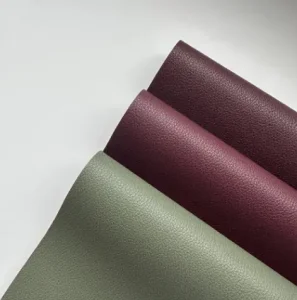
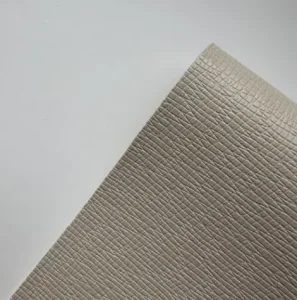
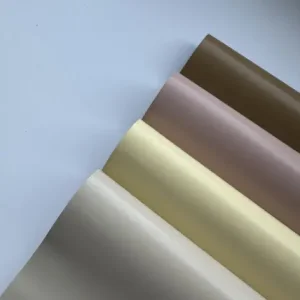
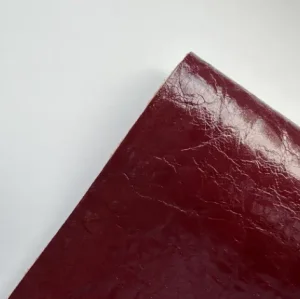
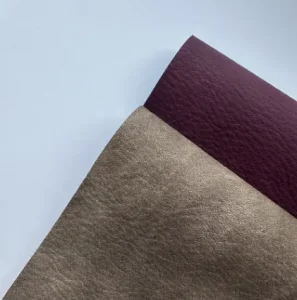
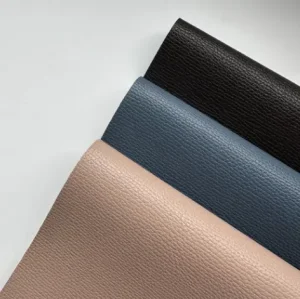
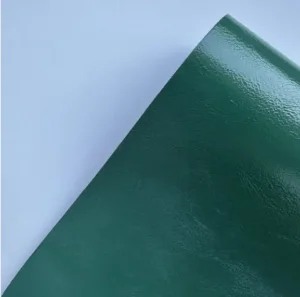
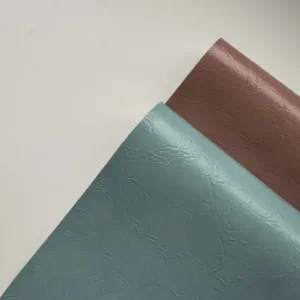
Industrial Plant-Based & Bio-Derived Reference Rolls (Batch II)
Select reference articles engineered for low odor, grain stability under deep thermoforming, and maximum batch-to-batch color repeatability.
Engineering & Procurement Frequently Asked Questions
Direct answers from our materials science team to clarify sampling protocols, chemical compliance testing, backing selection, and logistics guarantees.
How does bio-based polyurethane differ chemically from standard petroleum-based PU?
Standard polyurethane is formulated through the stoichiometric reaction of a petrochemically synthesized polyol (polyether or polyester) with an isocyanate (MDI/TDI). In bio-based PU, a defined portion (typically 30% to 60%) of petroleum polyols is replaced with plant-derived polyols extracted from non-food agricultural feedstock such as castor beans or industrial starch. The resulting macromolecular polyurethane polymer retains identical urethane linkages (-NH-COO-), offering equal or superior tensile tenacity, hydrolytic durability, and abrasion resistance while reducing cradle-to-gate carbon emissions by up to 40%.
How is bio-based carbon content analytically proven and certified for export hangtags?
Bio-based content is verified via ASTM D6866 radiocarbon (Carbon-14) isotope analysis conducted by accredited third-party laboratories (such as Beta Analytic). Modern plant biomass contains a known atmospheric concentration of Carbon-14, whereas fossil fuels have completely decayed over geological time (zero Carbon-14). The radiocarbon ratio quantifies the exact percentage of modern bio-based carbon relative to total organic carbon. This empirical report qualifies your product for formal USDA BioPreferred® licensing and hangtag declarations.
What is the official procedure for issuing RCS Transaction Certificates (TCs)?
When an order is placed for our RCS (Recycled Claim Standard) certified materials, the recycled post-consumer polyester (rPET) fibers are tracked through an unbroken chain of custody via the Textile Exchange portal. Upon completion of bulk rolling and shipment dispatch, our compliance unit files for an official Transaction Certificate (TC) through our accredited certification body. The TC details the certified lot volume, net weight, invoice linkage, and verified input percentage, supplying full proof during third-party customs or sustainability brand audits.
Can you engineer custom backing textiles for specialized die-cutting and elongation?
Yes. Backing substrate engineering is vital to the physical performance of the composite roll. Depending on your assembly line requirements, we supply: (1) Circular warp knits for 4-way stretch upholstery; (2) Microfiber fleeces for high stitch-tear strength and calfskin-like density in footwear; (3) High-tenacity woven canvas for dimensional stability in structured luggage; and (4) Non-woven spunbonds for thermoforming compatibility. All base fabrics can be matched with virgin, recycled (rPET), or bio-based viscose inputs.
What is the standard hydrolytic lifespan of your high-performance polyurethane lines?
We formulate multiple tiers of hydrolysis protection based on end-use exposure. For entry-level indoor accessories, our polyether formulations deliver 3- to 5-year jungle test resistance (equivalent to 3–5 weeks at 70°C, 95% RH). For marine upholstery, tactical footwear, and automotive seating, we deploy custom polycarbonate polyol matrices that achieve 7- to 10+ year jungle test survival (10+ weeks at 70°C, 95% RH) with zero peeling, resin tackiness, or structural cleavage.
What are your wholesale Minimum Order Quantities (MOQs) and sampling lead times?
For catalog references with existing grain rollers and color masters, our standard minimum order quantity is 500 linear meters per color/grain combination. For bespoke custom color matching (Pantone TPX/TCX or physical swatch) and customized backing textiles, our typical production pilot MOQ is 1,000 meters. Digital lab dip swatches (A4 yardage) are dispatched within 3 to 5 business days, while bulk roll runs ship within 14 to 20 days post-approval from our port facilities in Guangdong.