
Flagship Sustainable PU Leather Articles
Immediate wholesale procurement availability with certified chain-of-custody documentation, ultra-low VOC emissions, and precision engineered physical metrics for international global brands.
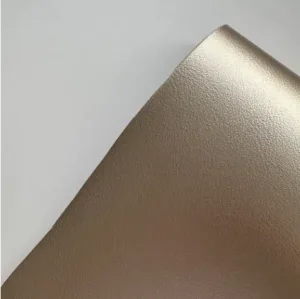
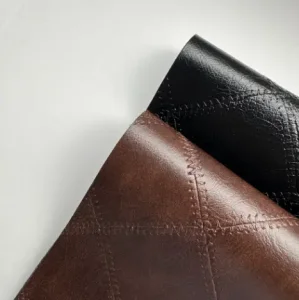
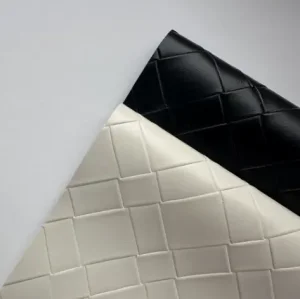

State of the Art: The Global Evolution of Sustainable PU Leather
As global carbon border adjustments and corporate ESG commitments tighten, conventional DMF-based synthetic leather manufacturing is obsolete. JX.ECO operates at the intersection of green chemistry, industrial efficiency, and technical reliability.
The Green Chemical Revolution
Traditional wet-process synthetic leather relied heavily on Dimethylformamide (DMFa), toluene, and petroleum-based polyols. Modern macro procurement mandates completely solvent-free polyurethane (PUD) systems, utilizing water as the dispersing medium, eliminating toxic VOCs, and substituting up to 75% of petrochemical fossil carbon with renewable non-food agricultural biomass polyols.
Circular Economy & RCS Standards
Brand-driven sourcing requires fully traceable post-consumer and post-industrial waste streams. Under the Recycled Claim Standard (RCS 2.0) and Global Recycled Standard (GRS), our backing textiles leverage GRS-certified recycled polyethylene terephthalate (rPET) sourced from ocean and landfill diversion, providing complete supply chain chain-of-custody transparency with valid Transaction Certificates (TCs).
Life-Cycle Assessment (LCA) Transparency
Enterprise buyers are no longer satisfied by vague eco-friendly marketing. Procurement teams analyze cradle-to-gate LCA metrics, measuring Embodied Carbon (kg CO2e / linear meter), cumulative energy demand, and water consumption. Through our 4.68 MW rooftop photovoltaic system and automated thermal recovery loops, our manufacturing achieves up to 48% carbon abatement over legacy dry/wet lines.
Wholesale Procurement Criteria & Comparative Engineering Specs
A rigorous comparative breakdown of engineering specifications across our major sustainable PU leather systems versus conventional synthetic substrates. Tailored for Tier-1 brand developers and quality assurance engineers.
| Technical Characteristic | Conventional Solvent PU | Bio-Based PU Platform | RCS Recycled PU Platform | Testing Standard Protocol |
|---|---|---|---|---|
| Bio-Carbon Content | 0% (Petroleum fossil base) | 20% – 75% USDA Verified | N/A (Derived from post-consumer rPET) | ASTM D6866 Radiocarbon AMS |
| Solvent Emissions (DMFa / DMAC) | < 500 – 1000 ppm | ND (Non-Detectable < 2 ppm) | ND (Non-Detectable < 2 ppm) | EN 17111 / ISO 16000 Thermal Desorption |
| Martindale Abrasion Resistance | 20,000 – 40,000 cycles | 60,000 – 100,000+ cycles | 80,000 – 120,000+ cycles | ISO 12947-2 (12 kPa pressure) |
| Cold Crack Temperature | -10°C to -15°C | -25°C to -35°C | -20°C to -30°C | ASTM D1790 Cold Mandrel Flex |
| Hydrolysis Resistance (Jungle Test) | 3 to 5 Weeks | 7 to 10 Weeks Guaranteed | 7 to 10 Weeks Guaranteed | ISO 1419 Method C (70°C, 95% RH) |
| Bally Flex Endurance | 50,000 cycles (Dry) | > 150,000 cycles (Dry) / 80k (Wet) | > 120,000 cycles (Dry) / 60k (Wet) | ISO 5402-1 Bally Flexometer |
| Global Compliance Certification | Baseline Factory ISO | USDA BioPreferred REACH SVHC | RCS 2.0 GRS Certified | Third-Party Accreditations (SGS, TÜV, Intertek) |
International Compliance & Localized Brand Integration
Navigating complex international customs barriers, restricted substance lists (RSL), and ESG due diligence frameworks with certified turn-key audit support.
Zero Hazardous Substances (REACH & OEKO-TEX)
Our sustainable materials fully satisfy European Union REACH Annex XVII and SVHC Candidate List requirements (>230 substances monitored). We formulate products strictly free from 6P/8P phthalates (DEHP, DBP, BBP, DINP, DIDP, DnOP), organotin compounds, short-chain chlorinated paraffins (SCCP), and polyfluoroalkyl substances (PFAS/PFCs), meeting OEKO-TEX Standard 100 Class I criteria for infant skin contact safety.
CBAM & EU Corporate Due Diligence (CSDDD)
Importers into the North American and European single markets face stringent supply chain scrutiny under the EU Deforestation Regulation (EUDR) and the Corporate Sustainability Due Diligence Directive. JiangXin’s complete chain-of-custody tracking allows brand tier-1 supply teams to trace bio-based raw crops and recycled polyester yarns directly back to verified circular and sustainable origins without deforestation risks.
Automated Transaction Certificates (TCs)
Purchasing recycled materials without verifiable documentation exposes fashion and automotive groups to greenwashing fines. For every certified volume of RCS leather shipped from our Guangdong facility, our dedicated regulatory compliance division submits and dispatches legitimate Transaction Certificates (TCs) generated through approved certification bodies, guaranteeing frictionless market access.
Research & Development Roadmap: The Next Frontier of PU Polymers
JiangXin's polymer science laboratories continually advance the chemistry of polyurethane to achieve full circular degradation, high-performance bio-hybrid matrices, and carbon-negative processing.
100% Waterborne PUD Dispersion
Complete phase-out of trace organic solvents across all dry and wet finishing lines, achieving absolute zero solvent emissions in the synthesis chamber.
70%+ High Bio-Carbon Polyols
Refining second-generation non-food cellulosic and castor-derived polyols that deliver Bally flex endurance exceeding 200,000 cycles at sub-zero cold conditions.
Fully Recyclable Thermoplastic PU
Monolithic, mono-material constructions where the skin coating and the structural backing share identical polymer identities, enabling 100% mechanical re-granulation.
CO2-Captured Polyol Integration
Pioneering direct CCU (Carbon Capture and Utilization) where industrial point-source exhaust is synthesized into polycarbonate polyols, producing carbon-negative vegan leather.
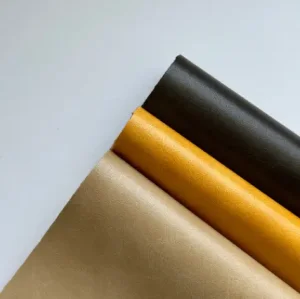
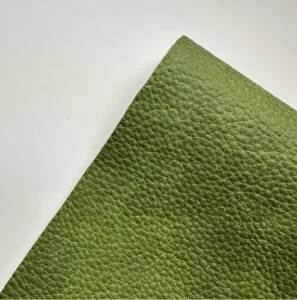
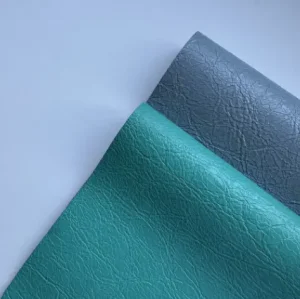
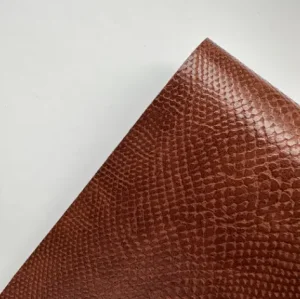
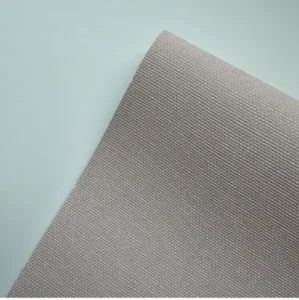
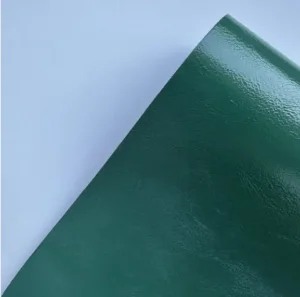
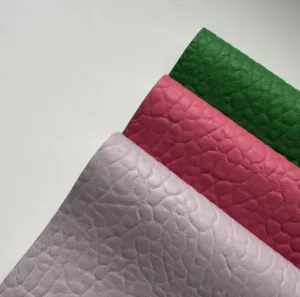
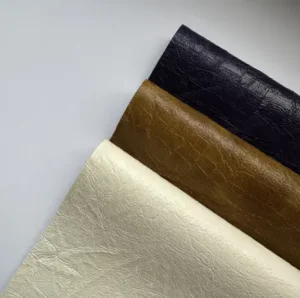
Custom Sustainable PU Leather Engineering Library
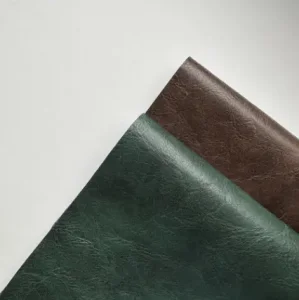
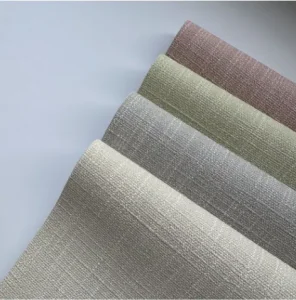
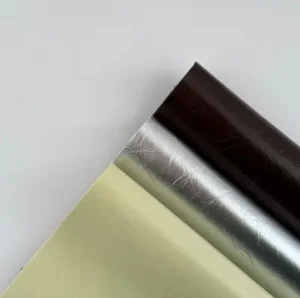
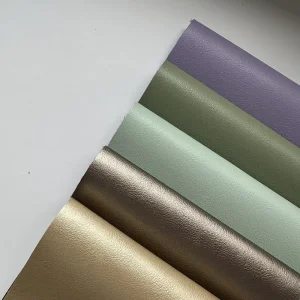
High-resilience plant-derived, custom-embossed, and low-carbon synthetic leathers engineered to exact client tech packs, backing specifications, and tactile hand-feel profiles.
Frequently Asked Technical Questions
Direct technical clarifications from JiangXin's material engineers and global export compliance directors to expedite your tech-pack approval and vendor qualification.
We determine bio-carbon content strictly using ASTM D6866 (Standard Test Methods for Determining the Biobased Content of Solid, Liquid, and Gaseous Samples Using Radiocarbon Analysis). Unlike raw mass calculations which include non-reactive fillers, radiocarbon measuring isolates C14 isotopic decay to identify the exact ratio of modern biological carbon (derived from renewable plant sources) versus fossil petroleum carbon. Our commercial grades feature authenticated bio-contents ranging from 20% to over 75%, certified under the USDA BioPreferred Program.
Both standards are administered by the Textile Exchange and verify the chain-of-custody of recycled input materials through each transformation stage. RCS (Recycled Claim Standard) focuses specifically on verifying the presence and percentage of recycled content (minimum 5% up to 100%) through Transaction Certificates. GRS (Global Recycled Standard) encompasses RCS requirements but additionally enforces strict chemical management (ZDHC alignment), wastewater treatment, and audited corporate social responsibility (amfori BSCI/ILO standards). JiangXin supports both RCS and GRS chain-of-custody documentation for all orders.
No. In fact, advanced 100% solid solvent-free polyurethane and high-solid waterborne PUD systems produce a denser, more cohesive cross-linked polymer network than solvent-evaporated wet-coagulation films. Our eco-friendly PU lines routinely deliver Martindale abrasion resistance exceeding 100,000 cycles, Bally flex durability over 150,000 cycles without micro-fissuring, and jungle test hydrolysis stability of 7 to 10 years equivalent life, surpassing standard commercial solvent-based alternatives.
For our established running reference catalog articles, baseline minimum order quantities start at 500 linear meters per color/grain. For fully custom color matching (Pantone TPX / TCX) and proprietary embossed textures requiring bespoke release paper rollers, standard MOQs are 1,000 linear meters per color. Lab-dip swatch strike-offs are typically turned around in 3 to 5 business days, with full container bulk roll production executing in 12 to 18 business days.
Yes. In compliance with strict automotive (FMVSS 302, ISO 3795) and contract upholstery standards (BS 5852 Crib 5, CAL 117-2013), JiangXin utilizes reactive, non-halogenated organo-nitrogen and inorganic mineral phosphorus flame retardants integrated directly into the polymer chain rather than topical chlorinated paraffin additives, preventing leaching, toxic smoke emission, or skin irritation.
By generating a massive portion of our direct electrical baseline through our rooftop 4.68 MW photovoltaic installation, we drastically reduce our grid reliance and factory Scope 1 and Scope 2 carbon footprint. When enterprise clients purchase our materials, our audited product-level Life Cycle Assessment (LCA) demonstrates a verified reduction in cradle-to-gate Embodied Carbon, which clients can directly report as verified Scope 3 GHG reductions under the GHG Protocol and SBTi frameworks.