
Featured Sustainable PU Leather Materials for Handbags & Luggage
Engineered for luxury handbags, structured totes, backpacks, and small leather accessories. All references support bespoke backing fabrics, tensile tailoring, and custom emboss profiles.
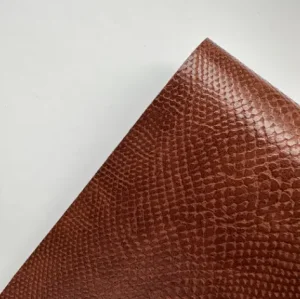
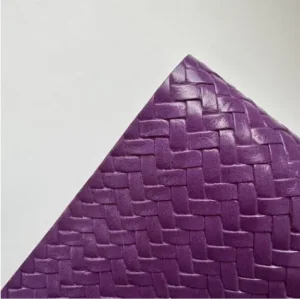
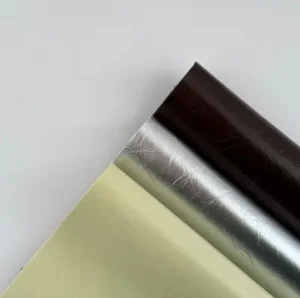
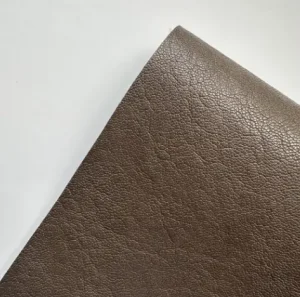
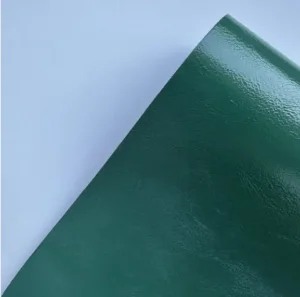
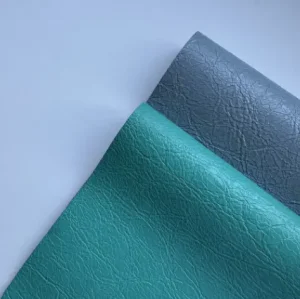
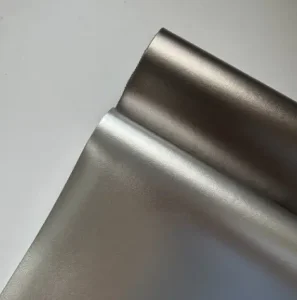
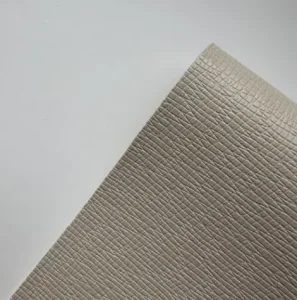
The Engineering Paradigm Shift: Beyond Petrochemical PU in Handbag Manufacturing
Modern brand owners, luxury conglomerate sourcing offices, and retail supply chain managers face compounding headwinds: stringent ESG reporting mandates, anti-greenwashing directives in Europe, and shifting consumer sentiment toward verifiable animal-free fashion.
Solvent-Free & Waterborne PU Chemistries
Traditional polyurethane relied heavily on Dimethylformamide (DMFa), toluene, and methyl ethyl ketone (MEK). Modern engineering eliminates toxic volatile organic compounds (VOCs) through 100% solid solvent-free casting or aqueous polyurethane dispersions (PUD). The result is zero residual DMFa (<1 ppm, complying with REACH Annex XVII entry 72), odorless handling, and significantly higher tensile yield per square meter.
Biobased Carbon Replacements (ASTM D6866)
By synthesizing polyols derived from non-food agricultural biomass (such as industrial corn, castor beans, and agricultural waste starch), our factory displaces fossil-based petroleum chains. Calibrated through C14 radiocarbon mass spectrometry according to ASTM D6866, our bio-synthetic leather achieves verifiable bio-content ratings spanning from 30% to over 70%, drastically suppressing cradle-to-gate carbon footprints (PCF).
Traceable Circular Polymer Integration
Utilizing post-consumer recycled (PCR) polyethylene terephthalate (rPET) derived from ocean-bound plastics and post-industrial leather scrap backing fibers, each roll is tied to verifiable Recycled Claim Standard (RCS) and Global Recycled Standard (GRS) transaction certificates. This guarantees full chain-of-custody validation across spinning, weaving, coating, and roll inspection.
China Factory 4.0: Supply Chain Resilience, Automation & Engineering Edge
Situated in Yinghong Industrial Park, Yingde City, Guangdong Province, Yingde City JiangXin New Material Co., Ltd. (operating as JX.ECO since June 2, 2017) represents the forefront of clean-tech synthetic leather engineering in Asia.
Closed-Loop Clean Tech Campus
Constructed under strict petrochemical zoning guidelines, our facility features floor-to-ceiling tempered glass architecture optimizing ambient daylighting. Energy integrity is reinforced by an integrated 4.68 MW rooftop photovoltaic solar grid and regenerative thermal oxidizers (RTO) recovering thermal energy from curing ovens with over 95% heat-exchange efficiency.
In-Line Optical Defect Scanning
Manual visual inspection is augmented by multi-spectral machine-vision cameras capable of detecting surface voids, pinholes, micro-scratches, and gauge unevenness down to 0.05 mm across moving webs at 45 m/min. Defect tagging is fed directly into customer roll maps, eliminating cutting room downtime during automated bag pattern die-cutting.
End-to-End Vertical Integration
From chemical compounding, bio-polyol formulation, and transfer paper release management to custom textile weaving (microfiber, twill, interlock jersey, recycled polyester) and surface lacquering, our fully internal pipeline prevents upstream bullwhip risks, guaranteeing stable pricing and dependable lead times.
Technical Roadmap & Future Outlook: Next-Gen Polymer Architectures
Our engineering division maintains a rolling R&D investment equivalent to 6.2% of annual turnover, driving structural innovations in circular materials, durability chemistry, and closed-loop recyclability.
Phase 1: Zero-PFAS Hydrophobic Engineering
Anticipating incoming EU and North American restrictions on per- and polyfluoroalkyl substances (PFAS), our factory has phased out legacy C8/C6 fluorochemical stain-repellent coatings. We now deploy hyper-branched silicone polymers and biomimetic nanoscale surface texturing that delivers 5-grade water repellency and oleophobicity without fluorine derivatives.
Phase 2: Ultra-High Solid Thermoplastic Polyurethanes (TPU)
Transitioning towards mono-material recyclable bag constructions. By synchronizing aliphatic TPU surface skins with 100% rPET textile substrates, the resulting composite handbag component can be mechanically or chemically recycled back into virgin-grade resins at the end of the accessory lifecycle, sidestepping landfill deposition.
Phase 3: Deep Sub-Zero Bally Flex & Hydrolysis Stability
Addressing the historical vulnerability of synthetic leather—premature peeling, delamination, and microbial degradation. Novel polyether polyol blends with crosslinked blocked isocyanates guarantee 10+ weeks Jungle Test endurance (70°C, 95% RH) and flawless Bally Flex survival exceeding 100,000 cycles at -20°C.
| Property Parameter | Test Standard / Protocol | Standard Commercial Grade | JX.ECO Engineered Bio-PU |
|---|---|---|---|
| Hydrolysis Resistance (Jungle Test) | ISO 1419 Tropical Test (70°C, 95% RH) | 1 - 3 Weeks (Surface Cracking) | 8 - 12 Weeks (Zero Delamination) |
| Bally Flex Resistance (Room Temp & Cold) | ISO 5402-1 / DIN 53351 | 30,000 Cycles @ 20°C | >100,000 Cycles @ 20°C / >50,000 @ -20°C |
| Martindale Abrasion Endurance | ISO 12947-2 (12 kPa Load) | 25,000 Rubs | >100,000 Rubs (Dry) / >50,000 (Wet) |
| Volatile Organic Content (DMFa) | EN 17111 / ISO 16189 | 100 - 500 ppm | ND (Non-Detectable < 1 ppm) |
| Bio-based Carbon Fraction | ASTM D6866-22 Method B (AMS) | 0% Fossil Derived | 30% - 73% USDA Certified Potential |
| Color Fastness to Light (UV Xenon) | AATCC 16.3 / ISO 105-B02 | Grade 3 - 4 | Grade 4.5+ (Blue Wool Scale 7+) |
Macro Industry Solutions: Engineered for Demanding Bag Segments
From ultra-soft supple slouch bags to rigid geometric suitcases, physical stress vectors differ drastically. Our factory configures distinct polymer-backing matrices tailored to specific accessory classes.
Luxury Structured Handbags & Clutches
Structured silhouettes demand high skiving yield, crisp edge-paint compatibility, and superior crease recovery. We formulate high-density microfiber substrates paired with high-molecular-weight surface resins that allow heat-burnishing, sharp edge beveling, and uniform stitching without needle-hole tearing or puckering.
Functional Commuter & Outdoor Packs
High-frequency friction points, strap-anchor tear loads, and sudden weather exposure require extreme tensile resilience. Our reinforced high-tenacity woven recycled substrates withstand seam rupture stresses exceeding 600 N / 5 cm (ISO 13934-1) and abrasion ratings past 100,000 Martindale revolutions.
Tech Device Sleeves & Protective Cases
Electronic device accessories require non-migrating plasticizers, dielectric sealing compatibility, and shock-absorbing elastomeric backings. Our specialized solvent-free PU lines exhibit high thermal weldability, anti-static resistivity, and anti-fingerprint surface coatings.
Localization Support, Audited Certifications & Chemical Compliance
B2B procurement teams cannot afford shipment impoundments or brand reputation damage. JiangXin operates on an audit-ready compliance foundation aligned with major international regulatory jurisdictions.
EU REACH (EC 1907/2006) & RoHS
Routine third-party batch screening (via SGS, TÜV Rheinland, and Intertek) verifies non-detection for over 240 Substances of Very High Concern (SVHC). Guaranteed free of banned organotins, short-chain chlorinated paraffins (SCCPs), polycyclic aromatic hydrocarbons (PAHs), and heavy metals.
California Proposition 65 & Phthalate-Free (16P)
Formulated without restricted orthophthalates (DEHP, DBP, BBP, DINP, DIDP, DnOP, DNHP, etc.). Meets total phthalate limits <100 ppm, fully compliant with US Consumer Product Safety Improvement Act (CPSIA) standards for skin contact and accessory usage.
Higg FEM / FSLM & amfori BSCI Social Standards
Verified environmental transparency through the Sustainable Apparel Coalition Higg Facility Environmental Module (FEM), benchmarking effluent treatment, clean energy integration, and waste diversion. Full ethical labor compliance confirmed via ongoing amfori BSCI social audit ratings.
Global Enterprise Sourcing Architecture: RFP to Mass Container Delivery
JiangXin operates structured account frameworks for multinational bag brands, OEM contract manufacturers, and major trading houses, mitigating risks across development, color lab dips, and bulk delivery.
1. Specification Brief & Grain Digitalization
Procurement commences with technical alignment: thickness (0.6mm - 2.2mm), backing textile selection (microfiber, non-woven, rPET knit), hand feel stiffness (soft, medium, rigid box feel), and digital grain scanning. Master swatch books dispatched within 24-48 hours.
2. Spectrophotometric Color Matching & A4/Yardage Proto
Using Datacolor computerized dispensing systems, lab dips achieve tight Delta E tolerances (ΔE < 0.5 under D65, TL84, and CWF light boxes). Rapid pilot roll coating delivers 10–30 meter sampling yardage within 5 business days for factory cutting-die testing.
3. Bulk Calender Automation & AQL 1.5 Inspection
Bulk batches execute under closed-loop PLC thermal and tension control. Finished rolls undergo 4-point system roll verification (AQL 1.0/1.5 standards). Comprehensive documentation dossiers (TDS, Certificate of Analysis, and RCS/GRS Transaction Certificates) accompany export bill of ladings.
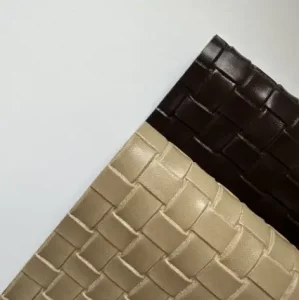
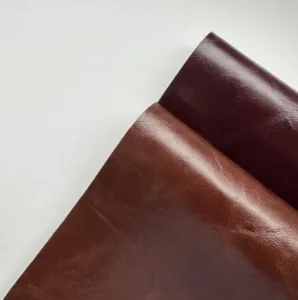
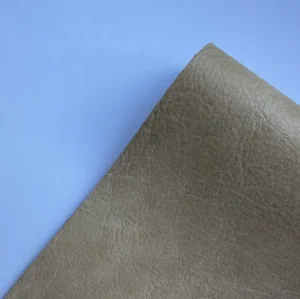
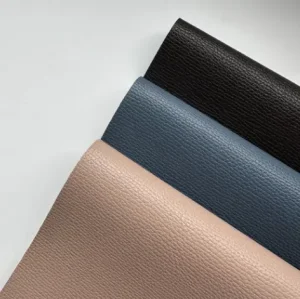
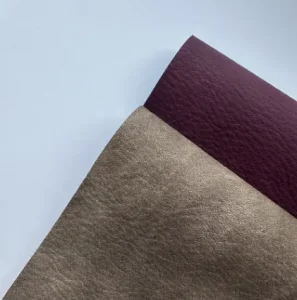
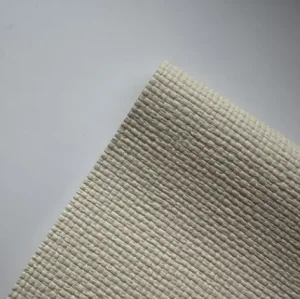
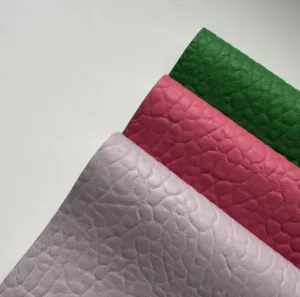
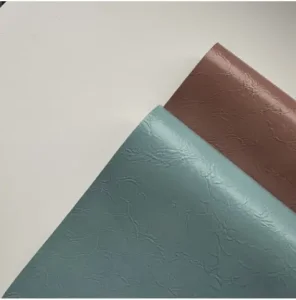
Explore Specialized Bio-Based, Low-Odor & RCS Certified Articles
Browse our extended product matrix formulated specifically for bag developers, contract manufacturers, and high-volume accessory programs.
Frequently Asked Sourcing & Engineering Questions (FAQ)
Direct technical clarifications from our chemical formulations laboratory and export compliance directors.
Traditional PU delamination is primarily triggered by moisture and heat cleaving ester molecular linkages (hydrolysis). JiangXin incorporates modified polyether polyols alongside plant-based building blocks, creating a chemically resilient molecular crosslinking structure. This enables our bag-grade materials to easily pass the 8-to-10-week Jungle Test (ISO 1419 at 70°C and 95% humidity), equating to over 8–10 years of typical consumer usage without flaking or embrittlement.
For running catalog references with existing emboss rollers, our minimum order quantity starts at 500 meters per color/thickness. For custom color matching (Pantone TPX/TCX) and custom grain engraving, pilot sample yardage (10–30 meters) typically requires 5–7 working days, while bulk commercial production cycles average 15–20 calendar days from lab dip approval.
Yes. Because our manufacturing facilities maintain audited scope certificates under Textile Exchange Recycled Claim Standard (RCS) and Global Recycled Standard (GRS), every verified commercial order is accompanied by an official Transaction Certificate issued directly through the certifying body, establishing an uncompromised chain of custody for your brand's consumer disclosures and regulatory filings.
Our materials are engineered with balanced warp-weft elongation (<15% under 100 N tension) and high needle-tear retention (>45 N according to ISO 3377-2). Edge burnishing and heat-creasing behave similarly to luxury chrome-free calfskin, allowing seamless compatibility with automatic CNC edge-dyeing machines without bead runoff or cracking.
Engineered bio-based PU offers a dramatic total-cost-of-ownership advantage over animal leather. While cowhide features irregular contours, flank blemishes, and a usable cutting yield typically between 60% and 75%, our synthetic leather ships in uniform 137 cm (54-inch) rolls with a 98%+ usable cutting efficiency. Compared to basic petrochemical PU, bio-PU carries a modest 8%–15% premium while providing verifiable marketing claims, lower carbon tariffs, and ESG compliance.
Yes. Light-colored pastels, chalk whites, and translucent finishes utilize 100% aliphatic isocyanates that prevent yellowing caused by UV light and atmospheric heat exposure (Grade 4.5+ on the Gray Scale after 72 hours of xenon-arc exposure under ISO 105-B02). Furthermore, our solvent-free thermal vacuum extraction lines strip residual monomers, ensuring our materials pass the VDA 270 sensory odor evaluation with a neutral Grade 2 rating.