
Industry Whitepaper & Technical Sourcing Guide
Wholesale Leather & Faux Leather Supplier & Factory
Next-generation polymer synthesis, bio-based feedstock architectures, and closed-loop RCS recycling built for tier-1 footwear, luxury apparel, and technical upholstery supply chains.
Primary Catalog Output
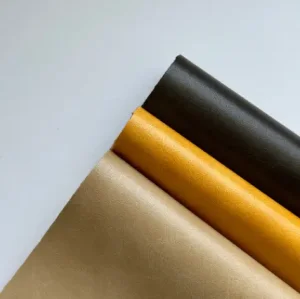
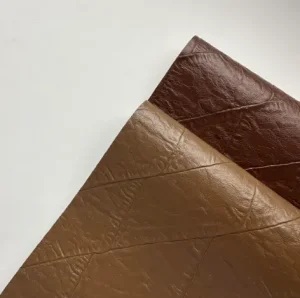
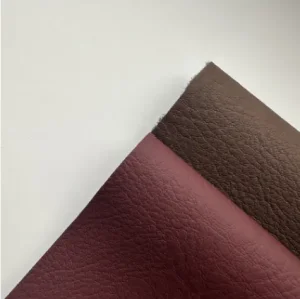
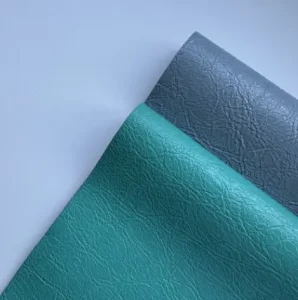
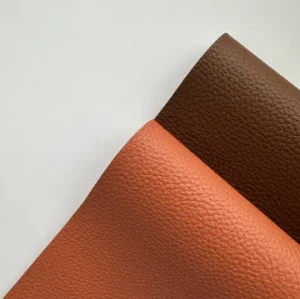
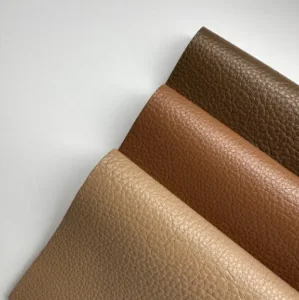
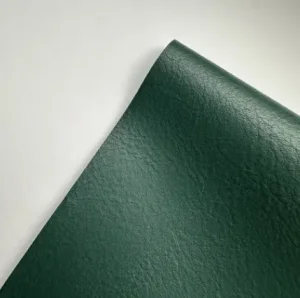
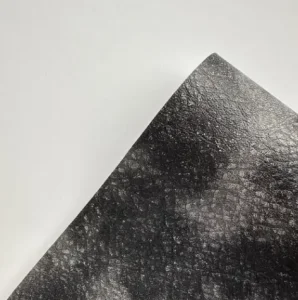
Precision Engineered Sustainable Leather Series
Explore high-yield commercial rolls engineered with solvent-free waterborne polyurethanes, plant polyol matrices, and GRS/RCS verified chain-of-custody backing textiles.
Executive Synthesis
Structural Transformation in Global Wholesale Leather Supply
Moving beyond petrochemical dependency toward verified biogenic carbon content, solvent elimination, and auditable Tier-1 to Tier-4 supply chain transparency.
The synthetic and natural leather manufacturing landscape is undergoing an unprecedented structural transition. International footwear, luxury apparel, automotive tier-1, and commercial upholstery conglomerates are recalibrating procurement metrics to conform with rigorous environmental mandates, notably the European Union Carbon Border Adjustment Mechanism (CBAM), the Corporate Sustainability Due Diligence Directive (CSDDD), and global Scope 3 carbon reporting frameworks. Operating as an industrial leader, Yingde City JiangXin New Material Co., Ltd. (JX.ECO) integrates continuous green chemistry synthesis with large-scale industrial throughput.
Headquartered within an advanced 135,733-square-meter eco-industrial campus in Guangdong, China, our manufacturing infrastructure operates on closed-loop principles. Integrating 4.68 MW of industrial rooftop solar power, high-efficiency regenerative thermal oxidation (RTO), and a zero-liquid-discharge wastewater facility, we deliver an annual operational capacity exceeding 16 million meters of high-performance technical leather to corporate buyers across more than 50 nations.
16M+
Meters Annual Output
135k m²
Production Campus
4.68MW
Rooftop Solar Array
50+
Export Destinations
300+
Global B2B Partners
200M+
RMB Annual Turn
Procurement Intelligence & Defensible Sustainability Claims
Wholesale material acquisition is no longer limited to superficial cost-per-meter parameters. Enterprise buyers require third-party chemical validation, isotope-based carbon dating (ASTM D6866), transaction certificates (TC) traceable via blockchain or Textile Exchange databases, and mechanical longevity guarantees that withstand rigorous hydrolysis, flex-resistance, and anti-fouling stress protocols.
Material Architecture
Three Core Sustainable Synthetic Leather Platforms
Engineered to resolve the trade-off between ecological compliance and commercial mechanical toughness across footwear, leathergoods, and technical apparel.
Bio-Based Polymers (ASTM D6866)
By replacing petroleum-based petrochemical polyols with bio-derived starch, non-food agricultural waste, and industrial corn oils, this platform yields biogenic carbon ratios reaching 30% to 75%. Verified via carbon-14 isotopic analysis, it slashes the total lifecycle cradle-to-gate carbon footprint by up to 45% compared to conventional virgin polyurethane (PU).
USDA BioPreferred
ASTM D6866
Low Embodied Carbon
RCS-Certified Recycled Matrices
Constructed utilizing recycled post-consumer PET bottles (rPET), post-industrial polyurethane trims, and microfiber yarn matrices certified under Textile Exchange Recycled Claim Standard (RCS). Each production batch generates traceable transaction certificates (TC), giving corporate brand programs concrete chain-of-custody data for consumer transparency.
RCS Certified
Post-Consumer rPET
Zero Virgin Polyester
Water-Based & Solvent-Free PU
Eliminating hazardous organic solvents including dimethylformamide (DMFa), dimethylacetamide (DMAC), and toluene. Utilizing aqueous water-dispersed polyurethane chemistry, this series delivers zero VOC off-gassing, exceptional flex-fatigue endurance (>100,000 cycles at -10°C), and complies with OEKO-TEX Standard 100 Class I for baby skin contact.
DMFa Free (<5ppm)
Zero VOC
OEKO-TEX 100
Procurement Engineering
Comparative Specification & Performance Matrix
A comprehensive side-by-side technical evaluation for senior sourcing directors, materials laboratory teams, and product engineers.
| Evaluation Parameter | Bio-Based PU (JX-BIO) | RCS-Recycled PU (JX-REC) | Solvent-Free Waterborne | Traditional Solvent PU |
|---|---|---|---|---|
| Primary Feedstock | Agricultural Plant Polyols / Bio-carbon | Post-consumer rPET / Recycled Fiber | Aqueous Waterborne Polyurethane | Fossil Crude Petrochemicals |
| VOC & DMFa Content | < 5 ppm (Zero detectable DMFa) | < 5 ppm | Zero Detectable VOCs | 30 - 300 ppm DMFa Residual |
| Bally Flex Endurance (-10°C) | > 80,000 Cycles without crack | > 70,000 Cycles | > 120,000 Cycles | < 30,000 Cycles (Embrittles) |
| Hydrolysis Resistance (Jungle) | 5 - 10 Weeks (Grade 4-5) | 5 - 8 Weeks (Grade 4) | 7 - 10 Weeks (Grade 5) | 2 - 3 Weeks (Degrades) |
| Chain of Custody Verification | ASTM D6866 Radiocarbon / USDA | Textile Exchange RCS / GRS TC | OEKO-TEX / ZDHC Level 3 | Self-declared MSDS only |
| Abrasion (Martindale 12kPa) | > 50,000 Revs without peel | > 40,000 Revs | > 80,000 Revs | 20,000 - 30,000 Revs |
In wholesale transactions across European and North American retail sectors, synthetic leather specifications have shifted from purely aesthetic replication to strict engineering verification. Modern automotive interiors and premium performance footwear demand non-yellowing characteristics (UV rating > 4.5), antimicrobial and anti-mildew stability (ASTM G21), and cold crack resistance down to -25°C. By formulating customized topcoats, micro-porous foam layers, and composite base fabrics—including woven, twill, microfiber, and non-woven felts—our engineering line guarantees tailored functional performance for specific industrial applications.
Application Ecosystems
Engineered Wholesale Solutions for Global Industries
Accelerating product lifecycle development with optimized roll cutting efficiency, balanced tensile strength, and certified performance profiles.
Athletic & Safety Footwear
Delivers high tensile and tear strength for automated CNC cutting and lasted upper construction. Engineered with high-frequency weldability, seamless bonding capabilities, dynamic waterproof breathability, and non-slip surface grips suited for high-stress athletic, mountaineering, and industrial workwear shoes.
Luxury Handbags & Accessories
Replicates the tactile, supple hand-feel and natural drape of full-grain aniline nappa leather. Features edge-paint compatibility, micro-embossed grain structures (including classic toothpick, pebbled, and saffiano textures), and extreme resistance to denim dye migration and oil rub.
Garments & Fashion Outerwear
Ultra-thin, featherweight polyurethane membranes (0.45mm to 0.70mm) integrated with four-way stretch jersey or viscose rayon backings. Provides optimal breathability, drape fluidity, silent flex movement, and complete machine-washable resilience without cracking or delamination.
Contract Furniture & Automotive
Heavy-duty contract upholstery leather built to pass rigorous automotive cabin tests (California TB117, British BS5852 Crib 5 fire retardance, ISO 105-B02 colorfastness to light). Resists harsh hospital-grade disinfectant wipes, scratching, and constant commercial traffic.
Regulatory Safeguards
Global Compliance, ESG Audits & Localization Support
Eliminating cross-border shipping delays and chemical compliance risks through an audited international compliance architecture.
EU REACH SVHC & Annex XVII
Every industrial roll produced by JiangXin undergoes automated inline and batch-laboratory testing to ensure zero presence of over 240 Substances of Very High Concern (SVHC). Fully compliant with 6P/17P phthalate-free directives, short-chain chlorinated paraffins (SCCP), and heavy metals limits.
Social Ethics & Factory Verification
Our Yingde facility operates under stringent corporate governance certified by amfori BSCI and ISO 9001/ISO 14001/ISO 45001 management systems. We provide complete institutional transparency during brand-led third-party ESG audits, ensuring responsible labor and workplace safety standards.
Complete Customs & Documentation Packs
We supply exhaustive documentation suites for every container: GRS/RCS Transaction Certificates (TC), USDA BioPreferred certifications, factory certificates of analysis (CoA), comprehensive RoHS/REACH compliance files, and accurate Harmonized System (HS) code classifications to streamline customs clearance.
Innovation Trajectory
Technical Roadmap & Circularity Milestones
A strategic technological view into our next-generation biopolymer synthesis, carbon-negative inputs, and monomer-level circular recovery programs.
Phase 1 · Implemented
Solvent-Free Waterborne Conversion
Complete phase-out of volatile organic solvents across coating lines, keeping residual DMFa below international detection thresholds.
Phase 2 · Active Scale
75% High-Carbon Bio-Based Resins
Formulating industrial polymer resins with up to 75% bio-based carbon, verified under ASTM D6866, with mechanical properties rivaling virgin petrochemicals.
Phase 3 · Pilot Phase
CO2-Utilized Polyols & Mycelium
Synthesizing captured industrial carbon dioxide into functional polyols, and validating mycelium-microfiber composite matrices.
Phase 4 · Future Horizon
Enzymatic Monomer Recovery
Commercializing circular chemical depolymerization protocols to break down end-of-life synthetic leather back into virgin-grade polymers.
Commercial Specifications
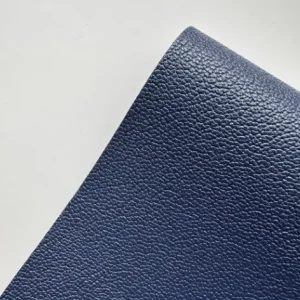
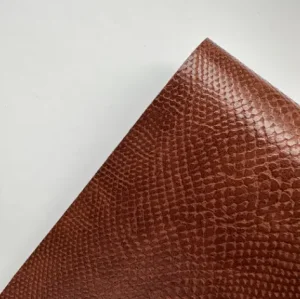
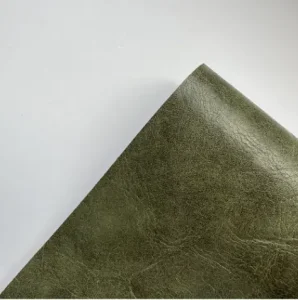
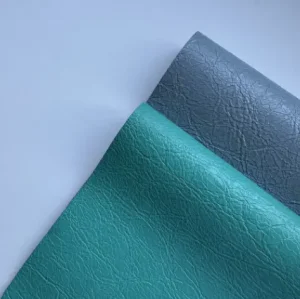
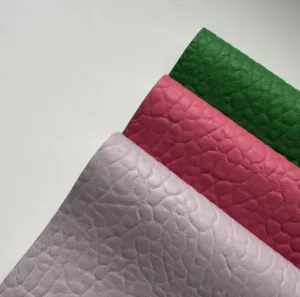
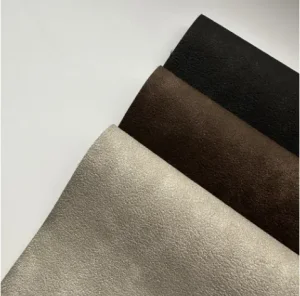
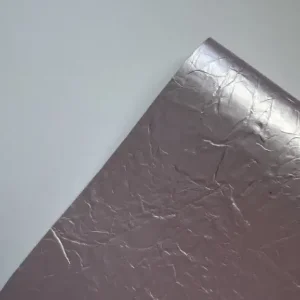
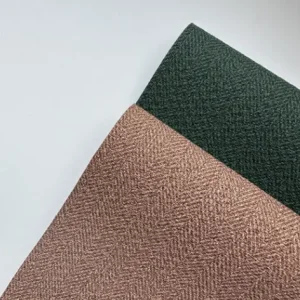
Advanced Renewable & Traceable Recycled Series
Order physical swatch decks, pilot trial sample rolls, or container-scale production for worldwide manufacturing destinations.
Technical Inquiry Clearing
Frequently Asked Procurement & Engineering Questions
Direct answers from our senior materials scientists and global trade logistics team.
What specific chemical differences distinguish bio-based synthetic leather from conventional PU?
Conventional PU relies exclusively on fossil-fuel-derived petrochemical diisocyanates and petroleum polyols. In bio-based PU, up to 75% of the petroleum polyol is replaced with non-food plant-derived agricultural components, such as corn or castor seed derivatives. The resulting polymer exhibits identical mechanical durability while significantly reducing embodied carbon emissions, verified via ASTM D6866 carbon-14 dating.
How does JiangXin maintain and verify RCS (Recycled Claim Standard) chain of custody?
We source certified post-consumer rPET bottles and post-industrial recycled polymers through certified partners. Every shipment into our plant includes an official raw material Transaction Certificate (TC). Throughout production, materials are tracked via rigorous mass balance accounting, allowing us to issue certified batch-specific TCs via authorized certification bodies for your brand programs.
What are the minimum order quantities (MOQs) and lead times for custom tech packs?
Standard catalog colorways and reference items maintain an MOQ of 500 meters per color/grain. Bespoke formulations—including custom color matching, custom embossing rollers, specialized flame-retardant chemistry, or specific backing fabrics—typically start at 1,000 meters. Lab dip swatches are dispatched within 3–5 working days, with bulk roll production completed within 12–18 business days.
Can your technical faux leathers withstand harsh hydrolysis in tropical regions?
Yes. Our polyether and polycarbonate-based formulations pass the rigorous "Jungle Test" (constant exposure to 70°C temperature at 95% relative humidity) for 5 to 10 consecutive weeks without surface cracking, delamination, or tactile softening. This corresponds to an expected 8 to 10 years of real-world consumer longevity in high-humidity climates.
How do you guarantee batch-to-batch color and mechanical consistency across bulk orders?
Our coating lines utilize automated spectrophotometers and closed-loop computer-controlled viscosity dosers to ensure color accuracy within Delta E < 0.8 under D65 lighting. Every master roll undergoes mechanical test checks for thickness tolerance (±0.03mm), peel strength, and tear propagation before final packaging and release.
What physical backing textile constructions are available for OEM customization?
We engineer composite materials over a comprehensive spectrum of structural backings: recycled rPET circular knits, non-woven ultra-fine split microfiber, twill weaves, woven cotton canvas, spandex blends, and flame-retardant aramid scrims. Each backing is matched to meet target elongation, stitch tear resistance, and shape recovery requirements.