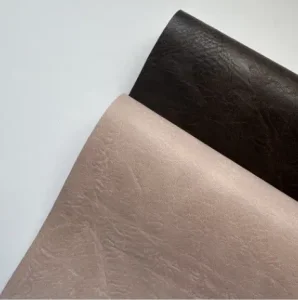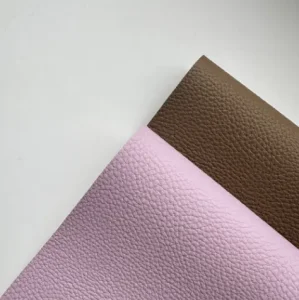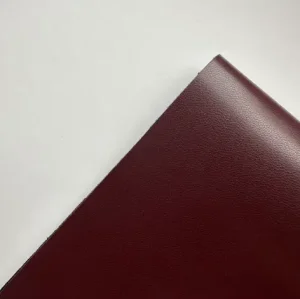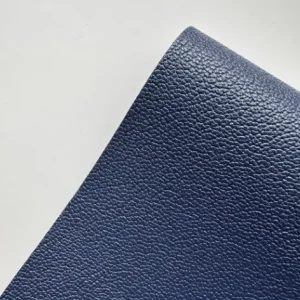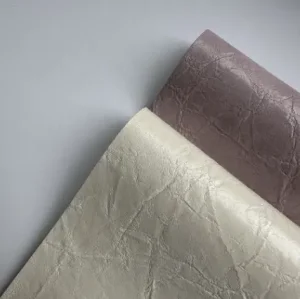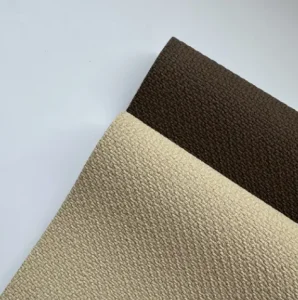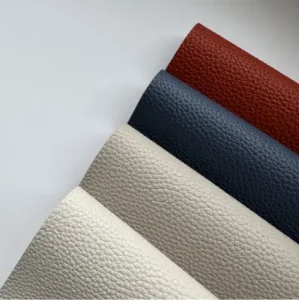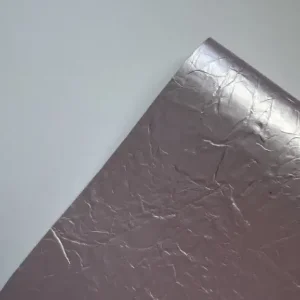
REF #0039 · Sustainable Eco PU
High-Quality Sustainable Eco-Conscious Synthetic Leather-0039 Supplier, Factories
Precision-manufactured biobased, waste-upcycled, and circular leather rolls ready for enterprise-scale cutting, stitching, and high-frequency welding applications.
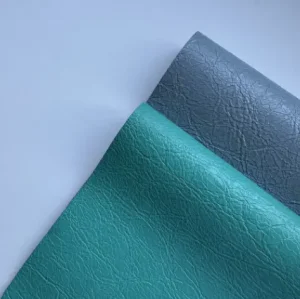
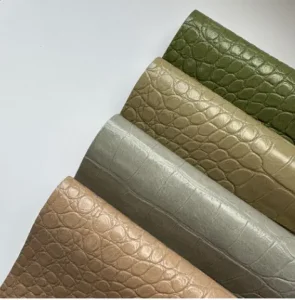
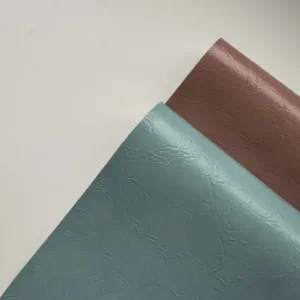

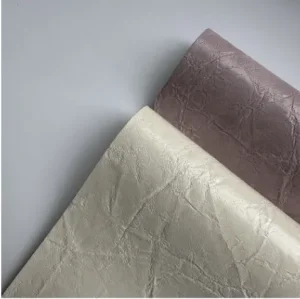
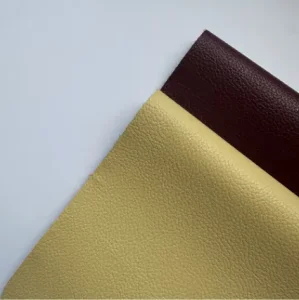
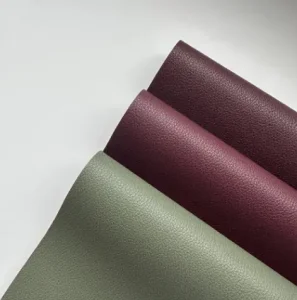
Evaluating synthetic polyurethane, biobased composite polymers, and traditional genuine leather across life-cycle emissions, batch uniformity, cutting yields, and corporate ESG accountability.
Traditional animal leather supply chains are increasingly constrained by deforestation scrutiny, methane emission penalties, and severe chemical footprint mandates under the EU Corporate Sustainability Due Diligence Directive (CSDDD). Modern biobased and recycled artificial leathers offer verified carbon-intensity reduction indices.
Unlike bovine hides characterized by irregular perimeters, brand scars, and neck creases, engineered PU rolls provide continuous 1.37–1.40m usable widths. Industrial CNC knife and laser cutting facilities consistently achieve 92–96% material utilization, dropping scrap costs by up to 28%.
Legacy synthetic leather relied heavily on Dimethylformamide (DMFa) and toxic phthalates. Our next-generation formulations utilize 100% solvent-free hot melt technologies and water-dispersed PU resin formulations, eliminating solvent evaporation risks for skin-contact consumer goods.
Operating from our 135,733 m² solar-powered eco-industrial park in Yinghong Industrial Zone, Yingde, Guangdong, JiangXin integrates green chemical syntheses with automated continuous manufacturing.
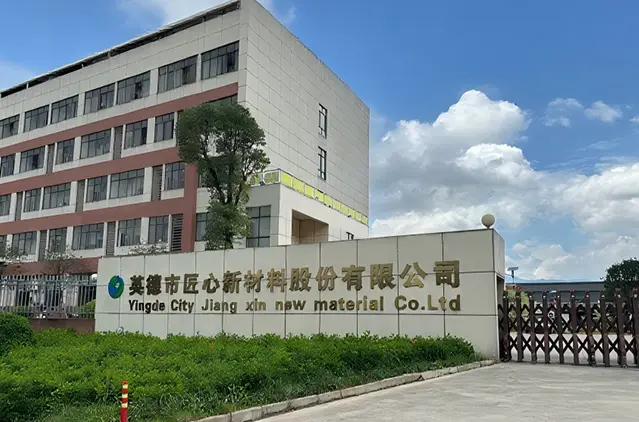
Equipped with a 4.68 MW rooftop photovoltaic solar generation infrastructure, our campus substantially offsets operational energy draw. Floor-to-ceiling tempered glass workshops maximize passive thermal optimization and daytime natural luminescence.
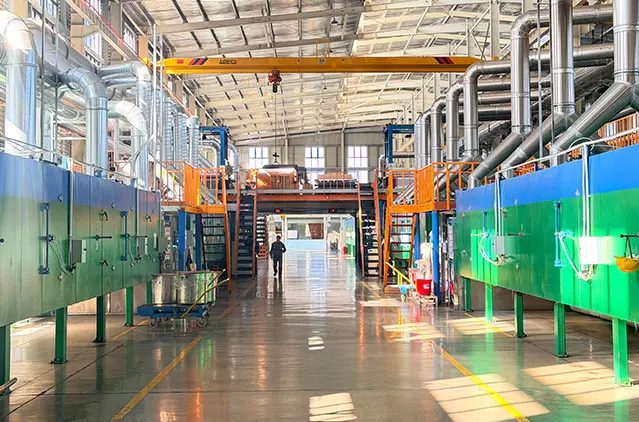
Dry-process coating lines integrate closed-circuit secondary heat exchangers that capture waste thermal dissipation, re-injecting clean heat into oven drying chambers to decrease primary boiler fuel reliance by more than 34%.
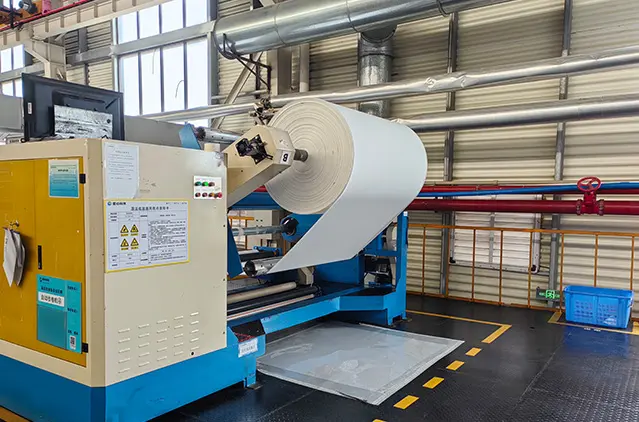
Featuring an internal biological aerobic/anaerobic wastewater treatment facility, water discharges satisfy stringent municipal ecological metrics, guaranteeing total regulatory continuity without line shutdowns.
| Evaluation Parameter | Traditional Bovine Leather | Standard PVC Faux Leather | JX.ECO Biobased & RCS PU (Factory 4.0) |
|---|---|---|---|
| Feedstock Origin | Animal Husbandry / Slaughter Byproduct | Fossil Crude Oil Polyvinyl Chloride | Renewable Bio-Polyols & Post-Consumer rPET |
| Carbon Footprint Index | High (~110 kg CO₂e / m²) | Moderate (~15 kg CO₂e / m²) | Ultra-Low (< 4.8 kg CO₂e / m²) |
| Hazardous Substances | Chromium VI, Formaldehyde, Arsenic | Toxic Phthalates (6P), Lead, Heavy Metals | Zero Phthalates, Zero DMFa, REACH Compliant |
| Hydrolysis Resistance | Vulnerable to rot, mold, hydration loss | Prone to surface embrittlement and cracking | 5 to 10+ Years Jungle Test Standard |
| Usable Cutting Yield | 65% – 75% (irregular edges & surface scars) | 85% – 88% | 94% – 98% Roll Utilization Efficiency |
Cross-industry functional mapping engineered to surpass mechanical stress requirements across demanding international consumer and industrial categories.
Footwear manufacturers require high flex fatigue resistance, stitch tear tolerance, and hydrolytic stability under extreme climates. Our biobased PU series delivers over 150,000 Bally flex cycles at -10°C, maintaining tensile integrity across safety boots and performance athletic sneakers.
High-end accessories demand rich touch tactile warmth, deep grain fidelity, and flawless drape. With custom calfskin, pebble, saffiano, and custom designer embossing plates, our vegan leathers enable tier-1 luxury houses to achieve cruelty-free premium aesthetics.
Vehicle interiors demand stringent anti-fogging (DIN 75201), extreme UV lightfastness (Xenon arc exposure ISO 105 B06), and strict flame retardancy (FMVSS 302). Our specialized automotive-grade waterborne PU compounds guarantee zero fogging build-up on windshields.
Streamlining the procurement lifecycle for buyers in over 50 countries with end-to-end chain-of-custody documentation, digital lab testing packs, and bonded freight support.
We issue validated Transaction Certificates (TC) tracking recycled polyester and polyamide inputs from post-consumer collection centers directly to your finished rolls, protecting your brand from global greenwashing liability.
Continuous monitoring against 240+ Substances of Very High Concern (SVHC) outlined by the European Chemicals Agency (ECHA). Full conformance with OEKO-TEX Standard 100 Class I (safe for infant contact).
In-house spectroscopic colorimeters achieve delta-E < 0.6 color matching within 48 to 72 hours from physical swatch or Pantone TCX target receipt, accelerating design-to-prototype schedules.
Pioneering the next frontier in material chemistry: our multi-year R&D trajectory dedicated to zero-petroleum formulations and end-of-life circular disassembly.
Transitioning beyond corn and sugarcane feedstocks toward non-food biomass including apple pomace, coffee grounds, pineapple leaf waste, and cactus cellulose to mitigate land-use pressures while pushing renewable carbon fractions beyond 65% (ASTM D6866 standard).
Developing monolithic synthetic structures wherein the surface polyurethane coating and the backing knitted substrate utilize chemically identical polymer families, allowing true fiber-to-fiber mechanical and chemical recycling without post-consumer delamination bottlenecks.
Integrating encrypted microscopic isotopic tagging and QR-addressable cryptographic ledger certificates within bulk roll selvage borders, enabling automated scanning of material composition, chemical safety certificates, and lifetime recycling journeys at final disposal facilities.
Immediate technical clarity on minimum order quantities, compliance verification, lead times, and custom compound tailoring.
Request customized physical swatch hangtags, complete compliance audit binders, or submit your brand's technical specifications directly to our engineering team.
Explore our custom vegan artificial leather references built on traceable post-consumer recycled substrates and high-purity renewable formulations.