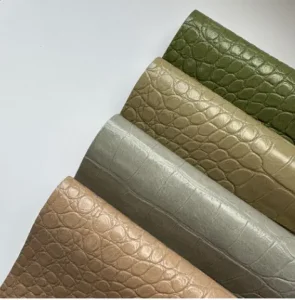
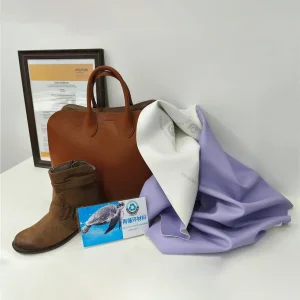
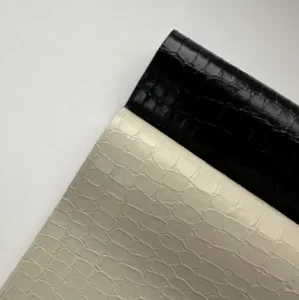
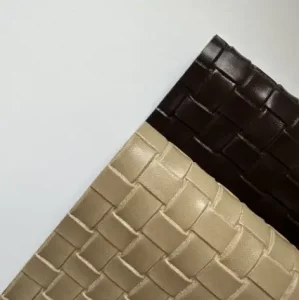
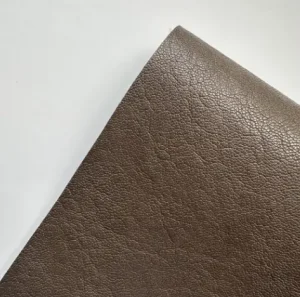
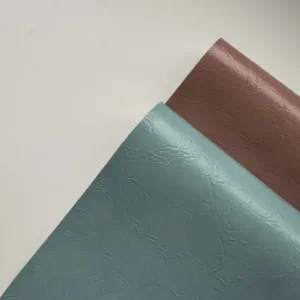
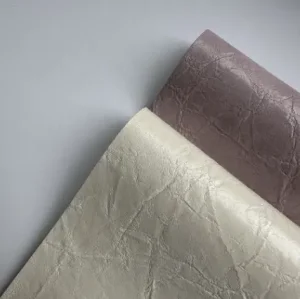
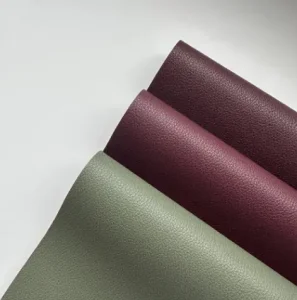
High-Performance Sustainable Synthetic Leather Platforms
Lab-validated tensile integrity, low VOC discharge, and compliant carbon lifecycle tracking for international luxury, footwear, and automotive upholstery brands.
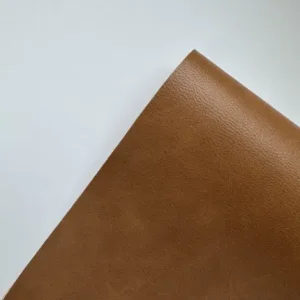
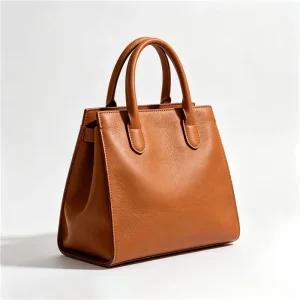
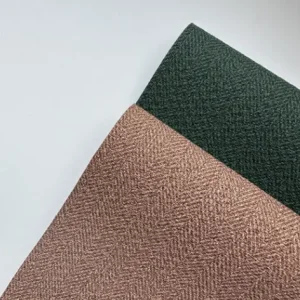
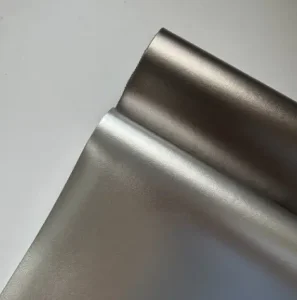
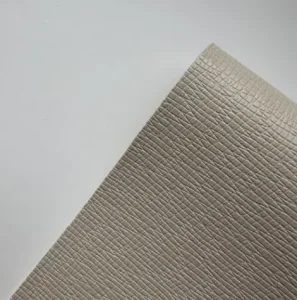
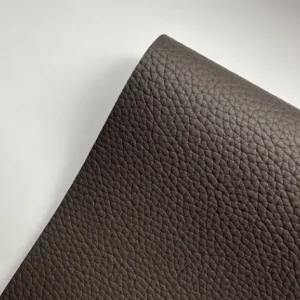
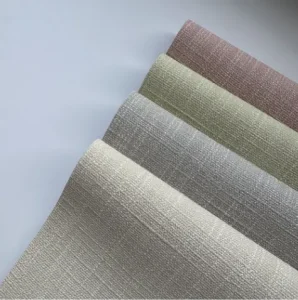
Macro Dynamics Driving Leather & Faux Leather Transitions
The global leather goods and synthetic fabric ecosystem is undergoing a generational shift towards non-toxic polyurethanes, circularity-verified synthetics, and plant-derived resins.
Bio-Based Polyols & Feedstocks
The phase-out of 100% petroleum-dependent synthetic polymers is accelerating. Modern polyurethanes systematically utilize corn-derived, castor bean, or agricultural byproduct polyols to substitute fossil carbon. Utilizing ASTM D6866 radiocarbon verification, contemporary bio-based leather grades reach up to 30%-70% bio-derived carbon without compromising tear propagation or hydrolytic resistance.
Traceable Circular Post-Consumer RCS Recycled Substrates
Circular procurement guidelines demand full chain-of-custody verification. Through the Recycled Claim Standard (RCS) and Global Recycled Standard (GRS), manufacturers now utilize microfibers, rPET polyesters, and upcycled post-industrial synthetic trimmings to assemble resilient backing textiles that significantly lower scope 3 embedded emissions.
Zero-DMFa & Water-Based Dispersion PU Chemistry
Stringent REACH revisions and international chemical compliance bans (including California Proposition 65 and ZDHC standards) have forced the industry away from dimethylformamide (DMFa) solvent coagulation. Waterborne PU dispersions (PUD) and 100% solvent-free hot-melt extrusion lines eliminate occupational hazards and volatile organic compound emissions entirely.
Enterprise Procurement Criteria: Real Leather vs. Advanced Eco-Synthetics
A rigorous comparative framework examining physical durability, chemical compliance, unit cost predictability, and verifiable environmental metrics for strategic enterprise supply chain managers.
| Evaluation Parameter | Traditional Bovine / Genuine Leather | Legacy PVC / Solvent PU Leather | Next-Gen Bio-Based & RCS Synthetic Leather |
|---|---|---|---|
| Raw Material Origin | Animal hide (bovine, ovine) requiring intensive tanning | 100% crude oil derivatives (PVC resin, petroleum polyols) | Renewable agricultural polyols + GRS/RCS recycled microfibers |
| Chemical Safety & Off-Gassing | Risk of hexavalent chromium (Cr VI) and heavy metals | High residual solvents (DMFa, phthalate plasticizers) | 100% solvent-free / waterborne, zero DMFa, REACH & RoHS compliant |
| Cutting Yield & Consistency | 60% – 75% yield due to scarring, insect bites, natural grain defects | 90% – 95% roll consistency, uniform thickness | 95% – 98% optimal continuous roll yield with automated CAD/CAM nesting |
| Hydrolysis Resistance (Jungle Test) | Variable depending on wet-blue tanning & finishing | Prone to surface peeling within 1 to 3 years (1-3 weeks jungle test) | Engineered polyether/polycarbonate bases exceeding 5 to 10+ weeks |
| Chain-of-Custody Certification | LWG (Leather Working Group) traceability verification | Minimal third-party environmental validation | USDA BioPreferred (ASTM D6866), Textile Exchange RCS/GRS, Higg FEM |
| Cold-Crack & Flex Performance | High natural flexibility, dries out without care | Stiffens and fractures below -10°C | Maintains dynamic flex endurance at -20°C to -30°C for sub-zero performance |
China Industry 4.0: Supply Chain Resilience & Technical Precision
How Yingde City JiangXin New Material Co., Ltd. (JX.ECO) integrates smart chemical synthesis, circular clean-tech infrastructure, and end-to-end digital process management.
Automated Coating & Closed-Loop Recovery
Operating dedicated wet and dry process lines with real-time infrared inline gauge monitoring guarantees precision film calipers from 0.5mm to 2.2mm with ±0.02mm roll-to-roll tolerance. Integrated thermal oxidizers and solvent distillation condensers achieve over 95% heat and chemical recovery cycles.
Clean Energy Decarbonization (4.68 MW Solar)
JX.ECO's 135,733 m² campus in Guangdong utilizes an extensive 4.68 MW rooftop photovoltaic array, generating millions of kilowatt-hours of clean electricity annually. Combined with an on-site advanced biochemical wastewater treatment facility, the production footprint minimizes Scope 1 and Scope 2 emissions.
Lab-to-Bulk Quality Locking
Formulations validated during prototyping undergo strict spectral color matching, Taber abrasion cycles (up to 100,000 revs), Bally flexometer cracking checks, and xenon weathering testing. Once locked, computerized chemical dosing systems reproduce exact batches across multi-ton production runs.
High-Demanding Engineered Application Scenarios
Custom substrate engineering, tailored polymer elasticity, and specialized surface coatings designed for distinctive commercial, industrial, and consumer markets.
Performance Athletic & Casual Footwear
Engineered for high-vamp flex endurance (exceeding 100,000 flexes at -10°C), superior tensile bond strength for vulcanized outsoles, and high-abrasion toe-cap protection with breathable micro-porous membrane coatings.
Luxury Handbags & Accessories
Calibrated drape, supple leather hand-feel, and fine dimensional embossings (including linear toothpick grains and classic saffiano textures). Edge-paint compatible backings without delamination under high humidity.
Automotive & Commercial Interiors
FMVSS 302 flame retardancy certification, extreme UV colorfastness under accelerated Xenon Arc exposure (Grade 4.5+), anti-stain fluorocarbon-free surface seals, and high Martindale abrasion endurance for contract seating.
Protective Consumer Electronics Cases
Ultra-thin profile configurations (0.5mm - 0.7mm) with anti-scratch polyurethane formulations, anti-microbial treatments, and non-migrating plasticizer technology for tablets, laptops, and smartphone cases.
Frequently Asked Questions on Leather & Synthetic Sourcing
Direct answers from material scientists and international supply chain engineers regarding minimums, certification, chemistry, and testing.
How is bio-based content mathematically calculated and verified?
Bio-based content represents the percentage of organic carbon derived from recent renewable biological sources versus fossil carbon. It is verified using ASTM D6866 radiocarbon dating analysis (measuring the Carbon-14 isotope ratio). We provide verified third-party laboratory test reports that support hangtag claims such as USDA BioPreferred program labeling.
What documentation accompanies an RCS or GRS certified order?
Every commercial production batch manufactured under the Recycled Claim Standard (RCS) is traced through our Textile Exchange scope certificate. Upon shipping approval, we issue a formal Transaction Certificate (TC) through the accredited certifying body, detailing the exact percentage of verified post-consumer or post-industrial recycled input.
How does solvent-free PU prevent hydrolysis degradation?
Traditional wet-process PU coagulated with DMFa leaves microscopic cellular voids and hydrophilic solvent residues that attract moisture, accelerating polyurethane bond breakdown. In contrast, 100% solid, solvent-free hot-melt systems and high-density polycarbonate/polyether resins create dense cross-linked structures that pass 5- to 10-week jungle tests (70°C, 95% RH).
What are the standard Minimum Order Quantities (MOQs) and lead times?
For custom color matching (Pantone TPX / TCX) and proprietary grain engraving, our standard production MOQ is typically 500 to 1,000 linear meters per color. Lab-dip swatches are delivered within 5 to 7 business days, with full container bulk production completed in 15 to 20 business days.
Can physical hand-feel and stiffness be customized across the same base grain?
Yes. The finished temper and hand-feel can be engineered from soft, buttery nappa textures to rigid, structured leatherette finishes. We achieve this by adjusting the polyurethane coating formulation, altering plasticizer-free molecular chain flexibility, and pairing specific backing fabrics such as microfibers, woven twills, circular knits, or non-wovens.
Which fire retardancy standards can your engineered upholstery synthetics meet?
Our industrial-grade faux leather formulations can be compounded to pass major international fire safety standards, including UK BS 5852 Crib 5, US California TB 117-2013, and automotive FMVSS 302, utilizing non-halogenated, eco-friendly flame retardant additives.
Upcycled, High-Durability & Bio-Derived Synthetics
Engineered technical leather fabrics available for immediate sampling, bulk contract manufacturing, and international distributor fulfillment.