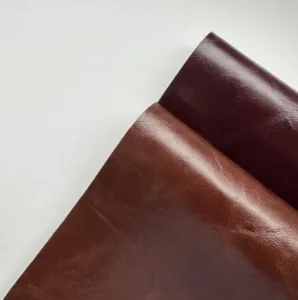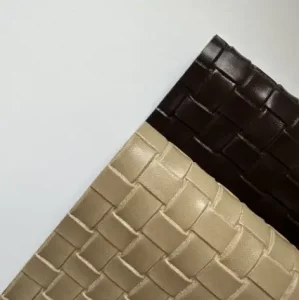
Direct Factory Catalog
High-Performance Vegan & Bio-Based Formulations
Engineered to satisfy luxury tactile demands, strict international restricted substance lists (RSL), and high flex-abrasion standards.
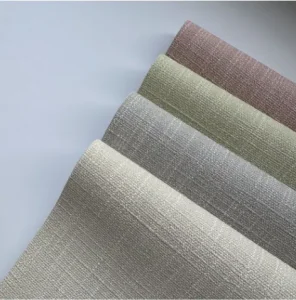
Wholesale Bio-Based Renewable Synthetic Leather-9384 Manufacturer, Supplier
Technical Specs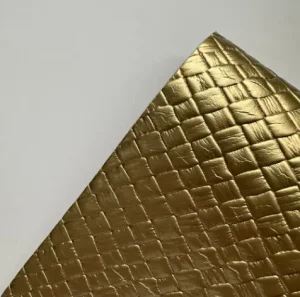
Custom RCS‑Verified Recycled‑Content Sustainable Synthetic Leather-9317 Manufacturers, Manufacturer
Technical Specs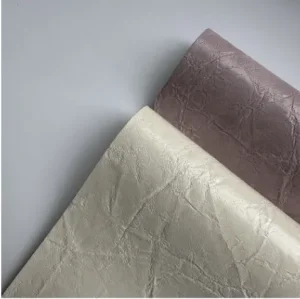
High-Quality RCS Recycled Synthetic Leather-0212 Manufacturer, Factory
Technical Specs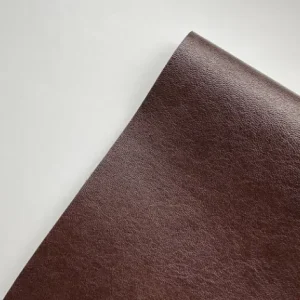
Custom RCS Verified Recycled Synthetic Leather Suppliers, Factories
Technical Specs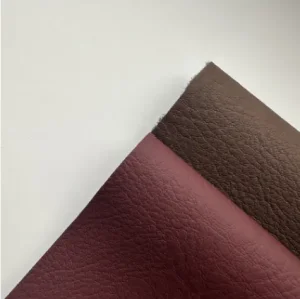
OEM RCS-Certified Traceable Recycled Synthetic Leather-9133 Manufacturer, Factory
Technical Specs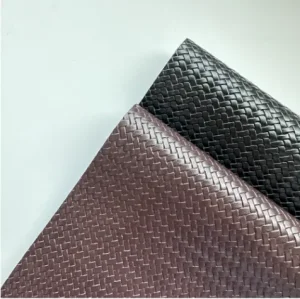
OEM Eco-Friendly Sustainable Synthetic Leather-9348 Manufacturers, Suppliers
Technical Specs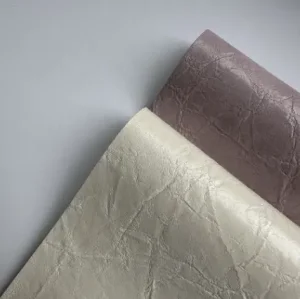
High-Quality RCS Approved Recycled‑Content Synthetic Leather-0212 Suppliers, Factories
Technical Specs
Enterprise Manufacturing Matrix
Why Global Tier-1 Brands Anchor Production in Guangdong, China
China's synthetic polymer industry has graduated from traditional commodity production to world-leading green chemical synthesis, high automation, and closed-loop environmental resilience.
Vertical Supply Chain Integration
Direct integration with domestic biomass polyol refineries, upstream polyester yarn spinning, and specialized grain release paper vendors minimizes transit friction, cuts production lead times to 7–15 days, and stabilizes raw material pricing against global logistics fluctuations.
Full Chain-of-Custody Traceability
Our operational framework integrates the Textile Exchange Recycled Claim Standard (RCS) alongside global Transaction Certificates (TC), guaranteeing that post-consumer rPET substrates and plant-based polyol contents withstand third-party ESG audits without greenwashing exposure.
Economies of Scale & Yield Efficiency
With an annual capacity topping 16,000,000 meters from a massive 135,733 m² clean campus, automated PLC-controlled continuous transfer coating systems provide pristine edge-to-edge consistency, eliminating batch-to-batch color shifts and maximizing downstream cutting yields above 95%.
Clean Energy Infrastructure
Deploying a proprietary 4.68 MW rooftop photovoltaic solar grid and internal catalytic regenerative thermal oxidizers (RTO), our factory generates its own green power and recaptures over 98% of thermal and solvent outputs, substantially shrinking product Scope 1 and Scope 2 carbon footprints.
16M+
Annual Output Meters
135,733 m²
Modern Campus Footprint
4.68 MW
Photovoltaic Clean Power
50+
Direct Export Destinations
Technical Whitepaper Insight
The Paradigm Shift: From Traditional PVC/PU to Bio-Synthetics
Consumer sentiment, tightening European chemical directives, and the corporate drive for carbon neutrality have completely transformed polyurethane polymer formulation.
1. Plant-Derived Polyol Integration
Replacing petroleum-derived polyols with non-food agricultural feedstocks (corn starch, castor oil, and industrial sugarcane) achieves bio-content ratings between 20% and 75% per ASTM D6866 radiocarbon verification, avoiding petroleum dependency while matching conventional mechanical tensile thresholds.
2. 100% Waterborne & Solvent-Free Systems
Legacy dimethylformamide (DMFa), toluene, and methyl ethyl ketone (MEK) processing systems are phased out. Our production uses 100% waterborne polyurethane (WPU) and solventless hot-melt PU coating technology, yielding near-zero VOC emissions, hypoallergenic touch, and complete human-wear safety.
3. Circular Backing Innovations
Surface coating innovations are paired with mechanical strength layers built entirely on recycled post-consumer PET bottles (RCS/GRS certified), recycled microfiber composites, and natural linen/organic cotton backings, creating a cohesive, end-to-end circular substrate for modern fashion assemblies.
Engineered Customization
Targeted Solutions Across Global Consumer & Industrial Sectors
Synthetic faux leather must perform uniquely across distinct stress parameters. We calibrate chemistry, thickness, backing stretch, and topcoats for specific high-stress environments.
Performance Footwear & Sneaker Uppers
Engineered for high dynamic fatigue resistance, withstanding >100,000 flex cycles at -10°C (Bally Flexometer test). Formulated with high-recovery microfiber cores for toe-box recovery, high tear strength along seam lines, and water-repellent breathable microporous coatings.
Anti-Cold Cracking
Bespoke Grains
Tear Resistant
Luxury Handbags & Designer Leather Goods
Delivers the soft, dry drape, supple temper, and heavy body of calfskin leather without animal inputs. Optimized for clean skiving, seamless edge-painting adhesion, and high thermal retention during dimensional debossing and high-frequency branding.
Calfskin Hand-Feel
Edge Paint Friendly
Rich Color Depth
Apparel, Outerwear & Fashion Jackets
Ultra-thin, featherweight polyurethane membranes calibrated from 0.45mm to 0.75mm. Paired with lightweight elastic viscose or organic cotton backings, yielding superb four-way drape, washability, breathability, and noise-free, non-stick garment wear.
0.55mm Ultra-Light
Drape Dynamic
Odorless
Automotive Seating & Hospitality Contract Upholstery
High-abrasion performance passing >100,000 Martindale and Wyzenbeek rub cycles. Enhanced with UV-stable aliphatic polyurethanes to prevent yellowing or heat-aging, alongside optional certifications for BS5852 Crib 5 and CAL 133 flame retardancy.
100k Martindale
UV Protected
Flame Retardant
Enterprise Procurement Matrix
Critical Quality Control Specifications for Global Sourcing Teams
When engineering global leather alternatives, chemical consistency and mechanical testing protocols ensure rapid border customs clearance and brand compliance. We validate every master roll against four core metrics:
-
01.
Restricted Substances List (RSL) Rigor: Complete elimination of banned organotin compounds, Dimethyl Fumarate (DMFu), short-chain chlorinated paraffins (SCCPs), and six regulated phthalates (6P Free) under EU REACH and California Prop 65.
-
02.
Hydrolysis Testing Lifespan: Guaranteed resistance against high humidity degradation using the Jungle Test (testing at 70°C and 95% relative humidity for 5 to 10 weeks), proving long-term surface stability.
-
03.
Delamination & Peel Strength: Industrial surface adhesion (>3.0 kg/3cm) between the PU skins and recycled substrates, preventing bubble detachment and bubble migration under prolonged shear force.
Direct Factory OEM/ODM Sourcing Workflow
From initial design concept to final master roll dispatch, our streamlined 5-stage production process keeps your supply chain agile and reliable:
Step 1: Specification Alignment — Define substrate, thickness (0.4mm–3.0mm), grain reference, and target eco-standard (RCS, Bio-based %, Solvent-free).
Step 2: Rapid Lab Sampling — Custom physical lab swatches, color dips, and grain roll-outs manufactured and dispatched via DHL within 48 to 72 hours.
Step 3: Analytical Verification — Mechanical tensile, cold-flex, and chemical RSL verification conducted in our in-house ISO/IEC-compliant lab.
Step 4: Continuous Bulk Transfer — PLC-monitored mass production running across precision high-speed coating lines.
Step 5: Roll-by-Roll Inspection — 4-Point System quality verification, accompanied by full TC documentation and export logistics manifests.
Enterprise Procurement Inquiries
Frequently Asked Technical & Sourcing Questions
Clear, direct answers to common questions from sourcing directors, material developers, and compliance managers.
What distinguishes your vegan faux leather from traditional PVC?
Unlike traditional polyvinyl chloride (PVC), our advanced vegan faux leathers are produced with polyurethane (PU), waterborne PU, or bio-based polyol systems completely free of phthalate plasticizers and toxic chlorine. Our materials offer breathable microporous performance, superior cold flex, zero offensive odor, and reduced lifecycle carbon emissions.
How do you verify and document bio-based or recycled claims?
Recycled synthetic substrates are certified via the Textile Exchange Recycled Claim Standard (RCS), providing verifiable Transaction Certificates (TC) tracking rPET from recycled flake to finished roll. For bio-based lines, content percentages are quantitatively tested via ASTM D6866 carbon isotope radiocarbon analysis.
What are your standard Minimum Order Quantities (MOQs) and lead times?
Our standard production MOQ for custom formulated colors and grains is 500 meters per color/thickness. For stock catalog articles, low trial thresholds of 100 meters are supported. Standard bulk production lead time runs 10 to 15 business days following sample sign-off.
Can you engineer materials to meet custom client RSL specifications?
Yes. We routinely manufacture synthetic leathers that meet stringent global standards including EU REACH SVHC, RoHS, OEKO-TEX Standard 100, 6P Phthalate-free directives, and brand-specific RSL lists. Simply provide your testing criteria during the sampling brief.
Complete Collection
Specialty Eco-Friendly & Recycled Leather Formulations
Explore additional certified formulations designed for luxury footwear, apparel, technical outerwear, and durable accessories.
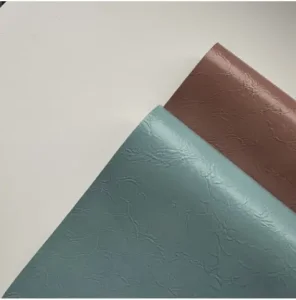
Wholesale Bio-Based Renewable Synthetic Leather-0177 Manufacturers, Factories
Technical Specs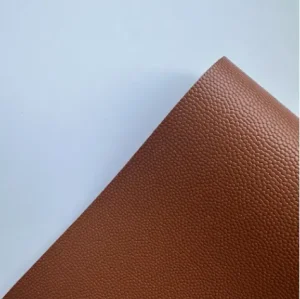
Wholesale Sustainable Eco-Conscious Synthetic Leather-9142 Manufacturer, Supplier
Technical Specs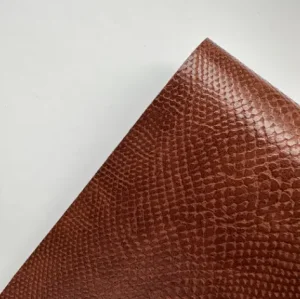
Custom RCS‑Verified Recycled Content Synthetic Leather-0041 Manufacturer, Suppliers
Technical Specs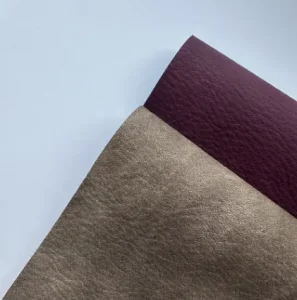
OEM Low Odor Bio-Based Vegan Leather-9237 Suppliers, Factory
Technical Specs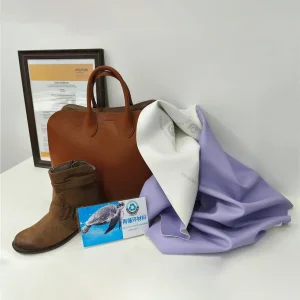
OEM RCS Certified Recycled Sustainable Synthetic Leather Supplier, Factory
Technical Specs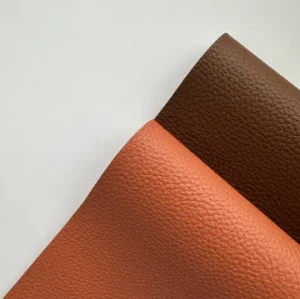
Custom Bio-Based Renewable Synthetic Leather-9109 Supplier, Factory
Technical Specs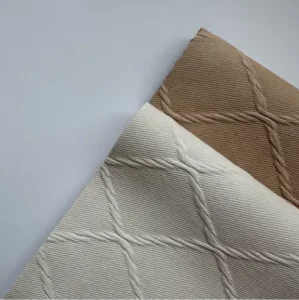
Wholesale Bio-Based Renewable Synthetic Leather -9016 Manufacturers, Factories
Technical Specs