
High-Performance Certified Upholstery Platforms
Engineered for rigorous contract furniture rub tests, zero-VOC off-gassing, and circular brand mandates. Direct factory integration with audited batch consistency.
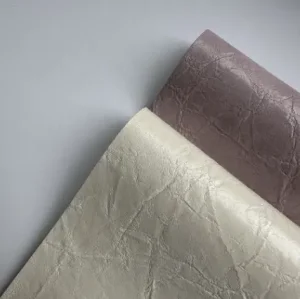
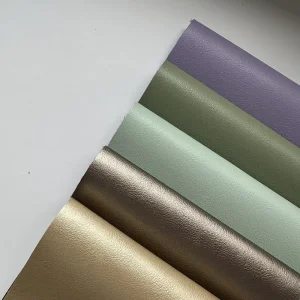
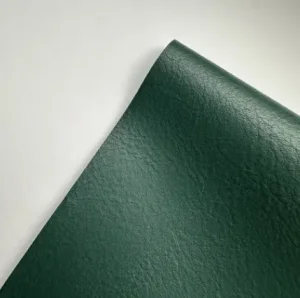
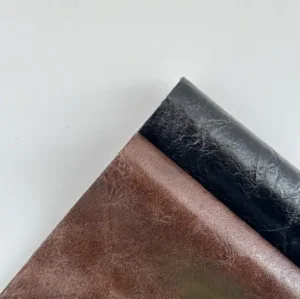
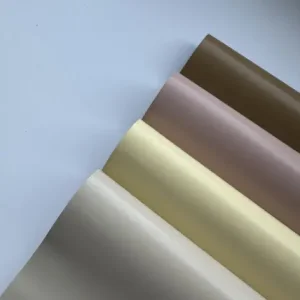
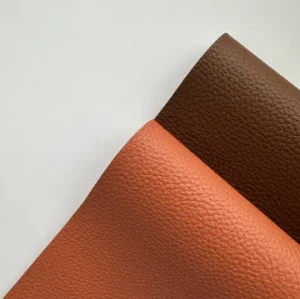
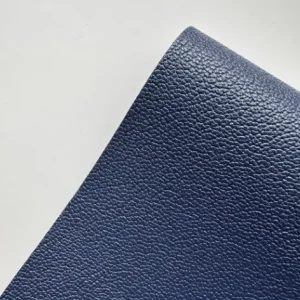
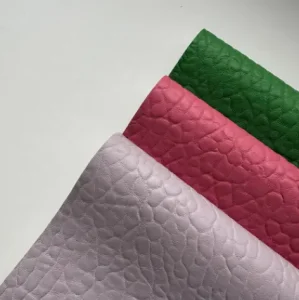
Global Enterprise Sourcing Architecture for Upholstery Composites
Strategic shift toward sustainable synthetic leather upholstery across contract furniture, automotive interiors, mass transit, and commercial environments.
The commercial upholstery sector is undergoing a structural paradigm shift. Driven by stricter environmental regulations across the European Union (such as REACH, the Corporate Sustainability Due Diligence Directive, and CBAM) as well as the United States (state-level PFAS bans and Prop 65 enforcement), international procurement directors are systematically phasing out conventional, solvent-heavy PVC and traditional dimethylformamide (DMF)-based polyurethane leathers. In their place, next-generation water-based PU, high-solid solvent-free polyurethane, bio-based synthetics, and circular post-consumer recycled substrates have transitioned from niche options to baseline tender prerequisites.
Procuring synthetic leather upholstery at enterprise scale requires navigating a complex matrix of engineering tolerances. Upholstery fabrics endure extreme localized physical wear, multidirectional stretch fatigue, oxidative degradation from industrial sanitizers, and unpredictable microclimatic exposure. Yingde City JiangXin New Material Co., Ltd. (JX.ECO) bridges modern chemical synthesis with large-scale industrial output, operating from a modern 135,733 m² clean-tech production campus designed to satisfy tier-1 OEM contract parameters across more than 50 export countries.
Stringent Chemical Stewardship
Complete elimination of organic solvents like DMF, toluene, and methyl ethyl ketone (MEK). Materials pass OEKO-TEX Standard 100 Class I, RoHS, and EU REACH Annex XVII tests for SVHCs, guaranteeing zero VOC off-gassing in sealed commercial and passenger cabin spaces.
Demanding Mechanical Durability
Engineered to exceed heavy-duty commercial benchmarks: >100,000 to 200,000 double rubs on the Wyzenbeek wire screen (ASTM D4157), >100,000 cycles Martindale (ISO 12947-2), and high seam-slippage resistance (ASTM D4034) preventing stitch perforation under stress.
Verifiable Biobased & Recycled Claims
Certified plant-derived carbon content verified via radiocarbon analysis (ASTM D6866 / USDA BioPreferred) paired with fully documented post-consumer recycled backing microfibers governed by Recycled Claim Standard (RCS) chain-of-custody transaction certifications.
Commercial Sector Procurement Matrix & Performance Thresholds
Standardized chemical and physical properties engineered to pass global commercial test protocols across automotive, healthcare, marine, and contract seating.
| Industry Sector | Core Application | Critical Testing Protocol | Target Engineering Standard | Recommended OEM Composite |
|---|---|---|---|---|
| Automotive Seating & Trim | Seat cushions, bolsters, door panels, console wrapping | DIN 75201 (Fogging), VDA 270 (Odor), Taber Abrasion (CS-10) | Condensable constituent < 2mg, Odor rating ≤ Grade 3, 5,000 cycles zero wear | Solvent-Free Aliphatic PU with Recycled Microfiber Backing |
| Contract & Hospitality | High-traffic hotel lobbies, corporate workstations, airport lounges | ASTM D4157 (Wyzenbeek), CAL 133, NFPA 260 Class 1, BS 5852 Crib 5 | 100,000 - 200,000 double rubs, self-extinguishing flame retardancy | Bio-Based High-Solid Polyurethane with Hydrolysis Barrier |
| Healthcare & Clinical | Hospital examination beds, dental seating, cleanroom surfaces | ISO 22196 (Antimicrobial), ASTM G21 (Antifungal), Chemical wipe down | >99.9% reduction (E. coli, MRSA); resistant to bleach, quats, and 70% IPA | Polycarbonate Waterborne PU with Cross-Linked Anti-Stain Topcoat |
| Marine & Outdoor Seating | Yacht cockpits, outdoor resort dining, marine passenger vessels | ASTM G154 (QUV Accelerated Weathering), IMO FTP Code Part 8 | 1,500+ hours UVB resistance without chalking/cracking; salt-fog resistant | UV-Stabilized Silicone-PU Hybrid Coating on Marine Backing |
| Aviation & Mass Transit | Commercial airline seating, high-speed rail passenger seats | FAR 25.853 (Vertical Flammability), Toxicity & Smoke Density tests | Flameout time < 15s, burn length < 6 inches, low heat release rate | Low-Smoke Halogen-Free Flame Retardant Bio-PU Composite |
Tensile & Tear Resistance
High-tenacity knitted and woven backing fabrics deliver exceptional breaking strength (>450 N) and tongue tear resistance (>45 N according to ISO 13937-2), preventing seam rupture in demanding upholstering operations.
10-15 Year Hydrolysis Defense
Polycarbonate and polyether polyol soft segments resist warm moisture attack. Tested via Jungle Room (ASTM D3690 / 70°C at 95% RH) for up to 10 to 14 weeks without surface peeling, sticky delamination, or embrittlement.
Stain Release Shield
Fluorine-free oleophobic topcoats resist stubborn stains including ballpoint pen, mustard, coffee, betadine, and denim dye transfer. Cleans with mild neutral soap and water without stripping surface grain aesthetics.
Sub-Zero Cold Crack Tolerance
Formulated for thermal stability across extreme temperature deltas, retaining suppleness and passing cold impact/flex tests down to -30°C (-22°F) without cracking (CFFA-6a / ASTM D1912), vital for transport and cold-climate projects.
Material Science & Green Polymer Engineering Roadmap
A systematic transition away from petrochemical-dependent synthetic leather toward renewable, closed-loop, and carbon-negative molecular architectures.
Phase 1: Bio-Based Polyol Integration
Replacing petroleum-derived polyols with non-edible agricultural feedstocks (industrial corn starch, castor oil, and agricultural residue). JiangXin manufactures bio-based synthetic leathers verified by ASTM D6866 carbon dating, scaling from 20% to over 60% verifiable biobased carbon content without sacrificing physical tensile properties.
Phase 2: Post-Consumer Circularity (RCS/GRS)
Utilizing high-purity recycled polyethylene terephthalate (rPET) sourced from post-consumer plastic bottles and recycled textile fibers to produce knit, woven, and non-woven microfiber backings. Fully documented via Textile Exchange Recycled Claim Standard (RCS) chain-of-custody, giving enterprise brands traceable cradle-to-gate certification.
Phase 3: 100% Waterborne & Solvent-Free PU
Transitioning lines to 100% solids solvent-free coating technology and waterborne polyurethane dispersions (PUDs). Eliminates toxic chemical processing aids (DMFa, DMAC, NMP), slashing production VOC emissions to virtually zero while conserving substantial process energy through lower drying and curing thermal thresholds.
JiangXin Manufacturing Campus & Production Prowess
A 135,733 m² eco-engineered facility in Yingde, Guangdong, built to institutional green manufacturing benchmarks.
4.68 MW Clean Photovoltaic Generation
The entire roof of our facility is outfitted with a 4.68 megawatt solar PV system. Clean electricity powers our high-speed dry-process coating and precision surface texturing lines, delivering a measured reduction in embodied carbon for every running meter of synthetic leather supplied.
Thermal Recovery & RTO Systems
Thermal regenerative oxidizers (RTO) achieve >99% destruction efficiency of volatile exhaust, recapturing over 95% of thermal energy to reheat drying ovens. Certified under ISO 14001 environmental management and audited annually through the Higg Facility Environmental Module (Higg FEM).
Zero Direct Wastewater Discharge
Our centralized industrial wastewater treatment and membrane bioreactor (MBR) recycling unit purifies and re-circulates process water within closed loops. This guarantees zero non-compliant effluent discharge and full adherence to strict local environmental watershed codes.
Enterprise Compliance & Chain-of-Custody Governance
Pre-cleared chemical, physical, and ethical audits satisfying Tier-1 brand supplier vendor matrices worldwide.
Chemical Clearance (REACH & RoHS)
Continuous testing against EU REACH candidate lists of Substances of Very High Concern (SVHC) and 6P phthalate screening (DEHP, DBP, BBP, DINP, DIDP, DnOP). Safe for hospital interiors, juvenile furnishings, and close skin contact.
Textile Exchange RCS / GRS
Official Recycled Claim Standard licensing guarantees raw-material origin tracking from certified plastic flake to final upholstery roll, backed by official Transaction Certificates (TCs) generated per procurement batch.
USDA BioPreferred Certified
Third-party analytical testing following ASTM D6866 Method B verifying authentic biogenic carbon content, helping global brands confidently meet Scope 3 emissions commitments without greenwashing vulnerabilities.
Ethical Audits: amfori BSCI & ISO
Fully certified social accountability under amfori BSCI standards paired with certified management systems under ISO 9001 (Quality Assurance) and ISO 14001 (Environmental Management) for audit compliance.
Enterprise OEM/ODM Customization Process
A proven engineering pipeline taking complex contract upholstery briefs from design tech packs to container-scale production.
Spec Brief & RSL Matching
Review customer tech pack requirements, target market chemical limits (RSL), target cost, and abrasion/flame resistance targets.
Custom Substrate & Grain
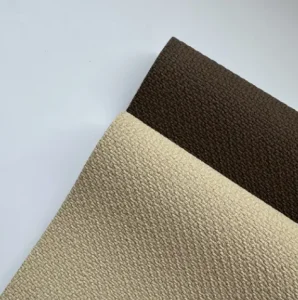
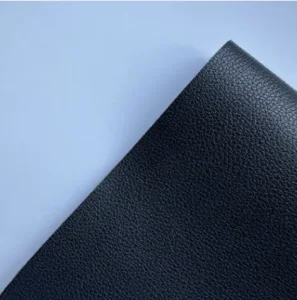
Selecting base fabrics (terry, brushed twill, rPET microfiber) and embossing rollers (bovine grain, Nappa, nubuck, toothpick, geometric textures).
Lab Swatch Prototyping
Computerized spectrophotometer color matching (Delta E < 0.6) and rapid 72-hour lab strike-off sample formulation.
Pilot Line Batch Validation
Short-run trial runs validating Wyzenbeek/Martindale cycles, seam elongation, cold-flex, and flammability compliance before bulk release.
Automated Inline Inspection
Roll-by-roll defect scanning, color consistency monitoring, lot-traced quality documentation, and global export packaging.
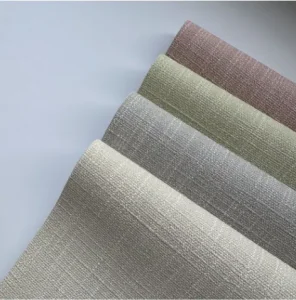
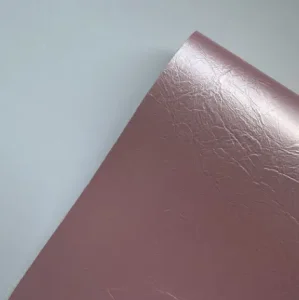
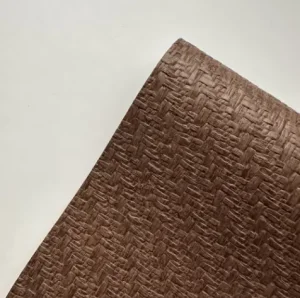
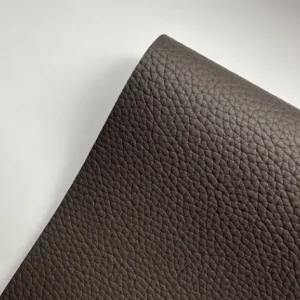
Sustainable Upholstery References (Continued)
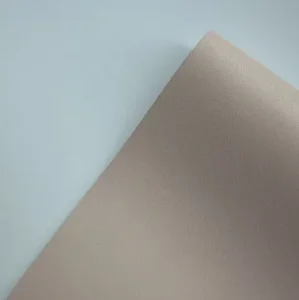
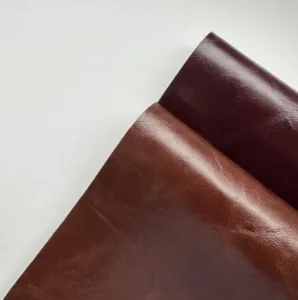
Explore additional bio-engineered, recycled, and high-performance synthetic leather specifications from JiangXin New Material.
Frequently Asked Technical & Sourcing Questions
In-depth insights compiled directly by our materials engineers and international compliance team.
What distinguishes high-solid solvent-free PU from conventional solvent-based polyurethane upholstery?
Conventional PU synthetic leather utilizes organic solvents, primarily Dimethylformamide (DMFa), to dissolve polyurethane resin pellets before wet-coagulation or dry transfer coating. High-solid solvent-free PU utilizes 100% reactive prepolymers without volatile carrier solvents. This eliminates trace DMFa residues (controlled below 5 ppm, well within strict REACH SVHC thresholds of <1000 ppm), eliminates process emissions, avoids surface micro-voids, and dramatically increases abrasion resistance, tensile strength, and flex fatigue performance.
How does JiangXin substantiate bio-based carbon claims for OEM brand partners?
Bio-based content claims cannot be estimated solely through raw chemical input weights; they require precise analytical radiocarbon validation under ASTM D6866. This method measures the ratio of Carbon-14 (modern plant-derived carbon) relative to Carbon-12 (fossil-derived carbon). JiangXin supplies independent third-party laboratory certifications (including USDA Certified Biobased Product verification) showing verified bio-based content ranging from 20% to over 60% depending on the chosen series.
Can your upholstery materials meet strict contract and mass-transit flammability standards without toxic halogens?
Yes. Many legacy synthetic upholstery materials rely on decaBDE or chlorinated paraffins to achieve flame resistance, but these chemicals face widespread international bans. JiangXin engineers halogen-free, phosphorous-nitrogen synergistic flame retardant systems directly into the polymer matrix. Our formulations meet California Technical Bulletin 117-2013, NFPA 260 Class 1, British Standard BS 5852 Crib 5, and Federal Aviation Regulation FAR 25.853 with low smoke toxicity and zero halogen off-gassing.
How is hydrolysis resistance measured, and what warranty terms apply to contract upholstery?
Hydrolysis resistance represents a polymer's ability to resist chemical breakdown caused by moisture and heat. Testing is performed via the accelerated Tropical Chamber / Jungle Test (ISO 1419 Method C / ASTM D3690) at 70°C and 95% relative humidity. One week in this chamber approximates roughly one to two years of ambient commercial service. JiangXin's polycarbonate and high-performance polyether PU upholstery composites reliably withstand 7 to 14 weeks of testing, enabling commercial furniture manufacturers to provide confident 5 to 10 year warranties.
What is the standard OEM sample turnaround, prototype sampling policy, and production lead time?
For catalog color references and existing embossed grains, swatches are dispatched within 24 to 48 hours. Custom color development using spectrophotometric targets and custom lab sample strike-offs are typically completed in 3 to 5 business days. Pilot sample yardage (30 to 50 meters) requires approximately 7 to 10 days. Full container-load production orders (FCL) are manufactured and dispatched in 15 to 20 business days from approved technical strike-off, depending on backing availability.
How does JiangXin manage supply-chain volatility in polyols and petro-chemical feedstocks?
With an annual production volume exceeding 16 million meters and an on-campus industrial storage facility, JiangXin maintains strategic safety reserves of key bio-based polyols, waterborne polyurethane dispersions, and rPET base yarns. This vertically integrated buffering protects enterprise tier-1 clients from spot-market price volatility and ensures consistent, multi-quarter price stability for contracted international manufacturing programs.