
Tier-1 OEM Microfiber & PU Suede Leather Specifications (Part I)
Explore high-performance, circular-verified polyurethane materials manufactured at JiangXin’s solar-powered facility in Yingde, Guangdong. Direct factory procurement for international supply chains.
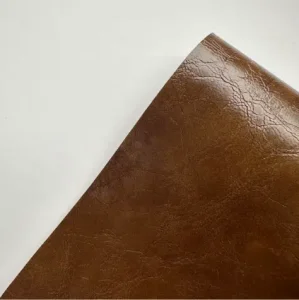
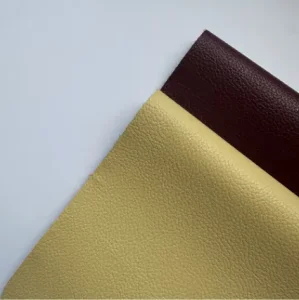
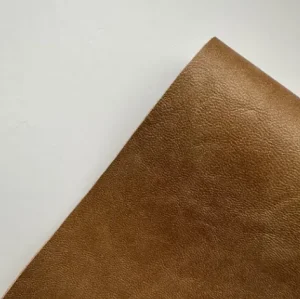
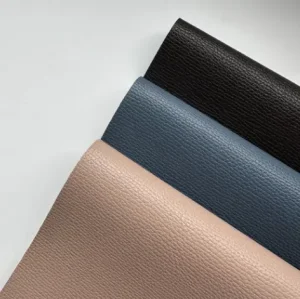
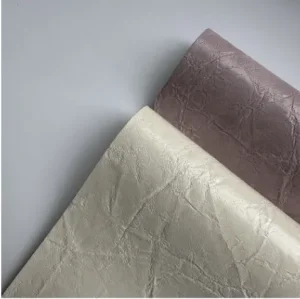
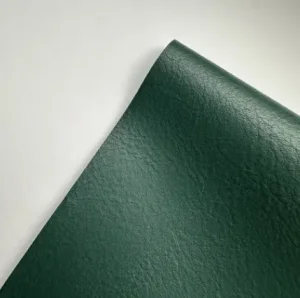
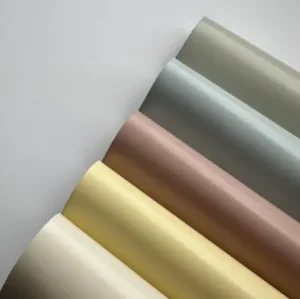
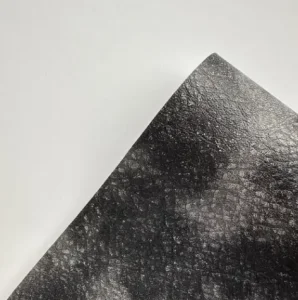
Decarbonization, Rheology, and Morphology: Transforming OEM PU Suede Leather Manufacturing
An analytical overview of structural non-woven matrices, waterborne polyurethane impregnation, and high-frequency tactile uniformity across tier-one manufacturing programs.
Sea-Island Microfiber Non-Woven Substrates
OEM PU Suede hinges entirely on 3D non-woven matrix engineering. By extruding sea-island conjugate micro-denier filaments (polyamide/polyethylene or recycled PET matrices) followed by precise hydro-entanglement and sea-component dissolution, fiber fineness reaches 0.001–0.05 dtex. This generates infinite open fibrils mimicking natural collagen dermis bundles.
Waterborne & Solvent-Free Polyurethane Dipping
Legacy OEM suede manufacturers traditionally relied on N,N-Dimethylformamide (DMF) coagulating baths, leaving hazardous residual traces. JiangXin utilizes waterborne polyurethane dispersions (PUD) and 100% solids solvent-free aliphatic resins, eliminating VOCs, preventing surface embrittlement under extreme UV cycles, and passing strict Zero Discharge of Hazardous Chemicals (ZDHC) rules.
Surface Precision Buffing & Sueding Rheology
Achieving an authentic suede hand-feel without structural bald spots requires dynamic abrasive cylinder control. Multi-stage diamond-coated and micro-grit emery sueding rollers spin against continuous tension controllers to split bundles, raise a dense velvet pile, and deliver consistent directional shading with ultra-low pill and shedding indices.
Global Procurement Imperatives: Risk Mitigation, Traceability & Spec Harmonization
How fortune-tier consumer and industrial brands qualify an OEM PU suede leather factory to safeguard delivery schedules and eliminate supply chain friction.
Cutting Yield & Scrap Minimization
Natural hides suffer from 30%–45% surface waste due to flay cuts, insect bites, and irregular perimeter shapes. JiangXin’s OEM PU suede is produced in continuous 1.37–1.42m width rolls with zero structural defects, enabling multi-layer computer numerical control (CNC) die-cutting efficiency of 92%–98%.
Bespoke Color Fastness & Rub Resistance
Suede materials face immense vulnerability to crocking (color transfer). Through high-temperature cationic fixation and reactive disperse dyeing, JiangXin ensures wet and dry crocking grades of 4.5+ on the AATCC gray scale, alongside 100,000+ Martindale cycles under ISO 12947-2.
Thermal Aging & Hydrolytic Stability
Automotive steering wheels and premium footwear demand materials that resist tropical humidity. Our OEM PU suede formulations undergo rigorous Jungle Tests (10 weeks at 70°C and 95% relative humidity) with zero peel delamination, surface crazing, or loss of tensile cohesion.
Closed-Loop Scope 1, 2 & 3 Decarbonization
Under the Corporate Sustainability Due Diligence Directive (CSDDD), global buyers require quantifiable product carbon footprint (PCF) reports. Our rooftop 4.68 MW solar system reduces direct production energy grid dependence, slashing cradle-to-gate carbon equivalent coefficients per square meter.
Engineering Benchmark: OEM Microfiber PU Suede vs. Traditional Animal Suede vs. Standard PVC
Objective physical, chemical, and environmental comparison validating why global procurement engineers specify solvent-free microfiber PU suede.
| Evaluation Parameter | Animal Split Suede (Cow/Pig) | Standard PVC Faux Suede | Legacy Wet-Process PU Suede | JiangXin Solvent-Free Bio/RCS PU Suede |
|---|---|---|---|---|
| Raw Material Substrate | Chromium/Vegetable Tanned Leather | Woven Polyester Knits + Plasticizers | Needle-punched non-woven + DMF PU | Sea-Island Microfiber Matrix (Recycled PET) |
| Carbon Footprint (kg CO₂e/m²) | 85.0 – 110.0+ kg | 18.5 – 24.0 kg | 14.0 – 19.5 kg | 4.2 – 7.8 kg (Solar-Powered Campus) |
| Volatile Organic Compounds (VOC) | Tanning chemicals, formamides | Phthalate off-gassing, chlorine | DMF residual (20–100 ppm) | Zero VOC / DMFa < 5 ppm (Undetectable) |
| Martindale Abrasion (Dry/Wet) | 15,000 – 25,000 cycles | 20,000 cycles (surface hardening) | 40,000 – 60,000 cycles | > 100,000 to 150,000+ cycles |
| Hydrolysis Resistance (Jungle Test) | Susceptible to mold, rot & hardening | Brittleness from plasticizer migration | 3 – 5 weeks (polyether/polyester split) | 8 – 10+ weeks (70°C, 95% RH stable) |
| Tensile & Tear Strength (N/cm) | Highly non-uniform across hide belly | Moderate warp, weak weft tear | Balanced, moderate elongation | Isotropic balance: > 80 N/mm tear rating |
| Waterproof / Moisture Permeability | Unpredictable without chemical dip | 0% breathability, impermeable trap | Microporous, moderate breathability | Engineered 3,000–8,000 g/m²/24h breathability |
| Traceability Certification | Complex farm-to-slaughter custody | Petrochemical feedstocks | Opaque chemical supply line | RCS / GRS Chain of Custody + ASTM D6866 |
Technological Roadmap (2025–2030): Next-Gen Polymers, Micro-Cellular Foaming & True Circularity
How JiangXin New Material pioneers chemistry evolution from post-consumer closed loops to molecular carbon-negative leather alternatives.
100% GRS/RCS Recycled Microfiber Sea-Island Split
Transitioning the structural non-woven carrier from virgin polyester/nylon to 100% post-consumer recycled rPET bottles and ocean-bound plastics. By stabilizing micro-denier spinning consistency, tensile parameters match pristine virgin fibers while lowering embodied carbon by 58%.
Second-Gen Bio-Based Polyols via Agronomic Byproducts
Synthesizing aliphatic polyurethane resin polyols derived not from food-crop starch, but from agricultural lignocellulosic waste, inedible industrial corn distillates, and castor beans. Verified through radiocarbon dating (ASTM D6866), bio-content hits 30%–70% with zero loss in tensile peel resistance.
Chemical Depolymerization & Mono-Material Architecture
Developing single-polymer matrix architectures where both the micro-suede non-woven base and the binder resin belong to the exact same thermoplastic polyurethane (TPU) molecular family. At end-of-life, discarded footwear and seating trims can be 100% melt-regranulated without separation.
Global Supply Chain Compliance: EU REACH, OEKO-TEX, Higg Index & Beyond
Guaranteed material security engineered for North American, European, and Asia-Pacific market authorization without customs hold-ups or chemical recalls.
EU REACH & SVHC Screening
Fully compliant with Regulation (EC) No 1907/2006. All OEM PU suede rolls are certified free from more than 235 Substances of Very High Concern (SVHC), including banned organotins, dimethyformamide (DMFa < 5ppm limit), nonylphenol ethoxylates (NPEOs), and chlorinated paraffins.
OEKO-TEX Standard 100 Class I/II
Rigorous certification verifying non-hazardous direct skin contact compatibility. Tested against extractable heavy metals (lead, cadmium, mercury, hexavalent chromium), formaldehyde emissions (< 16 ppm), azo dyes emitting carcinogenic amines, and biocidal preservatives.
Textile Exchange RCS 2.0 & GRS
Complete Chain of Custody (CoC) visibility. Official Transaction Certificates (TC) issued at the lot level allow fashion conglomerates and technical gear brands to legitimately verify recycled content claims to trade authorities and end consumers without greenwashing risks.
Higg Index FEM & FSLM Validated
Scored transparently via the Sustainable Apparel Coalition (SAC) Higg Facility Environmental Module (Higg FEM) and Social & Labor Module (Higg FSLM), auditing water reuse rates, chemical management audits, and on-site workforce ergonomics.
amfori BSCI Social Compliance
Comprehensive third-party social auditing upholding fair wages, non-discrimination, safe working hours, and structural plant safety across all workshops, verified via amfori BSCI databases for tier-one corporate procurement approval.
California Prop 65 & 6P Phthalate Free
Exceeding US federal and state standards. Formulated with zero added ortho-phthalates (DEHP, DBP, BBP, DINP, DIDP, DnOP < 0.01% by weight), safeguarding export container clearances into Long Beach and European ports alike.
Tier-1 OEM Microfiber & PU Suede Leather Specifications (Part II)
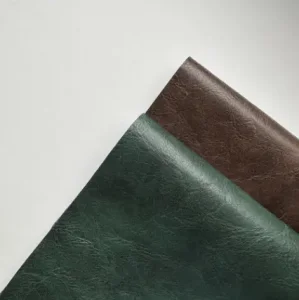
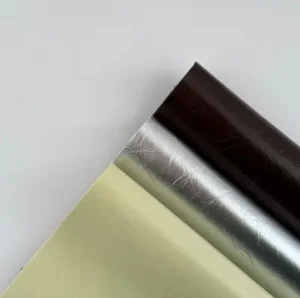
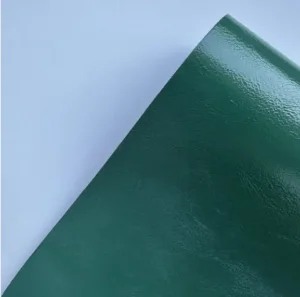
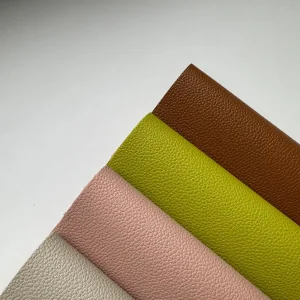
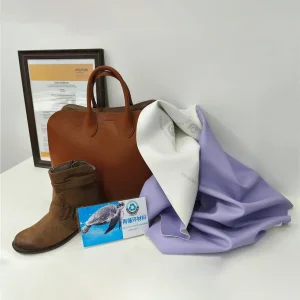
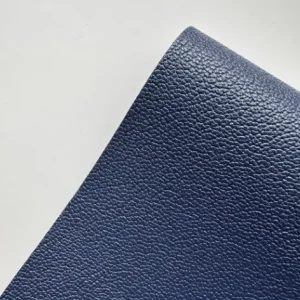
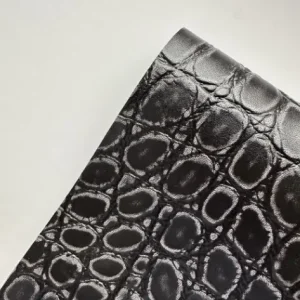
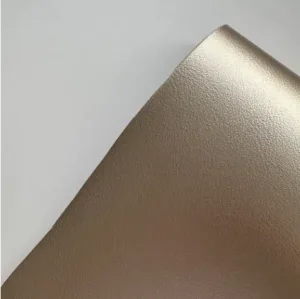
Direct product references featuring high-resilience grain profiles, official RCS chain-of-custody tracking, and solvent-free durability for demanding design applications.
Frequently Answered Technical & Operational Inquiries
Direct answers addressing formulation chemistry, physical test methodologies, minimum run quantities, and international third-party compliance validation.