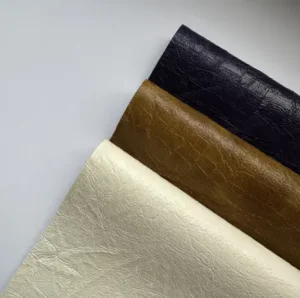
Immediate Sourcing: Top Circular & Bio-Polymer References
Factory-certified sustainable PU formulations ready for immediate lab-dip sampling, tech-pack prototyping, and high-volume roll delivery. Every reference conforms to international RSL standards and verified carbon-accounting parameters.
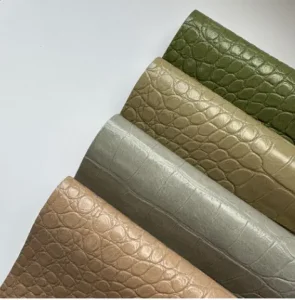
Wholesale Waste-Upcycled Recycled Synthetic Leather-9355
Request Tech Specs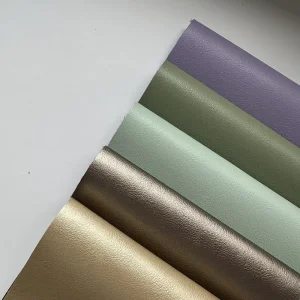
Wholesale RCS Recycled Synthetic Leather Manufacturer
Request Tech Specs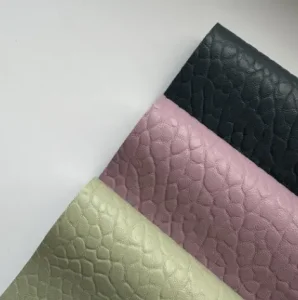
OEM RCS Certified Recycled Eco Synthetic Leather-9377
Request Tech Specs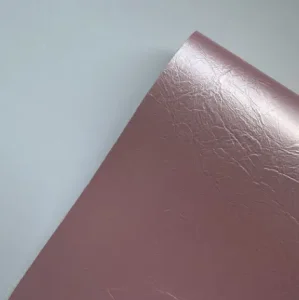
Custom Plant-Derived Bio-Based Synthetic Leather-0195
Request Tech Specs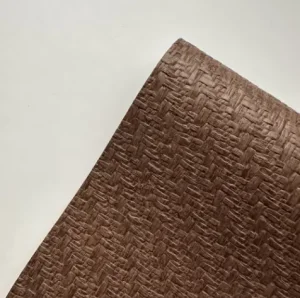
Wholesale Bio-Based Renewable Synthetic Leather-9339
Request Tech Specs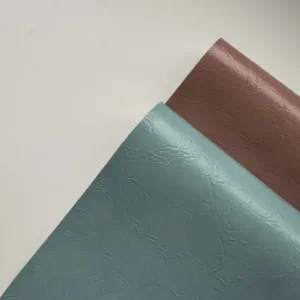
OEM Industrial-Grade Bio-Derived Renewable Leather-0177
Request Tech Specs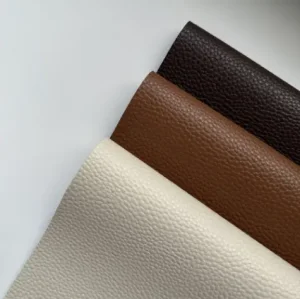
High-Quality Sustainably Upcycled Recycled Leather-9027
Request Tech Specs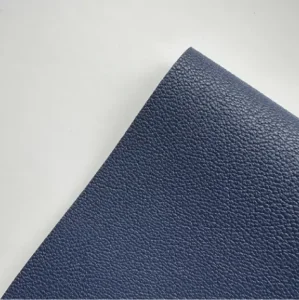
Wholesale Green Circular Synthetic Leather-9168
Request Tech SpecsThe Paradigm Shift in Sustainable Polyurethane Synthesis
The global market for synthetic leather is confronting an unprecedented structural inflection. Regulatory tightening across the European Union, North America, and East Asia has rendered conventional, solvent-reliant polyurethanes a critical supply-chain liability.
Decarbonization Mandates & Scope 3
Global brands governed by Science Based Targets (SBTi) must systematically strip embodied carbon from supply chains. Traditional PU manufacturing, tied to petrochemical cracking and coal-fired energy, generates heavy Scope 3 emissions. Transitioning to bio-based polyols and closed-loop thermal oxidizers cuts the carbon footprint of coated fabrics by up to 48% compared to virgin petrochemical lines.
Total Elimination of Regulated Solvents
Dimethylformamide (DMFa), toluene, and methyl ethyl ketone (MEK) face strict restrictions under EU REACH Annex XVII. Major footwear and apparel conglomerates now enforce an absolute threshold of DMFa below 5 ppm, and frequently demand non-detectable levels. OEM production must rely entirely on 100% solvent-free hot-melt transfer or aqueous waterborne polyurethane dispersions (PUD).
Traceable Digital Product Passports (DPP)
Circular economy legislation now penalizes unverifiable green claims. Enterprise procurement requires rigorous Chain of Custody (CoC) certification under the Recycled Claim Standard (RCS) and Global Recycled Standard (GRS). Transaction Certificates (TC) must validate feedstocks back to certified post-consumer PET bottles or industrial scrap yarn.
Solving Tier-1 OEM Sourcing Friction
Procurement directors and material development leads at global brands navigate a difficult balance: meeting corporate environmental pledges while preserving strict mechanical, aesthetic, and financial parameters.
| Material Technology Platform | Biobased Carbon Content | Solvent Profile | Hydrolysis Longevity | Tensile & Tear Strength | Regulatory Classification |
|---|---|---|---|---|---|
| Legacy Wet/Dry DMF PU | 0% (Petrochemical) | High DMFa / Toluene Residue | 3 - 5 Years (Jungle Test) | Baseline Reference | REACH SVHC High Risk |
| Waterborne PU Dispersion (PUD) | 0% - 20% (Partial Hybrid) | Zero Organic Solvents (Aqueous) | 5 - 8 Years (High Density) | High Flex Elasticity | OEKO-TEX Class 1 Compliant |
| 100% Solvent-Free Solid PU | 0% - 30% (Customized) | Zero Solvent (Pure Reactive) | 7 - 10+ Years (Extreme) | Superior Interlayer Bond | Zero VOC / Clean Line |
| Bio-Based Plant Polyol PU | 20% - 75% (ASTM D6866) | Waterborne or Solvent-Free | 5 - 10 Years (Tailored) | Exceeds Automotive Standard | USDA BioPreferred Verified |
| RCS Post-Consumer Recycled PU | Recycled rPET / Cotton Substrates | Low VOC / Controlled Clean | 5 - 8 Years | High Dimensional Stability | RCS / GRS Certified CoC |
Hydrolysis Resistance
Early-generation sustainable PU often failed prematurely under tropical heat and humidity. Modern formulations incorporate polycarbonate and polyether polyol blends that pass rigorous 10-week Jungle Testing (70°C at 95% relative humidity), preserving surface integrity without peeling or cracking.
Grain Definition & Hand-Feel
Sustainable synthetic leather must deliver tactile parity with fine calfskin and nappa hide. Advanced release paper micro-embossing and silicone transfer lines replicate intricate dermal grain geometries, matching high-end consumer luxury expectations.
Total PFAS & Fluorine Avoidance
With universal PFAS restrictions phasing out fluorinated water and oil repellents, OEM PU leathers require non-fluorinated, C0 surface coatings. These deliver water contact angles above 110 degrees and oil repelling properties without halogenated chemistry.
Cutting Yield & Scrap Minimization
Unlike genuine animal hides, which present 25-40% yield loss from neck wrinkles, insect bites, and flay defects, precision continuous-roll synthetic leather delivers over 98% usable surface area for high-speed automated CNC and die cutting.
Industrial Scale: The JiangXin (JX.ECO) Manufacturing Advantage
Founded in June 2017 in Yingde, Guangdong, JiangXin New Material operates a 135,733 m² clean-tech production campus. Built under strict environmental oversight, the complex integrates green energy, closed-loop resource recovery, and high-precision synthesis.
Photovoltaic Microgrid & Thermal Recovery
Our facility hosts a 4.68 MW rooftop solar installation that powers continuous coating lines with clean electricity. High-efficiency heat exchangers capture exhaust air from drying tunnels, returning thermal energy to preheat intake zones and significantly reducing industrial boiler fuel demand.
Industrial Closed-Loop Water Treatment
Advanced biochemical and membrane filtration systems operate directly within our industrial campus. Process effluent undergoes tertiary clarifying and reverse-osmosis desalinization, recycling high-purity water back into compounding and line-washing loops with minimal discharge.
Automated Compounding & Thickness Control
Online beta-gauge radiometric sensors and automated continuous-feed slurry dispensers regulate coating profiles down to ±0.02 mm variance across 1.4-meter widths. This eliminates roll-to-roll gauge inconsistencies across bulk supply runs.
Export Certification & Institutional Governance
Global commercial clearance requires verifiable compliance documentation. Our testing regimens eliminate legal uncertainty across Tier-1 brand audits and international customs inspections.
RCS & GRS Traceability
We supply verified Transaction Certificates (TC) with bulk shipments, detailing chain-of-custody tracking from post-consumer recycled chips through spun microfiber yarns, verifying genuine circular inputs under Textile Exchange standards.
USDA BioPreferred & ASTM D6866
Bio-based claims are authenticated through accelerator mass spectrometry radiocarbon testing under ASTM D6866. This process establishes clear isotopic proof of contemporary plant carbon versus fossil fractions, preventing corporate greenwashing risks.
Chemical & Social Governance
Materials undergo rigorous screening for EU REACH SVHC, RoHS, and OEKO-TEX Standard 100 compliance (free of 6P/16P phthalates, azo dyes, and short-chain chlorinated paraffins). Factory operations are audited under amfori BSCI and verified via the Higg Index FEM module.
Technological Roadmap: The Future of Synthetic Leather (2026-2030)
Pioneering R&D focuses on next-generation chemical architectures that bridge the gap between circular performance and true end-of-life material recovery.
Bio-Synthetics & Recycled Composites
Maximizing renewable polyols derived from non-food agricultural feedstocks (corn, castor, and soy) up to 75% bio-carbon content. Pairing these with 100% mechanical and chemical post-consumer recycled PET backing fabrics to deliver a balanced high-volume circular solution.
Mono-Material Recyclable PU
Resolving composite delamination bottlenecks through single-polymer architecture: matching aliphatic polyurethane skins with 100% recycled PU nonwoven microfiber backings. This allows entire finished items to enter unified thermal depolymerization streams without peeling.
Carbon-Captured (CCU) & Bio-Degradable Polyols
Synthesizing polyols directly from point-source captured industrial CO2 gas emissions, combined with enzymatic biodegradation triggers in industrial compost settings. This completely untethers synthetic leather production from petrochemical feedstocks.
OEM Procurement & Technical Sourcing FAQ
Detailed answers to common questions regarding formulation chemistry, testing standards, supply volume parameters, and international regulatory clearance.
How does bio-based PU differ chemically from traditional petroleum PU?
Traditional polyurethanes rely on petroleum-derived polyols reacted with diisocyanates. Bio-based PU replaces 20% to 75% of these fossil-fuel polyols with renewable plant-derived building blocks (such as succinic acid or polyols derived from non-food castor and corn oils). The urethane linkage (-NH-COO-) remains identical, preserving or exceeding conventional abrasion and tensile properties while cutting reliance on fossil carbon.
Can you supply official Transaction Certificates (TC) for RCS orders?
Yes. JiangXin is fully certified under the Recycled Claim Standard (RCS). For qualifying production batches, we request and supply official scope and transaction certificates issued by accredited third-party certification bodies, ensuring verified traceability through your brand’s chain of custody.
How is bio-based content tested and verified?
Bio-based content is measured using radiocarbon analysis under ASTM D6866. This test isolates Carbon-14 (14C) isotopes, which are present in living biological materials but completely absent from petrochemical feedstocks, establishing a defensible scientific measurement of plant-derived carbon.
What minimum order quantities (MOQ) apply to custom OEM articles?
Standard catalog reference runs carry a baseline MOQ of 500 running meters per color and grain. Fully custom formulation trials—including customized backing knits, precise Pantone color matches, custom emboss rollers, and specialized functional additives—typically require 1,000 to 3,000 meters depending on base fabric availability.
Can your eco PU withstand industrial Bally flex and cold cracking?
Yes. Our industrial-grade footwear formulations pass 100,000 Bally flexometer cycles under ambient temperatures and 30,000 to 50,000 flex cycles at -20°C without micro-cracking or grain delamination, meeting international athletic and work-boot standards.
Do your materials comply with strict automotive VOC specifications?
Yes. Our solvent-free 100% solid PU leather series eliminates organic diluents, passing stringent automotive cabin interior air quality tests (such as VDA 278 for thermal desorption analysis of VOC and FOG emissions), eliminating fogging and odor risks.
Certified Sustainable Leather References for Bulk Sourcing
Select from our certified series of verified recycled substrate leathers, plant-derived grain surfaces, and zero-solvent PU coatings for high-yield roll manufacturing.
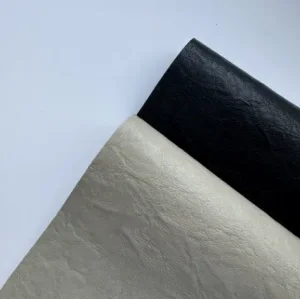
Custom RCS Recycled Substrate Synthetic Leather-9193
Request Tech Specs
Wholesale RCS Verified Recycled Leather-2058
Request Tech Specs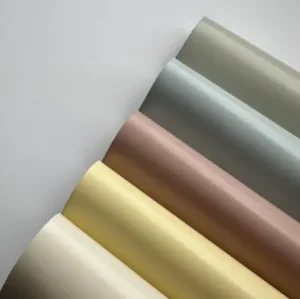
High-Quality RCS Qualified Recycled Leather-2056
Request Tech Specs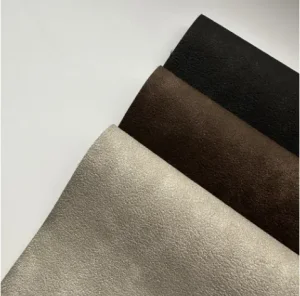
Custom Low-Impact Green Sustainable Leather-0004
Request Tech Specs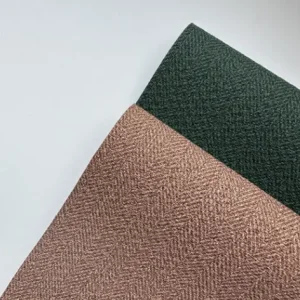
High-Quality Eco-Certified Sustainable Leather-9323
Request Tech Specs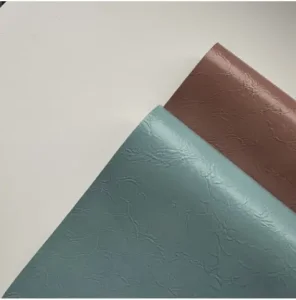
Wholesale Bio-Based Renewable Synthetic Leather-0177
Request Tech Specs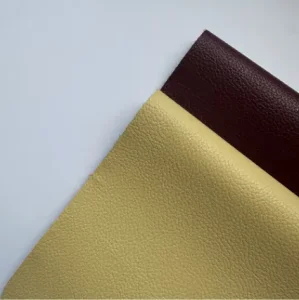
Wholesale Plant-Derived Renewable Leather-9350
Request Tech Specs