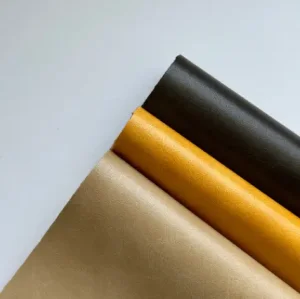
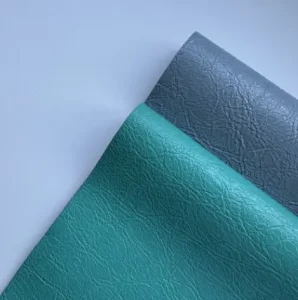
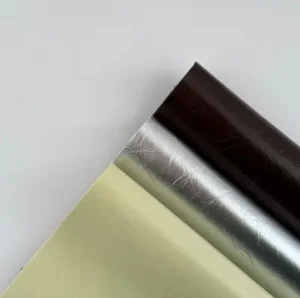
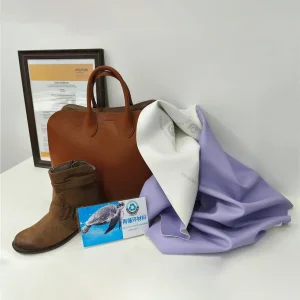
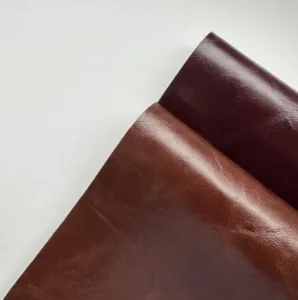
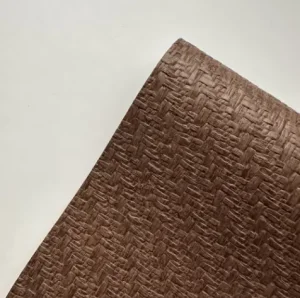
Featured Pre-Consumer Recycled & Bio-Synthetic References
Direct access to JiangXin's flagship engineered surface articles. Standardized formulations, high color fastness, and customizable backing textiles optimized for cutting yields.
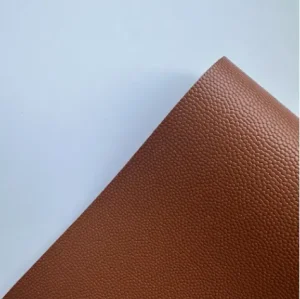
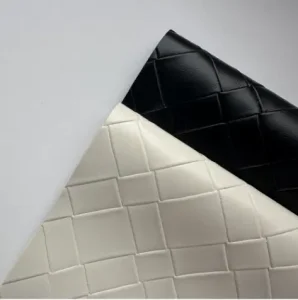
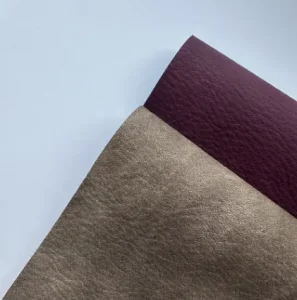
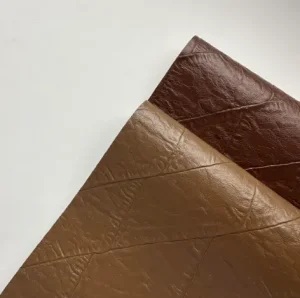
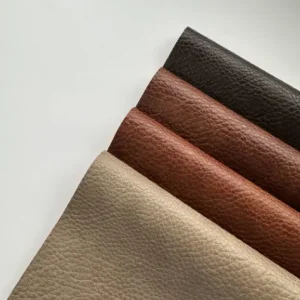
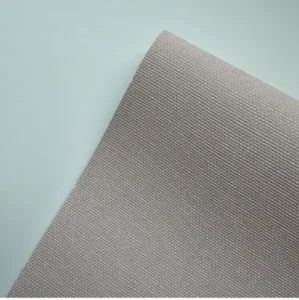
Global Corporate Procurement Imperatives for Pre-Consumer Circularity
Addressing the strategic shift from raw extraction to closed-loop post-industrial reclaimed streams in high-yield manufacturing.
Scope 3 Decarbonization Mandates
Multinational fashion brands, automotive interior systems, and luxury electronics packaging suppliers are facing stringent greenhouse gas (GHG) reporting guidelines under the GHG Protocol. Sourcing virgin petro-based substrates locks supply lines into high Scope 3 emissions. Pre-consumer recycled leather captures virgin manufacturing byproducts—such as split cut-offs, polymer trims, and factory trimmings—diverting high-purity inputs directly back into technical re-granulation without entering the landfill stream.
EU EPR & Digital Product Passport (DPP)
With the enforcement of the European Union’s Ecodesign for Sustainable Products Regulation (ESPR), brands must verify both recycled content percentages and trace chain-of-custody. Utilizing Textile Exchange RCS (Recycled Claim Standard) audited batching, JiangXin provides downstream procurement divisions with verifiable batch-level documentation, eliminating greenwashing vulnerabilities and ensuring full market entry clearance across EU/North American customs.
High-Efficiency Die-Cutting Yields
Unlike genuine animal hide which suffers from irregular contour geometry, insect scarring, and thickness variances (yielding only 60-70% effective cutting efficiency), our engineered OEM rolls offer absolute width uniformity (137-142 cm), controlled caliper tolerances (±0.05 mm), and continuous rolls over 30 to 50 meters. This yields cutting automation efficiencies exceeding 92%, drastically lowering operational factory floor scrap.
Macro-Industry Turnkey Material Solutions
Integrating solvent-free polyurethane skin chemistry with post-industrial fiber-matrix core dynamics.
1. Closed-Loop Fiber Defibration Platform
Pre-consumer leather remnants and pristine un-dyed wet-blue shavings are collected from partnered industrial processing facilities. Through precision mechanical defibration, these scraps are reduced to elementary collagen fibers without thermal degradation. Blended with low-melt bio-based binder filaments and re-needled into isotropic matrix nonwovens, the resulting substrate provides tensile strength equal to high-grade natural hide.
2. VOC-Free Hot-Melt & Waterborne Coatings
Traditional synthetic leather manufacturing relies heavily on Dimethylformamide (DMFa), Dimethylacetamide (DMAC), and Toluene solvents. JiangXin operates advanced dry-process, solvent-free coating facilities. By switching to high-solids waterborne polyurethane (WPU) and reactive polyurethane hot-melt (PUR) technologies, our composite materials exhibit zero solvent release, no chemical odor, and total REACH SVHC compliance.
3. Hybrid Substrate Architecture: Bio-Derived & Recycled Content Convergence
To satisfy enterprise sustainability frameworks looking beyond a single metric, JiangXin pairs pre-consumer recycled nonwoven backings with renewable plant-derived skin layers. By utilizing polyols derived from non-food agricultural biomass (tested via ASTM D6866 radiocarbon metrics for bio-based carbon tracking) atop an RCS-certified recycled backing layer, we provide Tier-1 footwear and contract furniture OEMs with an end-to-end sustainable product that drops overall lifecycle carbon footprints by up to 58% compared to virgin petrochemical PU leather.
Technical Roadmap & Forward-Looking Material Science
JiangXin’s phased roadmap for scaling sustainable composite chemistry through 2030.
Solvent Elimination & Certified Recycled Backings
Consolidation of 100% solvent-free dry transfer lines and waterborne PU systems. Commercial deployment of RCS 2.0-certified pre-consumer and post-consumer recycled PES nonwoven microfibers. Optimization of 4.68 MW rooftop solar self-generation arrays covering up to 40% of daytime manufacturing power requirements at our Yingde campus.
High-Assay Biobased Formulations >60% Carbon
Escalating the biomass polyol replacement threshold from current 25-40% standard formulations to certified >60% bio-based carbon content without sacrificing flexural fatigue durability (>100,000 cycles Bally flexometer at -10°C). Deep integration of raw material provenance tracking via decentralized ledger technology for supply chain immutability.
Mono-Material Circularity & Enzymatic Depolymerization
Development of fully recyclable mono-material polyurethane/polyester matrix composites. Standard multi-layer faux leathers cannot be mechanically recycled at product end-of-life due to cross-contamination between skin coatings and backing fibers. JiangXin's R&D laboratory is engineering chemically disassemblable PU resins responsive to mild enzymatic or thermal triggers, allowing post-industrial and end-of-life footwear garments to be separated into clean constituent polymers and recycled perpetually.
Global Sourcing Landscape & Production Competitiveness
Comparative analysis of regional manufacturing hubs for synthetic and recycled leather materials.
| Evaluation Parameter | JiangXin (Guangdong, China) | Traditional East Asia PU Hubs | European Boutique Mills |
|---|---|---|---|
| Annual Output Capacity | 16,000,000+ Meters / Year | 5,000,000 - 8,000,000 Meters | Under 1,500,000 Meters |
| Solvent Emissions (DMFa/Toluene) | Zero Detection (Solvent-Free & WPU Lines) | High residual reliance on DMF recovery towers | Low / Strict VOC Compliance |
| Supply Chain Integration | Resin compounding, backing weaving & finishing in-house | Fragmented subcontracted finishing facilities | Third-party reliance on imported base nonwovens |
| Scalable Pricing Efficiency | High industrial integration; scalable bulk pricing | Moderate; volatility linked to chemical imports | High premium cost per linear meter |
| Audit Readiness | Higg FEM, amfori BSCI, ISO 9001/14001, RCS Certified | Partial / Third-party trading agent reliance | High environmental audit ratings |
Localized Compliance & Rigorous Brand Protection
Mitigating international restricted substance liabilities before goods depart port.
EU REACH & SVHC Screening
Every production batch is tested against the expanding European Chemicals Agency (ECHA) Candidate List of Substances of Very High Concern (SVHC). Formulations are guaranteed free of organotin compounds, short-chain chlorinated paraffins (SCCPs), polycyclic aromatic hydrocarbons (PAHs), and dimethylformamide (DMFa < 5 ppm detection limit).
US CPSIA, CA Prop 65 & 6P Free
Full compliance for global consumer products across North American markets. Tested zero for banned phthalates (DEHP, DBP, BBP, DINP, DIDP, DnOP). Heavy metal content (lead, cadmium, mercury, hexavalent chromium) remains undetectable via inductively coupled plasma mass spectrometry (ICP-MS), ensuring unrestricted distribution.
OEKO-TEX & Higg Index Facility Auditing
Beyond the product itself, corporate responsibility relies on the operating environment. JiangXin's 135,733 m² campus maintains active Higg Facility Environmental Module (FEM) ratings and amfori BSCI social compliance validation, supporting transparent Tier-2 vendor disclosure protocols for public corporate ESG filings.
Procurement & Technical Engineering FAQ
Answers to key operational, chemical, and certification questions asked by brand material directors.
What precisely distinguishes Pre-Consumer Recycled Leather from Post-Consumer substrates? +
How does JiangXin manage Recycled Claim Standard (RCS) chain-of-custody documentation? +
Can solvent-free recycled PU withstand hydrolysis in tropical climates? +
What are the minimum order quantities (MOQ) and lead times for custom tech packs? +
What testing support is provided to confirm biobased and recycled content claims? +
RCS Certified & High-Performance Recycled Material References
Explore additional certified articles engineered for footwear, luggage, apparel, and performance upholstery.