
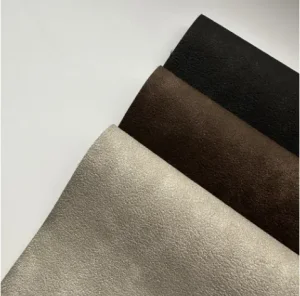
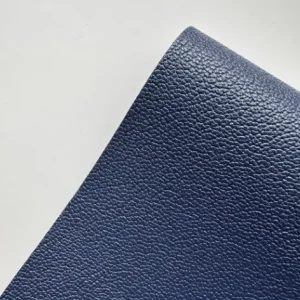
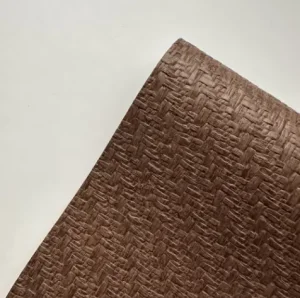
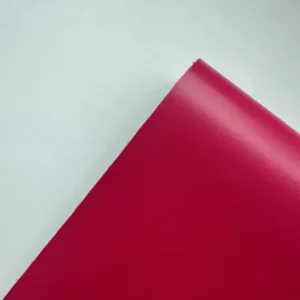
Featured OEM Biobased & Recycled Faux Leather Lineup
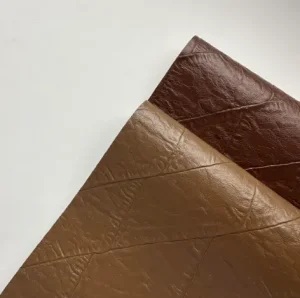
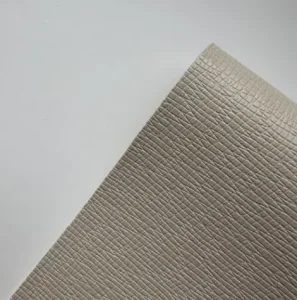
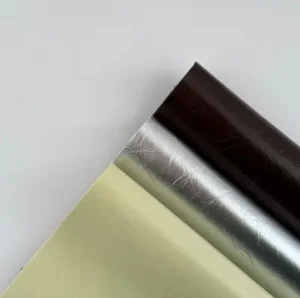
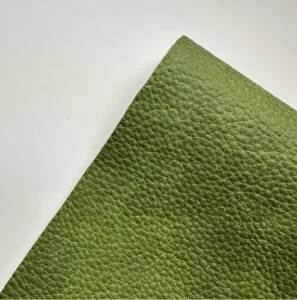
Batch-consistent, lab-verified sustainable synthetic leather rolls manufactured under strict ISO/BSCI protocols. Fully configurable for custom grain, thickness, tensile strength, and composite backings.
Global Macro Trends: The Evolution of Vegan & Synthetic Surfaces
The international artificial leather market is experiencing a profound structural transition. Driven by ESG capital mandates, stringent regulatory frameworks, and shifting consumer ethics, traditional petrochemical substrates are giving way to advanced, traceable polymer architectures.
Regulatory Compliance Pressures
The enforcement of the EU Corporate Sustainability Due Diligence Directive (CSDDD), EU Deforestation Regulation (EUDR), and stricter REACH Annex XVII restrictions have made non-compliant faux leather toxic to global supply chains. Procurement mandates now demand non-detectable levels of DMFa (<5 mg/kg), zero plasticizers (6P phthalate-free), and documented carbon baselines across Scope 1, 2, and 3 emissions.
The Bio-Based Carbon Paradigm
Tier-1 fashion luxury houses and electric vehicle (EV) automotive OEMs are actively swapping traditional animal hide and pure fossil PVC for verifiable bio-based polyurethane. Utilizing bio-polyols synthesized from non-food agricultural waste, castor seeds, and renewable corn feedstocks, these advanced synthetics offer an immediate 30% to 50% reduction in cradle-to-gate carbon footprint.
Closed-Loop Recycled Content
Modern synthetic leather manufacturing is no longer linear. Textile Exchange’s Recycled Claim Standard (RCS) and Global Recycled Standard (GRS) have codified post-consumer plastic waste diversion. Substrates utilizing 100% GRS-certified recycled polyethylene terephthalate (rPET) microfibers or woven backings provide the structural rigidity of calfskin with minimal environmental burden.
Material Architecture: Chemical Formulations & Physical Benchmarks
Our R&D center in Yingde City combines high-molecular polyurethane matrix engineering with sustainable chemical synthesis. Below is an exhaustive technical comparison comparing standard synthetic leather architectures against JiangXin proprietary eco-formulations.
Solvent-Free & Waterborne Polyurethane (WPU)
Traditional synthetic PU relies heavily on N,N-Dimethylformamide (DMF) or Dimethylacetamide (DMAC) as solvent carriers during wet coagulation. Our clean-tech solvent-free coating technology uses 100% solid prepolymers or waterborne polyurethane dispersion (PUD) systems. This eliminates hazardous airborne VOC releases, reduces factory water consumption by 65%, and ensures zero chemical skin sensitizers.
Biobased Carbon Verification (ASTM D6866)
Our biobased synthetic leather line incorporates plant-derived polyols replacing 20% to 75% of fossil petro-carbon in the functional coating layer. Utilizing accelerator mass spectrometry (AMS) radiocarbon analysis under ASTM D6866-22 Method B, we quantify modern biological carbon isotope (14C) ratios with absolute analytical rigor, empowering our OEM partners to secure official USDA BioPreferred certification.
| Performance Characteristic | Test Standard / Method | Standard Petroleum PU | JiangXin Eco Biobased PU | JiangXin RCS Recycled Series |
|---|---|---|---|---|
| Biobased Carbon Share | ASTM D6866-22 Method B | 0% (Petrochemical) | 20% – 73% (Customizable) | Optionally blended (10%–30%) |
| Recycled Content (Backing) | ISO 14021 / RCS 2.0 | 0% Virgin Polyester | 0% – 50% rPET Substrate | 100% GRS/RCS Post-Consumer rPET |
| Solvent Residuals (DMFa) | EN ISO 18218-2 / GC-MS | 50 – 300 mg/kg | < 5 mg/kg (Non-Detectable) | < 5 mg/kg (Non-Detectable) |
| Martindale Abrasion Resistance | ISO 12947-2 (12 kPa) | 30,000 Dry Rubs | > 100,000 Dry / 50,000 Wet | > 80,000 Dry Rubs |
| Cold-Crack Flexibility | ASTM D1790 / ISO 4675 | -10°C (Cracks appear) | -25°C to -30°C (No Surface Fissures) | -20°C (No Failure) |
| Hydrolysis Resistance | Jungle Test (70°C, 95% RH) | 2 – 3 Weeks | 5 – 10 Weeks (Long-Life Ether Polyol) | 5 – 7 Weeks |
| Tear Strength (Tongue Tear) | ISO 3377-2 / ASTM D2261 | ≥ 25 N | ≥ 45 N (Reinforced Microfiber) | ≥ 40 N |
China Supply Chain Resilience: Yingde JiangXin Clean Campus
Situated in the Yinghong Industrial Park, Yingde City, Guangdong Province, Yingde City JiangXin New Material Co., Ltd. represents the zenith of modern, vertically integrated synthetic leather production in East Asia.
135,733 m² Solar-Powered Infrastructure
Constructed in 2017 to petrochemical safety and architectural specifications, our facility incorporates 4.68 MW of rooftop solar photovoltaic capacity. Clean energy powers high-precision dry and solvent-free extrusion lines, offsetting thousands of tons of grid CO2 annually and enabling verifiable low-carbon product passports.
Closed-Loop Environmental Engineering
Our manufacturing site features a state-of-the-art on-site wastewater biological treatment plant and Regenerative Thermal Oxidizers (RTO) boasting 99.2% VOC destruction efficiency. Recovered heat is recycled back into the drying ovens, establishing a circular thermal loop that slashes energy overhead.
Rapid Pearl River Delta Synthesis Cluster
Leveraging Guangdong’s unrivaled chemical and textile cluster, our supply chain guarantees rapid prototyping: lab-dip strike-offs and custom emboss cylinders delivered in 3 to 5 business days, with full-scale production turnaround within 10 to 14 days, supported by deep port logistics via Shenzhen and Guangzhou.
Localized Application Scenarios: Where Performance Meets Aesthetics
OEM synthetic faux leather must balance distinct mechanical, tactile, and safety requirements across diverse global markets. Here is how our material engineering maps to specific industrial verticals.
Athletic & Outdoor Footwear
Footwear applications demand extreme Bally flex resistance, stitch pull-out strength, and high breathability. Our shoe-upper grade bio-based PU exhibits over 100,000 flex cycles at ambient temperatures and zero crack propagation at -20°C, paired with moisture-permeable backings engineered for high-mileage athletic training shoes, combat boots, and winter trekking footwear.
Luxury Handbags & Luggage
Luxury accessories require impeccable drape, supple hand feel, deep grain retention, and crisp edge-paint paintability. Our toothpick, saffiano, pebble, and nappa grain faux leathers integrate high-density micro-porous polyurethane skins that accept edge-coating without delamination, completely eliminating yellowing caused by UV light and thermal degradation.
Automotive Interiors & Marine
Demands strict compliance with low-fogging standards (DIN 75201 Method B) to prevent windshield film formation. Combined with non-halogenated flame retardancy passing FMVSS 302 and BS 5852 Crib 5, our automotive-grade synthetic leather delivers high UV color fastness (ISO 105 B06 Blue Wool Grade 7+) against harsh solar radiation in cockpits and marine seating.
Apparel & Outerwear
Leatherette garments demand exceptional drape, lightweight gauge (0.45mm to 0.70mm), low friction noise, and non-restrictive elasticity. Our apparel formulas feature waterborne micro-foaming layers that replicate lambskin butteriness while resisting laundry wash deterioration, sweat degradation, and dry-cleaning chemical aggression.
Consumer Tech & Wearables
Smartwatch straps, tablet folios, and VR headset cushions require rigorous bio-compatibility. Our medical/consumer tech PU substrates undergo in-vitro cytotoxicity (ISO 10993-5) and skin irritation screening (ISO 10993-10). They integrate permanent anti-fingerprint, oleophobic, and anti-microbial finishes passing ISO 22196 with 99.9% bacterial kill rates.
Commercial Contract Furniture
High-traffic hospitality and healthcare environments require bleach-cleanable surfaces capable of withstanding industrial hospital-grade disinfectant wipe tests without surface tackiness or micro-cracking, coupled with Wyzenbeek wire-screen abrasion endurance topping 200,000 double rubs for airport terminals and executive lounges.
Technological Roadmap: The Path to Monomaterial Circularity
Material science is evolving rapidly from incremental eco-substitution to true circular monomateriality. JiangXin’s strategic multi-year development pathway addresses chemical upcycling, bio-assimilation, and circular end-of-life processing.
Near-Term (2025–2027)
Bio-Content Scaling & Solvent-Free Maturation: Transitioning core catalog lines to minimum 40% certified ASTM D6866 biobased carbon fraction while maintaining price parity with virgin polyurethane. Phasing out trace solvent carriers entirely across all secondary finishing stages and expanding plant-derived natural pigments derived from non-edible botanical biomass.
Mid-Term (2027–2030)
100% Monomaterial Circular Systems: Eliminating mixed-material mechanical recycling bottlenecks by coupling thermoplastic polyurethane (TPU) topcoats with 100% molecularly identical recycled TPU woven substrates. At product end-of-life, the synthetic leather can be ground, depolymerized, and re-extruded without fiber separation hurdles.
Long-Term (2030–2035)
Enzymatic Biodegradability & Mycelium Hybrids: Developing specialized polyester-polyurethane polyols programmed with enzymatic trigger sites that remain inert during consumer use but rapidly decompose in industrial composting conditions within 180 days, alongside mycelium fungal network backings offering zero petrochemical entanglement.
Audited Certifications & Global Compliance Framework
Greenwashing protection is paramount for brand longevity. Every batch of faux leather shipped from our factory is backed by third-party laboratory accreditations, strict chain-of-custody documentation, and complete chemical transparency.
RCS & GRS Chain of Custody
Certified by Textile Exchange, our Recycled Claim Standard (RCS) protocols ensure every kilogram of post-consumer plastic feedstock is tracked from the flake shredder to the coated fabric roll. Official Transaction Certificates (TC) accompany each bulk consignment to satisfy brand ESG audits.
Higg FEM & amfori BSCI Social Compliance
Our industrial complex is rigorously benchmarked via the Higg Facility Environmental Module (FEM), verifying air emissions, energy management, chemical handling, and water stewardship. amfori BSCI audits validate safe, ethical, and equitable labor conditions for all 500+ campus workers.
ISO 9001 / ISO 14001 / ISO 45001
Operating under tri-fold ISO quality, environmental, and occupational health systems. Every master roll undergoes rigorous laboratory spectrocolorimeter Delta-E testing, tensile elongation mapping, and multi-point visual inspection to eradicate surface bubbles, grain drift, and caliper variance.
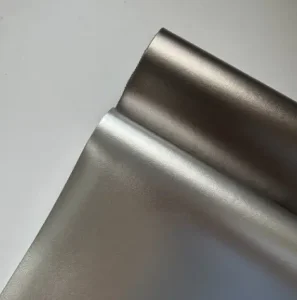
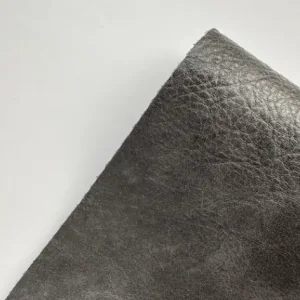
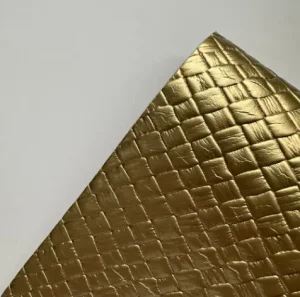
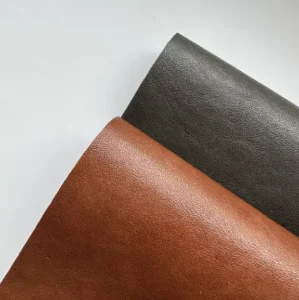
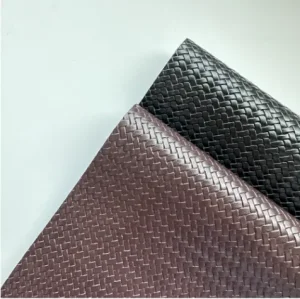
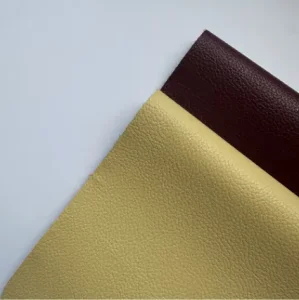
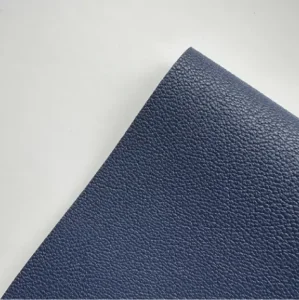
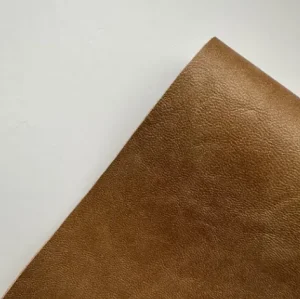
Expanded Technical Synthetic Leather Catalog
Engineered for specialized footwear uppers, heavy-duty handbag constructions, and performance automotive upholstery. Inquire today for custom roll master-swatches and technical data packages.
Lab-to-Line OEM Customization Workflow
Our engineering pipeline eliminates material failure risks before high-volume extrusion. From initial design brief to bonded warehouse delivery, transparency governs every phase.
Design & Performance Brief
Client specifies end application, target biobased/recycled percentage, mechanical specs (tensile, flex, abrasion), and chemical RSL limits.
Polymer Formulation & Color Match
R&D chemists configure the polyol resin system, adjust plasticizer-free viscosity, and formulate spectrophotometer-aligned color lab dips within 72 hours.
Pilot Batch & Physical Validation
Small-run trial meterage is run on our pilot coating line. Swatches undergo cold-crack, Jungle test hydrolysis, Martindale wear, and seam endurance testing.
Bulk Industrial Extrusion
Approved recipes are locked into SCADA-controlled production lines. Real-time beta-ray sensors monitor continuous coating thickness uniformity across the 1.4-meter web.
Batch Certification & Export
Roll-by-roll visual inspection is paired with official QC certificates of analysis (COA), RCS Transaction Certificates, and container sea-freight dispatch.
Technical & Procurement FAQ for OEM Sourcing Directors
Clear, uncompromising answers to the operational, technical, and regulatory questions asked most by brand material developers and global supply chain managers.