
High-Performance OEM Faux Leather Substrates
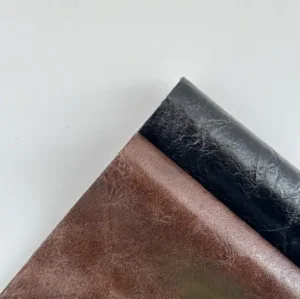
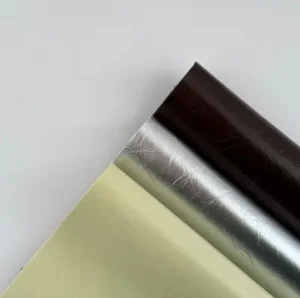
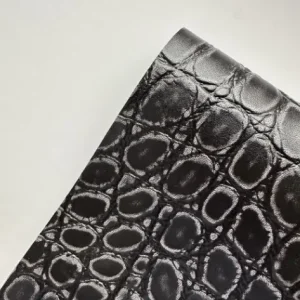
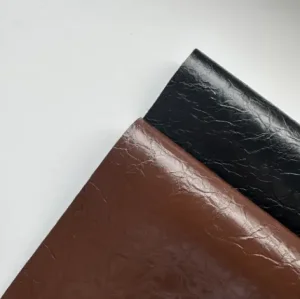
Explore our certified vegan synthetic leathers engineered specifically for premium handbag, backpack, and luxury luggage structural execution. Verified bio-content, tensile retention, and hydrolytic stability.
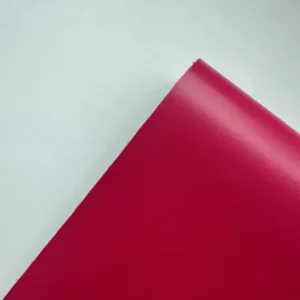
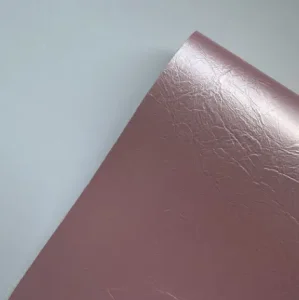
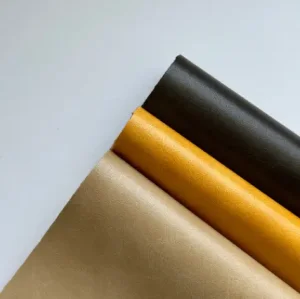
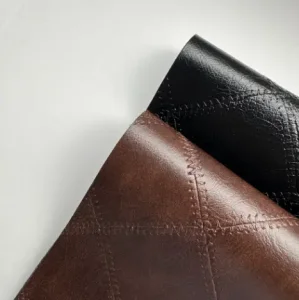
Overcoming the Scope 3 Decarbonization Bottleneck in Fashion Accessories
Modern luxury and accessible handbag brands are caught between tightening ESG mandates and uncompromising consumer standards for haptic luxury. JiangXin New Material resolves this friction through engineered green chemistry.
Fossil-to-Bio Feedstock Transition
Traditional polyurethanes rely almost entirely on crude oil-derived diphenylmethane diisocyanate (MDI) and petroleum polyols. We engineer bio-based synthetic leather replacing up to 55% of the fossil carbon with synthesized plant-derived polyols (corn non-food biomass, castor oil, and agricultural residue), scientifically validated via ASTM D6866 Carbon-14 radiocarbon assays.
Elimination of Toxic VOCs & Solvents
The historical reliance on N,N-Dimethylformamide (DMFa), Dimethylacetamide (DMAc), and toluene during wet PU coagulation presents severe occupational risks and high trace chemical residues. JX.ECO has industrialized 100% solvent-free hot-melt polyurethane coating lines and aqueous waterborne polyurethane dispersions, achieving zero hazardous VOC release during manufacture.
Verified Post-Consumer Circularity (RCS)
For brands targeting circular metrics, our RCS-certified (Recycled Claim Standard) collection incorporates recycled polyester microfiber, recycled cotton twill, and reclaimed post-industrial polyurethane scrap into structurally sound substrates. Full chain-of-custody documentation ensures authentic claims from raw flake down to roll delivery.
Comprehensive Lifecycle and Performance Matrix for Bag Engineers
Technical Directors and Chief Sustainability Officers require rigorous empirical data to make material substitutions. Below is an engineering comparison evaluating standard handbag materials against JX.ECO’s proprietary formulations.
| Evaluation Parameter | Traditional Bovine Leather | Conventional Virgin PVC | Standard Wet PU Leather | JX.ECO Biobased PU (0195/9279) | JX.ECO RCS Recycled PU (9200) |
|---|---|---|---|---|---|
| Carbon Footprint (kg CO₂e/m²) | 110.0 – 170.0 | 12.5 – 18.0 | 8.5 – 14.0 | 3.2 – 5.8 (60%+ reduction) | 4.1 – 6.5 (50%+ reduction) |
| Bio / Recycled Content Ratio | Organic Origin (High Methane) | 0% (100% Fossil / Cl) | 0% (100% Petroleum PU) | 30% – 55% Bio-Carbon (ASTM D6866) | 40% – 70% RCS Recycled Base |
| Hydrolysis Resistance (Jungle Test) | Prone to mildew/rotting | Inert, but stiffens over time | 3 – 5 Years (Accelerated Test) | 8 – 10+ Years (ISO 1419 Method C) | 7 – 10 Years (ISO 1419 Method C) |
| Flexural Fatigue (Bally Flexometer) | >50,000 cycles | <20,000 cycles (cracks at corners) | 50,000 – 80,000 cycles | >100,000 cycles (No creasing) | >80,000 cycles (No micro-tears) |
| Cold-Crack Threshold (°C) | -15°C to -25°C | 0°C to -5°C (brittle failure) | -10°C to -15°C | -25°C to -35°C (Maintains hand feel) | -20°C to -30°C (Flexible) |
| Restricted Substances (DMFa / Phthalates) | Chromium VI risk, Formaldehyde | High Ortho-Phthalate plasticizers | DMFa residue 30 – 100 ppm | 0 ppm DMFa / 0 Phthalates (REACH) | 0 ppm DMFa / 0 Phthalates (REACH) |
| Cutting Yield Efficiency | 60% – 75% (irregular hides/scars) | 95%+ (consistent continuous roll) | 95%+ (uniform rolls) | 98%+ (Guaranteed edge-to-edge) | 98%+ (Guaranteed edge-to-edge) |
A 135,733 m² Solar-Powered Advanced Synthetic Leather Manufacturing Campus
Established on June 2, 2017, in Yinghong Industrial Park, Yingde City, Guangdong Province, JX.ECO represents the pinnacle of modern ecological chemical engineering.
4.68 MW Rooftop Photovoltaics
Our campus roof is engineered with an extensive 4.68 megawatt solar generation array. This clean energy infrastructure powers our continuous calendering, drying, and lamination lines, cutting Scope 2 grid emissions and providing buyers with a documented low-carbon production pedigree.
Floor-to-Ceiling Safety Architecture
Built strictly to state petrochemical and construction standards, the manufacturing bays feature floor-to-ceiling tempered glass workshops. This structural design optimizes natural ambient daylighting, lowers thermal accumulation, and ensures strict workplace occupational safety.
Dedicated Industrial Wastewater Plant
Unlike third-party outsourced finishing shops, JX.ECO houses an on-site multi-stage wastewater treatment facility. Chemical coagulants and aqueous residues are treated, filtered, and monitored through closed-loop biochemical processes before meeting environmental effluent discharge standards.
Precision Substrates Customized for Diverse Handbag Structures
A structured luxury tote behaves completely differently from a supple hobo bag or an ultralight commuter roll-top. We calibrate the backing substrate, foam layer, and surface polyurethane resin for exact load demands.
Structured Luxury Handbags & Satchels
Requires rigid memory, crisp edge-skiving capabilities, and high seam tension strength. We deploy high-density non-woven microfiber backings with calibrated shore hardness. Perfectly compatible with automated edge-dyeing machines without oil-bleed or adhesive breakdown.
Soft Hobo Bags, Slouch Totes & Pouches
Demands a liquid-smooth drape, butter-soft sensory touch, and natural grain break during handling. Utilizing soft-elastic brushed poly-cotton or recycled terry backings, our 0195 and 9015 series emulate calfskin without the heavy plastic hand feel typical of low-tier PU.
Technical Backpacks & Travel Carryalls
Formulated for extreme tear resistance, heavy transit abrasion, and wet weather exposure. We integrate hydrophobic surface coatings tested to Martindale >50,000 cycles, hydrostatic water column >20,000 mm, and stain-resistant polyolefin cross-linkers.
Export Certifications Protecting Brands in Strict Regulatory Markets
A compliance failure at customs or a toxic chemical recall destroys brand equity. JiangXin materials pass third-party testing protocols for North America, the European Union, the United Kingdom, and the Asia-Pacific.
EU REACH & RoHS Compliance
Every dye, stabilizer, plasticizer, and pigment matches the current European Chemicals Agency (ECHA) SVHC Candidate List. Content of regulated substances remains well under the 0.1% w/w threshold, ensuring unfettered customs clearance across EU member states.
6P & 17P Phthalate-Free Verification
Meets California Proposition 65 and CPSIA guidelines. We strictly ban DEHP, DBP, BBP, DINP, DIDP, and DnOP. Essential for consumer bags where prolonged dermal contact, skin temperature, and sweat interactions require benign chemical profiles.
OEKO-TEX & Higg Index Facility Audit
Our chemicals and finished rolls conform to OEKO-TEX Standard 100 testing guidelines. Furthermore, our Yingde campus is routinely audited via the Higg Facility Environmental Module (FEM) and amfori BSCI, simplifying ESG supplier reporting for Fortune 500 bag houses.
Next-Generation Technology Roadmap: 2026 to 2030
Our chemistry laboratory continuously explores the boundaries of artificial leather science. Here is how our upcoming material platforms are scheduled for industrial bulk availability.
Bio-Carbon Maximization (55%)
Industrialization of non-food bio-polyols derived from corn and castor oil. Reaching a verified 55% USDA BioPreferred rating while sustaining Bally flex fatigue exceeding 100,000 cycles at room temperature.
Circular Polyurethane Recovery
Commercialization of chemical depolymerization allowing handbag manufacturers to return clean pattern cutting waste back into our extrusion lines, synthesizing new polyols without virgin resin addition.
Waterless Surface Graining
Introduction of precision laser graining and nano-silicone transfer release paper. Eliminates water washing and silicone emulsion oil usage during embossing, boosting surface tactile realism.
Digital Product Passport (DPP)
Integration of molecular microscopic tracing taggants inside the PU matrix. Handbag brands can instantly scan cut panels to verify authentic origin, carbon history, and RCS compliance directly via blockchain.
Frequently Asked Questions by OEM Handbag Developers
Direct technical explanations addressing minimums, edge-finishing, hydrolytic breakdown, and lead times.
We synthesize aliphatic and tailored aromatic polyols with enhanced molecular crosslinking. Unlike early polyurethanes susceptible to microbial attack or humidity, our biobased resins pass 10-year equivalent Jungle Hydrolysis testing (70°C at 95% RH for 10 weeks) under ISO 1419 Method C with zero surface stickiness or delamination.
Yes. We engineer our backing substrates (dense microfiber and spunlace bases) with non-silicone sizing agents to ensure high-adhesion bonding with water-based and polyurethane edge sealants. This prevents the common problem of edge paint peeling away from synthetic cuts during repeated flexure.
For custom Pantone, CSI, or physical master swatches, our laboratory dispenses lab dips within 3 to 5 business days. Once approved, the minimum order quantity (MOQ) is 500 meters per color/grain. Bulk production lead time across our high-capacity coating lines is typically 12 to 18 calendar days.
Every production run of our Recycled Claim Standard (RCS) material is tracked through Textile Exchange protocols. We issue official Transaction Certificates (TCs) generated by our third-party auditing body, confirming the exact metric tonnage of post-consumer recycled PET or recycled PU content incorporated into your specific order.
High-Yield Production Roll Stocks for Brand Lines
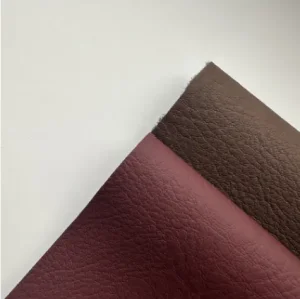
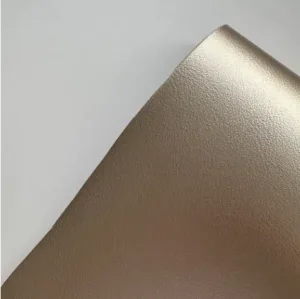
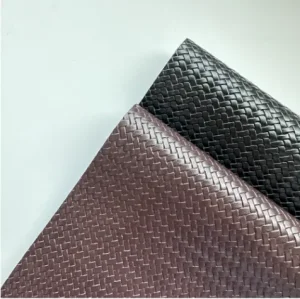
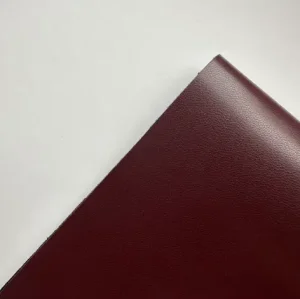
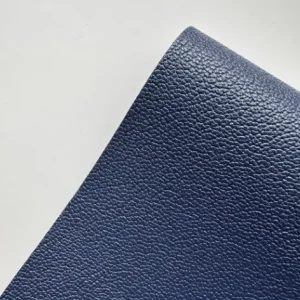
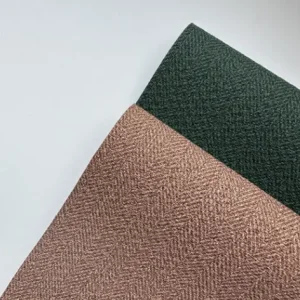
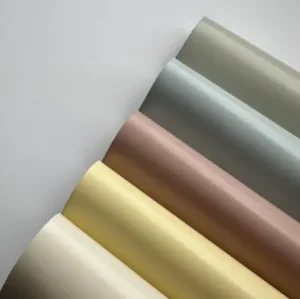
Review our specialized portfolio of plant-derived, RCS qualified, and eco-certified artificial leathers designed for mass roll cutting, high yields, and strict RSL safety standards.

Partner with an Audited OEM Faux Leather Manufacturer
Request sample swatches, physical grain decks, and comprehensive third-party compliance dossiers (ASTM D6866 bio-based test certificates, RCS transaction proof, and REACH SVHC test records) for your upcoming handbag line.