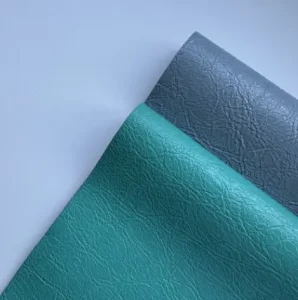
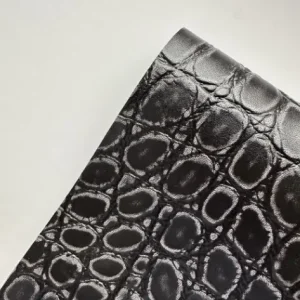
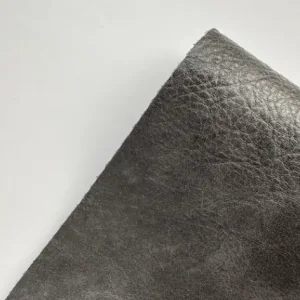
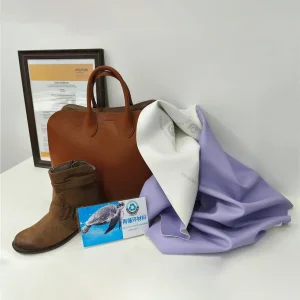
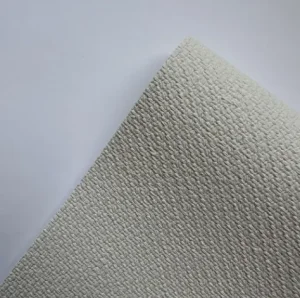
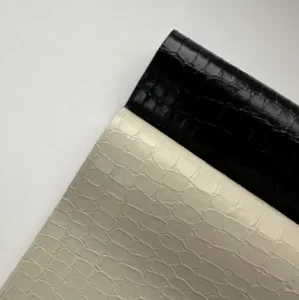
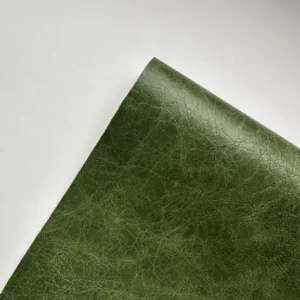
Primary Bio-Circular & Recycled Leather References
Engineered to fulfill Scope 3 carbon compliance, verified circularity metrics, and heavy-wear mechanical requirements across modern industrial and consumer supply chains.
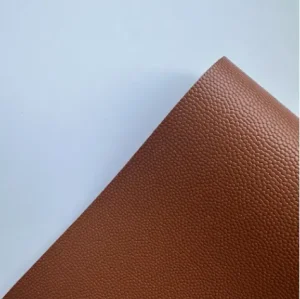
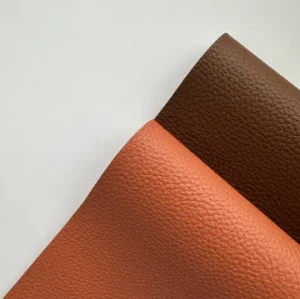
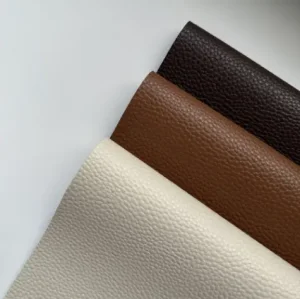
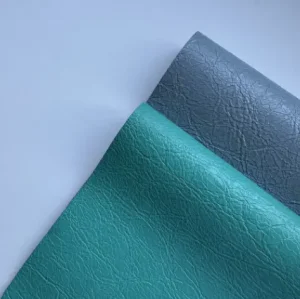
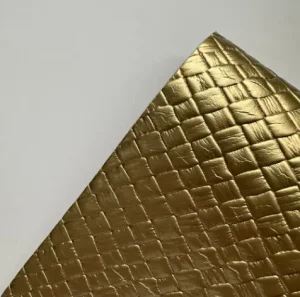

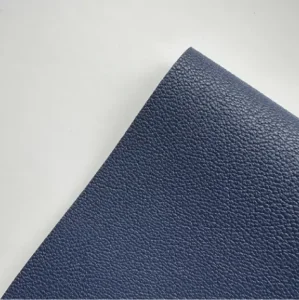
Engineering Biobased & Biodegradable Polyurethane Architecture
Traditional synthetic leather relies on petrochemical polyols derived from crude oil refining, locking high volumes of embodied carbon into footwear, automotive, and luxury accessories. Yingde City JiangXin New Material Co., Ltd. (JX.ECO) re-engineers this molecular foundation by substituting petroleum derivatives with plant-derived polyols harvested from non-food agricultural biomass, such as industrial corn starch, castor oil, and agricultural residue.
Our proprietary water-based, solvent-free synthesis eliminates toxic chemical processing aids such as N,N-Dimethylformamide (DMFa), Dimethylacetamide (DMAC), and volatile plasticizers. By integrating bio-polyester polyols and enzymatic biodegradation accelerators into the polyurethane backbone, the resultant membrane delivers exceptional tensile and tear properties while retaining the ability to break down under controlled industrial composting or soil landfill conditions into water, CO₂, and natural organic biomass.
Quantitative bio-carbon verification certifying up to 30%–75% renewable biological content across surface PU films and micro-fiber substrates.
Optimized hydrolytic enzyme breakdown pathways allowing biobased ester segments to degrade under controlled microbial landfill environments without microplastic shedding.
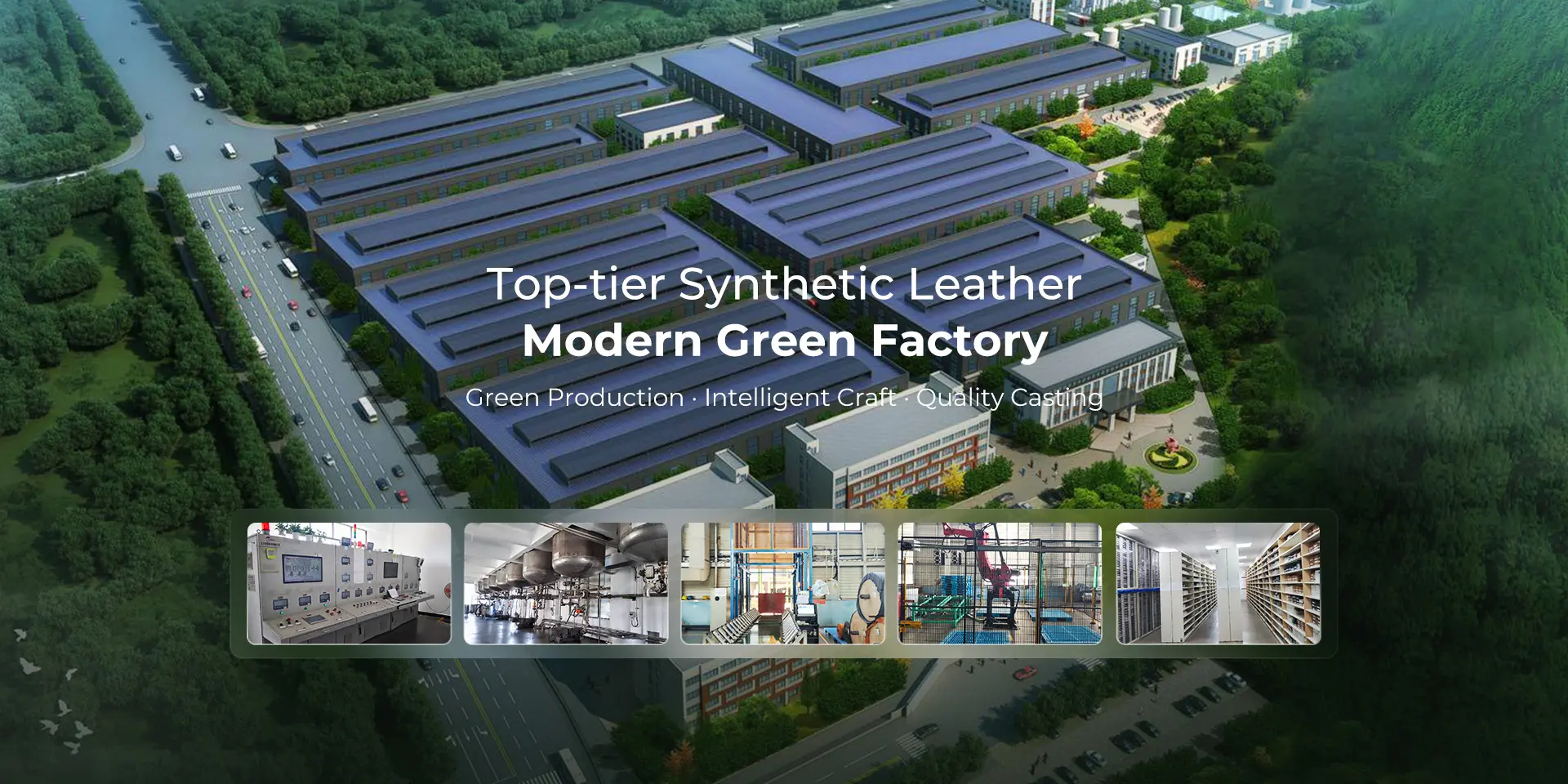
China OEM Manufacturing Edge: Scale, Agility & Green Chemistry
Positioned in the Yinghong Industrial Park, Yingde City, Guangdong Province, JX.ECO combines end-to-end chemical synthesizing with sustainable smart factory operations.
Full Supply Chain Integration
From raw polyol synthesis and backing fabric weaving (recycled rPET / bio-cotton) to multi-stage precision calendering, surface embossing, and post-finishing under one unified quality system.
High-Output Production Scalability
Operating continuous multi-head dry coating and solvent-free automated lines delivering over 16,000,000 meters annually, eliminating lead time volatility for large-scale multinational production programs.
Dedicated R&D Formulation Lab
Custom tailoring of grain sharpness, matte gloss, soft dry-milled hand feel, and biocide-free anti-mildew chemistry. Fast turnaround on physical swatches, lab dips, and ASTM/ISO standard testing.
Low Carbon Manufacturing
Powered by a 4.68 MW rooftop photovoltaic solar system and closed-circuit waste heat recovery modules, reducing the Scope 2 emission footprint per square meter to historic lows.
Market Transformation & Regulatory Drivers
Global environmental legislation and consumer sentiment are accelerating the obsolescence of traditional PVC and fossil-based PU artificial leathers.
EU Corporate Due Diligence & DPP
The European Union Digital Product Passport (DPP) and Corporate Sustainability Due Diligence Directive (CSDDD) mandate auditable material lifecycle declarations. Biobased synthetic leathers offer traceable upstream raw material origins and verifiable biogenic carbon ratios.
Elimination of PFAS & Harmful Solvents
Evolving chemical bans on "forever chemicals" (PFAS) and stringent REACH restriction of DMFa (to under 5 mg/kg) require a total paradigm shift toward 100% waterborne and solvent-free PU manufacturing technologies.
Scope 3 Decarbonization Targets
Global athletic giants, automotive OEMs, and luxury houses are racing to meet Science Based Targets (SBTi). Substituting traditional fossil leather with plant-derived biobased alternatives directly yields up to a 40%–60% reduction in Cradle-to-Gate Life Cycle Assessment (LCA) carbon metrics.
Engineered Performance for Specialized Demands
Tailoring substrate elongation, grain integrity, hydrolysis resistance, and flame retardancy to sector-specific international test methods.
Automotive Interior Systems
Engineered for seating trims, instrument panels, and steering column shrouds. Meets low-fogging criteria (DIN 75201), extreme UV resistance (ISO 105 B06), and strict VOC odor test standards (VDA 270) without sacrificing supple seating ergonomics.
High-Performance Footwear Uppers
Developed for running, outdoor trekking, and lifestyle sneaker uppers. Featuring exceptional Bally flex endurance (>100,000 cycles at -10°C), Martindale abrasion resistance, high stitch-tear strength, and hydrophobic breathability.
Luxury Goods, Bags & Apparel
Deep, crisp embossing fidelity for fine natural grain textures (toothpick, pebble, nappa, box calf) combined with high color fastness to rubbing and sweat. Superior edge-folding behavior and soft drape for premium apparel and accessories.
Macro-Industry Solutions for Procurement & ESG Teams
Overcoming the triple challenge of cost stability, compliance risks, and technical performance verification for global Tier-1 brands.
Seamless Chain-of-Custody Certification
JX.ECO guarantees frictionless auditability. Every order of biobased and recycled leather is backed by Transaction Certificates (TC) under the Recycled Claim Standard (RCS) or validated carbon fractionation reports under ASTM D6866, completely immunizing brands against greenwashing litigation.
Comprehensive RSL & Chemical Safety
Materials comply rigorously with EU REACH SVHC lists, RoHS, OEKO-TEX Standard 100 Class I (safe for skin contact), and 6P/16P phthalate restrictions. All technical dossiers and safety data sheets (MSDS) are provided directly to brand laboratories prior to volume manufacturing.
Hedging Against Petrochemical Price Spikes
By utilizing continuous solar energy and non-petroleum raw materials, JX.ECO buffers global supply partners against crude oil price spikes and supply disruptions, delivering stable long-term annual contract pricing.
Frequently Asked Questions by Sourcing Directors
Clear, definitive technical clarifications on biobased synthetic leather performance, certification, and production capacity.
How is biobased content calculated and verified in PU leather?
Biobased content is determined via radiocarbon analysis according to ASTM D6866 or EN 16640. This analytical method measures modern carbon (Carbon-14) originating from renewable plant sources versus fossil carbon from petroleum. It provides an empirical, indisputable percentage of biological content in the finished polymer resin.
Does biobased polyurethane degrade during regular customer use?
No. Biobased PU does not decompose under normal atmospheric storage or daily operational conditions. The material maintains standard hydrolytic stability (Jungle Test 5 to 10 years resistant), cold crack resistance, and UV light fastness. Decomposition is initiated exclusively under industrial composting or active soil microbial landfill conditions where heat, moisture, and specific bacterial enzymes trigger ester bond cleaving.
What is the distinction between biobased, biodegradable, and recycled leather?
Biobased indicates origin: the raw feedstock is plant-derived instead of extracted from crude oil. Biodegradable indicates end-of-life: the ability to return to nature via biological agents. Recycled (RCS/GRS) indicates circularity: utilizing post-consumer or post-industrial polymers (such as recycled rPET plastic bottles) as backing fabrics or coating matrices. JX.ECO manufactures both standalone and hybrid formulations.
Can OEM custom colors, embossings, and thicknesses be developed?
Yes. We offer turnkey OEM/ODM customization. We engineer thicknesses from 0.5mm to 2.2mm, backings including recycled microfiber, jersey knit, woven bio-cotton, or non-woven fleece, and match any custom Pantone color or physical grain standard with custom metal embossing rollers.
What are your MOQ requirements and sampling lead times?
Standard laboratory color-matching swatches (A4 to 1-meter lengths) are delivered within 3–5 working days. For commercial custom bulk production, our baseline MOQ starts at 500 meters per color/grain combination, backed by our 16,000,000+ meter annual plant capacity.
How does JX.ECO assist with international customs and compliance testing?
Every shipment is accompanied by comprehensive chemical compliance reports (REACH SVHC, RoHS, Phthalate-Free), full product specifications, and official Transaction Certificates (for RCS lines). We coordinate directly with third-party testing institutes (SGS, TÜV, Intertek) based on your custom Restricted Substances List (RSL).
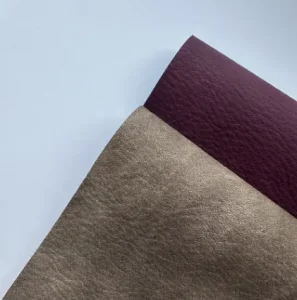
Advanced Bio-Synthetic Material Showcase
Explore additional factory-direct references engineered for abrasion resistance, soft tactile luxury, and environmental circularity.