
Featured Enterprise Upholstery & High-Performance References
Explore our verified bio-based and recycled polyurethane (PU) formulations engineered for commercial durability, skin-safe ergonomics, and low-VOC emissions.
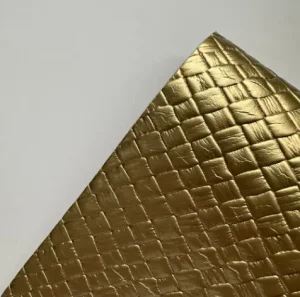
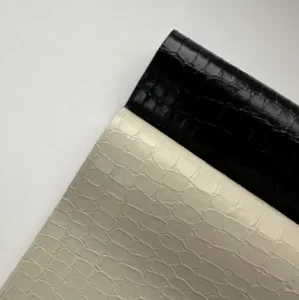
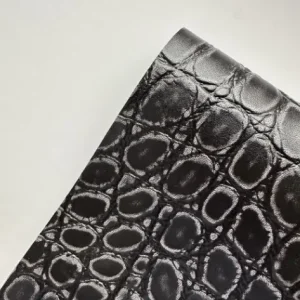
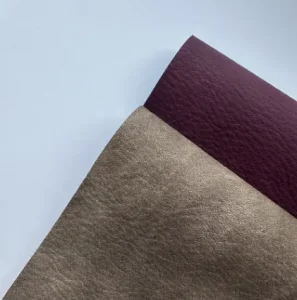
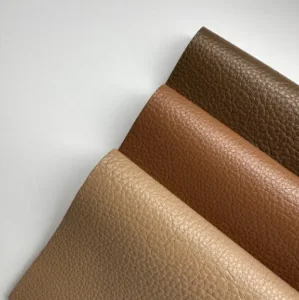
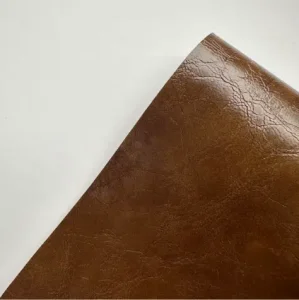
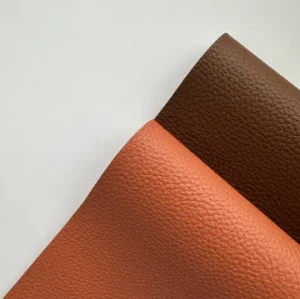
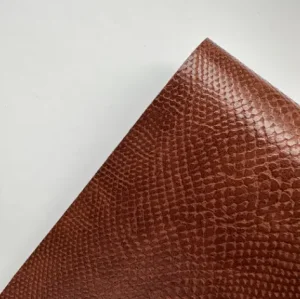
Global Enterprise Procurement Dynamics for Upholstery Faux Leather
Strategic market analysis of chemical safety thresholds, cyclic mechanical stresses, and global ESG transition mandates across high-volume contract sectors.
In modern industrial procurement, selecting an upholstery faux leather supplier is no longer a purely aesthetic or cost-per-linear-meter determination. Enterprise procurement directors representing multinational hospitality developers, automotive tier-1 seating integrators, commercial workplace furniture brands, and maritime interior design houses now operate under stringent ESG auditing frameworks, lifecycle carbon assessments (LCA), and strict international regulatory mandates.
The traditional artificial leather industry—historically reliant on plasticized Polyvinyl Chloride (PVC) and solvent-heavy Dimethylformamide (DMFa)-based Polyurethane—faces systemic obsolescence driven by tightening European Union REACH annexes, California Proposition 65 enforcement, and Scope 3 carbon reduction targets. Modern tier-1 buyers demand next-generation synthetic leathers that balance luxurious hand-feel, structural breathability, and realistic leather grain aesthetics with verifiable sustainability claims and severe physical durability.
Commercial Hospitality & Contract
Demands stain-resistant topcoats capable of withstanding industrial bleach and hospital-grade quaternary disinfectant wipes without surface micro-crazing, fading, or plasticizer migration.
Automotive & Mass Transit Interiors
Requires compliance with VDA 270 olfactory odor testing (≤ 3.0 rating), DIN 75201 fogging limits, extreme UV colorfastness (SAE J2412), and cold-crack tolerance down to -30°C.
Marine & Exterior Architectural
Engineered with specialized UV light stabilizers and antimicrobial agents complying with ASTM G21 to combat pink-stain mold, salt-fog corrosion, and solar thermal degradation.
Advanced Chemical Solutions: Solvent-Free, Bio-Based & RCS Recycled Systems
How Yingde City JiangXin New Material Co., Ltd. (JX.ECO) integrates industrial polymer innovations to eliminate toxic solvents and reduce lifecycle carbon footprints.
The transition toward sustainable faux leather upholstery is powered by three complementary chemical architectures. At JiangXin (JX.ECO), our research and development facility in Yinghong Industrial Park has synthesized these approaches into scalable, high-volume roll production that satisfies both industrial engineering thresholds and corporate green agendas.
1. Solvent-Free Reactive Polyurethane Coating (100% Solid PU): Traditional synthetic leather coating lines utilize significant volumes of Dimethylformamide (DMFa), Dimethylacetamide (DMAC), or Methyl Ethyl Ketone (MEK) as carrier solvents. During thermal curing, residual DMFa can become trapped within the microporous polyurethane skin, leading to chronic outgassing, skin irritation, and eventual non-compliance with the REACH SVHC limit (< 5 ppm). JiangXin’s solvent-free hot-melt reaction systems cross-link pre-polymers at 100% solids, producing zero solvent emissions, zero DMFa content, and fundamentally eliminating interior chemical off-gassing.
2. Bio-Based Polyols via Renewable Feedstocks: By substituting petroleum-derived polyether and polyester polyols with biogenic counterparts derived from non-edible agricultural resources, castor bean oil, or agricultural starch, we systematically lower embodied fossil carbon. The biogenic carbon ratio in our bio-based collections is rigorously certified through ASTM D6866 Radiocarbon Analysis, meeting USDA BioPreferred program benchmarks with verified bio-content options spanning from 20% up to 60%.
3. RCS / GRS Certified Post-Consumer Recycled Substrates: A synthetic leather’s tear strength, tensile modulus, and seam elongation are defined largely by its reinforcing backing fabric. We laminate our eco-polyurethane surface skins onto 100% post-consumer recycled polyethylene terephthalate (rPET) microfiber, recycled woven twill, or circular knit scrims. Certified under the Recycled Claim Standard (RCS) and Global Recycled Standard (GRS), these substrates allow upholstery makers to calculate precise plastic bottle diversion metrics for every piece of furniture produced.
| Performance / Chemical Property | Traditional Solvent PU | JX.ECO Solvent-Free Bio-Based PU | Testing Standard / Protocol |
|---|---|---|---|
| DMFa / Solvent Residue | 50 – 300 ppm (High risk) | Zero Detected (< 1 ppm) | EN ISO 14389 / GC-MS |
| Hydrolysis Resistance (Jungle Test) | 1 – 3 Years Equivalent | 7 – 10 Years Equivalent | ISO 1419 (Method C, 70°C, 95% RH) |
| Abrasion Durability (Wyzenbeek) | 30,000 – 50,000 Double Rubs | > 100,000 – 200,000 Double Rubs | ASTM D4157 (#10 Cotton Duck) |
| Bio-Based Carbon Share | 0% (100% Fossil-derived) | 20% – 60% Renewable Carbon | ASTM D6866 Radiocarbon Dating |
| Backing Textile Origin | Virgin Virgin Polyester/Rayon | RCS-Verified Post-Consumer rPET | Textile Exchange Chain of Custody |
| Flame Retardancy Execution | Chlorinated / Brominated additives | Halogen-Free Intumescent System | BS 5852 Crib 5 / CAL TB 117-2013 |
World-Class Clean-Tech Production Campus
Founded in 2017 in Yingde, Guangdong, our intelligent facility operates with low-carbon photovoltaic energy, zero-VOC lines, and continuous quality monitoring.
Built strictly in compliance with advanced petrochemical and architectural standards, our Guangdong manufacturing hub integrates tempered-glass high-bay workshops optimized for natural illumination, high-efficiency closed-loop heat recovery thermal chambers, and an advanced biological on-site wastewater recycling plant. By utilizing 4.68 MW of rooftop photovoltaic energy, JX.ECO directly offsets thousands of metric tons of greenhouse gas emissions annually, passing verified low-carbon Scope 3 value directly to our commercial brand partners.
The Future of Circular Artificial Leather Engineering
How next-generation polymer science will decarbonize the contract upholstery ecosystem over the next five years.
Phase 1: Non-Isocyanate Polyurethanes (NIPU)
Developing functional cyclic carbonates and polyamines to synthesize polyurethanes completely free from toxic isocyanates (MDI/TDI), protecting worker health during synthesis and ending isocyanate-associated environmental risks.
Phase 2: Monomaterial Assembly & Depolymerization
Transitioning away from heterogeneous composite structures toward single-polymer polyester or thermoplastic polyurethane (TPU) assemblies. This enables 100% mechanical and chemical recycling without post-consumer layer separation.
Phase 3: CO₂-Mineralized Polyols & Mycelium Composites
Piloting gaseous carbon capture utilization (CCU) polyols that mineralize industrial carbon emissions into polymer chains, combined with biological fungal mycelium matrices for true carbon-negative architectural upholstery.
Comprehensive International Compliance & Localized Support
Guaranteed alignment with restricted substance lists (RSL), consumer safety laws, and third-party corporate governance audits across major destination markets.
EU REACH & RoHS
100% compliant with Annex XVII and SVHC candidates (< 0.1% w/w). Free of SCCP, phthalates, and organotin compounds.
USDA BioPreferred
Official radiocarbon verification (ASTM D6866) validating the exact percentage of renewable plant-derived carbon content.
RCS & GRS Tracking
Transaction Certificate (TC) documentation verifying chain of custody for all post-consumer recycled backing layers.
Higg Index & BSCI
Facility environmental module (FEM) and amfori BSCI social compliance certifications audited annually by third-party bodies.
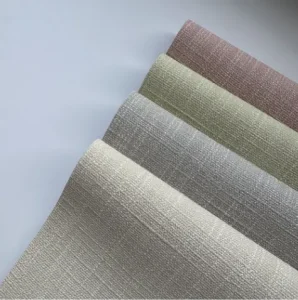
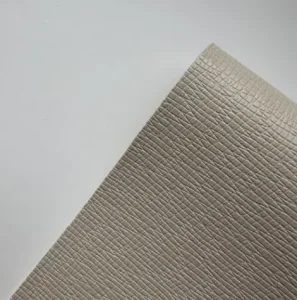
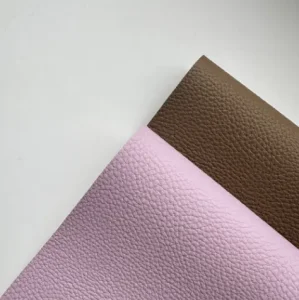
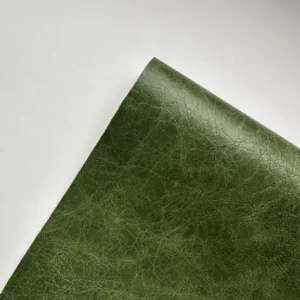
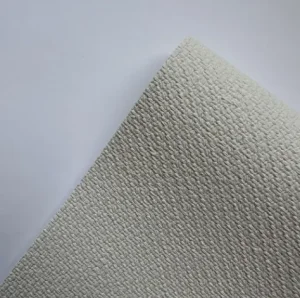
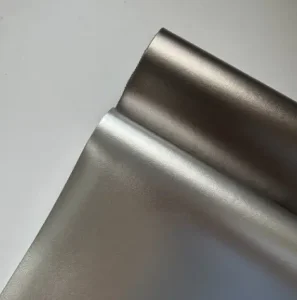
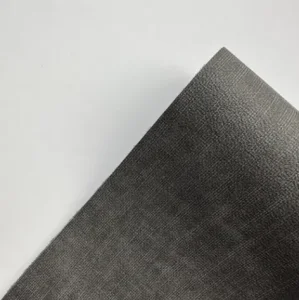
Next-Generation Circular & Bio-Sourced Upholstery Collections
Engineered for contract grade durability, luxurious hand feel, flame resistance, and full compliance with global restricted substance lists.

Frequently Asked Sourcing & Engineering Questions
Detailed answers regarding test protocols, physical chemistry, customization thresholds, and regulatory clearance for international procurement teams.