
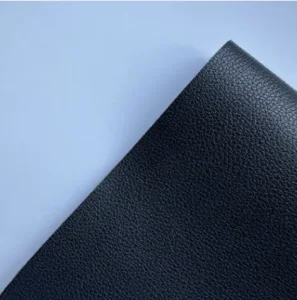
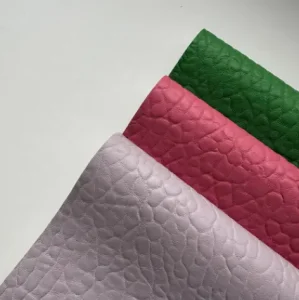
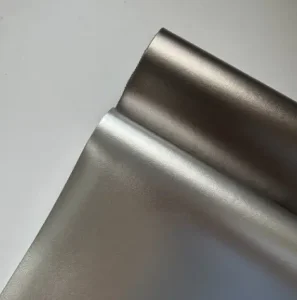
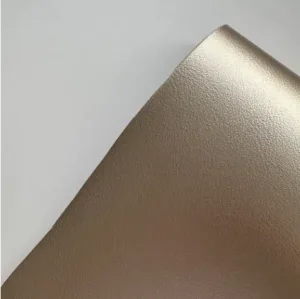
Featured Thin Synthetic Leather Specifications
Selected high-tensile, low-gauge PU formulations engineered for premium luxury goods, technical footwear linings, and ultra-lightweight upholstery applications.
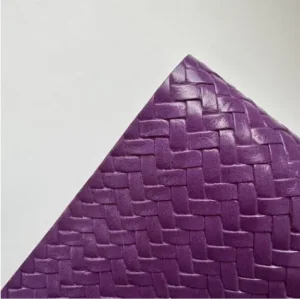
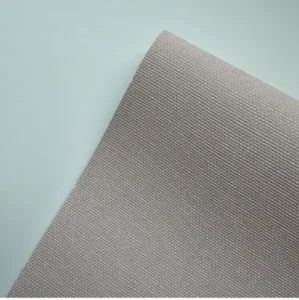
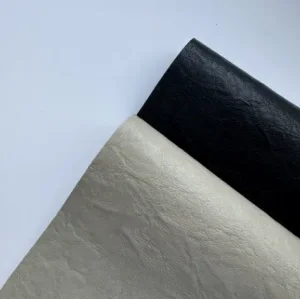
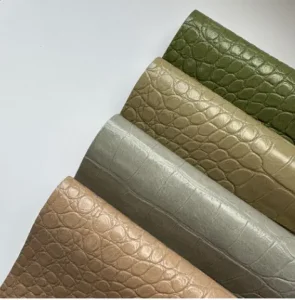
The Engineering Evolution of Ultra-Thin Faux Leather (0.4mm – 0.8mm)
Transitioning from traditional heavy-gauge PVC to micron-tolerance thin PU, waterborne resins, and bio-composites across high-velocity manufacturing supply chains.
In the contemporary materials ecosystem, the global market for Thin Faux Leather Fabric (gauging between 0.35mm and 0.75mm) is witnessing an unprecedented architectural transformation. Driven by consumer electronics demand, athletic performance wear, and ultralight fashion accessories, global procurement is shifting away from heavy, stiff synthetic hides toward flexible, breathability-optimized micro-calendered membranes. The engineering barrier for thin faux leather is drastically higher than conventional 1.2mm automotive synthetic materials: the supplier must attain extraordinary tensile resistance and tear propagation thresholds without relying on bulk substrate thickness.
Solvent-Free & Waterborne Polyurethane (WPU)
Elimination of DMF (Dimethylformamide), toluene, and heavy ketone solvents. Modern thin faux leather utilizes pure water dispersion polymers to achieve near-zero VOC emissions, meeting ultra-strict OEKO-TEX Standard 100 Class I thresholds for direct human skin contact.
Bio-Based Circular Feedstocks
Industrial integration of non-food renewable plant polyols (derived from industrial dent corn and agricultural biomass). Replacing fossil-derived crude fractions reduces the cradle-to-gate carbon baseline by up to 42% while retaining high flexural endurance down to -20°C.
Micro-Denier Ultra-Dense Substrates
Thin artificial leathers rely heavily on island-in-the-sea microfibers and high-density circular knits. With yarn counts finer than 0.05D, the micro-filament matrix achieves peeling adhesion strengths surpassing 2.5 kgf/3cm despite structural weights below 220 g/m².
Advanced Chinese Factory Production Paradigms
Unpacking why world-leading industrial scale, supply-chain clustering, and smart automated calendering give Chinese facilities unmatched competitive advantages.
Vertically Integrated Base Mills
Operating in premier industrial hubs such as Yingde, Guangdong, our facilities maintain direct backward linkages to continuous yarn extrusion, nonwoven hydro-entanglement, and synthetic resin synthesis, mitigating supply interruptions and maintaining batch uniformity.
Automated Infrared Gauge Systems
Achieving extreme structural precision across 1400mm-wide continuous web runs requires multi-point optical inline gauges. Caliper deviations are instantaneously countered via automated micro-roller positioning, eliminating thin-spot structural failures.
Closed-Loop Chemical Recovery
Adhering to pristine ESG criteria, advanced high-solid solvent-free and waterborne coating plants run proprietary regenerative thermal oxidizers (RTO) and wastewater recycling stations, drastically curtailing carbon tariffs for overseas export.
| Performance Criterion | Legacy Thin PVC (0.6mm) | Standard Thin PU (0.6mm) | JX High-Performance Thin Bio/RCS PU (0.55mm) |
|---|---|---|---|
| Weight / Mass (GSM) | 380 – 450 g/m² | 260 – 310 g/m² | 190 – 230 g/m² (Lightweight Optimization) |
| Bally Flex Endurance (-10°C) | < 15,000 cycles (Cracking) | > 50,000 cycles | > 100,000 cycles (No micro-fracture) |
| Hydrolysis Resistance (Jungle Test) | 1 - 2 Weeks | 3 - 5 Weeks | 7 - 10 Weeks (Anti-Hydrolysis Polycarbonate Resin) |
| VOC Emissions & Odor | Severe (Plasticizer migration) | Moderate (Solvent remnants) | Near-Zero (Solvent-Free Waterborne System) |
| Traceability & Verification | None | Batch CoA only | Full RCS Chain-of-Custody & USDA Biobased Test |
Tailored Engineering for Critical Industrial Demands
Examining how high-performance thin faux leather unlocks weight reduction, tactile fidelity, and high cutting yields across diverse sectors.
Aerospace & High-Speed Transit
Weight reduction is paramount. Thin faux leather (0.5mm – 0.65mm) engineered with non-halogenated flame retardants provides exceptional weight savings over split cowhides, drastically slashing aircraft fuel burn without sacrificing FAR 25.853 flame standards.
Consumer Electronics Sleeves
Smartphone protective folios and tablet shells necessitate thin synthetic skins (0.4mm – 0.55mm) with extreme edge-creasing memory, continuous radio-frequency (HF) weldability, and resistance to hand skin oils, sweat, and alcohol rub downs.
Athletic Footwear Linings & Uppers
Thin PU artificial leather acts as high-friction collars, tongue backings, and supportive vamp substrates. Requires dynamic breathability, water-vapor permeability (WVP), and dynamic stitch-tear resistance under extreme athletic torque.
Luxury Handbags & Gussets
Premium leather goods require soft micro-drape capabilities without tension puckering along sewn seams. Our thin synthetic materials provide the luxurious buttery temper demanded by European haute-couture labels while guaranteeing 100% yield efficiency.
De-Risking Supply Chains Through Audit Readiness
How Tier-1 sourcing directors mitigate regulatory hurdles with verified test certificates, chain-of-custody tracking, and full chemical safety transparency.
Recycled Claim Standard (RCS)
Full Textile Exchange chain-of-custody certification ensuring that every meter of polyester, polyamide, or micro-denier substrate can be tracked directly back to post-consumer PET bottles or verified industrial scrap, supported by Transaction Certificates (TC).
ASTM D6866 Radiocarbon Proof
Greenwashing is a critical legal liability. We quantify the exact bio-carbon content percentage using accelerator mass spectrometry (AMS) according to ASTM D6866 standards, qualifying materials for the prestigious USDA Certified Biobased Product designation.
Comprehensive RSL / REACH Protocol
Every batch conforms strictly to EU REACH (EC 1907/2006) Annex XVII candidate lists, avoiding heavy metals, organic tin, 6P/16P phthalate plasticizers, and chlorinated paraffins, providing frictionless entry into European, North American, and Japanese retail channels.
Frequently Addressed Technical & Sourcing Questions
In-depth responses authored by material scientists, manufacturing plant managers, and regulatory compliance specialists.
What is the absolute thinnest gauge achievable without losing tensile integrity?
Through our ultra-fine microfiber base formulation and advanced calendering, our facility routinely achieves commercial-grade thin faux leather at 0.38mm to 0.45mm. Despite this minimal profile, the cross-woven backing prevents seam elongation and delivers tensile strength over 180 N / 3cm.
How does thin synthetic leather compare against natural leather in cutting yields?
Natural animal hide suffers from irregular contours, natural scar defects, neck folds, and edge thinning, generally resulting in a net cutting yield of 60% to 75%. Our continuous roll thin synthetic leather maintains 100% surface usability across 54-inch (1.37m) widths, boosting automated CNC cutting yields to 92%–96%.
Can thin faux leather deliver satisfactory Bally flex durability in freezing conditions?
Yes. By utilizing specialized aliphatic or polycarbonate-modified waterborne polyurethane polymers, our thin membranes resist brittleness down to -20°C (-4°F), exceeding 50,000 to 100,000 flex cycles without surface micro-cracking or grain delamination.
What is the standard production lead time and Minimum Order Quantity (MOQ)?
For custom color matches and bespoke grain textures, our regular development turnaround is 3–5 working days for lab swatches. Commercial production lead times are typically 12–18 business days. Standard MOQ starts at 500 linear meters per color/grain combination.
Certified Sustainable Roll Materials
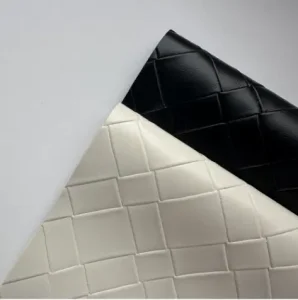
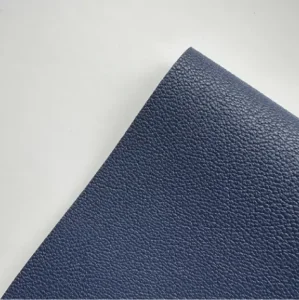
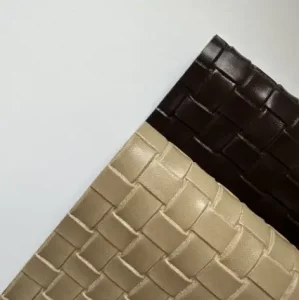
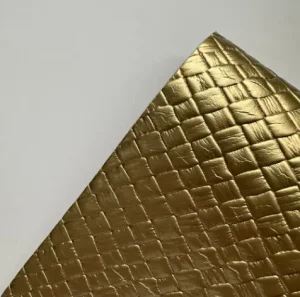
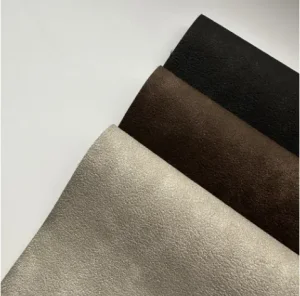
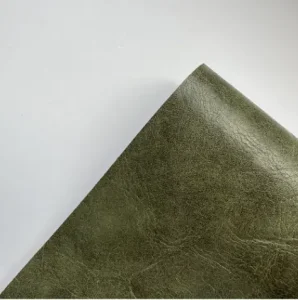
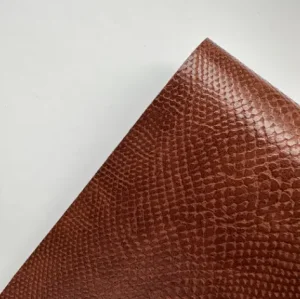
Explore our complete spectrum of plant-based bio-leathers, circular post-consumer recycled fabrics, and zero-solvent PU solutions ready for global distribution.

Future Trajectories in Ultra-Thin Synthetic Substrates
Forecasting macro trends across mono-material recyclability, waterborne polyurethanes, and digitized supply chains over the 2026–2030 cycle.
100% Mono-Material Circularity
Traditional synthetic leather composites bond distinct chemical groups—such as polyurethane surfaces bonded to polyester or polyamide substrates—creating insurmountable mechanical recycling barriers. The industry frontier lies in single-polymer systems: Thermoplastic Polyurethane (TPU) surface films melted directly onto recycled TPU nonwovens for closed-loop remelting.
Atmospheric Carbon Capture Polyols
Next-generation pilot operations are deploying polyols manufactured from sequestered industrial carbon dioxide (CO2). These captured emissions replace conventional ethylene oxide inputs, lowering net embodied emissions of thin artificial leather rolls to zero or carbon-negative ratings.
Digital Product Passports (DPP)
Anticipating mandatory European Union Ecodesign requirements, smart manufacturing lines are embedding cryptographic QR identifiers into roll selvedges, linking physical batches directly to real-time LCA data, water-footprint indices, and raw ingredient origins.