
High-Performance Vegan & Recycled Formulations
Direct supply from JiangXin New Material (JX.ECO). High-durability polyurethane matrix bonded with traceable recycled substrates and renewable plant carbon polymers.
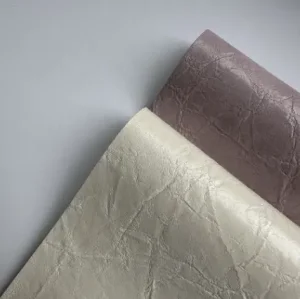
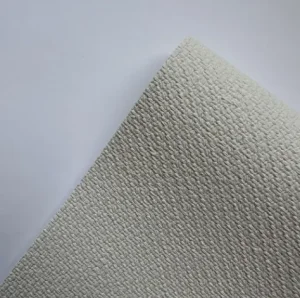
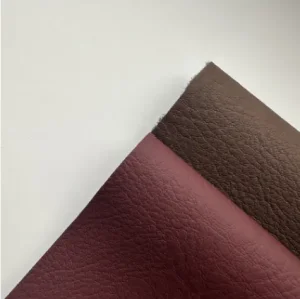
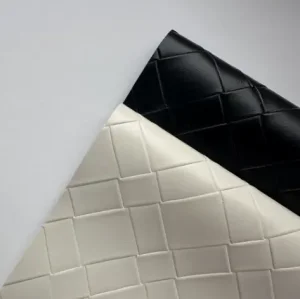

Macro-Industry Paradigm Shift: Defining True Vegan Synthetics
Why modern chemical engineering has made animal slaughter obsolete, and how the industrial transition toward bio-carbon polyurethane is establishing definitive ESG benchmarks.
The Demise of Animal Leather
Traditional bovine hide tanning represents an ecologically burdensome process involving heavy trivalent/hexavalent chromium salts, massive aqueous effluent discharges, and intense upstream methane generation from cattle ranching. Animal leather is fundamentally incompatible with Scope 3 decarbonization commitments.
- Methane Factor: Up to 110 kg CO₂e per m² of bovine hide.
- Chemical Leaching: 85% of global hide relies on chromium sulfate.
- Supply Volatility: Unpredictable hide grading, scarring, and low yields.
1st Gen Faux vs. 3rd Gen Vegan
Early market definitions conflated PVC and petrochem solvent-cast PU with clean vegan leather. While ethically free from animal proteins, early generation synthetics relied on hazardous DMFa plasticizers, ortho-phthalates, and 100% virgin fossil fuels. The industry has reached an inflection point where "vegan" must also imply non-toxic and circular.
- Phase 1 (PVC): High chlorine content, brittle low-temp fracture.
- Phase 2 (DMF PU): Solvent evaporation risk, VOC emission hazards.
- Phase 3 (JX Clean-Tech): Waterborne & Bio-polyols with zero animal inputs.
Global Decarbonization Mandates
With the European Union implementing the Corporate Sustainability Due Diligence Directive (CSDDD) and tightening Ecodesign for Sustainable Products Regulations (ESPR), Tier-1 procurement directors require empirically audited Life Cycle Assessments (LCA) verifying plant-derived carbon origin and recycled content verification.
- EU ESPR Ready: Digital Product Passport (DPP) support ready.
- CBAM Compliance: Drastic reduction in embodied carbon metrics.
- Deforestation-Free: 100% dissociated from livestock deforestation.
| Evaluation Parameter | Traditional Bovine Leather | Generic Petrochemical PU | JiangXin (JX.ECO) Bio-Recycled Vegan PU |
|---|---|---|---|
| Cruelty-Free / Animal Inputs | 0% (Slaughterhouse by-product) | 100% Animal-Free (Synthetic) | 100% Certified Vegan & PETA-Approved Compatible |
| Fossil Carbon Displacement | N/A (Biological Animal Protein) | 0% (100% Virgin Petrochemical) | 30% to 75% Renewable Agricultural / Bio-Based Polyols |
| Substrate Matrix Origin | Animal Dermis / Collagen Mesh | Virgin Woven / Nonwoven Polyester | 100% RCS / GRS Certified Traceable Post-Consumer rPET |
| Hazardous Solvents (DMFa / Toluene) | Formaldehyde / Chromium Salts | 50 ppm - 300 ppm Residual DMFa | Zero Solvent / Water-Based Matrix (DMFa < 1 ppm ND) |
| Bally Flex Resistance (-20°C) | Moderate (Stiffens under zero) | 20,000 - 40,000 Cycles | > 100,000 Cycles without surface micro-fissures |
| Embodied Carbon (CO₂e / m²) | ~65.0 - 110.0 kg CO₂e | ~14.5 - 18.2 kg CO₂e | < 4.8 kg CO₂e (Powered by on-site Photovoltaics) |
JiangXin New Material (JX.ECO): 135,733 m² Smart Campus
Established on June 2, 2017, in Yingde, Guangdong. Purpose-built chemical engineering site designed to eliminate solvent exposure and deliver gigascale eco-synthetic polymer output.
4.68 MW Rooftop Photovoltaics
Our expansive industrial complex features one of the synthetic leather industry's largest on-site solar generation grids. With a 4.68 megawatt peak capacity, clean renewable electricity powers over 40% of our thermal drying and automated coating lines, systematically insulating global buyers from fossil tariff volatility.
Biological Wastewater Treatment
Equipped with a proprietary biological secondary filtration and membrane separation wastewater plant, our facility treats 100% of process rinsewater in-house. Water is treated to grade-A discharge standards, with closed-loop cooling towers recycling thermal loads to minimize municipal water dependency.
Zero-VOC Air Purification
Unlike conventional facilities using open solvent vats, JiangXin utilizes fully enclosed dry-process coating workshops built with floor-to-ceiling tempered glass, advanced regenerative thermal oxidizers (RTO), and continuous VOC condensation units. Volatile emissions are reduced to undetectable limits.
Three Core Engineering Platforms
Engineered to satisfy distinct sustainability narratives without sacrificing tear strength, haptic hand feel, grain definition, or stitch durability.
1. Plant-Derived Bio-Based PU
By substituting petroleum-derived polyols with non-food agricultural biomass (castor bean starch, agricultural byproduct cellulose, and industrial corn polyols), this platform traps atmospheric CO₂ during plant photosynthesis. Certified under ASTM D6866 radiocarbon dating standards.
- Bio-Content Range: 30% to 75% verifiable modern carbon.
- Thermal Resistance: Hydrolysis resistance up to 7-10 years.
- Application Scope: Premium footwear vamps and luxury leather goods.
2. RCS-Certified Recycled System
Manufactured using mechanical and chemical recycling pathways. Textile base fabrics are spun entirely from post-consumer recycled polyethylene terephthalate (rPET) plastic bottles and recycled textile remnants. Certified under Textile Exchange Recycled Claim Standard (RCS).
- Substrate Traceability: Official Transaction Certificates (TC).
- Resource Conservation: Conserves 70% energy vs. virgin polyester.
- Application Scope: Luggage, sports lifestyle footwear, and belts.
3. Waterborne & Solvent-Free PU
Synthesized without dimethylformamide (DMFa), methyl ethyl ketone (MEK), or toluene. By utilizing high-solids aqueous dispersion polymers, JiangXin produces a 100% non-toxic synthetic leather that eliminates hazardous occupational chemical exposure.
- Zero Odor Profile: Ideal for enclosed automotive and infant wear.
- Chemical Safety: Free of phthalates, organotins, and lead.
- Application Scope: Automotive interiors and childrenswear.
Audited Compliance & Localized Technical Support
Streamlined supply chain integration for brands in North America, the European Union, the United Kingdom, and Asia-Pacific. Zero friction at customs and third-party laboratory audits.
Strict Chemical RSL Conformance
JiangXin formulations undergo routine gas chromatography-mass spectrometry (GC-MS) screening to guarantee complete alignment with corporate Restricted Substances Lists (RSL). Every production lot meets EU REACH Annex XVII Substances of Very High Concern (SVHC < 0.1% w/w), RoHS 2.0 heavy metal bans, and California Proposition 65 total lead and cadmium thresholds.
Social & Facility ESG Verifications
Our campus is systematically certified under the Higg Facility Environmental Module (Higg FEM) and Facility Social & Labor Module (Higg FSLM), assuring tier-1 enterprise stakeholders that manufacturing complies with international labor rights (amfori BSCI) and environmental management systems (ISO 14001, ISO 9001, and ISO 45001).
Localized Global Delivery Pipeline
Exporting to more than 50 nations across Europe, North America, Southeast Asia, and South America. We provide dedicated bilingual technical field engineers who work directly with your contract manufacturing facilities (OEM/ODMs) in Vietnam, Cambodia, Indonesia, Mexico, and Portugal to calibrate die-cutting pressures, stitching gauges, and cement bonding adhesives.
Precision Engineering for Demanding Sectors
Configured across customized backing fabrics (microfiber, circular knit, twill, or recycled fleece), specific surface embossing, and functional top-coat formulations.
Athletic & Lifestyle Footwear
Engineered to endure repetitive high-impact mechanical stress. Features high peel strength (> 3.5 kg/3cm), dynamic flexing resistance down to -30°C, and exceptional scratch/scuff recovery for athletic sneakers, hiking boots, and formal shoes.
- Cold Flex Resistance: 100,000 Bally flex cycles (-30°C).
- Abrasion Standard: Taber H-22 wheel > 5,000 cycles.
- Tensile Strength: Warp > 800 N / Weft > 650 N.
Handbags & Small Leather Goods
Delivers the refined haptic suppleness, structural drape, and edge-creasing performance demanded by luxury accessories brands. Compatible with modern automatic cutting tables and edge-coating oil finishes without swelling.
- Grain Fidelity: Distinct tooth-pick, pebble, and nappa patterns.
- Stitch Tear Resistance: > 90 N per ASTM D4704.
- Hydrolysis Aging: Jungle Test 10 weeks (70°C, 95% RH).
Automotive & High-Traffic Furniture
Formulated for severe UV exposure and flame resistance. High-density waterborne polyurethane coatings resist plasticizer migration, sun fade, perspiration acid erosion, and accidental ink staining in electric vehicle interiors.
- Lightfastness Rating: ISO 105-B02 Blue Wool Grade 7+.
- Flame Retardancy: FMVSS 302 & BS 5852 Crib 5 options.
- Fogging Evaluation: DIN 75201 Method B > 90%.
2026–2030 Synthetic Leather Technology Roadmap
How JiangXin New Material is investing R&D capital to achieve closed-loop circularity, carbon-negative polyurethane, and enzyme-degradable polymer backings.
85% Bio-Mass Polyols & Single-Polymer TPU
Scaling second-generation agricultural residue synthesis to push renewable bio-carbon content past 85% in surface films. Commercializing monomaterial TPU leather constructions that allow the surface coating and woven backing to be recycled together without chemical delamination.
Direct Carbon Capture Polyurethane (CCU)
Collaborating with leading petrochemical research institutions to capture industrial exhaust carbon dioxide (CO₂) and chemically transform it into polyurethane monomers. This converts industrial emissions into durable, supple vegan leather for consumer goods.
Enzyme-Triggered Circular Recycling
Engineering specialized microbial enzyme cleaving sites into the polyurethane polymer chain. Products at their end-of-life cycle can be submerged in proprietary organic biological baths, fully digesting the polymer coating within 90 days into reusable base oligomers.
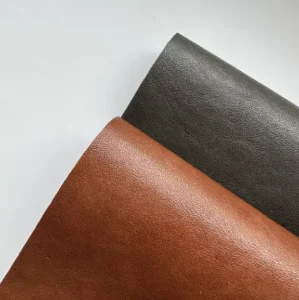
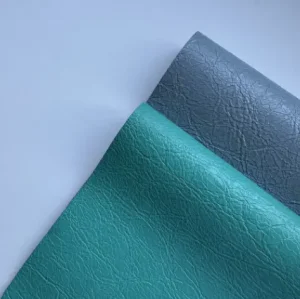
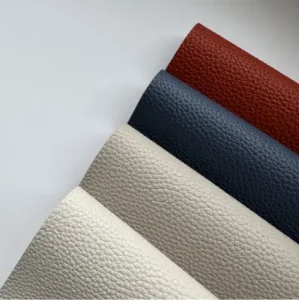
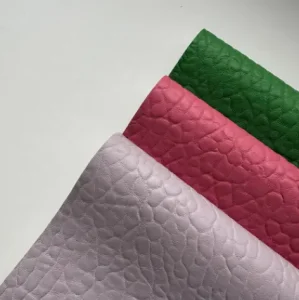
Bio-Renewable & Eco-Conscious Synthetics
Engineered for low-VOC emissions, certified recycled content, and reliable physical performance across diverse global supply chains.



Frequently Asked Technical & Procurement Questions
Critical data points addressing brand compliance, material testing thresholds, supply chain verification, and minimum order parameters.