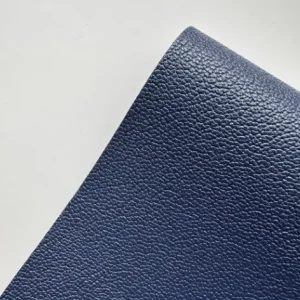
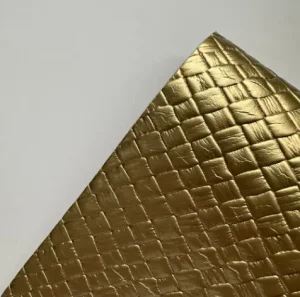
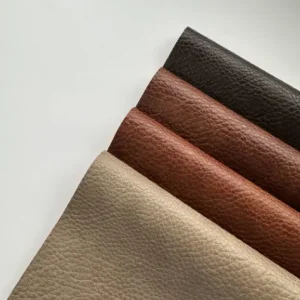
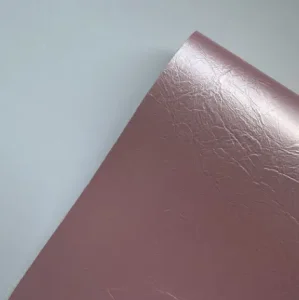
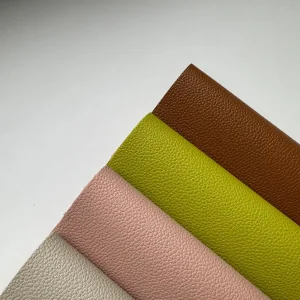
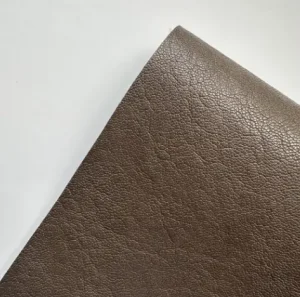
Custom Mill Yardage: Bio-Derived & Recycled Formulations
Continuous coil yardage calibrated for roll-to-roll consistency, standard widths (54"-56"), and zero surface defect tolerance for footwear, automotive upholstery, and luxury luggage manufacturing.
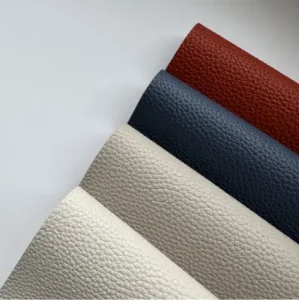
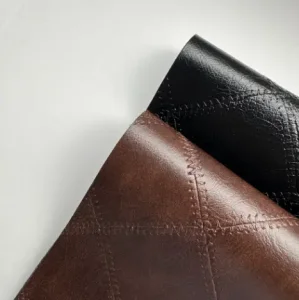
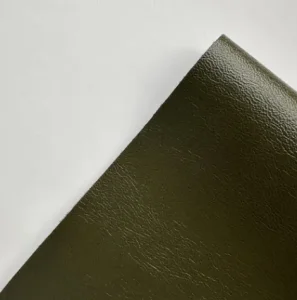
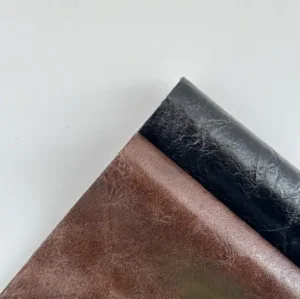
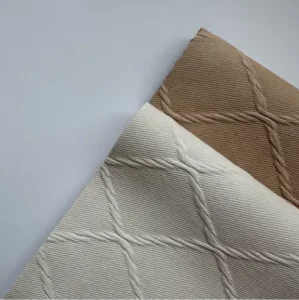
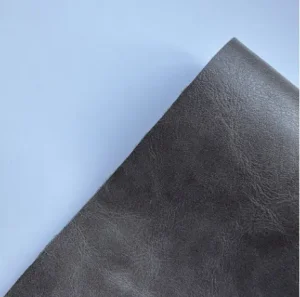
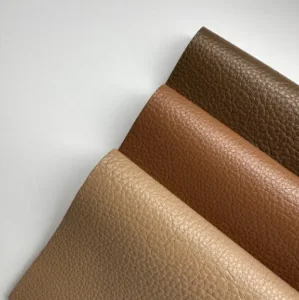
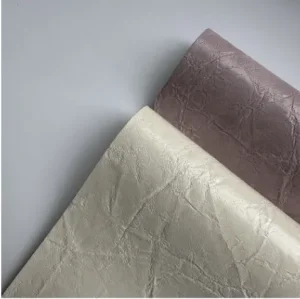
Engineering High-Yield Synthetic Leather by the Yard
Navigating the procurement shift from legacy PVC/DMF-laden polyurethanes to clean water-based, solvent-free, and bio-synthesized artificial hides in Chinese smart manufacturing.
The China Factory Advantage
China's Guangdong production clusters synthesize complete vertical integration: upstream chemical polyols synthesis, precision micro-fiber non-woven knitting, coagulation bath control, and robotic surface transfer coating happen inside synchronized industrial corridors, delivering unmatched economies of scale and rapid lead times.
Solvent-Free Clean Chemistry
Legacy synthetic fabrics relied on toxic N,N-Dimethylformamide (DMFa). Modern yards engineered by clean-tech factories utilize 100% waterborne polyurethane dispersions (PUD) and hot-melt solvent-free polyurethane systems, eliminating VOC outgassing and meeting stringent EU REACH Annex XVII thresholds.
RCS Chain-of-Custody Integrity
Textile Exchange Recycled Claim Standard (RCS) certification enables transparent tracking of post-consumer PET bottle flake backings and regenerated scrap fibers, providing global luxury groups complete audit trails via verified Transaction Certificates (TCs) for every production batch.
Engineered Specifications for Targeted Application Sectors
Different end applications demand distinct molecular elasticity, scratch resistance, and environmental stability. Here is how custom yardage addresses high-stress commercial verticals.
Automotive & Commercial Transit
Engineered to withstand prolonged UV radiation without fading, hydrolytic degradation, or plasticizer cracking. Meets stringent automotive standards including FMVSS 302 flammability ratings, cold-crack resistance to -30°C, and Martindale abrasion resistance exceeding 100,000 cycles.
High-End Luggage & Accessories
Combining customized grain stamping—such as toothpick, saffiano, pebbled, or smooth nappa grains—with tensile tear strength. Delivers clean edge painting compatibility, flexible stitching retention, and anti-staining chemical shields against grease and alcohol wipes.
Athletic Footwear & Apparel
Engineered for lightweight dynamic flex endurance (Bally Flex testing beyond 200,000 cycles at ambient temperature). Offers breathable microporous backing structures and plant-based polyol skin formulations that mirror calf leather's soft drape without animal-derived inputs.
What Global Sourcing Officers Demand in 2026+
International procurement teams must balance brand environmental commitments with harsh supply chain realities. Our factory workflows are structured around resolving corporate sourcing pain points directly.
1. Traceability & Defensible ESG Metrics
Greenwashing scrutiny requires verified data. Purchasing teams now require quantitative verification via radiocarbon analysis (ASTM D6866) to prove bio-derived carbon percentage, alongside verified Higg FEM scorecards and amfori BSCI social compliance audits for labor conditions.
2. Dimensional Uniformity & Cutting Yield
Genuine hide yields average only 65-75% due to insect bites, scars, and irregular contours. High-precision continuous synthetic leather by the yard delivers uniform width, controlled roll elongation, and zero perimeter wastage, enabling computer-controlled automated CNC cut-rates above 95%.
3. Zero-Delay Chemical Compliance (RSL)
Any batch halted for restricted substances can derail season releases. Formulations must undergo pre-shipment gas chromatography–mass spectrometry (GC-MS) verification to guarantee zero organotin compounds, no banned phthalates (6P/16P-free), and full OEKO-TEX Standard 100 compliance.
4. Agile Pilot Prototyping to Full Roll Orders
Modern supply chain managers reject rigid multi-thousand-meter MOQ models for early prototyping. Our agile manufacturing lines support targeted sampling lengths followed by synchronized 16M+ meter annual capacity to execute aggressive product rollouts.
Frequently Asked Questions by Industrial Sourcing Teams
Direct answers to the most common engineering and procurement inquiries regarding synthetic leather rolls, bio-based metrics, and international export logistics.
What is the minimum order quantity (MOQ) and lead time for custom continuous roll yardage?
How does bio-based synthetic leather differ structurally from standard PU leather?
Can you supply official Transaction Certificates (TC) for RCS-certified recycled orders?
What functional finishings can be applied during production?
How do rolls ship to prevent pressure marks and grain distortion during transit?
Specialty High-Performance Rolls & Bio-Based Formulations
Explore our full line of solvent-free, low-impact sustainable faux leathers, manufactured in an ISO 9001/14001, Higg Index audited industrial complex.