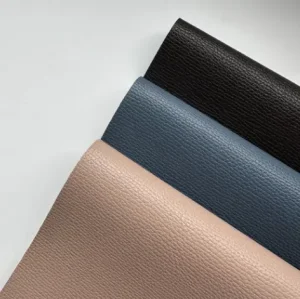
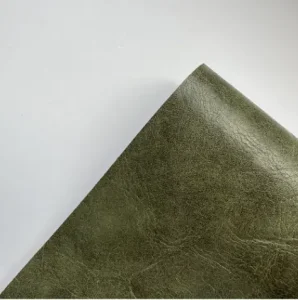
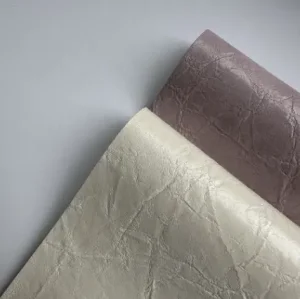
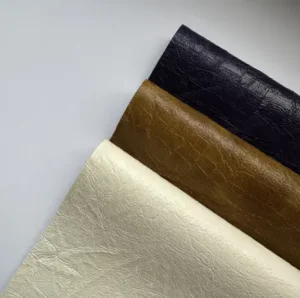
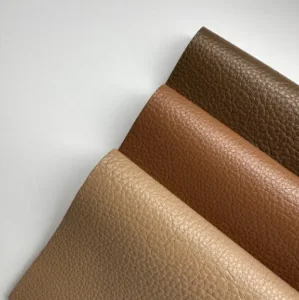
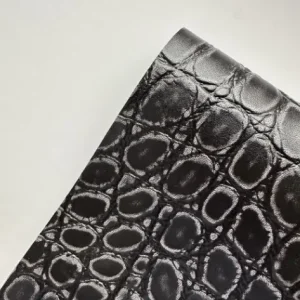
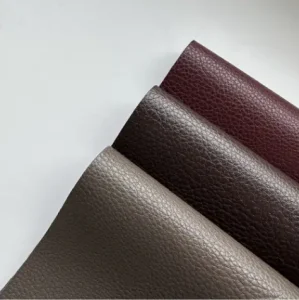
Featured Sustainable Biobased Leather Catalog
Explore precision-formulated vegan and plant-derived leather references directly supplied from our certified manufacturing infrastructure.
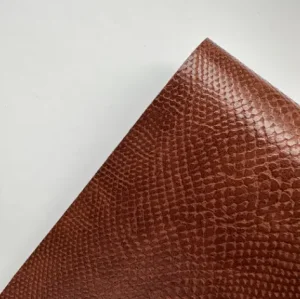
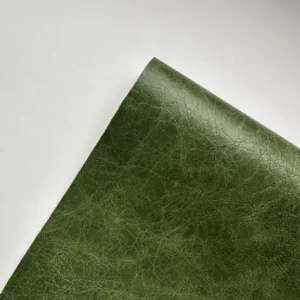
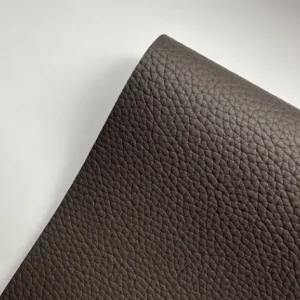
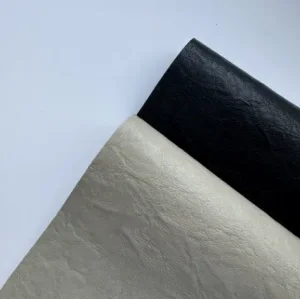
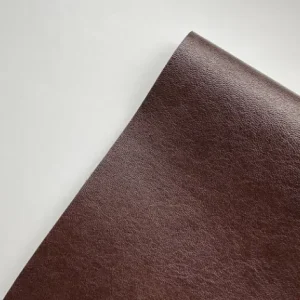
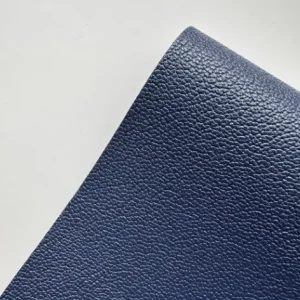
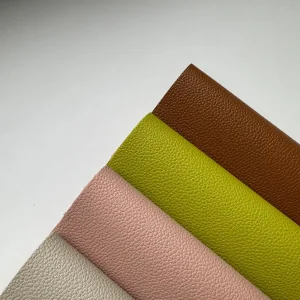
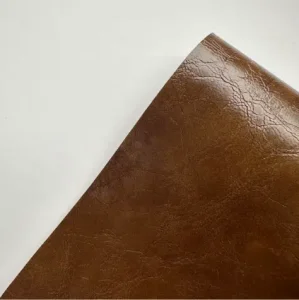
Soybean Oil Based Biobased Leather: Chemical Engineering & Innovation
A comprehensive technical analysis of epoxidized soybean oil (ESBO) polyol synthesis, replacing fossil-based diols in waterborne polyurethane leather systems.
Bio-Polyol Synthesis
By functionalizing triglyceride unsaturated double bonds via epoxidation and oxirane ring-opening, we transform non-food-competing soybean oil into high-reactivity polyols. This architecture provides high crosslinking density and stable hydrolytic performance, completely replacing conventional petroleum-derived polyethers.
ASTM D6866 Radiocarbon Traceability
Every lot of biobased synthetic leather is verified through accelerator mass spectrometry (AMS) radiocarbon C14 isotopic testing in accordance with ASTM D6866. JiangXin guarantees customized renewable organic carbon concentrations ranging reliably from 25% up to 75% total bio-content.
Zero-VOC Waterborne PU Technology
Unlike legacy synthetic leather operations reliant on DMF (dimethylformamide), toluene, or MEK solvents, our soybean biobased formulation is combined with clean waterborne dispersion polyurethane (WPU), ensuring zero solvent discharge, ultra-low odor, and seamless compliance with international health mandates.
Technical Insight: Why Soybean Polyols Outperform Traditional Petrochemical Coatings
The natural aliphatic hydrocarbon chains found in soybean fatty acids provide intrinsic flex resistance and low-temperature durability that surpass petrochemical equivalents. Conventional PU stiffens significantly below -15°C due to rigid ester/ether phase segregation. In contrast, biobased polyols derived from soybean triglycerides feature a branched molecular backbone that maintains soft viscoelastic flexibility down to -30°C while achieving over 100,000 Bally flex cycles without micro-cracking.
| Performance Indicator | Legacy Petrochemical PU Leather | JiangXin Soybean Oil Biobased Leather | Industrial Advantage |
|---|---|---|---|
| Feedstock Origin | 100% Fossil / Petroleum Derivatives | Up to 75% Soybean Plant Carbon | Massive Carbon Decoupling |
| Solvent Chemistry | DMF / DMAC / Toluene Based | 100% Solvent-Free / Waterborne Systems | Zero VOC Toxicity |
| Cold Crack Resistance | Fails at -10°C to -15°C | Tested stable at -30°C (100k cycles) | Superior Arctic Durability |
| Hydrolysis Resistance | 3 - 5 Years (Jungle Test 5-7 days) | 8 - 10 Years (Jungle Test 10-14 days) | Automotive-Grade Longevity |
China Factory Advantage: Scale, Integration & Clean Supply Chain
Operating from our modern Yingde chemical park campus, JiangXin New Material integrates raw material refinement, automated coating lines, and green energy governance.
Full Value-Chain Vertical Control
From the precise catalytic cracking of epoxidized soybean bio-oil to computerized release paper laminating, color matching, and backing fabric compounding (including recycled PET, bamboo fiber, and organic cotton), our end-to-end integration eliminates margin markups and guarantees unmatched roll-to-roll consistency.
Solar-Powered Decarbonization
Sustainability is more than product composition. JiangXin manufactures across a smart campus energized by a 4.68 MW rooftop photovoltaic solar grid. Together with advanced thermal recovery units and an automated wastewater treatment station, we lower the embodied Scope 1 and Scope 2 carbon footprint for every exported meter.
Rapid OEM Customization & R&D Lab
Our in-house polymer formulation engineers support customized grain design (smooth nappa, pebble, saffiano, vintage), specialized thicknesses from 0.5mm to 2.2mm, flame retardancy (FMVSS 302, BS 5852), and unique hand feels within 3-5 working days for lab strike-offs and technical sampling.
Global Procurement Demands & Macro Industry Trajectory
Strategic ESG roadmaps, EU CBAM carbon borders, and circular economy legislative frameworks are reshaping how multinational enterprises procure high-performance synthetic textiles.
Scope 3 ESG Mandates
Global brands in North America and Western Europe are required to systematically audit Scope 3 supply chain greenhouse gases. By switching to biobased polyols derived from photosynthetic soybean crops, corporate clients slash cradle-to-gate carbon profiles by up to 42%.
Strict Regulatory Compliance
International chemical restrictions—including REACH SVHC, RoHS, California Proposition 65, and 6P/ortho-phthalate bans—render cheap, solvent-laden materials unviable. JiangXin biobased PU delivers third-party lab documentation with zero regulated contaminants.
Decoupling from Petro-Volatility
Crude oil geopolitics cause unpredictable pricing swings for polyurethane precursors like TDI and MDI. Agronomic polyol derived from domestic renewable soybeans safeguards procurement stability, providing predictable contract costing over multi-year manufacturing runs.
Rise of Verified Vegan Consumerism
Modern consumers demand cruelty-free leather alternatives that do not compromise luxury tactile properties. Our soybean bio-materials provide premium hand feel, drape, and breathability without animal sacrifice or high-carbon plastic compromise.
Engineered Application Sectors & Custom Performance Profiles
Our biobased formulations are tailored specifically to the structural, thermal, and mechanical demands of distinct industrial segments.
Automotive Cockpits & EV Interiors
Tailored for seat covers, steering wheel wraps, headliners, and door panel skins. Certified for extreme anti-UV aging (Florida cycle 1,000 hrs), stringent low-fogging ratings, and compliance with automotive flame retardancy standards (FMVSS 302).
Luxury Handbags & Designer Fashion
Combines soft, supple calfskin hand touch with structural drape and high puncture strength. Compatible with high-frequency embossing, foil stamping, and zero edge-peeling, ideal for fine luggage and bespoke outerwear.
High-Performance Athletic Footwear
Engineered for running shoe vamps, football boot outer shells, and casual sneaker counters. Delivers over 100,000 dynamic Bally flex cycles, extreme wet/dry rub fastness (Grade 4.5+), and water-repellent finishing.
Comprehensive Solutions for Tier-1 Brands & Global Sourcing
How JiangXin bridges the gap between lab-scale chemical engineering and large-scale manufacturing deployment.
Full Chain-of-Custody Certification
We provide full auditability from upstream crop origin to completed export shipment. Accompanied by official Transaction Certificates (TC) under RCS (Recycled Claim Standard), GRS, and USDA BioPreferred documentation to streamline brand sustainability reporting.
Dedicated Technical Account Engineering
Our cross-functional teams consist of chemical polymer PhDs and experienced export managers. We work directly with your design, compliance, and production departments to ensure our biobased leather seamlessly integrates into existing die-cutting and sewing machinery without tooling changes.
Logistical Resilience & Global Warehousing
Positioned near major international maritime ports in Southern China (Guangzhou, Shenzhen, Hong Kong), we support flexible Incoterms (FOB, CIF, DDP) and maintain bonded container shipping lines with short transit lead times to Europe, the Americas, and Southeast Asia.
Frequently Asked Questions (FAQ) for Material Buyers
Clear, direct answers regarding soybean biobased chemistry, MOQ, test compliance, and production verification.
What exactly is soybean oil based biobased leather?
How is the biobased percentage certified and proven?
Does soybean leather decompose prematurely or lack durability?
Can JiangXin combine biobased coatings with recycled substrate fabrics?
What are your typical production lead times and Minimum Order Quantities (MOQ)?
Which global chemical compliance standards are guaranteed?
Explore Extended Biobased & Sustainable Product Solutions
Review additional certified performance grades, embossed patterns, and sustainable synthetic leather articles.