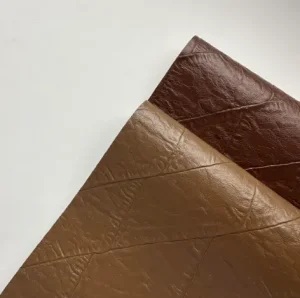
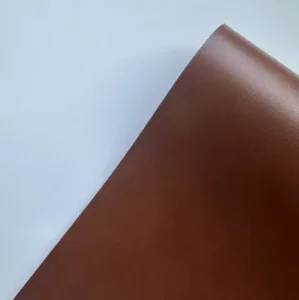
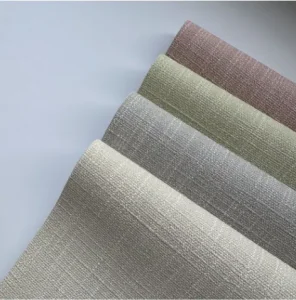
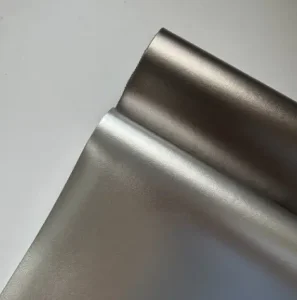
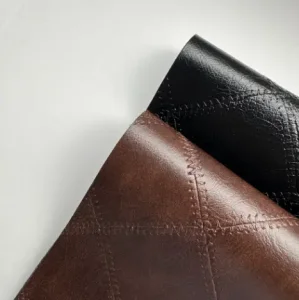
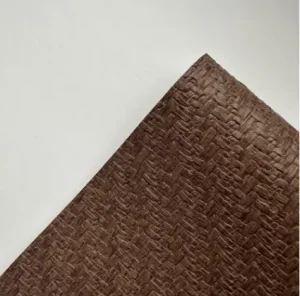
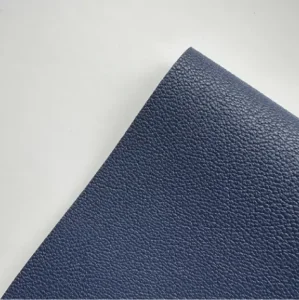
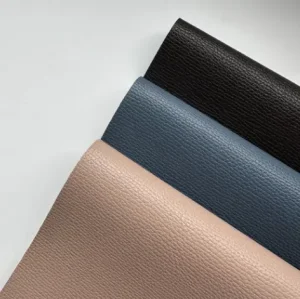
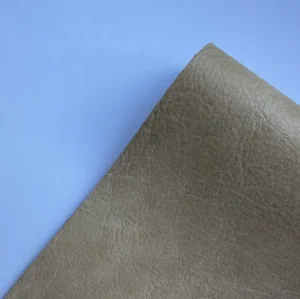
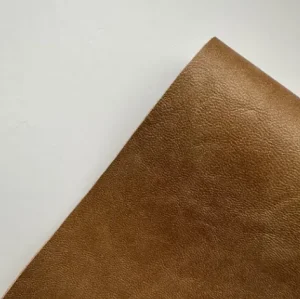
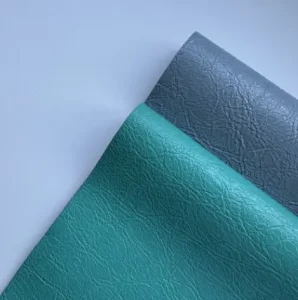
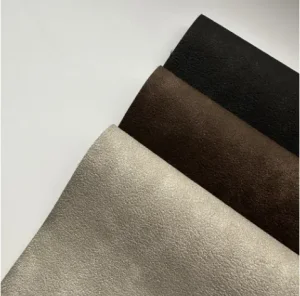
Featured Bio-Derived & Recycled Leather Formulations
Standard-setting sustainable synthetic substrates engineered in our zero-coal, solar-powered chemical park in Guangdong, China.
The Strategic Transformation of Global Vegan Leather Supply Chains
Navigating the regulatory leap from legacy fossil-derived synthetics to biologically sourced carbon and circular post-consumer chemistries.
The Regulatory Squeeze on Fossil PU
Global manufacturing is encountering unprecedented scrutiny. The European Union’s Corporate Sustainability Due Diligence Directive (CSDDD) and escalating Extended Producer Responsibility (EPR) mandates are compelling footwear and fashion brands to systematically eliminate traditional petroleum-derived polyurethane and toxic solvent residues (such as DMFa). Sourcing executives now require empirically proven carbon balance sheets rather than unsubstantiated eco-marketing.
USDA Biobased Radiocarbon Validation
Premium vegan leather engineering has transitioned from passive substitution to deep synthesis. By substituting conventional petroleum polyols with bio-succinic acid, industrial corn starch, castor oil, and sugarcane residues, modern technical leathers achieve 20% to 75% renewable carbon content. Precise verification via ASTM D6866 radiocarbon dating ensures zero fossil greenwashing, granting Tier-1 compliance across international import customs.
Chain-of-Custody Integrity
Procurement risk mitigation requires total vertical integration. OEM brands can no longer rely on unverified multi-tier brokers. The integration of Textile Exchange Recycled Claim Standard (RCS) protocols and Global Recycled Standard (GRS) enables roll-by-roll digital track-and-trace, linking recycled post-consumer PET substrate fiber back to physical feedstock origin with certified Transaction Certificates (TC).
Full-Stack Ecological Leather Engineering Platforms
From solvent elimination to circular polyester backings, our engineering architecture is configured for scalable industrial deployment.
100% Water-Based & Solvent-Free PU
Complete obsolescence of volatile organic solvents (DMFa, DMAC, toluene). Our chemical synthesizers utilize aqueous polyurethane dispersions (PUD) and hot-melt solvent-free polyurethane casting. The resulting polymers release zero pungent odors, ensure 0% plasticizer migration, and preserve a soft, breathable hand feel.
- Zero VOC emissions during thermal vulcanization
- Elimination of hazardous chemical occupational hazards
- Flawless compliance with ZDHC MRSL Version 3.1
Circular Textile Core Backings
A high-performance vegan leather is defined by its structural backing. We manufacture dedicated warp-knitted, circular-knitted, non-woven microfiber, and spunlace bases engineered from 100% GRS/RCS certified recycled rPET bottle flakes, post-industrial cotton trims, and plant-derived cellulose.
- High mechanical peel strength (>2.5 kg/3cm)
- Balanced tensile and elongation ratios for shoe lasting
- Superior edge-burnish and fold properties
Extreme Duty Functional Tailoring
Sustainable substrates must equal or exceed animal hides in physical longevity. Our surface laboratory applies cross-linked polyurethane micro-coatings configured for rigorous industrial and extreme environmental applications without cracking, peel failure, or premature discoloration.
- Martindale abrasion exceeding 100,000 cycles
- Cold-crack resistance verified down to -30°C
- Hydrolysis stability: 5-year to 10-year jungle test rating
Engineered Customization for Demanding Global Verticals
Every industry experiences distinct mechanical stresses, chemical exposures, and regulatory requirements. Our tailored lines deliver validated solutions.
Athletic & Casual Footwear
Engineered for high-frequency flexing (>100,000 Bally flex cycles), high seam-tear strength, and scuff resistance. Validated for high-heat automatic cutting machines and vulcanized injection moulding.
Automotive & Transit Interiors
Formulated to conform with strict OEM automotive standards: FMVSS 302 flame retardancy, low fogging (DIN 75201), extreme UV resistance (ISO 105-B02), and ultra-low internal vehicle odor ratings.
Luxury Bags & Travel Goods
Engineered for classic drape, buttery grain definition (pebble, toothpick, saffiano), deep edge-painting adhesion, and zero plastic crack along acute corner bevels and structural folds.
Consumer Tech & Packaging
Ultra-thin gauges (0.4mm to 0.7mm) with anti-yellowing, alcohol resistance, and anti-fingerprint properties. Perfect for luxury smartwatch bands, tablet protective folios, and cosmetic cases.
Zero-Friction Market Clearance & Independent Verification
Every meter manufactured by JiangXin is documented to pass the world's most rigorous chemical safety and ethical labor benchmarks.
REACH & RoHS Compliant
Certified SVHC-free across all 240+ substances on the ECHA candidate list. Free of lead, cadmium, mercury, and PBDEs, providing seamless clearance through customs in 27 EU member states.
CA Prop 65 & 6P Phthalate Free
Formulated without banned phthalate plasticizers (DEHP, DBP, BBP, DINP, DIDP, DnOP). Fully compliant with US Consumer Product Safety Commission (CPSC) norms for skin-contact merchandise.
RCS & GRS Chain of Custody
Textile Exchange certified traceability with transaction certificates (TC) issued per bulk order. Complete verification from raw recycled flake to final rolled goods ready for brand audit.
OEKO-TEX Standard 100
Tested against over 300 harmful parameters. Class I & Class II safety approvals guaranteeing harmlessness for human health, babies, and close-body intimate fashion.
amfori BSCI & ISO 9001/14001
Fully audited facility conditions covering fair wages, workplace safety, and greenhouse gas control. Certified ISO 9001 quality management and ISO 14001 environmental stewardship.
Higg Index Verified Facility
Standardized environmental evaluation through Higg FEM (Facility Environmental Module). Transparent public performance tracking on water usage, energy mix, and carbon reduction.
Engineering the Autonomous Clean-Tech Leather Horizon
Our multi-year research and capital investment plan designed to reach net-zero embodied carbon across all roll lines.
Photovoltaic Decarbonization
Our 4.68 MW rooftop solar installation powers dry-process casting and solvent recovery, preventing over 4,500 metric tons of CO2 emissions annually.
High-Carbon Bio Replacement
Expanding commercialization of agricultural residue polyols to achieve over 80% ASTM D6866 biobased content while maintaining 10-year hydrolysis thresholds.
Mono-Material Circularity
Development of homogenous 100% recyclable polyurethane constructions (PU skin paired with matching non-woven PU backing) to enable direct post-consumer shredding and re-pelletization.
Mycelium & Protein Matrices
Pilot trials on biological pure-mycelium network growth and bacterial cellulose coatings, delivering completely biodegradable, fossil-free alternative luxury hides.
Frequently Asked Sourcing & Engineering Questions
Immediate answers to critical validation, minimum ordering, customization, and chemical compliance questions.
What types of synthetic leather does JiangXin manufacture?
We manufacture three core material platforms: biobased synthetic leather formulated with plant-derived polyols (USDA BioPreferred compliant), RCS/GRS-certified recycled synthetic leather utilizing post-consumer rPET substrates, and zero-solvent / water-based eco-friendly PU leather engineered for high-end footwear, bags, apparel, and upholstery.
How is biobased content verified for customer compliance?
Biobased content measures the proportion of renewable plant-derived carbon versus fossil carbon. It is quantitatively validated via accelerator mass spectrometry radiocarbon analysis according to ASTM D6866, the gold-standard testing protocol behind the USDA Certified Biobased Product label.
Can JiangXin provide official RCS transaction certificates (TC)?
Yes. Operating under an audited Textile Exchange Chain of Custody, every production lot of RCS-certified recycled synthetic leather can be supported with official Transaction Certificates (TC) issued directly by an accredited certification body, proving legal claim validity for brand reporting.
What is JiangXin's production scale and typical lead time?
Our 135,733 m² campus in Yingde, Guangdong produces more than 16 million meters annually across multiple automated dry, wet, and solvent-free casting lines. Standard swatch development takes 3–5 working days, while bulk roll production cycles typically range between 12 to 18 working days.
Which physical performance parameters can be tailored?
Formulations can be adjusted for Martindale and Taber abrasion, cold crack (-10°C to -40°C), UV color fastness, flame retardancy (BS5852 / FMVSS 302 / CAL 117), antibacterial properties, anti-stain oleophobic finishing, breathability, and customized backing stretch behavior.
How does JiangXin ensure chemical compliance with brand RSLs?
All materials are formulated to comply with EU REACH SVHC, RoHS, California Proposition 65, 6P Phthalate-Free parameters, and OEKO-TEX Standard 100 Class I/II. Clients are invited to submit their corporate Restricted Substance List (RSL) prior to lab dip sign-off.
Explore Specialized Vegan Leather References
Select an article code below to review specific physical datasheets, grain books, and laboratory test reports.