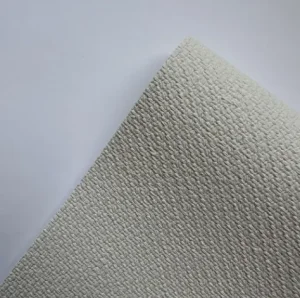
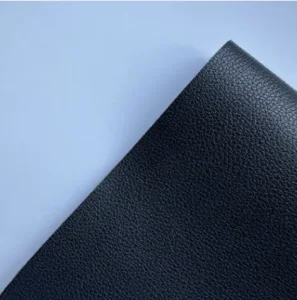
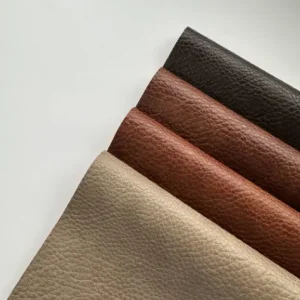
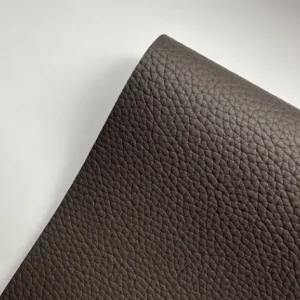
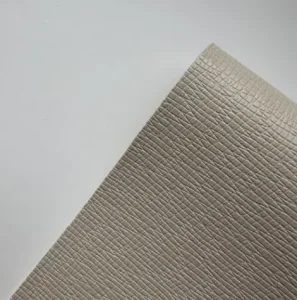
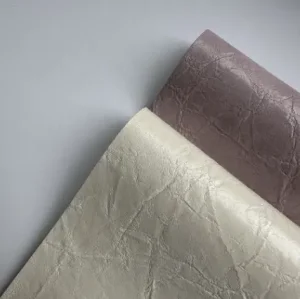
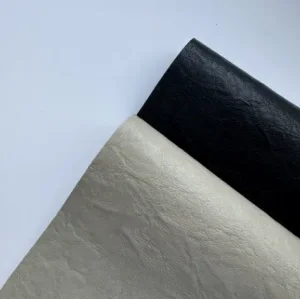
Featured Biobased & Circular Synthetic Materials
Explore our flagship certified low-carbon synthetic leathers engineered to surpass strict OEM durability tolerances, solvent thresholds, and international consumer safety benchmarks.
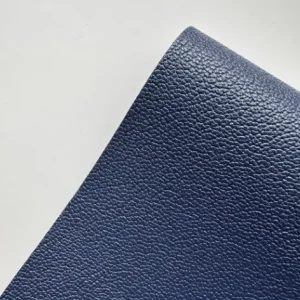
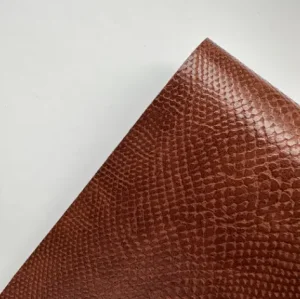
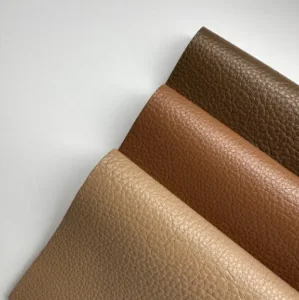
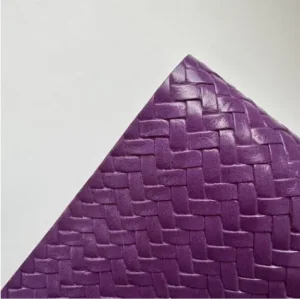
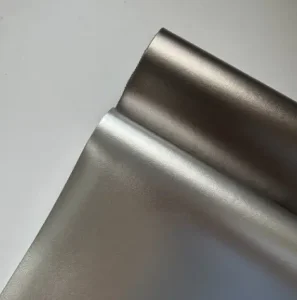
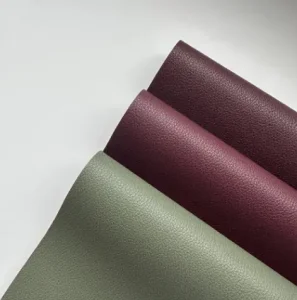

Engineering Synthetic Leather: Polymer Synthesis to Closed-Loop Processing
Modern industrial synthetic leather has outpaced standard faux polymers. Through water-borne chemistry, bio-derived carbon substitution, and post-consumer recycled substrates, JX.ECO redefines artificial leather structural performance.
Biobased Carbon Synthesis (ASTM D6866)
Instead of petrochemical cracking for polyols, our bio-PU lines incorporate renewable carbon extracted from industrial non-food corn, castor oil, and agricultural by-products. Radiocarbon dating verifies up to 75% renewable biological carbon share, drastically reducing cradle-to-gate CO2 emissions without compromising polymer backbone elasticity.
Zero Solvent Polyurethane (DMFa & VOC Free)
Traditional wet-process PU relies on toxic N,N-Dimethylformamide (DMFa) solvent baths. Our clean-tech dry and water-dispersed lines utilize reactive solvent-free polyurethane. This eliminates hazardous airborne VOCs, prevents chemical odor retention, and effortlessly complies with the 5 mg/kg European REACH Annex XVII limitation.
Recycled Claim Standard (RCS) Substrates
Our woven, non-woven, and ultra-microfiber backings integrate post-consumer rPET bottles and mechanically recycled fabric scraps. Governed by complete Textile Exchange chain-of-custody protocols, each production batch provides full transactional certificates verifying exact recycled percentages.
| Technical Characteristic | Conventional Petrochemical PVC/PU | JX.ECO Biobased PU Series | JX.ECO RCS-Recycled PU Series |
|---|---|---|---|
| Carbon Feedstock Source | 100% Fossil / Petroleum Hydrocarbons | 20% - 75% Renewable Plant-Derived Polyols | Up to 100% GRS/RCS Recycled rPET Backing |
| Solvent Threshold (DMFa / Toluene) | Frequent DMFa residues (>50 ppm) | Solvent-Free / Waterborne (<5 ppm, REACH clear) | Zero Hazardous Processing Solvents |
| Hydrolysis Resistance (Jungle Test) | 1 - 3 Years (Quick embrittlement) | 5 - 8 Years (Tolerates 70°C, 95% RH testing) | 5 - 10 Years High-Tenacity Polycarbonate Grade |
| Abrasion Endurance (Martindale) | 20,000 - 30,000 Cycles | 80,000 - 150,000+ Cycles (BS EN ISO 12947) | 100,000+ Cycles (Tear-resistant Microfiber) |
Why Global Enterprises Source from Guangdong's Premier Megafactory
Modern enterprise procurement demands more than spot market purchases; it demands audited supply chain integrity, multi-megawatt green energy operations, and rapid customization turnaround.
135,733 m² Clean-Tech Campus
Constructed in 2017 inside Yinghong Industrial Park, our plant features industrial tempered-glass workshops, high-efficiency closed exhaust capture, and automated high-yield calendering lines.
4.68 MW Solar Photovoltaic Grid
Rooftop renewable solar arrays generate millions of kilowatt-hours annually, powering clean-coating lines and allowing international brands to offset Scope 3 indirect carbon loads.
16M+ Meters Annual Output
Massive scale yields volume consistency and competitive raw material cost insulation. With over 200 Million RMB in turnover, we buffer raw chemical price shifts for long-term contract predictability.
End-to-End Vertical Control
From substrate weaving and surface grain laser embossing to custom resin blending, flame lamination, and physical inspection, 100% of execution is governed in-house.
Localized Regulatory Support & Risk Assurance
Importing high volumes of coated textiles into North American, European, and Asia-Pacific jurisdictions requires thorough chemical clearances, labor accreditations, and ESG auditability.
European Union REACH & RoHS Audits
Every commercial production lot is engineered to pass EU REACH SVHC (Substances of Very High Concern) screening, RoHS restriction on hazardous heavy metals, and stringent 6P/ortho-phthalate tests for infant and prolonged dermal contact compliance.
North American ASTM & CA Prop 65
Formulated without lead, cadmium, toxic plasticizers, or bio-accumulative PFAS/PFCs, satisfying strict California Proposition 65 settlement limits, ASTM cold-crack flex tests (-20°C to -40°C), and flammability parameters (FMVSS 302 / CAL 117).
Social Governance: Higg FEM & amfori BSCI
Procurement safety goes beyond raw chemicals. JX.ECO undergoes continuous Higg Facility Environmental Module (Higg FEM) verification and amfori BSCI ethical auditing, safeguarding international brands against modern supply chain disruptions and reputational liability.
High-Performance Applications Built for Demanding Use-Cases
Synthetic leather provides designers with zero hide-shape waste, edge-to-edge roll uniformity, superior dye lot repeatability, and tailored mechanical traits across critical industries.
Performance Footwear & Athletic Uppers
Engineered for dynamic flexing (Bally flex > 100,000 cycles), micro-perforation breathability, high pull-strength stitching, and lightweight endurance in running, outdoor, and lifestyle shoe profiles.
Luxury Handbags & Luggage
Delivers distinct edge-paint compatibility, drape resilience, deep debossing clarity, scratch resistance, and refined surface hand identical to high-grade calfskin or nappa leather without animal origin.
Garments & Precision Apparel
Ultra-soft, supple drape combined with micro-porous breathability and laundering stability. Developed specifically for moto jackets, tailored trousers, outerwear facings, and premium trims.
Automotive Interior & Contract Seating
Meets stringent automotive VOC fogging criteria (DIN 75201), UV colorfastness under accelerated Xenon weathering, anti-microbial sanitation resistance, and flame-retardant standards.
Synthetic Leather Market Trajectory: The Next Decade
Regulatory pressure on petroleum synthetics and animal leather tanneries is accelerating the transition toward bio-based, circular, and digitally traceable artificial leather materials.
1. Upward Bio-Ratio Transition (Up to 80%+)
First-generation bio-PU contained 10% to 20% agricultural carbon. The current and upcoming generations target 50% to 80% non-food plant-derived carbon content through enzymatic biotechnology, replacing both the polyol and isocyanate building blocks.
2. Digital Product Passports (DPP) & LCA Verification
With the European Union Eco-design for Sustainable Products Regulation (ESPR), brands will mandate batch-level QR codes revealing Life Cycle Assessment (LCA) data, cradle-to-gate carbon footprints, and complete origin verification down to raw material inputs.
3. Monomaterial Circular Recyclability
Cross-layer contamination between synthetic coatings and natural backings traditionally rendered end-of-life recycling impossible. Next-generation circular leather combines 100% polyester polyurethane skins over 100% rPET non-wovens for closed-loop thermal recovery.
Frequently Asked Technical & Sourcing Questions
Clear answers addressing supplier verification, custom development minimums, testing certifications, and mass production delivery lead times.
What core material classifications does JiangXin (JX.ECO) manufacture?
How is biobased content verified and what certifications are provided?
Can your factory provide official RCS Transaction Certificates (TC) for bulk orders?
What are your minimum order quantities (MOQ) and production lead times?
Which international chemical compliance standards do your materials meet?
What mechanical and physical properties can be customized during prototyping?
More Certified Synthetic Leather Selections
Browse our extended catalog of high-abrasion, low-carbon synthetic leathers available for worldwide bulk manufacturing and specialized development.