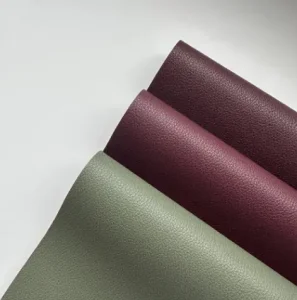
Featured Sustainable Product References (Part I)
Verified low-carbon PU and bio-synthetic references precision-engineered for brand-scale applications in footwear, upholstery, and accessories.
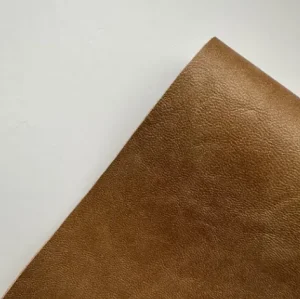
Custom Circular‑Focused RCS‑Verified Recycled Synthetic Leather-0003
Product Detail →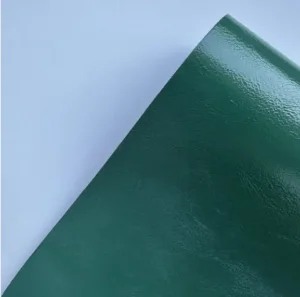
High-Quality Low‑Impact Green Sustainable Synthetic Leather-9333
Product Detail →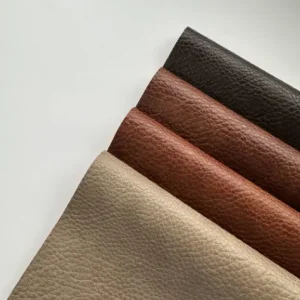
Custom RCS Recycled Synthetic Leather -9088 Manufacturers
Product Detail →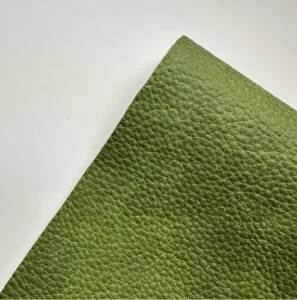
Custom Premium Sustainable Eco Synthetic Leather-9304 Supplier
Product Detail →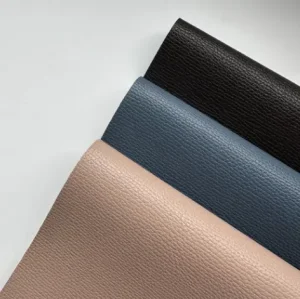
Wholesale Green Sustainable High-End Synthetic Leather-9264
Product Detail →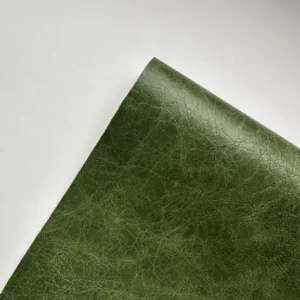
OEM Plant-Based Renewable Bio Synthetic Leather-9023
Product Detail →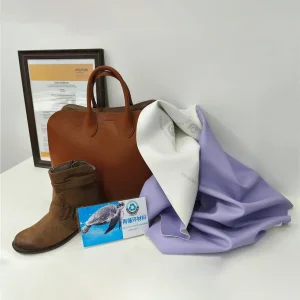
OEM RCS Certified Recycled Sustainable Synthetic Leather
Product Detail →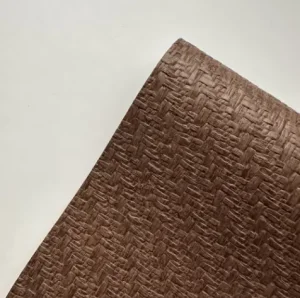
Wholesale Bio‑Based Renewable Synthetic Leather-9339
Product Detail →Semantic Definition: What Constitutes High-Quality Organic Leather?
Demystifying nomenclature: Clarifying the chemical continuum from bio-derived carbon matrices to 100% solvent-free circular polymers.
Bio-Based Polyurethane (Bio-PU)
Engineered by synthesizing polyols derived from non-food agricultural biomass (e.g., industrial corn starch, castor oil, and agricultural residue). Replaces 20% to over 60% of petrochemically sourced polyols, verified strictly under ASTM D6866 standard radiocarbon metrics.
Circular RCS / GRS Recycled Substrates
Utilizing high-tenacity post-consumer PET bottles (rPET) alongside reclaimed microfibers. Maintains an unbroken custodial trail validated via Textile Exchange Recycled Claim Standard (RCS) and Global Recycled Standard (GRS) transaction certification chains.
Zero-VOC Water-Based Chemistry
Completely eliminates dimethylformamide (DMFa), methyl ethyl ketone (MEK), and toxic plasticizers. Complies effortlessly with stringent international standards including EU REACH SVHC restrictions, RoHS, and OEKO-TEX Eco-Passport protocols.
| Evaluation Parameter | Bio-Based PU (Organic Matrix) | Conventional Wet-Process PU | Traditional PVC Synthetic |
|---|---|---|---|
| Renewable/Recycled Carbon Content | 30% – 75% Bio-Content (ASTM D6866) | 0% (100% Virgin Fossil Derivative) | 0% (Petroleum & Chlorine-based) |
| Solvent Emissions (VOCs) | < 5 ppm (Water-based / Solvent-free) | High residual DMFa risks (20-100 ppm) | Phthalate migration & heavy VOC off-gassing |
| Hydrolysis Resistance (Tropical Test) | Up to 10+ Years (ISO 1419 Jungle Test) | 3 – 5 Years average breakdown | Hardens and cracks over time |
| Direct Cradle-to-Gate Carbon Footprint | Reduced by 45% – 60% vs virgin PU | Baseline benchmark: high thermal load | High carbon footprint + lifecycle dioxin hazard |
Why Global Brands Source Organic Synthetic Leather from Advanced Chinese Facilities
The convergence of upstream clean chemical synthesis, advanced thermal recovery, massive solar infrastructure, and certified supply chain integration.
Fully Integrated Upstream-Downstream Clusters
China's Guangdong and coastal chemical development clusters unite specialized bio-polyol distillers, precision non-woven needle-punch mills, and coating processors within immediate proximity. This clustering dramatically mitigates Scope 3 transportation carbon while compressing lead times from lab swatch formulation to full 20-foot container dispatch.
Clean Energy Transition & Photovoltaic Scale
Modern tier-1 plants (such as JiangXin's 135,733 m² campus) operate extensive on-site solar rooftop arrays generating megawatt-class renewable power. Integrated regenerative thermal oxidizers (RTO) achieve closed-loop solvent recovery efficiency exceeding 99.5%, allowing brand procurement officers to claim indisputable Higg FEM verified emission cuts.
Audited ESG Governance & Regulatory Certainty
Modern manufacturing infrastructure complies strictly with the highest national environmental protocols, amfori BSCI ethical working conditions, and ISO 9001 / ISO 14001 guidelines. This completely insulates global luxury groups, sporting conglomerates, and contract furnishers from unexpected factory shutdown risks.
Precision Engineering Across Tier-1 Industry Applications
Matching dynamic mechanical specifications to vertical market demands: High-cycle flexion, abrasion resilience, and flame retardation.
Automotive Interiors & Commercial Fleet
Demands zero volatile fogging (DIN 75201 compliant), high scratch resistance, and self-extinguishing flame-retardant properties (FMVSS 302). Solvent-free organic leather eliminates chemical cabin smells while withstanding 100,000+ Taber abrasion cycles.
Athletic Footwear & Heavy-Flex Technical Shoes
Requires cold-crack resistance (-20°C Bally Flex test exceeding 50,000 cycles) and high breathability. Micro-porous bio-PU coatings bonded to recycled stretch backings deliver lightweight tensile performance with zero layer delamination.
Luxury Handbags, Leather Goods & Apparel
Focuses on tactile suppleness, edge-creasing behavior, and high-fidelity embossing retention (such as toothpick grains and dimensional stitched effects). Ensures uniform colorfastness against sweat, friction, and UV aging.
Macro Industry Trends & Global Procurement Requirements
Addressing EU Corporate Sustainability Due Diligence (CSDDD), Scope 3 reporting, and circular lifecycle obligations.
Traceable Digital Product Passports (DPP)
Global procurement directives now mandate indisputable material origin proof. Sourcing managers require QR-linked audit certificates certifying the chain of custody from bio-feedstock harvesting or post-consumer flake sorting down to the final master roll.
Elimination of "Forever Chemicals" (PFAS-Free)
With global bans targeting polyfluoroalkyl substances, tier-1 organic synthetic leather factories must achieve stain resistance, waterproof barrier protection, and water repellency through innovative silicone matrices and dendritic water-based top finishes.
Agile Low Minimums with High Technical Yield
Procurement teams demand lower development sampling thresholds combined with industrial consistency across multi-thousand-meter dye lots. Tier-1 automated continuous coating lines mitigate batch-to-batch delta-E color variance to under 0.5.
Frequently Asked Technical Questions (B2B Sourcing Guide)
Clear, definitive answers directly from industrial material scientists and export compliance engineers.
What is the difference between biobased leather and conventional faux leather?
How do factory audits ensure compliance with European Union REACH and RSL standards?
What is the typical Minimum Order Quantity (MOQ) and production turnaround for custom grains and colors?
Can organic synthetic leather meet fire-retardant (FR) standards for upholstery and transportation?
How is RCS (Recycled Claim Standard) chain of custody transferred to the buyer?
Featured Sustainable Product References (Part II)
Explore high-performance organic formulations, plant-derived substrates, and low-impact eco PU materials ready for brand development.
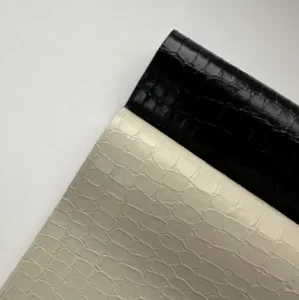
High-Quality Eco-Conscious Synthetic Leather-9255
Product Detail →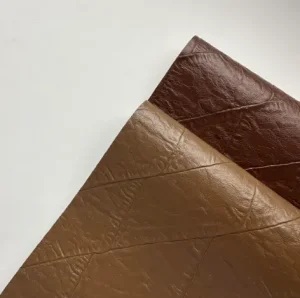
OEM Non-Toxic Vegan Eco Synthetic Leather-9266
Product Detail →
High-Quality Sustainable Synthetic Leather-0039
Product Detail →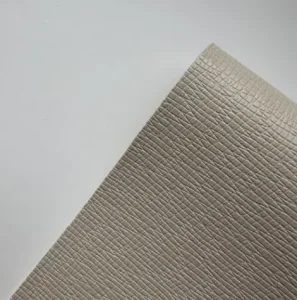
Custom RCS‑Verified Recycled Synthetic Leather-9265
Product Detail →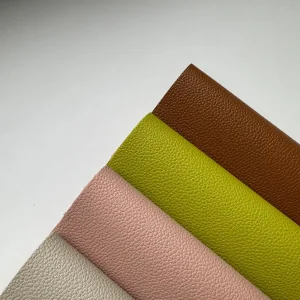
High-Quality Sustainable Eco-Friendly Faux Leather
Product Detail →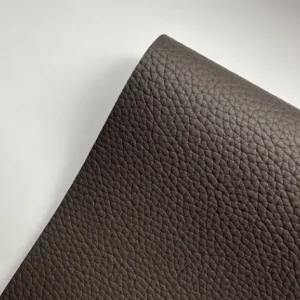
OEM Low-Impact Sustainable Synthetic Leather-9299
Product Detail →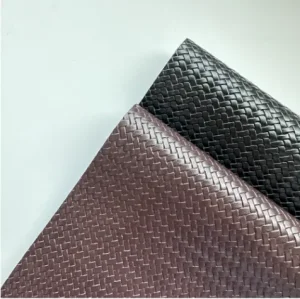
OEM Eco-Friendly Sustainable Synthetic Leather-9348
Product Detail →