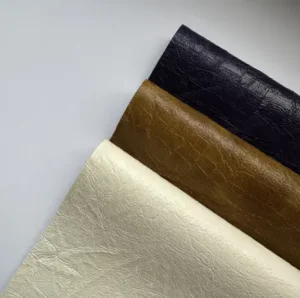
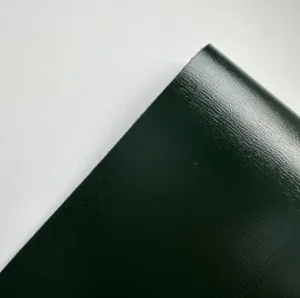
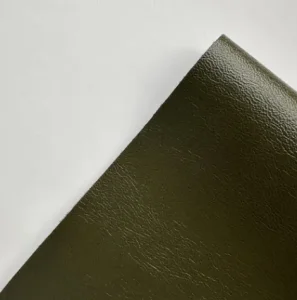
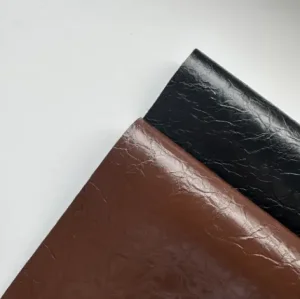
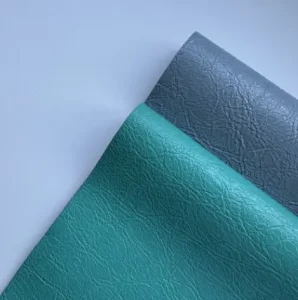
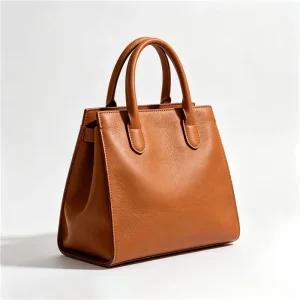
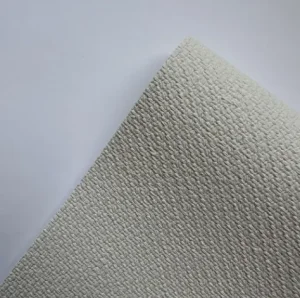
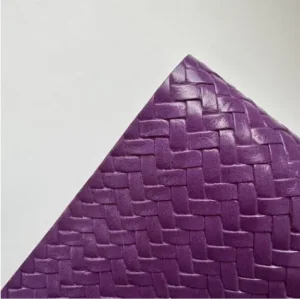
Engineered Recycled & Bio-Based Synthetic Leather (Series I)
Precision-manufactured vegan synthetic materials with certified chain-of-custody tracking, customizable grain profiles, and optimized chemical matrices.
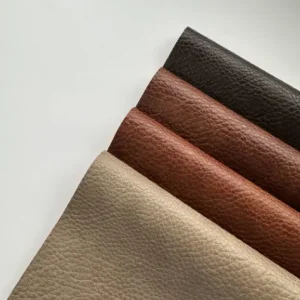
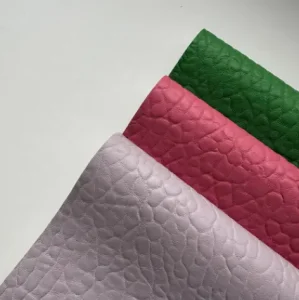
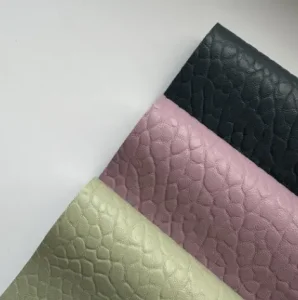
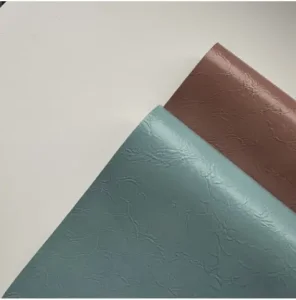
Strategic Evolution of Global Synthetic Leather Procurement
International tier-1 purchasing teams face twin vectors: aggressive corporate decarbonization commitments (Scope 3 GHG abatement) alongside relentless physical durability requirements.
Regulatory Mandates & LCA Auditing
Global supply chains operating across North America and the European Union must conform to rigorous frameworks including the EU Corporate Sustainability Due Diligence Directive (CSDDD) and dynamic Ecodesign for Sustainable Products Regulations (ESPR). Procurement workflows no longer tolerate unverified marketing claims; buyers demand audited Life Cycle Assessments (LCA) verifying biogenic versus petrochemical cradle-to-gate carbon intensity.
Zero-Tolerance Chemical Safety (RSL)
The phase-out of traditional Dimethylformamide (DMFa), Organotin catalysts, plasticizers (ortho-phthalates), and halogenated flame retardants is non-negotiable for modern footwear, upholstery, and apparel brands. Premium synthetic leather suppliers must formulate coating resins on zero-solvent water-based polyurethane (WPU) dispersion systems or high-solids solvent-free hot-melt reaction platforms.
Engineered Mechanical Parity
The historical compromise between environmental sustainability and mechanical performance has been resolved through advanced macromolecular formulation. Modern sustainable leather synthetics must deliver over 100,000 Bally flex cycles at -10°C, extreme Taber and Martindale abrasion resistance, high tensile break thresholds, and hydrolytic stability surpassing 7 to 10-year Jungle Test standards.
Comprehensive Vertical Industrial Solutions
From renewable polymer synthesis to high-speed multi-stage release paper embossing, our manufacturing infrastructure delivers turnkey material engineering.
Bio-Based Polymer Synthesis (Plant Carbon)
We replace traditional fossil-fuel petrochemical feedstocks with polyols derived from non-food agricultural waste, castor beans, corn starches, and natural plant derivatives. By controlling bio-based carbon concentration (ranging from 20% to 75% verifiable bio-content via ASTM D6866 radiocarbon testing), we offer original equipment manufacturers transparent hangtag claims and tangible corporate carbon credits without modifying existing assembly tooling.
Traceable RCS Recycled Material Streams
Under strict Recycled Claim Standard (RCS) Chain of Custody (CoC), we reprocess Post-Consumer Recycled (PCR) PET bottles and Post-Industrial Recycled (PIR) polymer scrap into ultra-refined microfibers, woven backings, and recycled PU skins. Every manufacturing lot is backed by rigorous third-party Transaction Certificates (TCs), ensuring infallible traceability from reclaimed flake to delivered master roll.
Functional Matrix Engineering
We tailor the physical properties of our synthetic leather to precise product use-cases. Our lab controls surface rheology to impart stain resistance, flame retardance (FMVSS 302, BS 5852), antibacterial and antifungal barriers (ISO 22196), cold crack resistance down to -30°C, and custom micro-porous breatheability, outperforming conventional leather in severe usage environments.
The 2026–2030 Leather Synthetic Innovation Trajectory
Continuous R&D investments targeting net-zero carbon circularity, cellular polyurethane precision, and bio-identical performance matrices.
Solvent-Free & Water-Based Platforms
Complete elimination of DMFa, MEK, and toluene through mature 100% solids hot-melt reactive polyurethane (PUR) and aqueous WPU technology. Industrial facilities operate closed-loop condensation and waste heat extraction systems powered by 4.68 MW rooftop photovoltaic arrays, establishing an industry benchmark for low Scope 1 and 2 emissions.
High-Fraction Bio-Carbon & Mono-Material Systems
Scaling commercial plant-based synthetic compositions past 60% bio-polyol carbon mass fractions without sacrificial performance degradation. Concurrently deploying mono-material polyurethane constructions (PU surface layers mated seamlessly with 100% recycled PET or recycled PU non-woven bases) to enable streamlined, closed-loop thermal recycling at the end of product life.
Mycelium Hybrids & CO2-Captured Polyols
Integrating synthesized microbial mycelium networks and carbon-capture utilization (CCU) polyols derived from sequestered industrial smokestack flue gases. The objective is establishing carbon-negative synthetic leather substrates that surpass traditional bovine leather in structural tensile continuity, breathability, and aesthetic depth.
World-Class Manufacturing Rigor & Global Compliance
Operating from our 135,733 m² integrated campus in Yingde, Guangdong, Yingde City JiangXin New Material Co., Ltd. (JX.ECO) sets the operational standard for responsible eco-leather synthesis.
The JiangXin (JX.ECO) Industrial Campus
Founded on June 2, 2017, the facility was engineered specifically to transcend traditional petrochemical processing liabilities. Designed with state-of-the-art floor-to-ceiling tempered glass workshops, advanced industrial HVAC ventilation systems, an on-site multi-stage wastewater treatment plant, and a 4.68 MW rooftop photovoltaic array, the complex produces over 16 million meters of high-performance synthetic leather annually for more than 300 tier-1 clients worldwide.
Standardized Multi-Jurisdiction Compliance
Every synthetic leather roll shipped from our facility complies with stringent consumer and chemical safety regulations across export destinations. Our technical lab validates every lot against strict parameters before packaging, guaranteeing rapid customs clearance and immediate brand onboarding.
Frequently Asked Technical & Sourcing Questions
Direct technical clarifications from JiangXin's material engineers for procurement directors, product developers, and quality assurance leads.
What core chemical and structural material families does JiangXin manufacture? +
How is bio-based carbon verified versus misleading raw material percentage claims? +
Can JiangXin provide complete Recycled Claim Standard (RCS) Transaction Certificates (TCs)? +
What mechanical and functional customization capabilities can be engineered into the rolls? +
What are JiangXin's facility production capacities and lead times? +
Engineered Recycled & Bio-Based Synthetic Leather (Series II)
High-specification artificial leather references developed for luxury accessories, athletic footwear, and demanding commercial contract installations.