
Featured High-Performance Formulations (Part I)
Engineered for seamless down-line cutting yields, uniform surface naps, and comprehensive chemical traceability. Select verified formulations ready for technical sampling.
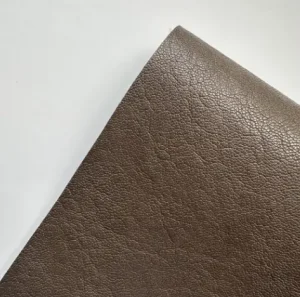
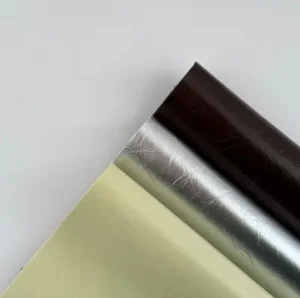
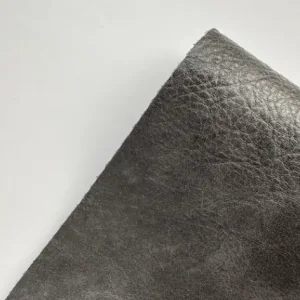
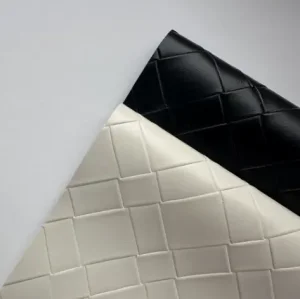
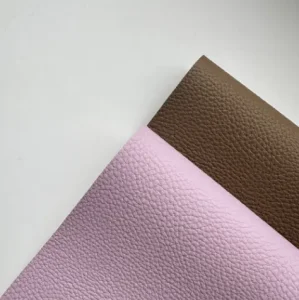
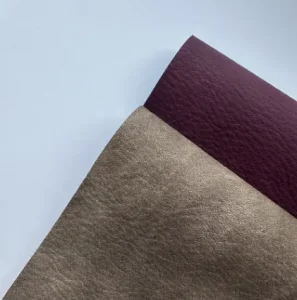
High-Quality Bio-Sourced Renewable Plant-Based Synthetic Leather-9109 Manufacturer, Factories
Explore Product
Global Procurement Demands: Addressing Technical Pain Points
Tier-1 procurement organizations require more than aesthetic parity. We resolve critical points of mechanical failure, thermal instability, and regulatory exposure across complex enterprise supply chains.
Nap Uniformity & Micro-Fibrillation
Traditional synthetic suede often exhibits differential shading, grain shedding, and directional distortion. Our sea-island matrix spinning process delivers ultra-fine continuous microfibers (under 0.05D), guaranteeing consistent surface tension, isotropic pile recovery, and zero bald-patching across thousands of continuous linear meters.
Dynamic Delamination Resistance
Bonding failure between surface polyurethane and underlying non-woven scrims remains a primary vulnerability in high-stress seating and footwear. Through precision aqueous coagulation and deep resin saturation, our matrices provide interlaminar peel strength exceeding 45 N/3cm, eliminating adhesive collapse under severe flex cycles.
Zero-VOC & Solvent-Free Processing
Global brands navigating tightening indoor air quality thresholds require materials free from residual DMFa, toluene, and plasticizer leaching. Our waterborne and solvent-free PU lines eliminate hazardous organosolvents directly at the polymerization phase, achieving under 5 ppm volatile emissions for closed cabin applications.
Technical Roadmap & Next-Generation Material Science
Translating sustainable polymer engineering into scalable commercial substrate production. Our multi-phase innovation framework guides molecular weight customization, functional finishes, and renewable carbon integration.
Phase 1: Bio-Based Carbon
Utilizing high-purity polyols derived from agricultural industrial non-food feedstocks. Our ASTM D6866 certified biobased formulations achieve biological carbon contents exceeding 30% to 50%, systematically replacing fossil petrochemicals without degrading tensile or elongation dynamics.
Phase 2: Closed-Loop Microfibers
Integrating mechanical and chemical post-consumer rPET bottle flakes directly into sea-island microfiber bundles. Fully validated through Textile Exchange chain of custody (RCS/GRS), eliminating virgin polyester dependencies while sustaining extreme tear and seam-burst threshold ratings.
Phase 3: Thermal & Anti-Fouling
Engineered siloxane crosslinking and nanoscale fluorocarbon-free surface treatments create high-energy barriers against liquid ingress, skin sebum transfer, and denim indigo dye staining, maintaining Martindale rub endurance over 100,000 cycles under rigorous laboratory protocols.
Phase 4: Monomaterial Recyclability
Advancing all-polyurethane consolidated constructs, merging microfiber polyurethane base substrates directly with waterborne PU skins. This monomaterial chemistry enables end-of-life depolymerization and circular recovery, removing cross-polymer mechanical delamination barriers.
Macro-Industrial Solutions & Application Systems
Engineered specifications tailored for industrial converting environments. Every substrate matrix is matched to exact mechanical tooling, thermoforming limits, and field environments.
Automotive Cabin Interiors
Direct compliance with international low-fogging criteria (DIN 75201 Method B) and flame retardancy regulations (FMVSS 302). Resistant to prolonged ultraviolet yellowing (ISO 105-B02), high humidity aging, and severe passenger contact wear across steering consoles, door card inlays, and seating inserts.
Footwear & Athletic Performance
Micro-porous open-cell breathability mimicking authentic natural split leathers. Exceptional dynamic vamp cold-flex endurance tested to over 100,000 cycles at -20°C without micro-fracturing. Rapid moisture dispersion and enhanced dimensional stability eliminate deformation during lasting and automated assembly.
Contract Upholstery & High-End Luggage
Supple drape profiles combined with heavy-duty structural integrity. Wyzenbeek testing yielding over 100,000 double rubs on heavy cotton duck. Formulated to withstand institutional grade ethanol disinfectants, UV aging, and stitch pull stress on complex luggage edges and executive seating.
Smart Manufacturing & Supply Chain Resilience
Operating from our modern Yinghong Industrial Park campus in Guangdong, JiangXin integrates automated polymer blending, continuous thickness calibration, and deep logistics connectivity to guarantee delivery stability.
Industry 4.0 Automated Production
Closed-loop inline infrared thickness scanners monitor substrate gauge across full roll widths in real time, sustaining tolerance levels within tight +/-0.03 mm windows. Automated slurry preparation eliminates human error in pigment dispersion and catalytic formulation.
Clean-Tech Energy Infrastructure
Powered by our 4.68 MW rooftop photovoltaic solar grid and regenerative thermal oxidizers (RTO) recovering thermal power for curing tunnels. Water circulation operates via an on-site treatment system, lowering product embodied carbon (Scope 1 & Scope 2 emissions).
Logistical Redundancy & Scalability
Direct positioning within Guangdong's maritime and terrestrial transport corridors enables rapid container dispatch through Shenzhen and Guangzhou ports. Strategic raw polymer buffers insulate OEM production schedules against global geopolitical disruption and shipping volatility.
Global Compliance & Localized Technical Support
Comprehensive regulatory assurance backed by complete international test validation. We assist brands with market entry clearances, chain-of-custody tracking, and regional chemical restrictions.
Full RSL Chemical Verification
All materials are systematically screened and certified under EU REACH (SVHC list), RoHS directives, and OEKO-TEX Standard 100 Class I/II criteria. Free of prohibited phthalates (6P / 16P free), short-chain chlorinated paraffins (SCCP), and organotin compounds.
Audited Chain-of-Custody (RCS & GRS)
We provide full Transaction Certificate (TC) traceability through certified bodies for every recycled order batch. Ensuring your corporate sustainability reports, downstream customs declarations, and consumer hangtags remain unimpeachable under ESG verification.
Field Technical Services
Dedicated material engineers assist development teams with physical standard mapping, custom die-cutting trials, adhesive bonding recommendations, and seam tension tuning. We bridge the gap between material specification and factory conversion.
Featured High-Performance Formulations (Part II)
Explore additional customizable substrates developed for low odor, extreme abrasion resistance, and verified bio-content. Technical documentation provided upon sample dispatch.
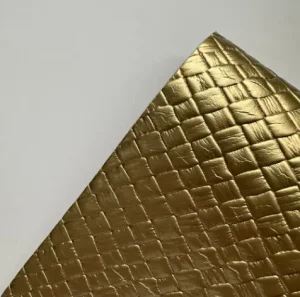
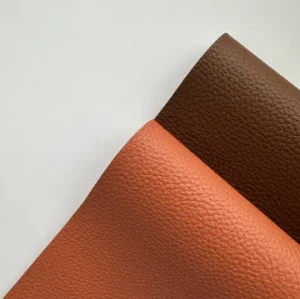
Custom RCS‑Verified Recycled‑Content Sustainable Synthetic Leather-9317 Manufacturers, Manufacturer
Explore Product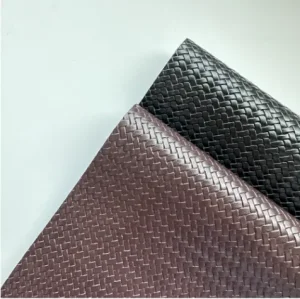
Frequently Asked Questions (FAQ) & Technical Governance
Direct technical responses addressing polymer chemistry, minimum order thresholds, chemical certifications, and performance parameters for enterprise procurement teams.
What chemical differentiations exist between faux suede and standard PU leather?
Standard synthetic leather utilizes a compact coagulated PU film on woven or knitted backings. Faux suede leather, particularly microfiber suede, employs an ultra-fine sea-island bundle matrix of polyester or polyamide entangled via high-pressure needle punching, followed by chemical sea-component extraction and surface buffing. This yields an isotropic, porous fibrous structure identical to animal suede corium.
How is biobased renewable content verified under international trade standards?
Biobased integrity is evaluated through ASTM D6866 carbon isotope radiocarbon analysis. This precisely differentiates modern renewable biological carbon from fossil-fuel-derived petrochemical carbon. Certificates issued through approved laboratories define exact percentage ratings acceptable for USDA BioPreferred hangtags and European biomaterial documentation.
Can JiangXin provide official RCS/GRS Transaction Certificates for each consignment?
Yes. As a fully certified facility operating within Textile Exchange chain-of-custody protocols, JiangXin secures authorized Transaction Certificates (TCs) corresponding to individual commercial invoices and bill-of-lading documents, validating the provenance of recycled post-consumer rPET substrates.
What are the standard sampling lead times and custom coloration parameters?
Standard lab dips and color-matching trials across Pantone or physical swatches are executed within 3 to 5 business days using computerized spectrophotometry. Prototype sample yardage is normally ready within 7 to 10 days. Bulk production cycles operate on a standard 15 to 21-day timeline with scalable throughput matching your shipping schedules.