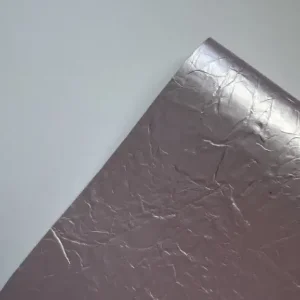
Engineered High-Durability Materials: Top Performance Articles
Explore initial commercial grades developed for supreme flex-fatigue endurance, mechanical tear resistance, and international certification compliance.
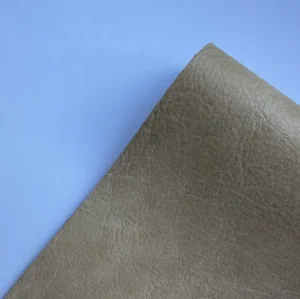
Wholesale Plant‑Origin Renewable Bio‑Based Synthetic Leather-9271
Explore Specification →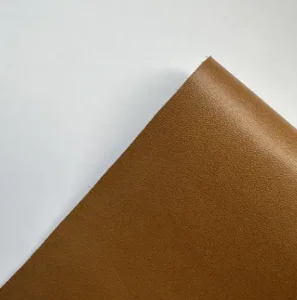
Custom Plant-Sourced Bio-Based Synthetic Leather-9164 Factory
Explore Specification →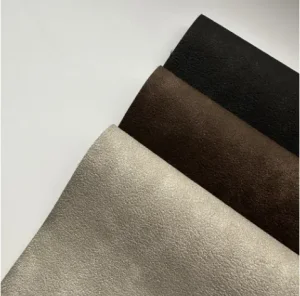
Custom Low‑Impact Green Sustainable Synthetic Leather-0004
Explore Specification →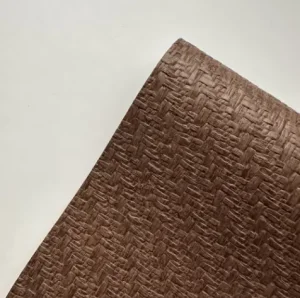
Wholesale Bio‑Based Renewable Synthetic Leather-9339
Explore Specification →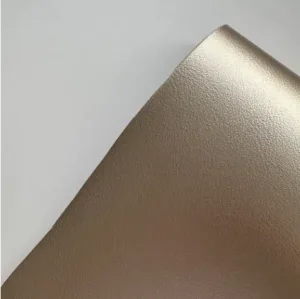
High-Quality Eco-Friendly Sustainable Synthetic Leather-9081
Explore Specification →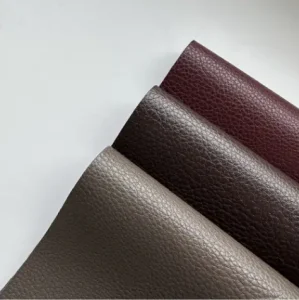
High-Quality Bio-Based Renewable Synthetic Leather-9078
Explore Specification →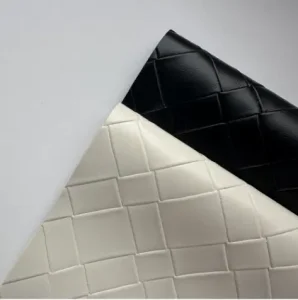
Custom Green Sustainable Man-Made Leather-9338
Explore Specification →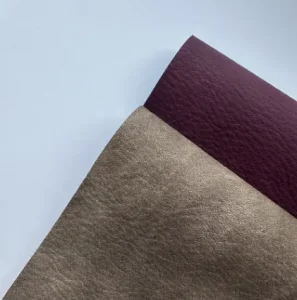
OEM Low Odor Bio-Based Vegan Leather-9237 Suppliers
Explore Specification →Understanding Faux Leather Durability: Polymer Architecture & Longevity
In global procurement, "durability" is no longer an ambiguous marketing term; it is a measurable polymer matrix metric governed by polyurethane hydrolysis resistance, cross-linking density, and mechanical substrate bonding.
Polycarbonate & Polyether Chemistry
Traditional ester-based synthetic leathers suffer from premature degradation when exposed to moisture and heat (hydrolysis). JiangXin (JX.ECO) integrates advanced polycarbonate and polyether cross-linked polyurethane systems that surpass 5 to 10-year hydrolysis benchmarks under extreme tropical environmental simulations (Jungle Test ASTM D3690).
Mechanical Interfacial Adhesion
Durability depends critically on the mechanical anchoring between the micro-porous polyurethane skin and the backing fabric. Utilizing high-density ultra-fine microfibers, recycled polyester knits, and organic cotton twills, our surface adhesion exceeds 40 N/3cm, eliminating delamination, edge cracking, and blistering under severe cyclical load.
Abrasion & Flex Fatigue Thresholds
Through solvent-free hot-melt and high-solid polyurethane formulations, our synthetic surfaces withstand over 100,000 Martindale abrasion cycles (ISO 12947-2) and endure in excess of 150,000 Bally flexometer cycles at 0°C to -20°C without micro-fissure propagation.
| Performance Vector | Standard PVC Faux Leather | Conventional DMF-PU Leather | JX.ECO Solvent-Free Bio-Based / RCS PU |
|---|---|---|---|
| Hydrolysis Resistance (Jungle Test 70°C, 95% RH) | Prone to plasticizer migration (1-2 yrs) | Moderate (3-5 years) | Superior (7-10+ years tested) |
| Martindale Abrasion (ISO 12947-2) | 20,000 - 30,000 cycles | 40,000 - 50,000 cycles | 100,000+ cycles (Industrial Heavy Duty) |
| Bally Flex Endurance (-10°C cold crack) | Fails under 10,000 cycles | 30,000 - 50,000 cycles | 100,000 - 150,000+ cycles without cracking |
| VOC & Odor Threshold | High phthalate smell, toxic degassing | DMF / Solvent residue risk | Zero VOC, DMFa < 2ppm, completely odorless |
| Sustainability Credentials | Non-renewable fossil origin | Fossil feedstock, heavy environmental toll | USDA Biobased, RCS Certified, 4.68MW Solar Mill |
Strategic China Manufacturing Advantages for Durable Faux Leather
From chemical upstream synthesis to automated roll-to-roll continuous calendering, our Guangdong campus harnesses deep industrial clusters to deliver unmatched engineering control, scalability, and price-to-performance ratios.
Vertically Integrated Supply Backbone
Located in Yingde, Guangdong, our 135,733 m² mega-plant eliminates tier-3 middleman costs. We manage precision polymer reaction kettles, wet and dry coagulation lines, laser embossing cylinders, and post-finishing lines under one roof, guaranteeing batch-to-batch mechanical uniformness across millions of meters.
Continuous Green Infrastructure
Equipped with a self-generated 4.68 MW rooftop solar installation, localized catalytic thermal oxidizers, and closed-loop wastewater reclamation stations, JiangXin buffers global buyers against tightening carbon borders (CBAM) and volatile energy pricing.
Rapid Sampling & RSL Compliance
Custom substrate engineering, tailored grain depth, and custom Pantone matching are executed in 3 to 5 business days. Our in-house analytical lab validates zero phthalates, lead-free composition, and non-DMF formulas prior to full-scale container shipping.
Global Industry Evolution: Where Durability Meets Decarbonization
The global faux leather sector is experiencing an unprecedented structural pivot away from petro-dependent PVC towards high-integrity bio-synthetics and fully circular post-consumer recycled matrices.
The Bio-Feedstock Transition
Brands are demanding measurable reductions in Scope 3 greenhouse emissions. By utilizing polyols derived from non-food agricultural biomass (corn starch, castor oil, and sugarcane residues), our bio-based faux leather achieves 30% to 75% renewable carbon content (verified via ASTM D6866 radiocarbon tracking) without sacrificing tensile strength.
Strict Regulatory Bans on Hazardous Solvents
With stringent European REACH amendments banning dimethylformamide (DMFa) levels above strict thresholds, water-based (WBPU) and 100% solvent-free hot-melt polyurethane processing have become mandatory for cross-border brand market clearance.
Recycled Claim Standard (RCS) Traceability
Circular economy procurement protocols require auditable transaction certificates. JX.ECO integrates GRS and RCS-certified post-consumer recycled (rPET) backings, allowing footwear, apparel, and furniture brands to authenticate recycled mass balances across supply chain nodes.
Application Scenarios: Custom Mechanical Profiles by Sector
A single faux leather spec cannot satisfy every operational environment. JX.ECO tailors coating plasticity, grain depth, and micro-structure backings to match localized industrial use cases.
Athletic Footwear & Heavy Boots
Primary Demands: High seam burst strength, flex resistance at -20°C, high abrasion heel-counter durability.
Solution Profile: JX.ECO high-density microfiber bio-based PU with multi-directional tensile yield and water-repellent finishing.
Luxury Handbags & Small Goods
Primary Demands: Natural plump hand-feel, sharp crease retention, edge-paint compatibility, anti-scratch surface coats.
Solution Profile: Solvent-free low-VOC formulations paired with delicate calfskin, pebble, or linear toothpick grain embossings.
Automotive & High-Traffic Furniture
Primary Demands: Flame retardancy (FMVSS 302, BS 5852), UV colorfastness (Grade 4.5+ Xenon arc), anti-staining cleanability.
Solution Profile: Polycarbonate PU coatings integrated with intrinsic non-halogen fire-retardant chemistry.
Macro Supply Chain Solutions for Global Enterprise Procurement
Solving systemic friction for Tier-1 supply chains: How JX.ECO de-risks sourcing from chemical verification to frictionless port delivery.
1. Material Science Innovation Track
We co-develop custom formulations alongside brand innovation directors. Whether transitioning fossil resins to certified bio-based content or engineering customized grain depths, our pilot line accelerates physical sample iterations within 72 hours.
2. Zero-Risk Chemical Compliance Track
Our systematic testing protocols protect brands from costly market recalls. Every batch is cataloged and matched with third-party testing verification (SGS, Intertek, TÜV) confirming REACH SVHC non-detect, 6P phthalate-free, and OEKO-TEX Eco-Passport clearance.
3. Enterprise Capacity & Logistics Track
With 16M+ meters annual throughput, JiangXin scales effortlessly from pilot roll batches to multi-container global allocations. Full automated barcode roll tracking ensures exact batch traceability from resin blending to final ocean container packing.
Enterprise Sourcing FAQ: Faux Leather Durability & Specifications
Direct technical answers from JiangXin's chemical engineers to assist your quality control, sustainability, and sourcing decisions.
What is the primary factor that causes faux leather to peel or crack over time?
Premature peeling and cracking (delamination) are almost always caused by polymer hydrolysis or weak backing bonding. In conventional low-cost PU leathers, residual moisture breaks down vulnerable ester chemical bonds. JiangXin uses advanced polycarbonate-polyether hybrid resins and solvent-free hot-melt polyurethane that resist moisture breakdown, backed by a 5 to 10-year hydrolysis guarantee.
How does bio-based synthetic leather maintain identical durability to petroleum leather?
Bio-based synthetic leather replaces fossil petroleum polyols with bio-polyols synthesized from plant feedstock (such as castor plants or non-food industrial starches). At a molecular polyurethane chain level, the resulting polymer links exhibit identical cross-linking density and tensile strength, delivering identical Martindale abrasion resistance and Bally flex endurance while cutting fossil carbon usage.
Can JiangXin provide formal certification chain-of-custody documentation for brands?
Yes. For our RCS-certified (Recycled Claim Standard) and GRS materials, we issue official Transaction Certificates (TC) tracking post-consumer recycled content back to certified origin points. For bio-based articles, we supply ASTM D6866 carbon dating test reports for USDA BioPreferred labeling support.
What is your factory's standard production capacity and sampling turnaround?
JiangXin's Yingde facility covers 135,733 m² with an annual production output exceeding 16 million meters of high-performance synthetic leather. Lab swatches and custom color matching take 3 to 5 business days, while standard bulk container orders typically ship in 14 to 21 days.
Sustainable High-Durability Materials: Additional Factory Grades
Explore our certified recycled (RCS), bio-derived, and solvent-free synthetic leather grades ready for international sampling and tech pack integration.
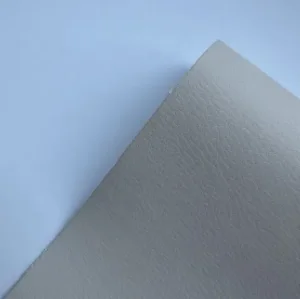
Wholesale RCS Verified Recycled Synthetic Leather-2058
Explore Specification →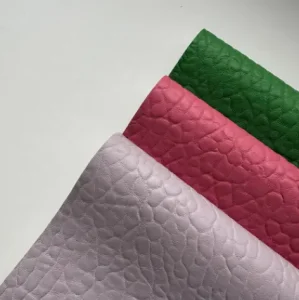
Wholesale Bio-Based Renewable Synthetic Leather-9293
Explore Specification →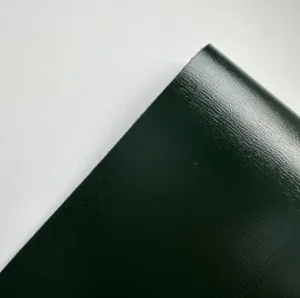
Wholesale RCS-Certified Traceable Recycled Synthetic Leather-0101
Explore Specification →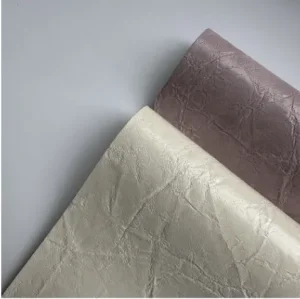
High-Quality RCS Recycled Synthetic Leather-0212 Manufacturer
Explore Specification →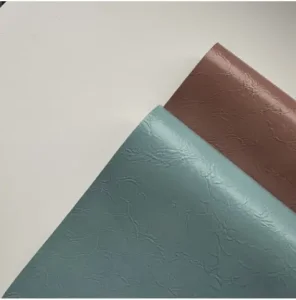
Wholesale Bio-Based Renewable Synthetic Leather-0177
Explore Specification →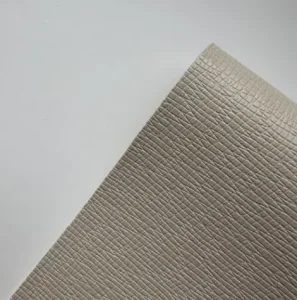
Custom RCS‑Verified Recycled‑Content Synthetic Leather-9265
Explore Specification →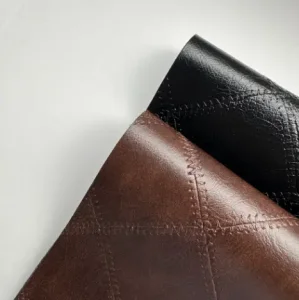
Industrial‑Grade Bio‑Derived Synthetic Leather-9279
Explore Specification →