
Featured Sustainable Synthetic Leather for Luxury Handbags
Factory-calibrated structural integrity, customized flex-fatigue tolerance, and high-yield grain retention designed to exceed commercial luxury brand specifications.
-
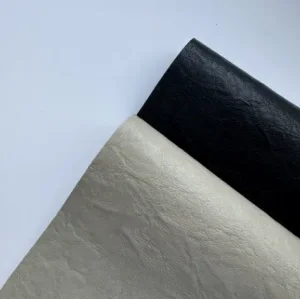 Custom RCS Recycled Substrate Synthetic Leather-9193View Specification
-
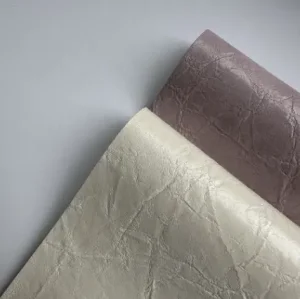 High-Quality RCS Approved Recycled‑Content Synthetic Leather-0212View Specification
-
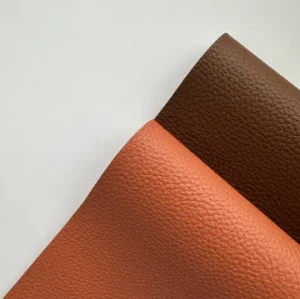 Custom Bio-Based Renewable Synthetic Leather-9109View Specification
-
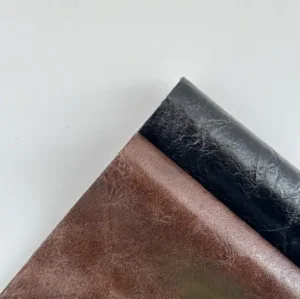 Wholesale Eco-Friendly Sustainable Synthetic Leather-0212View Specification
-
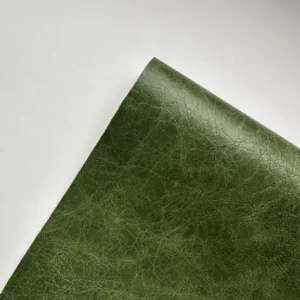 OEM Plant-Based Renewable Bio Synthetic Leather-9023View Specification
-
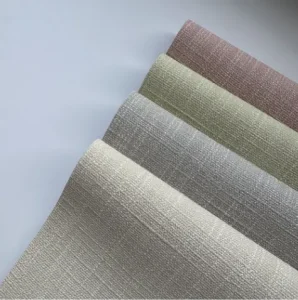 OEM RCS Verified Recycled Sustainable Synthetic Leather-9384View Specification
-
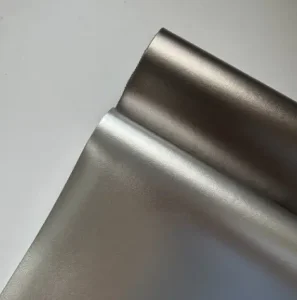 Wholesale Eco Plant-Based Renewable Synthetic Leather-2056View Specification
-
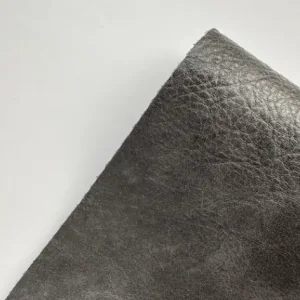 OEM RCS Qualified Recycled Eco-Friendly Synthetic Leather-9271View Specification
Global Procurement Demands & The Shift in Handbag Manufacturing
The shift from conventional bovine hides and petrochemical PVC to eco leather is not merely a branding preference—it is a structural transformation driven by Scope 3 greenhouse gas disclosures, chemical liability limits, and shifting consumer metrics.
Scope 3 Emission Reductions
Handbag brands operating under the European CSRD must declare upstream carbon expenditures. By swapping petroleum-derived polyols with plant-based sources and using 100% recycled PET microfiber backings, raw material carbon equivalents fall by 38% to 64% per running linear meter.
PFAS & Solvent Regulatory Barriers
With escalating restrictions surrounding Dimethylformamide (DMFa), persistent PFAS chemistry, and 6P phthalates across the EU, North America, and Japan, brand procurement departments require verified zero-solvent and zero-VOC production lines backed by OEKO-TEX and REACH audit reports.
Verifiable Chain-of-Custody (RCS)
Greenwashing penalties leave zero margin for unverified claims. Modern international luxury contracts mandate third-party audited Transaction Certificates (TC) tracking post-consumer plastic flake inputs throughout processing to ensure chain-of-custody transparency.
Turnkey Manufacturing Solutions for Industrial Handbag Production
Handbag engineering requires a balance between aesthetic drape, structural firmness, edge-paint adhesion, and peel strength. JiangXin provides calibrated solutions addressing specific factory failure points.
Substrate Tensile & Skiving Stability
Engineered specifically for gussets, handles, and load-bearing bag straps. Backings use high-density non-woven recycled microfibers that cut cleanly, withstand heavy skiving, accept automated stitching without thread pull-through, and yield 95%+ cutting efficiencies.
High-Flex Surface Skin Coatings
Designed to prevent flex fatigue cracking at -20°C and eliminate yellowing in tropical humidity. Formulated via 100% waterborne aliphatic PU dispersions (WPU) to achieve over 100,000 cycles on Bally flexometers alongside Martindale abrasion resistance exceeding 50,000 revs.
Thermal-Forming & Edge Adhesion
Structural luxury totes require stable bond lines for waterborne adhesives and heat-seal edge paints. Our custom surface tensions (dyne levels) ensure zero edge-paint peeling, edge cracking, or delamination through extended service life and climatic shifts.
| Evaluation Parameter | Conventional Wet PU Leather | JiangXin Bio-Based Platform | JiangXin RCS Recycled Series |
|---|---|---|---|
| Feedstock Origin | 100% Virgin Petrochemical (Crude Oil) | 20%–45% USDA Verified Bio-Polyols | 30%–100% Post-Consumer Recycled rPET |
| Volatile Organics (DMFa/VOC) | Present (< 100 ppm via washing) | 0% Non-Detectable (Water-Based PU) | 0% Solvent-Free Reactive PU |
| Flex Endurance (-10°C) | 15,000–30,000 Cycles | > 80,000 Cycles (Bally Flex) | > 100,000 Cycles (Bally Flex) |
| Peel Strength (N/3cm) | 40 – 55 N | 65 – 85 N (High Adhesion) | 70 – 90 N (Structural Grade) |
| Traceability Mechanism | None | ASTM D6866 Radiocarbon Testing | Textile Exchange Chain-of-Custody TC |
Technology Roadmap: Next-Gen Circularity (2026–2030)
Our engineering division in Yingde City operates a dedicated clean-tech roadmap focused on replacing finite fossil resources with closed-loop polymers and plant-derived composites.
Solvent-Free Microfiber Platforms
Full implementation of dry-process coating, solvent-free transfer systems, and 4.68 MW rooftop photovoltaic arrays. Complete phase-out of DMFa and implementation of zero-discharge closed-loop wastewater recovery systems.
Agricultural Carbon Synthesis
Increasing biobased polyol content to over 50% via non-food-chain agricultural residue (corn stover, caster seed, and industrial hemp fibers), validated via standardized ASTM D6866 C14 isotopic analysis.
Monomer-to-Monomer Circularity
Development of enzymatically digestible and chemically recyclable polyurethane matrices, enabling post-consumer handbags to be depolymerized back into base monomers without quality downcycling.
Industrial Status & Certified Manufacturing Facilities
Operating from our 135,733 m² campus in Yingde, Guangdong, JiangXin combines large-scale capacity with strict environmental compliance.
Social & Facility Audits
Fully compliant with amfori BSCI social criteria and evaluated against the Higg Facility Environmental Module (FEM), ensuring verified fair-wage employment, clean working environments, and responsible wastewater management.
Automated Inline QC
Multi-stage computer vision scanning systems monitor surface thickness (±0.03mm) and color delta-E variations across whole master rolls, minimizing cutting scrap and eliminating color batch variations in high-volume runs.
Chemical Verification
Batches ship with comprehensive test reports conforming to global market regulations: EU REACH Annex XVII, California Proposition 65, RoHS, 6P Phthalate-free directives, and brand-tailored Restricted Substance Lists (RSL).
High-Performance Synthetic Leathers for Commercial Handbags
Explore production-ready references offering versatile textures, classic grains, structured backings, and verified sustainable formulations.
-
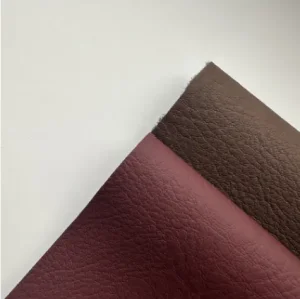 OEM RCS-Certified Traceable Recycled Synthetic Leather-9133View Specification
-
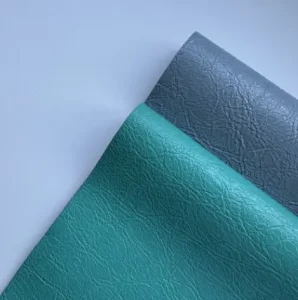 OEM RCS Recycled Synthetic Leather-9213View Specification
-
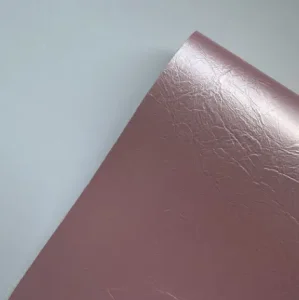 Custom Plant-Derived Bio-Based Synthetic Leather-0195View Specification
-
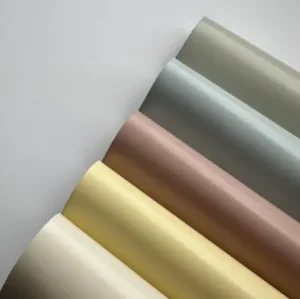 High-Quality RCS Qualified Recycled Green Synthetic Leather-2056View Specification
-
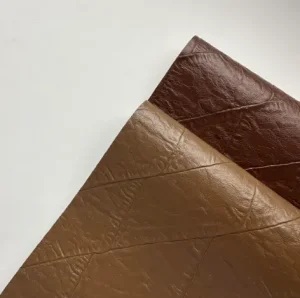 OEM Non-Toxic Vegan Eco Synthetic Leather-9266View Specification
-
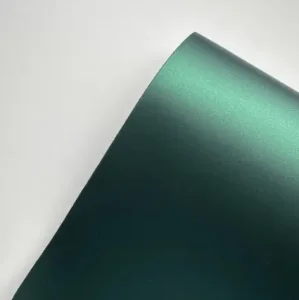 OEM High Bio-Content Plant-Based Synthetic Leather-1001View Specification
-
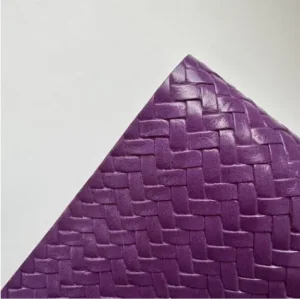 Custom Green Sustainable High-End Synthetic Leather-9344View Specification
-
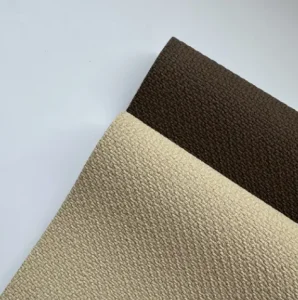 High-Quality RCS Qualified Recycled Green Synthetic Leather-9321View Specification
Frequently Asked Technical & Procurement Inquiries
Direct technical insights to simplify tech-pack specifications, chemical clearances, minimum order setups, and customized production.
How does bio-based eco leather compare to genuine leather in handbag manufacturing?
JiangXin bio-based PU offers consistent roll widths (1.37m/54in), zero surface defects, and uniform thickness across master rolls, driving cutting yields up to 95–98% compared to genuine hide yields of 60–70%. Physical performance matches or exceeds genuine leather, achieving 100,000+ Bally flex cycles, high hydrolysis resistance, and dependable edge-finishing stability.
What documentation accompanies an RCS-certified recycled leather order?
Every certified order is supported by a valid Transaction Certificate (TC) issued by an authorized certification body (e.g., IDFL or Intertek) along with a chain-of-custody declaration detailing post-consumer recycled input weights in compliance with Textile Exchange guidelines.
Can you engineer materials to prevent edge cracking on structural luxury handbags?
Yes. We adjust backing fiber density, substrate impregnation chemistry, and surface tension to maximize adhesion for commercial edge paints (e.g., Fenice, Giardini), ensuring high adhesion, smooth bevel sanding, and zero edge peel across fluctuating ambient conditions.
What are the standard sampling lead times and bulk production MOQs?
Standard lab dip swatches and stock grain strike-offs ship within 3–5 working days. Custom embossing rollers and technical backings require 7–10 days. Bulk production minimums begin at 500 running meters per custom color or grain, supported by our 16M+ annual meter output capacity.