
Primary Sourcing Catalog: Biobased & Recycled Formulations
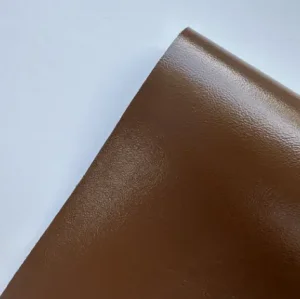
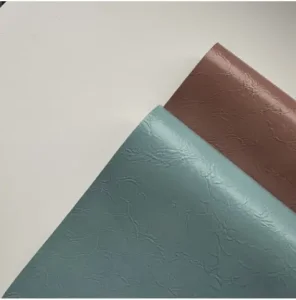
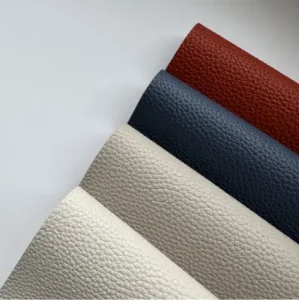
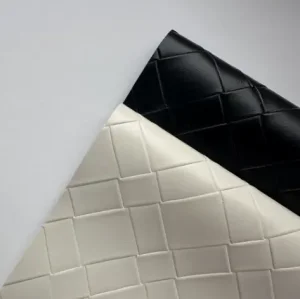
Engineered references ready for footwear, luxury leathergoods, and technical upholstery sampling. Fully backed by ASTM D6866 and RCS chain-of-custody verifications.
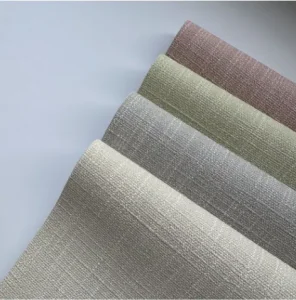
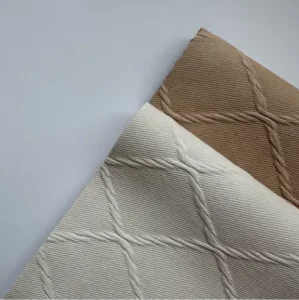
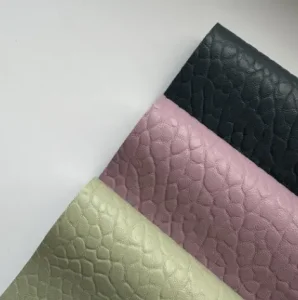
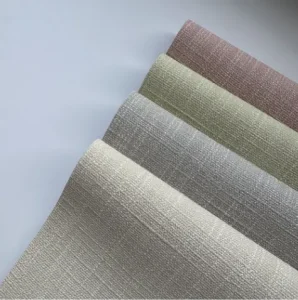
Redefining Polymer Architecture: The Science of Biodegradable Vegan Leather
Addressing the ecological shortcomings of first-generation PVC and petroleum-based PU through advanced green chemistry, biogenic polyols, and zero-solvent thermal coating systems.
Plant-Sourced Bio-Polyols
Traditional synthetic polyurethane relies heavily on fossil-fuel propylene oxide. Our biobased formulations replace up to 40%–75% of petrochemical polyols with renewable agricultural feedstocks, including non-food grade industrial corn, castor oil, and sugarcane residues.
- Verified renewable biological carbon via ASTM D6866 radiocarbon dating.
- Significant reduction in cradle-to-gate cradle greenhouse gas emissions.
- Identical tensile strength and tactile drape to premium bovine nappa.
Solvent-Free Waterborne Synthesis
Eliminating N,N-Dimethylformamide (DMFa), toluene, and toxic volatile organic compounds (VOCs) from the manufacturing hall. Our solvent-free high-solid PU systems prevent toxic outgassing and skin-sensitization risks for end users.
- Exceeds European Union REACH SVHC zero-threshold limits.
- Odorless surface finish optimized for closed automotive and interior cabins.
- Superior hydrolysis resistance (>8 weeks in tropical 70°C / 95% RH jungle test).
Controlled Biodegradability Dynamics
By engineering hydrolytically and enzymatically cleavable ester linkages within the polyurethane soft segments, our biodegradable grades achieve accelerated degradation under industrial composting and controlled landfill conditions.
- Degrades into non-toxic biogenic carbon, H2O, and natural biomass.
- Compliant with anaerobic digestion standards without microplastic shedding.
- Stable shelf-life: Degradation initiates only upon sustained microbial contact.
| Performance & Ecological Metric | Legacy PVC Leather | Standard Petrochemical PU | JX.ECO Biobased PU (ASTM D6866) | JX.ECO Biodegradable Vegan Grade |
|---|---|---|---|---|
| Renewable / Recycled Content | 0% (Petroleum fossil) | 0% (Petroleum fossil) | 30% – 75% Certified Bio-Carbon | Bio-synthesized degradable polyol matrix |
| Solvent Architecture (VOC / DMFa) | High Plasticizer (Phthalates) | DMFa Solvent Systems | 100% Solvent-Free / Waterborne | 100% DMFa & Toluene-Free |
| Bally Flex Endurance (-20°C) | < 15,000 cycles (Cracks) | 30,000 – 50,000 cycles | > 100,000 cycles | > 80,000 cycles |
| Martindale Abrasion Resistance | 20,000 revs | 40,000 revs | > 100,000 revs (ISO 12947-2) | > 80,000 revs (ISO 12947-2) |
| End-of-Life Lifecycle Profile | Non-biodegradable; toxic dioxins | Persists > 500 years | RCS Circular Recyclable Path | Enzymatically degradable in composting |
| Compliance Certification Readiness | Restricted in EU / USA | Requires RSL filtering | USDA BioPreferred / OEKO-TEX 100 | ISO 14855 / REACH / RoHS / GRS / RCS |
China Factory Scaling: The Yingde Mega-Facility Ecosystem Advantage
Why multinational footwear conglomerates, automotive groups, and luxury fashion houses consolidate their sustainable material supply chain with JiangXin New Material.
Vertical Integration & Raw Material Security
Located in the Yinghong Industrial Park, Yingde City, Guangdong, our 135,733 m² campus controls the entire synthesis value chain—from in-house bio-polyol formulation blending and precision fabric backing preparation to dry-process transfer coating and roller embossing.
This localized supply density removes reliance on volatile overseas polymer distributors, locking in transparent pricing, continuous supply continuity, and predictable bulk delivery schedules for demanding international buyers.
Solar-Powered Clean Manufacturing
Sustainability cannot be claimed on finished goods if production is carbon-intensive. Our production facility integrates a massive 4.68 MW rooftop photovoltaic array, generating millions of kilowatt-hours of green energy annually to power heavy curing ovens and calendar lines.
Equipped with on-site biological wastewater reclamation systems, regenerative thermal oxidizers (RTO) for closed-loop air treatment, and intelligent heat exchangers, we lower Scope 1 and Scope 2 carbon intensity per linear meter produced.
Rapid Color & Texture Customization
Brand design houses require fast turnarounds during seasonal development. Our specialized R&D laboratory operates high-precision automated color-matching spectrophotometers (ensuring ΔE < 0.5) and holds a library of over 500 embossing rollers.
Physical swatches can be tailored and air-dispatched within 48 to 72 hours, accelerating product development cycles from early sketch boards to audited pilot sampling.
Uncompromising Scale & Cost Predictability
With an annual output exceeding 16 million meters of high-performance synthetic materials, JiangXin provides enterprise-tier cost efficiencies that boutique bio-textile startups cannot match.
Our economies of scale enable global procurement teams to fulfill demanding ESG decarbonization mandates without bearing unsustainable price surcharges over fossil synthetics.
Enterprise Sourcing Trends: Meeting Global Brand Sustainability Mandates
A rigorous examination of shifting regulatory compliance, Scope 3 ESG targets, and consumer sentiment across North American and European procurement divisions.
Combatting Greenwashing with Chain-of-Custody
Global regulators (such as the EU Corporate Sustainability Due Diligence Directive and FTC Green Guides) are cracking down on unverified green marketing. Corporate procurement directors can no longer accept generic "eco-leather" claims without verifiable lab certification.
Our materials supply auditable chemical footprints, third-party radiocarbon test reports (ASTM D6866), and official Textile Exchange Transaction Certificates (TCs) for complete peace of mind.
Corporate Scope 3 Emissions Decarbonization
Upstream raw materials account for up to 70% of a fashion or consumer brand's carbon profile. Replacing conventional petroleum-derived polyurethane with plant-sourced, bio-renewable alternatives directly reduces emissions at the raw material extraction stage.
JiangXin supplies verified Life Cycle Assessment (LCA) data packages to support corporate greenhouse gas accounting and Science Based Targets initiatives (SBTi).
Yield Consistency & Manufacturing Efficiency
Unlike genuine animal hides that exhibit irregular grain distribution, neck wrinkles, scarring, and high cutting waste (often 25%–40%), our biobased vegan leather is manufactured in uniform roll widths (1.37m to 1.40m) with flawless edge-to-edge consistency.
This allows automated computer-guided CNC nesting and multi-ply cutting lines to achieve cutting yields exceeding 95%, sharply reducing per-unit production costs for footwear and accessory manufacturers.
Worldwide Compliance Assurance & Localized Technical Support
Ensuring risk-free import clearance across all major commercial ports through strict alignment with global chemical safety standards and dedicated regional application engineers.
Chemical Restriction & Toxicological Screening
Every roll of biodegradable and biobased vegan leather manufactured at JiangXin is rigorously vetted against international Restricted Substance Lists (RSL).
- EU REACH & SVHC: Certified free from heavy metals, organotins, aromatic amines, and hazardous alkylphenols.
- Phthalate Control: Tested completely 6P / 16P free for safe contact with infants and children.
- OEKO-TEX Standard 100: Classified Class I & II for direct, prolonged skin contact applications.
- California Proposition 65: Formulated without toxic carcinogens or reproductive hazards.
Standardized Physical Test Verification
To withstand the demanding environments of daily footwear, transport, and apparel use, all formulations are validated through standardized physical stress regimes:
- Flex Crack Resistance: ISO 5402 / Bally Flexometer > 100,000 cycles at room temp, > 30,000 at -20°C.
- Color Fastness to Rubbing: ISO 105-X12 (Wet & Dry Crockmeter Grade 4.5+).
- Tear & Tensile Strength: ASTM D2261 & ISO 13934 high-tenacity backing fabric combinations.
- Hydrolysis Testing: Standard 5 to 10-week Jungle Test (70°C, 95% RH) without peeling or delamination.
Audit-Ready Social & Environmental Governance
Transparency extends beyond material chemistry to ethical factory conditions. JiangXin operates under stringent international workplace and sustainability frameworks:
- Higg Index FEM & FSLM: Continuous benchmarking of energy, water, chemical, and labor management.
- amfori BSCI Audited: Safe working environments, fair compensation, and zero exploitation guaranteed.
- ISO 9001 / ISO 14001: Certified quality and environmental management architectures in daily operation.
Tailored Regional Engineering Support
We provide localized technical account managers for clients throughout North America, the European Union, Southeast Asia, and Japan. Our engineers assist factory teams on:
- Adhesion optimization using waterborne PU glues and hot-melt adhesives.
- Skiving and edge-folding temperature settings on automated shoemaking lines.
- High-frequency ultrasonic welding and precision embossing mold calibration.
High-Performance End-Use Sectors
Tailored mechanical formulations engineered to withstand specific thermal, physical, and chemical stresses across consumer and industrial categories.
Athletic Footwear & Premium Boots
Footwear uppers demand extreme flex fatigue resistance and high breathability. Our biobased microfibers feature high-density woven matrices that replicate the fibrillar architecture of natural collagen.
Providing dynamic stitch retention, high toe-puff molding recovery, and sweat-wicking breathability for lifestyle sneakers, dress shoes, and rugged outdoor boots.
Luxury Handbags & Small Leather Goods
For high-fashion accessory brands, tactile hand feel, elegant drape, and clean edge-painting are non-negotiable. Our soft bio-PU surfaces mimic smooth nappa, pebble grain, or exotic textures with rich visual depth.
Exceptional dimensional stability prevents seam slippage and corner wear over years of daily consumer handling.
Fashion Apparel, Outerwear & Belts
Jackets, skirts, and winter coats require light areal weights (0.4mm – 0.7mm) coupled with flexible soft hand properties that do not stiffen or crack at sub-zero temperatures.
Water-repellent surface finishes combined with vapor permeability deliver windproof thermal insulation alongside comfortable moisture management.
Consumer Electronics & Smart Accessories
Protective tablet folios, headphone ear cushions, and smartphone cases need ultra-thin caliper tolerances, high thermal dissipation, and resistance to oils, makeup, and alcohol cleaners.
Our solvent-free coatings incorporate specialized anti-stain topcoats that resist persistent yellowing under daily UV exposure.
Material Science Roadmap: The Future of Biodegradable Synthetics
Navigating the next decade of biomimetic circularity, enzymatic breakdown technologies, and non-isocyanate polyurethane synthesis.
Non-Isocyanate Polyurethanes (NIPU)
The foremost cutting edge in green polymer synthesis is eliminating toxic monomeric diisocyanates (such as MDI and TDI). JiangXin's lab is co-developing cyclocarbonate-amine pathways to manufacture bio-based NIPU resins.
This breakthrough removes petrochemical toxicity at the polymerization stage while dramatically increasing thermal degradation stability and cellular biocompatibility.
Enzymatic Self-Triggered Depolymerization
Next-generation biodegradable vegan leathers will incorporate micro-encapsulated polyester-polyurethane esterase enzymes dormant in everyday use. Once exposed to warm municipal composting conditions (>55°C, high microbial moisture), the capsules activate.
Enzymatic cleavage accelerates full organic decomposition within 180 days, generating non-toxic compost suitable for soil enrichment.
Direct Carbon Capture (CCU) Feedstocks
In addition to agricultural bio-polyols, pilot trials are underway utilizing polyols synthesized directly from captured industrial carbon dioxide emissions (CO2 polyols).
By replacing petroleum fractions with up to 20% sequestered CO2, this circular process converts greenhouse emissions into stable, durable synthetic leather for mainstream production lines.
Frequently Asked Questions: Technical & Commercial Clarifications
Authoritative answers curated by our senior material engineers and international export compliance specialists.
What is the clear technical distinction between "Biobased" and "Biodegradable" vegan leather?
The term Biobased indicates the origin of the carbon feedstock, specifically that a portion of the polyols originates from renewable plant sources (corn, castor, sugarcane) rather than petrochemical fossil crude, as verified by ASTM D6866 carbon-14 dating. Biodegradable refers to the end-of-life mechanism, meaning microorganisms under appropriate heat, moisture, and microbial activity can metabolize the polymer chains into biogenic biomass, water, and CO2 (under ISO 14855 or ASTM D5338). A material can be biobased without being rapidly biodegradable, or biodegradable while partially synthetic. JiangXin engineers specific options catering to either or both criteria.
Will biodegradable vegan leather begin degrading during regular consumer wear or storage?
No. Biodegradable vegan leather is chemically stable throughout normal consumer use. The degradation process requires a specific threshold of enzymatic activity, continuous microbial colonies, moisture content exceeding 60%, and elevated temperatures (such as those found in industrial compost facilities or managed biological landfills). In normal indoor conditions, wardrobes, or retail display shelves, the material exhibits the same 5-to-10-year durability profile as standard high-performance PU leather.
How does JiangXin substantiate Recycled Claim Standard (RCS) documentation?
Every certified batch of recycled synthetic leather manufactured at our facility is tracked via a certified chain of custody under Textile Exchange standards. We utilize GRS/RCS-certified recycled post-consumer PET bottles or recycled post-industrial scrap to form backing textiles and recycled PU skins. Upon order dispatch, our compliance team issues an official Transaction Certificate (TC) through an accredited international certification body (such as IDFL or Intertek) linking our production directly to your brand purchase order.
Can you formulate vegan leather to meet stringent OEM automotive hydrolysis and UV standards?
Yes. Our customized functional solutions allow us to tailor aliphatic polyols, specialized UV stabilizers, and antioxidant packages into the coating layers. Automotive and marine grades are formulated to pass over 1,000 hours of accelerated QUV weathering without chalking, color fading, or cracking, alongside 10-week tropical jungle testing (70°C, 95% RH) and Martindale abrasion exceeding 100,000 revolutions.
What is the typical Minimum Order Quantity (MOQ) and production lead time?
For custom color matching and custom emboss development, our standard production MOQ is typically 500 to 1,000 linear meters per color/grain combination. In-stock core catalog references and developmental trial rolls can be sampled with lower minimum thresholds. Lead times for customized lab-dip swatches are 2 to 3 days, with bulk production orders completing within 10 to 18 business days from final lab-dip signoff.
Which backing fabrics are available, and how do they impact overall sustainability?
The backing fabric represents 30% to 60% of total synthetic leather caliper and areal weight. We provide an extensive selection of eco-conscious backing materials: 100% GRS-certified recycled rPET microfiber, organic cotton canvas, FSC-certified viscose, bamboo fiber knits, and zero-solvent waterborne ultra-microfibers. Matching a biobased surface with a biobased or recycled backing provides maximum total bio-carbon or circular content for brand hanging tag disclosures.
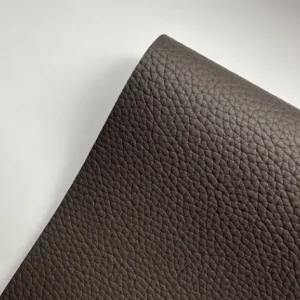
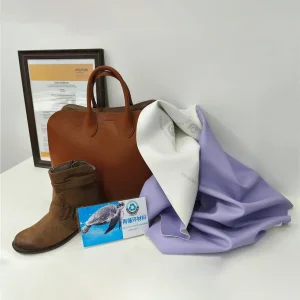
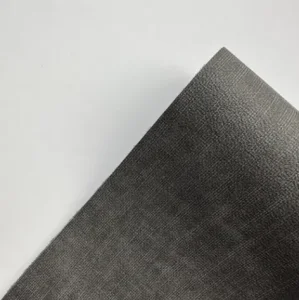
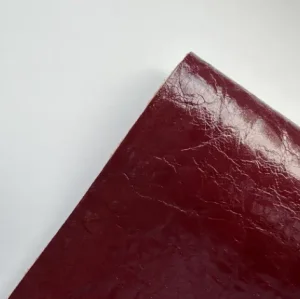
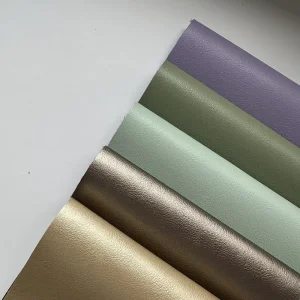
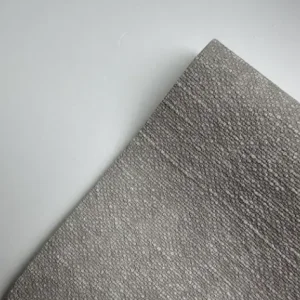
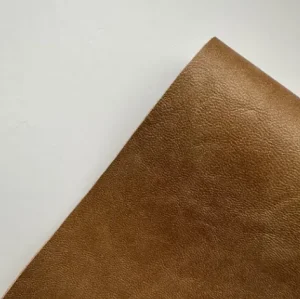
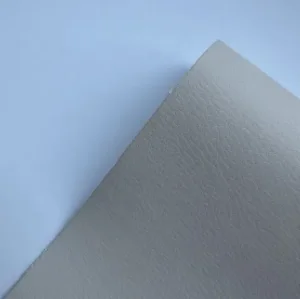
Specialty Technical References & Plant-Derived Formulations
Explore additional high-grade references designed for exacting mechanical demands, flame retardancy, low-temperature cold crack resistance, and unique aesthetic grains.
Begin Your Sustainable Material Transition with JiangXin
Connect with our senior engineering team to request sample swatches, verify customized RSL compliance packages, or arrange a comprehensive technical audit of our Yingde facility.