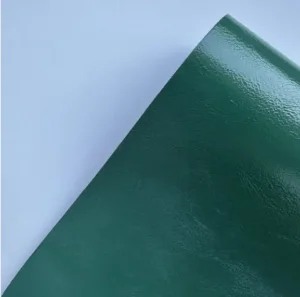
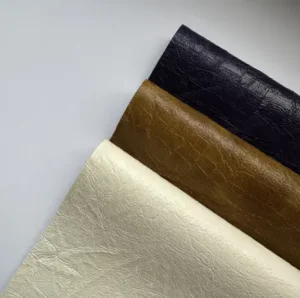
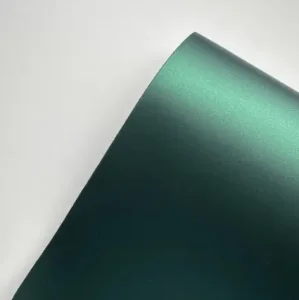
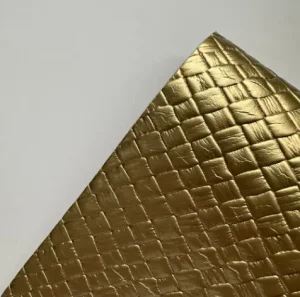
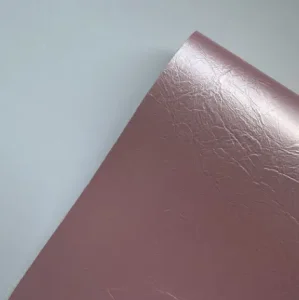
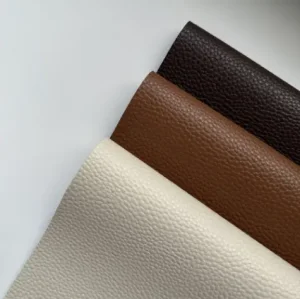
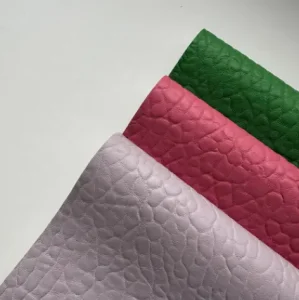
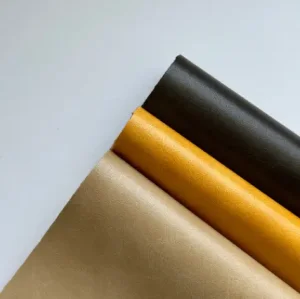
High-Performance 100 PU & Biobased Material Catalog
Engineered across our 135,733 m² smart manufacturing campus in Guangdong, China. Fully certified under RCS, USDA BioPreferred, EU REACH, and OEKO-TEX Standards.
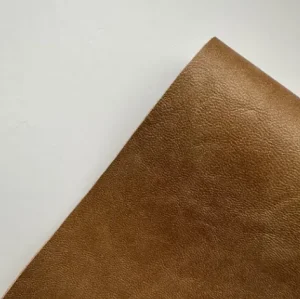
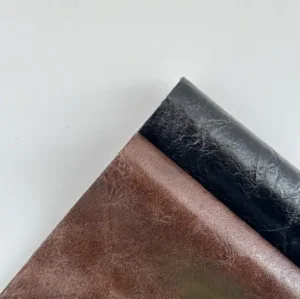
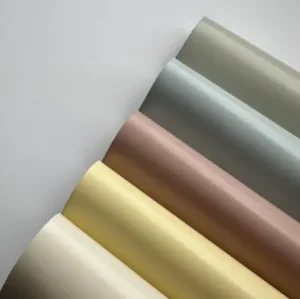
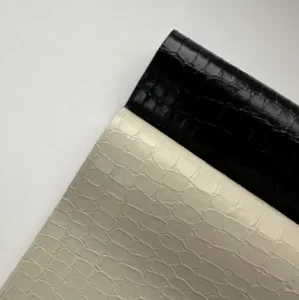
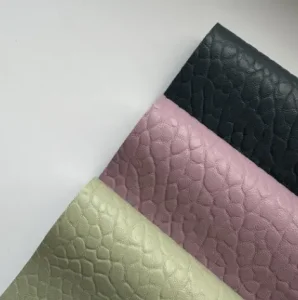
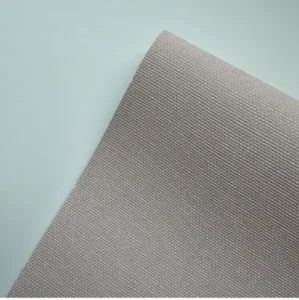
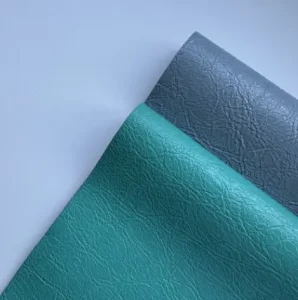
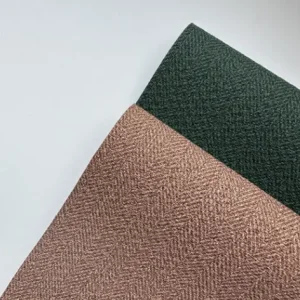
Global Landscape: The Evolution from PVC to 100% PU Polymers
The synthetic leather sector is experiencing an unprecedented structural transformation driven by decarbonization mandates, corporate ESG commitments, and technical advances in polymer elasticity.
Molecular Superiority of 100% PU
Unlike PVC, which relies on phthalate plasticizers that leach, crack, and off-gas harmful VOCs, 100% Polyurethane (PU) features an alternating block copolymer architecture of rigid diisocyanate segments and flexible polyols. This molecular structure delivers genuine breathability, room-temperature hand-feel, and self-recovering elongation without hazardous stabilizing agents.
Stricter Global Regulatory Regimes
Cross-border material compliance has shifted from voluntary testing to mandatory statutory enforcement. The EU REACH SVHC register, California Proposition 65, and RoHS stringently target restricted solvents such as DMFa (Dimethylformamide) and plasticizers. Sourcing true 100% solvent-free and water-based PU systems guarantees safe border clearance and zero consumer liability.
The Closed-Loop Circular Shift
Modern industrial procurement demands auditable chain-of-custody tracking. Tier-1 multinational brands in fashion, mobility, and accessories require Textile Exchange RCS (Recycled Claim Standard) certification and biobased verification (ASTM D6866) to substantiate net-zero carbon disclosures and circular product roadmaps.
Engineering Truth: Why Polyurethane Outlasts and Outperforms Traditional Alternatives
100% PU leather replicates animal hides at the microscopic level through microporous, interconnected cellular matrices without the cutting yield losses (which reach 25–40% in genuine hide processing). The absence of phthalates ensures long-term resistance to stiffening, cold-crack fatigue down to -25°C, and spontaneous delamination.
100% PU vs. Water-Based PU vs. Biobased PU vs. PVC Leather
Critical technical benchmarks for R&D engineers, sourcing directors, and materials chemists comparing polyurethanes across key industrial parameters.
| Performance Indicator | 100% Solvent-Free PU | Water-Based PU (WPU) | Biobased 100 PU | Conventional PVC Leather |
|---|---|---|---|---|
| Primary Resin System | 100% Solvent-Free Polyurethane | Aqueous PU Dispersion (PUD) | Plant-Polyol Derived PU Matrix | Polyvinyl Chloride + DOP Plasticizers |
| VOC & DMFa Content | 0 ppm (Undetected) | < 5 ppm | 0 ppm (Eco Pure) | High Residual VOCs & Chlorine |
| Martindale Abrasion | > 100,000 Cycles | > 80,000 Cycles | > 100,000 Cycles | 30,000 – 50,000 Cycles (Brittle) |
| Hydrolysis Resistance | 7 to 10+ Years Jungle Test | 5 to 8 Years Jungle Test | 7 to 10 Years Jungle Test | Plasticizer Leaches in 1–2 Years |
| Cold-Crack Flexibility | -25°C to -30°C Dynamic | -20°C Dynamic | -25°C Dynamic | Fails at 0°C to -5°C (Cracks) |
| Carbon Footprint Index | 40% Lower than Solvent PU | 45% Lower than Solvent PU | Up to 60% Decarbonized (ASTM D6866) | High Carbon & Heavy Toxic Waste |
| Cutting & Roll Yield | > 98% Usable Roll Area | > 98% Usable Roll Area | > 98% Usable Roll Area | High Distortion During Laser Cutting |
Chinese Factory Efficiency: The Guangdong Supply Chain Advantage
How Yingde City JiangXin New Material Co., Ltd. (JX.ECO) integrates continuous chemical synthesis, vertical backing fabrication, and clean solar infrastructure to deliver world-class precision.
4.68 MW Solar-Powered Production
Our 135,733 m² campus features a rooftop solar photovoltaic array generating 4.68 MW of renewable power. This proprietary clean-energy transition directly lowers the embodied Scope 2 emissions of every square meter produced, allowing international buyers to meet strict carbon accounting requirements under the EU Corporate Sustainability Due Diligence Directive (CSDDD).
Full-Chain Upstream & Downstream Integration
Guangdong's Pearl River Delta cluster houses the world's most concentrated ecosystem for circular yarn recycling, non-woven microfiber carding, precision release paper texturing, and pigment synthesis. This geographical co-location shortens raw material logistics, eliminates multi-tier intermediate margins, and shrinks physical lead times from months to days.
Rapid Prototyping & Lab-to-Line Locking
Our integrated R&D center can match custom pantones, grain reliefs, hand-feel drapes, and functional treatments within 48 to 72 hours. Once physical lab-dips and tensile stress tolerances are approved, formulation recipes are digitally locked via computerized PLC dispensing pumps, guaranteeing zero batch-to-batch variation during bulk production runs exceeding 50,000 meters.
High-Tech Localized Application Scenarios
Each industrial application subjects synthetic leather to distinct mechanical stresses, chemical exposures, and tactile expectations.
Luxury Bags & Small Leather Goods
Demands precise embossing (such as linear toothpick, pebbled, or cross-grain textures), edge-creasing paint compatibility, and dimensional stability. Our formulations provide a genuine leather hand-feel with anti-crease recovery and scratch resistance, ensuring bags hold their shape without stiffening over time.
Performance Footwear & Athletic Uppers
Subjected to relentless dynamic flexing, high-frequency ultrasonic welding, and abrasion during sport conditions. Our cold-resistant 100 PU formulations endure over 100,000 flex cycles at sub-zero temperatures without surface delamination, while delivering the tensile strength required for stitch-free athletic shoes.
Contract Furniture & Automotive Cabins
Requires heavy chemical endurance against sweat, skin oils, sanitizing alcohols, and UV radiation. Our specialized PU coatings pass rigorous 10-year hydrolysis tests, retain Class-1 flame retardancy ratings (CAL TB 117 / FMVSS 302), and maintain colorfastness without thermal deformation.
Eco-Fashion Apparel & Quilted Outerwear
Jackets and wearables require ultra-supple drape, silent movement without vinyl rustle, and micro-pore water vapor permeability. Our stitched and custom-finished vegan PU gives fashion designers a premium animal-free canvas that handles delicate tailoring, laser perforation, and precision stitching.
Future Trends: Plant-Derived Feedstocks & Microfiber Breakthroughs
Where material science meets sustainable industrial manufacturing over the next decade.
Biobased Carbon Content (USDA BioPreferred)
The industry's most significant frontier is replacing petrochemically sourced polyols with renewable agricultural feedstocks (corn starch, castor bean oil, industrial hemp, and agricultural residues). By leveraging radiocarbon ASTM D6866 testing, our biobased synthetic leathers offer between 20% and 75% USDA-certified bio-content without sacrificing mechanical durability.
Traceable Post-Consumer Backings (RCS & GRS)
Backing fabrics constitute roughly 50% of finished synthetic leather weight. Leading manufacturers are phasing out virgin polyester knit in favor of 100% GRS- and RCS-certified recycled polyethylene terephthalate (rPET) derived from ocean-bound bottles, complete with Transaction Certificates (TCs) verifying the custody chain from flake to fabric.
Solvent-Free Hot-Melt Coating Systems
Traditional coagulated wet-process lines require substantial water consumption and solvent recovery plants to scrub DMFa. Next-generation solvent-free hot-melt extrusion lines eliminate process water, slash industrial carbon footprints by 40%, and achieve 100% solids utilization, setting a new benchmark for clean synthetic leather operations.
Global Sourcing Guide: How Enterprise Buyers Qualify Manufacturers
A systematic evaluation framework designed for procurement managers and quality assurance teams sourcing bulk 100 PU roll goods.
1. RSL Testing & Border Compliance
Ensure the supplier supplies current test reports from independent third-party laboratories (SGS, TÜV, Intertek) confirming full compliance with EU REACH (Annex XVII), OEKO-TEX Standard 100, and zero detectable 6P phthalates (DEHP, DBP, BBP, DINP, DIDP, DnOP).
2. Mechanical Validation & Tech Packs
Review tensile and tear strength test sheets (ASTM D2261), Bally flex endurance ratings (> 50,000 cycles without cracking), color fastness to rubbing (dry/wet ISO 105-X12), and peeling strength (> 2.5 kg/3cm) to match material grade to end-product duty cycle.
3. Production Scale & Delivery SLAs
Direct-mill auditing must confirm minimum capacity scale. JiangXin's 16M+ meters annual capacity across a 135,733 m² campus guarantees reliable batch delivery, container freight optimization, and sample-to-bulk lead times of 10 to 15 business days.
Frequently Asked Technical & Sourcing Questions
Clear answers to the most common queries from industrial buyers, sourcing directors, and materials engineers.
What differentiates 100% Polyurethane (PU) leather from PVC and semi-PU materials?
How is biobased renewable content in synthetic leather measured and certified?
What is the Recycled Claim Standard (RCS) chain-of-custody process for synthetic leather?
Which chemical compliance standards can JiangXin products satisfy for international export?
How does JiangXin manage production scale and batch consistency?
What functional properties can be custom-engineered into the material?
Extended Certified Recycled & Plant-Derived PU Articles
Each article is available with custom base fabrics (rPET woven, non-woven, micro-fiber, tricot), customized caliper thicknesses (0.5mm – 2.2mm), and full pantone color matching.