
Engineering Grade Sustainable Substrates for Handbag Fabrication
Direct from our Yingde smart facility: ultra-durable, hydrolysis-resistant bio-synthetic leather engineered to endure extreme Bally flex resistance, tight edge-creasing, and pristine edge-paint adherence across demanding handbag silhouettes.
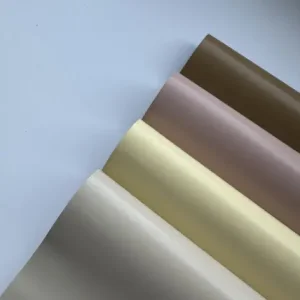
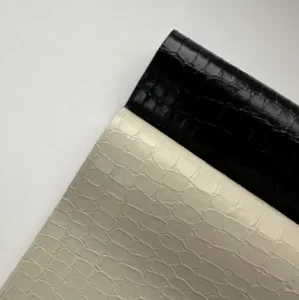
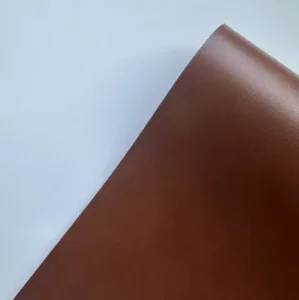
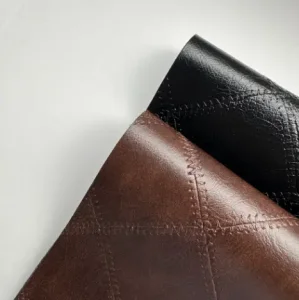
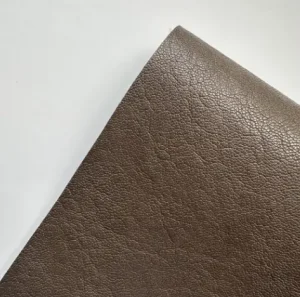
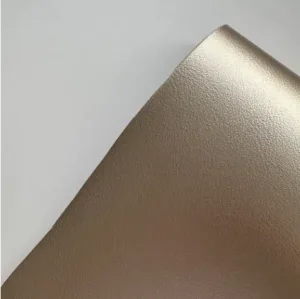
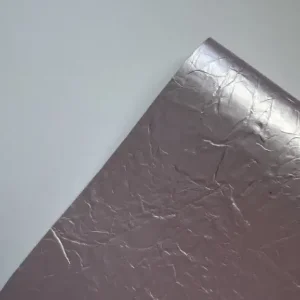
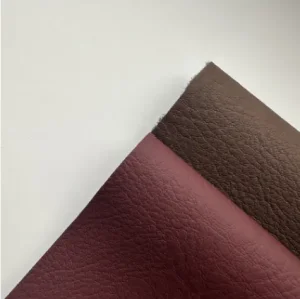
The Global Paradigm Shift: Beyond Petrochemical Faux Leather
An authoritative analysis of regulatory enforcement, LCA decarbonization mandates, and technical advancements transforming luxury and lifestyle handbag manufacturing.
Market Trajectory: Why Traditional PVC and Low-Grade PU are Becoming Unviable
The global luxury accessories sector is undergoing a profound structural pivot. Historically, "vegan leather" was synonymous with petroleum-derived polyvinyl chloride (PVC) and low-grade dimethylformamide (DMF) based polyurethane (PU). While these legacy materials delivered short-term economic advantages, their life-cycle assessments (LCA) present catastrophic corporate vulnerabilities: phthalate leaching, high atmospheric volatile organic compound (VOC) emissions, non-biodegradability, and rapid surface micro-fissuring within 12 to 24 months of consumer use.
Modern luxury groups, heritage accessory houses, and direct-to-consumer (DTC) market disruptors are operating under tightened regulatory environments. European Union mandates—including the Corporate Sustainability Due Diligence Directive (CSDDD), EU REACH Annex XVII revisions, and the impending Digital Product Passport (DPP)—now legally compel global brands to document raw material provenance, carbon intensity per linear meter, and end-of-life circularity. As California SB 253 and international ESG disclosure frameworks take full effect, procuring unverified, fossil-heavy polymers poses unacceptable enterprise supply chain risk.
The Technical Shift: Next-generation handbag manufacturing requires bio-based polyols derived from agricultural waste and non-food starch crops, paired with Recycled Claim Standard (RCS) certified Post-Consumer Waste (PCW) woven backings. This molecular combination decouples performance handbag hardware from virgin fossil hydrocarbons while achieving structural elongation superior to bovine leather.
| Performance / Compliance Vector | Traditional Bovine Leather | Legacy Petrochem PVC / DMF-PU | JiangXin (JX.ECO) Bio-Based & RCS PU |
|---|---|---|---|
| ASTM D6866 Bio-Carbon Share | 100% Animal Derived | 0% (100% Fossil Feedstock) | 25% – 70% Bio-Based Polyols |
| Traceability & Chain-of-Custody | Fragmented (Abattoir to Tannery) | Opaque Compound Blending | Textile Exchange RCS 2.0 Scope Audited |
| Chemical Solvents & Emissions | Chromium VI, Formaldehyde, Sulfides | DMFa, Toluene, Methyl Ethyl Ketone | 100% Solvent-Free & Water-Based PU |
| Bally Flex Resistance (-20°C) | 50,000 – 100,000 cycles | Fails < 20,000 cycles (Brittle) | > 100,000 cycles without Micro-Cracks |
| Hydrolysis Resistance (Jungle Test) | Subject to mold & moisture rot | Delaminates in 1 to 3 Weeks | 5 to 10 Weeks (Equivalent to 5-10 Years) |
| Carbon Footprint (Cradle-to-Gate) | 17.0 – 35.0 kg CO₂e / m² | 8.5 – 12.0 kg CO₂e / m² | 3.2 – 4.8 kg CO₂e / m² (Solar Optimized) |
Enterprise Sourcing Vectors: Quality Control & RSL Compliance
Global brands cannot compromise between planetary stewardship and physical luxury resilience. Discover the exact engineering standards our materials fulfill for international tier-one handbag collections.
Mechanical & Tensile Integrity
Handbag handles, structural gussets, and bottom corner gussets withstand constant cyclic stress. We formulate PU matrices with breaking strengths exceeding 600 N / 5cm (ISO 1421) and tear propagation resistance over 45 N (ISO 4674-1). Materials exhibit superior screw-rivet retention, edge-creasing memory, and seamless compatibility with automatic high-speed CNC leather skiving machines.
Zero-VOC Water-Based Chemistry
Traditional synthetic plants exhaust hazardous organic vapors. JiangXin utilizes advanced aliphatic waterborne polyurethane dispersions (PUD) and solventless systems that eradicate dimethylformamide (DMFa < 5 ppm), toluene, and benzene. Compliant with stringent OEKO-TEX Standard 100 Class I (safe for skin contact), 6P/17P Phthalate-free mandates, and global Restricted Substance Lists (RSL).
RCS Chain-of-Custody Certification
Third-party integrity is vital for avoiding corporate greenwashing accusations. Every production run utilizing post-consumer recycled PET or post-industrial polyurethane scrap is monitored under Textile Exchange Recycled Claim Standard (RCS 2.0). Brands receive authenticated Transaction Certificates (TC) linked to specific production batch codes to support verifiable consumer marketing.
China Factory 4.0: Resilient Supply Chains & Scale Advantage
Inside JiangXin New Material’s 135,733 m² mega-campus in Yingde, Guangdong—combining raw material polymer synthesis, clean energy automation, and unmatched bulk responsiveness.
Vertically Integrated Synthesis & Substrate Weaving
Unlike standard processing workshops that purchase off-the-shelf polymer emulsions, JiangXin operates custom polymer reactor lines. We compound bio-polyols and synthesize polyurethanes in-house. Our facility houses dedicated warp-knitting, circular-knitting, and non-woven microfiber backing production. This full vertical integration protects brand buyers from sub-tier supply disruptions, eliminates batch-to-batch color shifts, and reduces production cycle times by up to 35% compared to fragmented assemblers.
4.68 MW Clean Solar Energy & Thermal Loop Recovery
Decarbonization is deeply built into our production physics. Our Yingde industrial facility is shielded by an expansive 4.68 Megawatt rooftop solar photovoltaic generation system, producing clean megawatt-hours that run our high-precision coating ovens and continuous laminators. Advanced heat-exchanger recycling loops capture over 88% of process heat, directly lowering product carbon footprints. Our on-site closed-loop wastewater purification plant ensures zero effluent discharge into surrounding municipal reserves.
Real-Time Automated QC & High-Yield Skiving Compatibility
In luxury handbag creation, scrap rate is directly tied to profitability. Traditional leather typically yields only 60-70% usable area due to natural bites, scars, and grain thickness variances. JiangXin's computerized continuous roll coating yields 98.5%+ cuttable surface uniformity across widths up to 140cm (54/55 inches). Real-time optical machine-vision cameras scan every centimeter for pinholes, coating streaks, and color divergence (Delta E < 0.5), marking any micro-defect instantly so your laser cutters and automatic dies operate at maximum throughput with near-zero stoppage.
Bespoke Engineering for Luxury, Commute, and Travel Collections
Every handbag silhouette requires an exact stiffness coefficient, flex endurance, and surface tension. Explore how our material grades map precisely to international consumer use-cases.
Structured Luxury Totes & Satchels
Demands high structural stand-up capability, crisp box-pleat definition, and zero sagging over prolonged use. We configure semi-rigid microfiber backings coated with bio-based cross-linked PU. Materials exhibit immaculate edge-paint adhesion with zero bubbling at 60°C heat-box tests, giving high-fashion brands the architectural drape required for iconic luxury collections.
Tech-Commuter Backpacks & Briefs
Engineered for urban professionals facing unpredictable weather and constant friction. Engineered with an ultra-thin aliphatic waterborne topcoat that delivers Hydrostatic Head waterproofness > 10,000 mm while maintaining vapor permeability. Scratch-resistant surface chemistry prevents scuffs from laptop zippers, metro turnstiles, and rough surfaces.
High-End Travel Duffles & Weekenders
Heavy payload capacity requires exceptional stitch tear resistance and corner abrasion durability. Formulated with high-density interlock recycled polyester backings and cold-resistant bio-polyols rated to maintain supple handfeel down to -30°C without plasticizer migration, stiffening, or brittle surface cracking.
Enterprise Sourcing & Manufacturing Answers
Direct technical responses addressing common validation, regulatory, testing, and customization inquiries from brand developers and sourcing vice presidents.
What exact chemical composition differentiates JiangXin bio-based PU from petrochemical faux leather?
How does your vegan leather perform on Bally Flex and Martindale abrasion tests for handbags?
Can you supply certified Transaction Certificates (TC) under the Recycled Claim Standard (RCS)?
How does your material resist tropical hydrolysis and edge-peeling (Jungle Test)?
What are the standard Minimum Order Quantities (MOQ) and lead times for custom colors and grains?
How do JiangXin materials support luxury edge-painting and RF welding techniques?
Traceable Bio-Based & Recycled Formulations for Handbag Lines
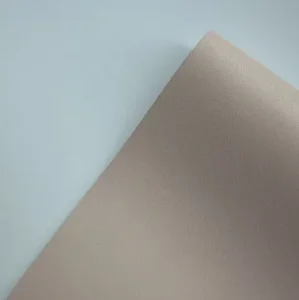
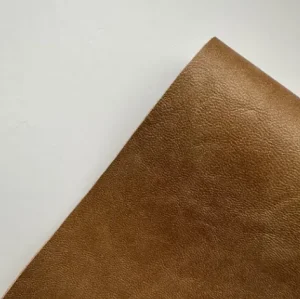
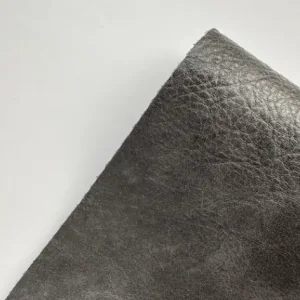
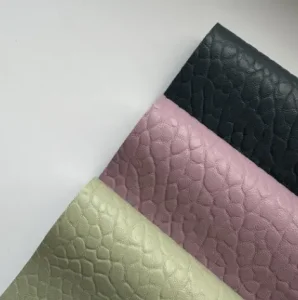
Explore the remainder of our flagship vegan leather collection—fully customizable in thickness (0.6mm - 2.2mm), surface luster, grain depth, and functional backing.
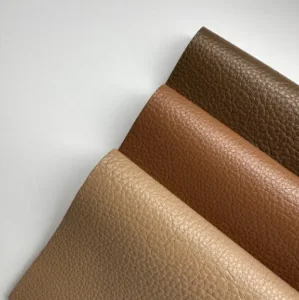
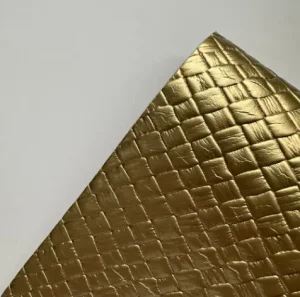
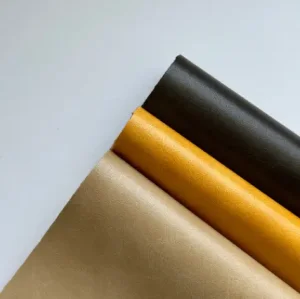
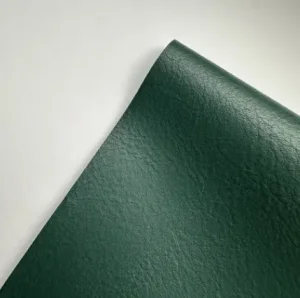
Request Custom Handbag Swatchbooks & Technical Swatches
Accelerate your next product release cycle with direct support from our senior polymer engineers. Access full ASTM D6866 bio-carbon certificates, RCS transaction audit trails, and physical color book portfolios shipped worldwide.