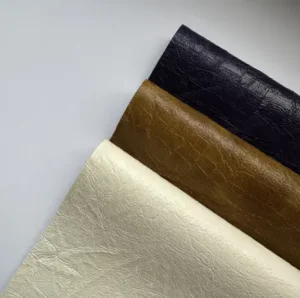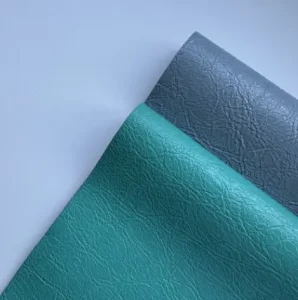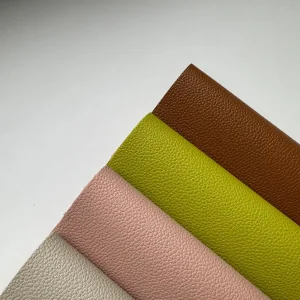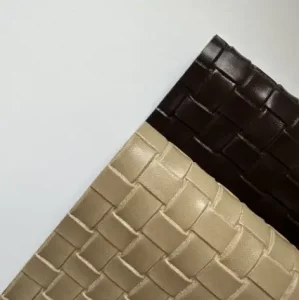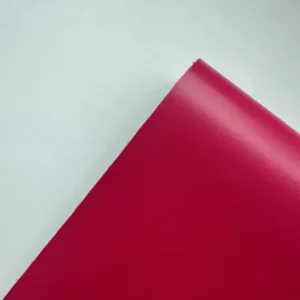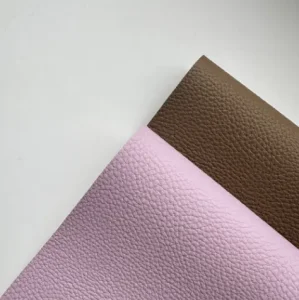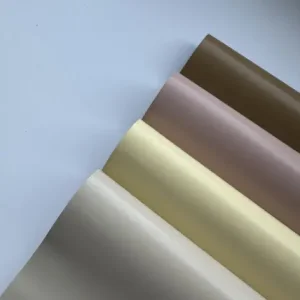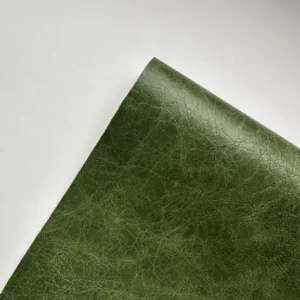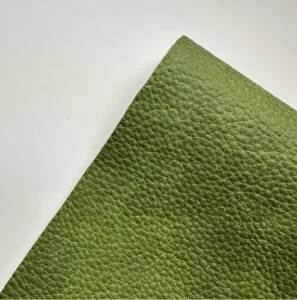
Top-Tier Material Matrix
Engineered Synthetic & Microfiber Substrates
Direct from our smart manufacturing plant in Yingde, Guangdong. High-tensile, wear-resistant, and chemically compliant with international sustainability frameworks.
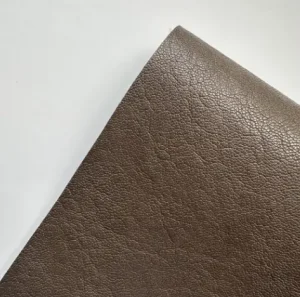
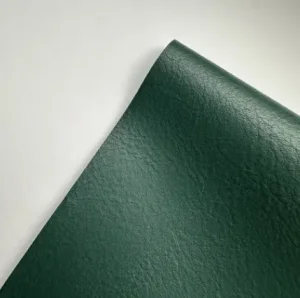
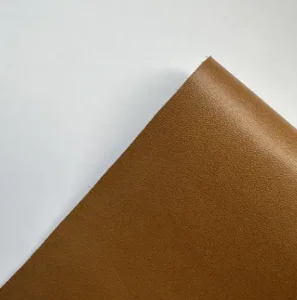
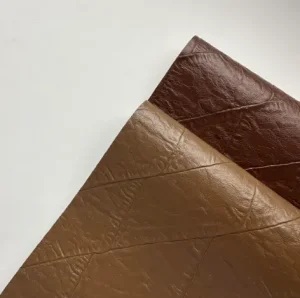
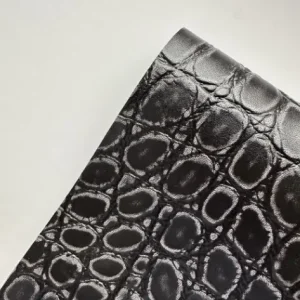
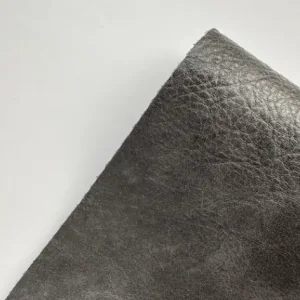
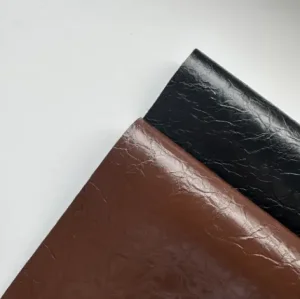
Industry Whitepaper Deep-Dive
Precision Ultra Fine Fiber Architecture: The Polymer Revolution
Ultra-fine fiber (microfiber synthetic leather) represents the third generation of artificial leather synthesis, surmounting traditional split leather and conventional coagulated PU through sea-island bicomponent micro-spinning technology.
Sea-Island Microfilament Matrix
By dissolving the sacrificial matrix polymer from composite nylon/polyurethane filaments, our processing yields individual fibers with linear densities below 0.001 to 0.01 dtex. This mimics natural collagen bundle morphology while eliminating systemic grain defects, achieving extreme tensile strength and superior flex-endurance exceeding 200,000 Bally flex cycles.
Waterborne & Solvent-Free Synthesis
Traditional synthetic leather reliant on DMF (Dimethylformamide) faces tightening ECHA SVHC thresholds. JiangXin deploys automated closed-loop aqueous dispersions and 100% solid solvent-free polyurethane reaction systems, mitigating volatile organic compounds (VOCs) to under 50 ppm and ensuring absolute compliance with EU REACH and RoHS regulations.
Thermo-Regulating Microporous Breathability
Engineered with controlled open-cell porous reticular intertwinement, ultra fine fiber substrate achieves moisture-vapor transmission rates (MVTR) surpassing 8,000 g/m²/24hr. This provides dynamic thermo-regulation indistinguishable from prime full-grain calfskin, making it the material of choice for high-contact automotive interiors and precision sportswear.
135,733m²
Modern Industrial Campus in Guangdong
16.0M+
Annual Output Capacity (Linear Meters)
4.68MW
Rooftop Solar Array for Clean Energy
50+
Global Export Destination Markets
Global Procurement Edge
China Ultra Fine Fiber Factory Manufacturing Advantages
Operating from Yingde, Guangdong—the epicentre of global advanced chemical processing—our plant delivers uncompromised vertical integration, massive economies of scale, and unmatched time-to-market speed.
Vertical Chain Consolidation
We synthesize bio-polyols, needle-punch three-dimensional microfiber fleeces, perform wet coagulation, and apply surface finishes under one continuous roof, curtailing supply volatility and intermediate freight overhead.
Photovoltaic Microgrid Operations
Powered by our proprietary 4.68 MW rooftop solar installation, our production baseline reduces corporate Scope 1 & 2 carbon emissions by 42%, offering ESG-conscious Western brands substantiated life-cycle assessment (LCA) data.
Rapid Bespoke Tooling & Lab Dips
Equipped with an internal R&D technical center, we achieve customized grain matching, spectrophotometer color approval (Delta E < 0.5), and physical prototype delivery in under 5 business days, accelerating your design phase.
Verified Export Credentials
From complete Recycled Claim Standard (RCS) transaction certificates to Higg FEM verification, ISO 9001/14001, and amfori BSCI social audit reports, our compliance dossiers integrate cleanly into Tier-1 brand audits.
Multi-Disciplinary Deployment
High-Performance Localized Application Scenarios
Engineered to satisfy exacting mechanical requirements across consumer luxury, automotive tiering, performance footwear, and aviation interior surfaces.
Automotive Seating & Cockpit Trim
Standards: FMVSS 302, DIN 75201 (Low Fogging), Taber Abrasion > 100,000 cycles.
Engineered with ultraviolet (UV) stabilizers and non-hydrolytic polycarbonates, our ultra fine fiber leather resists heat degradation on dashboards, door trim panels, and seat covers while optimizing cabin olfactory ratings (VDA 270 score ≤ 3.0).
Athletic Footwear & Safety Boots
Standards: EN ISO 20345, SATRA TM31, Hydrolysis resistance > 8 weeks jungle test.
Delivering up to 30% weight reduction compared to bovine leather, JiangXin microfiber provides unmatched cut resistance, tear strength, and elastic rebound for athletic running shoes, football boots, and steel-toe industrial protective footwear.
Luxury Handbags & Consumer Tech
Standards: ISO 17233 (Cold Crack -25°C), 6P Phthalate-Free, OEKO-TEX Eco-Passport.
Offering a mellow drape, immaculate edge-stitching fidelity, and high split-tear retention. Favored by global fashion houses for vegan travel goods, protective tech envelopes, and ergonomic executive office furniture surfaces.
| Performance Characteristic | JiangXin Ultra Fine Fiber | Standard Coagulated PU | Genuine Bovine Leather |
|---|---|---|---|
| Raw Material Architecture | Sea-island microfilament 3D matrix | Woven/knitted fabric + coagulated PU | Natural collagen fiber bundles |
| Cutting Yield Efficiency | 98% - 100% (Uniform roll geometry) | 90% - 95% (Occasional edge bias) | 65% - 75% (Flaws, scarring, shape loss) |
| Hydrolysis Resistance (Jungle Test) | 5 to 10+ Years (Customized Polycarbonate) | 1 to 3 Years (Standard Polyether/Ester) | Prone to mildew, rot, and moisture hardening |
| Flex Endurance (-10°C cold bally) | > 150,000 Cycles without cracking | < 30,000 Cycles (Layer delamination) | Variable (Dependent on tanning oils) |
| Sustainability Traceability | ASTM D6866 Biobased / RCS Certified | Petroleum-derived conventional resins | High water usage & chromium tanning footprint |
Strategic Roadmap 2026-2030
Macro Industry Trends & Global Procurement Drivers
The transition toward circularity, carbon-taxation hedging, and non-animal alternatives has made ultra-fine fiber an essential strategic asset for Fortune 500 procurement teams.
Hedging European CBAM & Scope 3 Risks
With the European Union Carbon Border Adjustment Mechanism (CBAM) expanding and corporate Scope 3 audits taking effect, buyers are transitioning away from heavy livestock carbon footprints. Microfiber leather offers quantifiable carbon accounting verified through Higg Index Life Cycle Assessments (LCA).
Transition to Bio-Polyols & PCR Resins
The industry is migrating from fossil-exclusive polyurethanes to biobased sources—corn-derived PDO and castor-oil polyols—validated via ASTM D6866 radiocarbon testing, accompanied by post-consumer recycled (PCR) polyester matrixes traced via GRS and RCS chains of custody.
Consolidated OEM/ODM Sourcing
Global procurement teams are eliminating multi-tiered handling chains. Partnering directly with integrated Chinese plants such as JiangXin ensures unadulterated lot-to-lot color matching, shorter lead times, customized backing fabrics, and direct regulatory accountability.
Procurement & Engineering Inquiries
Frequently Asked Technical Questions
Expert insights covering raw materials, durability metrics, sample lead times, and global shipping policies.
What distinguishes Ultra Fine Fiber leather from standard PU and real leather?
Ultra fine fiber (microfiber leather) utilizes a non-woven 3D sea-island microfilament fleece impregnated with specialized polyurethane resins, replicating the exact microscopic bundle construction of natural animal dermis. Standard PU utilizes basic knitted or woven backings which delaminate under heavy strain. Compared to genuine leather, microfiber offers identical breathability and hand-feel, but delivers 30% lighter weight, 100% usable cutting yield, consistent roll dimensions, superior abrasion resistance, and zero animal ingredients.
How does JiangXin verify biobased and recycled content claims?
Biobased materials are tested in accredited laboratories according to ASTM D6866 radiocarbon (Carbon-14) measurement to calculate the exact percentage of modern biological carbon vs. fossil-based feedstocks. Recycled options conform strictly to the Textile Exchange Recycled Claim Standard (RCS) or Global Recycled Standard (GRS), backed by Transaction Certificates (TCs) validating raw scrap pedigree from shredder to roll.
What custom performance properties can be engineered into bulk runs?
We tailor thickness (0.4mm to 2.2mm), surface grains (from delicate nappa to pebbled and custom laser etchings), and functional coatings. Engineering options include high hydrolysis longevity (5 to 10+ years), flame retardancy (calibrated to BS 5852, CAL 117, or FMVSS 302), antibacterial/antimicrobial protection, anti-stain oleophobic coatings, and extreme cold-crack resistance down to -30°C.
What are your minimum order quantities (MOQ) and sample lead times?
Standard inventory colors have zero MOQ requirements for swatches and trial yardage. Custom color formulations matched to Pantone chips or customer cuttings, with bespoke grain embossing, require a typical MOQ of 500 to 1,000 linear meters per color. Swatch strike-offs and A4/yardage prototypes are dispatched globally within 3 to 7 business days via international courier.
Can your materials satisfy strict RSL chemical limits for EU/US exports?
Yes. Our production lines operate under strict chemical management systems. We ensure total compliance with EU REACH (SVHC list), RoHS, 6P/17P Phthalate-free mandates, OEKO-TEX Standard 100, and California Proposition 65. Comprehensive SGS, Intertek, or TÜV third-party test reports can be furnished along with sample yards.
Custom Formulation Series
High-Performance Eco & Bio-Based Catalog
Explore customized textures, abrasion coatings, and bio-polymer bases certified for demanding Tier-1 applications worldwide.