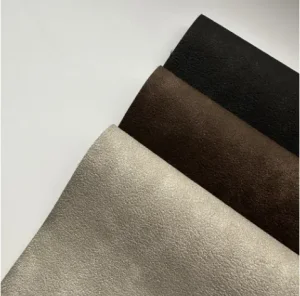
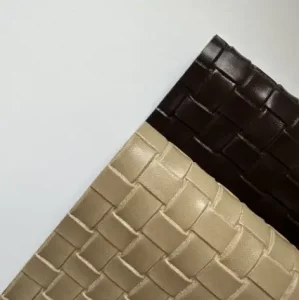
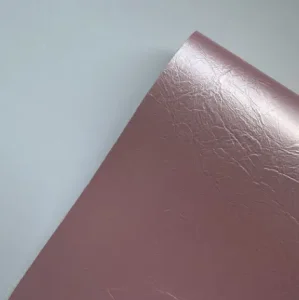
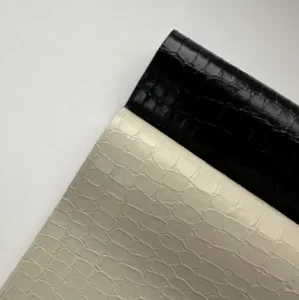
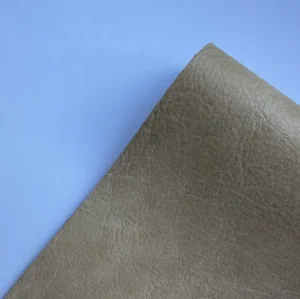
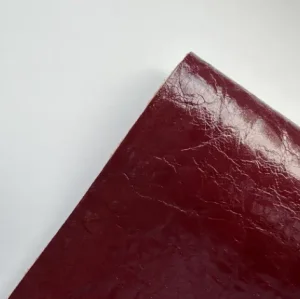
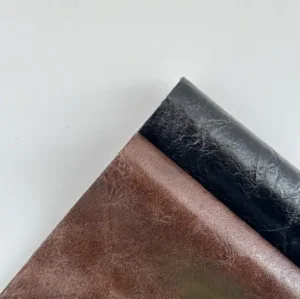
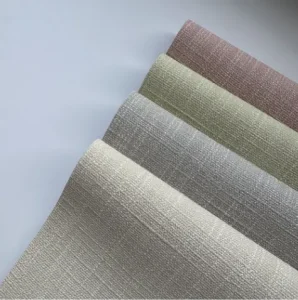
High-Performance Sustainable Material Series
Explore eight core industrial grades engineered for high mechanical stress, luxury hand feel, and verified international environmental certifications.
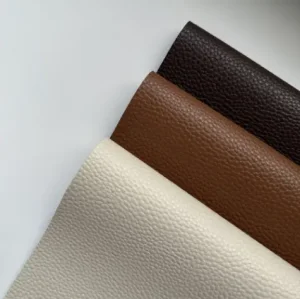
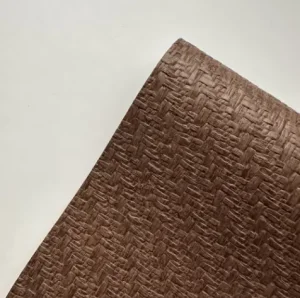
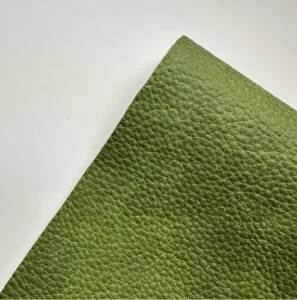
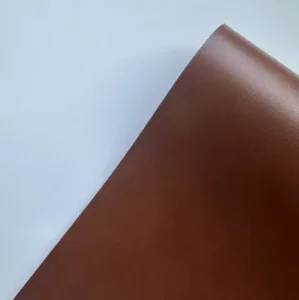
Global Enterprise Sourcing Architecture & Industrial Demand
Strategic shifting from legacy petro-chemical PVC/PU toward bio-circular matrices driven by Corporate Sustainability Reporting Directive (CSRD) and Scope 3 disclosures.
Footwear & Athletic Performance
Global sportswear conglomerates require high flex-cycle durability (>100,000 Bally flexes at -10°C) paired with high bio-carbon index according to ASTM D6866 standards.
Luxury Handbags & Fashion Goods
Haute couture fashion houses require flawless pebble, toothpick, or glazed nappa grains without heavy phthalate plasticizers (6P/16P Free) or detectable trace organotins.
Automotive Cockpits & Contract Upholstery
Transportation and commercial interior OEMs require stringent flame-retardant performance (FMVSS 302, California TB 117), ultra-low VOC emissions, and antibacterial finishes.
Engineering Pathways: Closed-Loop Green Chemistry
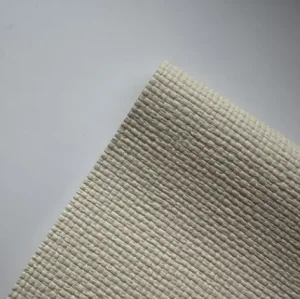
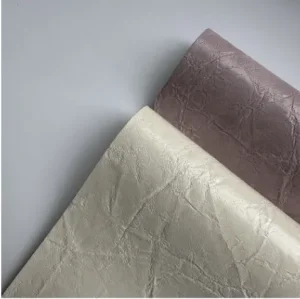
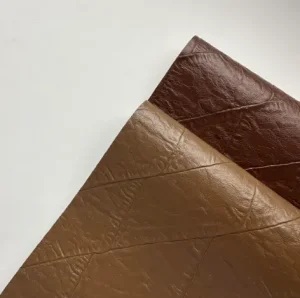
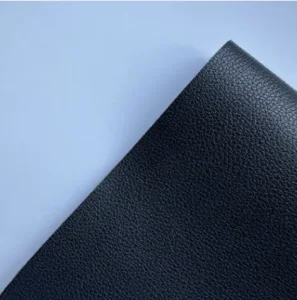
Comprehensive comparative matrix illustrating material performance thresholds across synthetic leather technologies manufactured at Yingde City JiangXin New Material Co., Ltd.
| Material Engineering Matrix | Feedstock Composition | VOC & Solvents | Mechanical Durability | Certified Compliance Standards |
|---|---|---|---|---|
| Bio-Based Renewable PU | Agricultural polyols (corn, castor, starch) up to 75% | Water-dispersed / Zero DMFa | Hydrolysis resistance up to 8 years; >80k Bally flex | USDA BioPreferred (ASTM D6866), REACH, RoHS |
| RCS Certified Recycled Leather | Post-consumer recycled rPET knit & microfibers | Low VOC trace emissions | High tensile split strength; cut-yield rate >95% | Recycled Claim Standard (RCS), GRS, OEKO-TEX 100 |
| Solvent-Free Eco-Friendly PU | 100% solids polyurethane hot-melt transfer | Zero solvents, Zero VOCs | Extreme scratch & cold fold resistance down to -25°C | 6P/16P Phthalate-free, amfori BSCI, Higg FEM Level 3 |
| Water-Based Microfiber Leather | Aqueous PU dispersion + sea-island polyamide/rPET | Aqueous vehicle, ultra-clean | Tensile > 3.0 MPa, tear resistance > 50 N/mm | ISO 9001/14001, China 3.15 Integrity Verified |
Technology Roadmap & Future Outlook (2026–2030)
Continuous investment in clean chemistry, molecular upcycling, and automated surface texturing to maintain global supply chain leadership.
Next-Gen Non-Food Feedstocks
Industrial scale-up of lignocellulosic and agricultural byproduct polyols, preventing competition with edible crops while maintaining 65%+ renewable carbon content.
CO2-Derived Polycarbonate Diols
Capturing and synthesizing industrial flue-gas carbon into polyols, creating negative-emission surface layers engineered for automotive seating and active luggage.
End-of-Life Enzyme Depolymerization
Development of chemically recyclable PU skins capable of being decoupled from backings via controlled industrial composting and micro-bacterial enzymolysis.
Zero-Loss Solar Smart Micro-Lines
Full integration of our 4.68 MW rooftop photovoltaic arrays with real-time automated infrared roll inspection to drive scrap defect rates below 0.1%.
Localized Support, Traceability & Regulatory Protection
Guaranteed supply chain transparency and zero-friction customs clearance for North American, European, and Asia-Pacific multi-market distributions.
Digital Product Passports (DPP)
Full lot-by-lot tracking compatible with EU Ecodesign for Sustainable Products Regulation (ESPR). Provides transparent verification of recycled content percentages and mill-level Scope 1 and Scope 2 footprints.
Customs Clearance Documentation
Shipment dossiers include Certificate of Origin, RCS Transaction Certificates (TCs), REACH 235 SVHC compliance statements, and California Prop 65 third-party lab assay reports for fast border release.
Rapid OEM Sampling & Grain Customization
Dedicated technical engineering labs in Yingde process custom color formulation, gloss calibration (ultra-matte to high-patent), and embossed grain development with a 5-day swatch lab turnaround.



Frequently Asked Questions (FAQ)
Authoritative technical, testing, and contractual answers curated for manufacturing buyers, materials managers, and compliance teams.
What specific chemical differences distinguish biobased PU from conventional PU leather?
Biobased PU synthesizes polyols derived from non-fossil renewable agricultural crops—such as corn starch, castor oil seeds, and industrial forestry byproducts—replacing petroleum naphtha. The carbon-14 isotopic ratio measured via ASTM D6866 confirms the biological origin of the polymer chains without compromising hydrolytic stability or wear resistance.
How does JiangXin manage the RCS Chain-of-Custody for recycled synthetic leather?
Every lot containing recycled polyethylene terephthalate (rPET) backings or re-milled PU is documented using the Textile Exchange Recycled Claim Standard. We supply formal Transaction Certificates (TCs) generated by our third-party auditing bodies directly to your brand to prove recycled content continuity from yarn supplier to final roll.
What are your standard Minimum Order Quantities (MOQ) and production lead times?
For standard catalog colors and textures, our baseline production minimum is 500 linear meters per reference. Custom-formulated pantone matches, specific backings (such as recycled microfibers or bio-cotton), or custom embossing plates start at 1,000 meters. Lab swatches take 3-5 working days; 20-foot container orders dispatch in 15-20 days.
Can JiangXin's leather grades meet stringent cold-flexing and flame-retardant standards?
Yes. Our laboratory can adjust functional additives into the PU matrix to achieve cold crack resistance down to -20°C to -30°C for sub-zero alpine footwear, and integrate non-halogenated flame retardants complying with British BS 5852 Crib 5 and US California TB 117 upholstery safety regulations.
Is JiangXin fully solvent-free or water-based during production?
We operate both 100% solvent-free hot-melt reaction lines and advanced aqueous water-borne polyurethane (WPU) coating installations. These processes completely eliminate N,N-Dimethylformamide (DMFa), N-Methyl-2-pyrrolidone (NMP), and toluene, meeting zero-discharge hazardous chemical (ZDHC) MRSL standards.
How does your factory demonstrate its environmental and social compliance?
Our 135,733 m² Yinghong Industrial Park campus was built with an on-site multi-stage wastewater treatment facility, heat recovery systems, and a 4.68 MW rooftop photovoltaic solar system. We maintain active certifications in ISO 9001, ISO 14001, amfori BSCI social compliance, and the Higg Facility Environmental Module (FEM).
Verified Eco-Friendly Technical Surfaces
Explore eight specialized formulations including low-impact green vegan leather, plant-derived bio-composites, and OEM-verified recycled textiles ready for volume shipping.