
Precision Engineered PU & Biobased Leather References
Verified plant-based polyols and closed-loop RCS recycled synthetic substrate matrix.
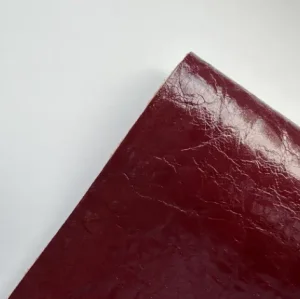
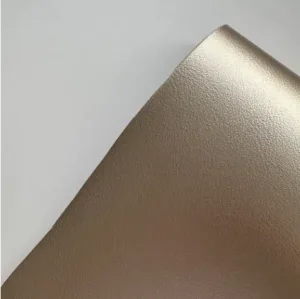
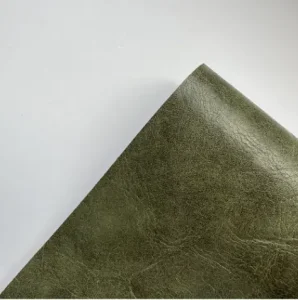
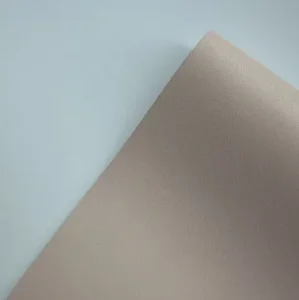
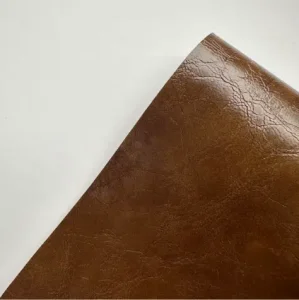
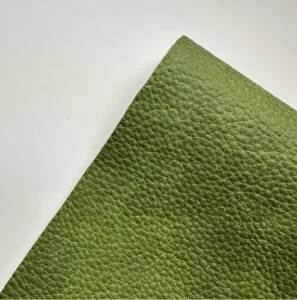
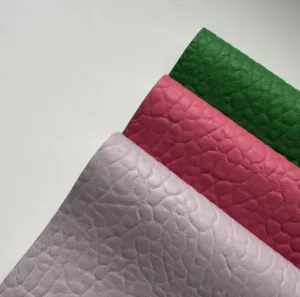
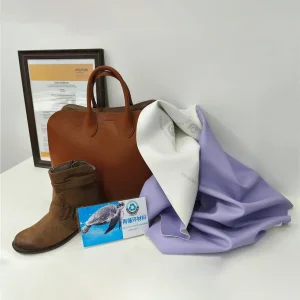
The Paradigm Shift in PU Faux Leather Manufacturing
How strict carbon boundary audits, LCA demands, and green chemistry are reshaping artificial leather manufacturing.
Transition to Solvent-Free & Water-Based PU
Traditional DMF (Dimethylformamide) solvent synthesis faces severe restrictions under EU REACH regulations. Leading OEMs are migrating to 100% solvent-free polyurethane and waterborne PUD technologies that eliminate VOC emissions while elevating tensile yield strength and peel resistance.
- Zero VOC emissions during compounding
- Elimination of hazardous organic solvents
- Superior surface hydrolysis resilience
Bio-Based Feedstock Integration
Utilizing agricultural residues, non-food starch, and plant oils, advanced PU synthesis achieves up to 30%-70% biobased carbon content validated via ASTM D6866 standard radiocarbon metrics, directly offsetting fossil hydrocarbon dependency in heavy industrial usage.
- Verified USDA BioPreferred compliance
- Drastic reduction in cradle-to-gate footprint
- Uncompromising hand-feel and flex durability
Circular Economy & Recycled Substrates
By coupling recycled microfibers, post-consumer rPET substrates, and RCS/GRS-certified chain-of-custody tracking, artificial leather manufacturing addresses end-of-life cycle circularity for automotive cockpits and sustainable fast fashion lines.
- Third-party verified Transaction Certificates (TC)
- High mechanical tear and seam integrity
- Closed-loop internal waste reclaim systems
China Factory 4.0: Supply Chain Resilience & Precision Chemistry
Combining automated dosing, digital line calibration, and green campus operations to deliver high-speed, flawless synthetic leather rolls worldwide.
Full-Chain In-House Cohesion
From custom polyol compounding and wet coagulating to surface dry-coating, micro-embossing, and grain laser etching, 100% of core procedures are unified in our Yingde facility to prevent supplier latency.
Automated Inline Defect Scanners
Equipped with machine-vision AI optical scanning arrays across dry-coating and slitting lines, spotting surface pinholes, color drift, and thickness deviance at 60 meters per minute.
Zero-Lag Chemical Customization
Our formulation laboratory rapid-prototypes custom touch-feels (buttery lambskin, structured saffiano, technical carbon grain, tactile nubuck) matching client Pantone standards within 72 hours.
Clean Energy Decarbonization
Operating a massive 4.68 MW rooftop solar PV system coupled with closed-loop VOC thermal regenerators and on-site biological wastewater facilities ensures your supply chain stands audit-ready.
Engineered Performance for Demanding B2B Sectors
Formulated to meet strict physical abrasion, tensile strain, fire safety, and skin-contact biosecurity benchmarks.
Automotive Cockpit & EV Interiors
Formulated for high resistance against extreme temperature fluctuations, UV yellowing, and persistent abrasion. Meets OEM low-odor standards and stringent cold-flex testing down to -30°C.
- FMVSS 302 & ISO 3795 flammability compliance
- Hydrolysis longevity: 5 to 10 years Jungle Test
- Anti-fogging and low TVOC condensation
Athletic Footwear & Active Gear
High dynamic flex resistance engineered for marathon midsoles, soccer boots, and technical lifestyle sneakers. Provides micro-porous breathability paired with hydrophobic water-shedding performance.
- Bally flex test surpassing 100,000 cycles
- Dynamic stitch tear strength over 60 N
- High mechanical peel strength up to 4.0 kg/3cm
Luxury Handbags & Designer Leather Goods
Supple drape, authentic pebble grains, and dimensional edge-creasing capabilities tailored for modern luxury leather collections. Provides clean die-cutting edges without edge-paint bubbling.
- Flawless edge-coating paint absorption
- Exquisite microfiber suede and woven backings
- 100% skin-safe, OEKO-TEX Standard 100 Class I
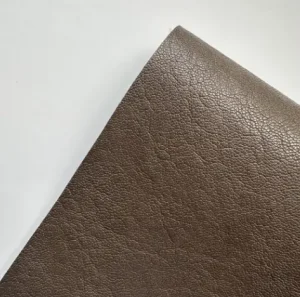
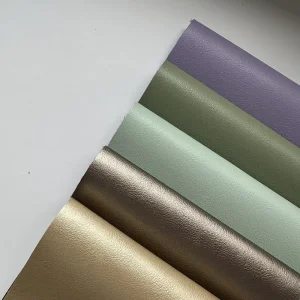
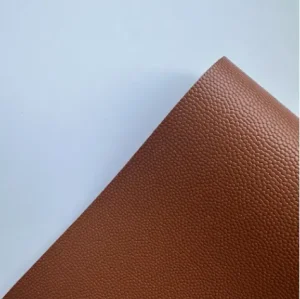
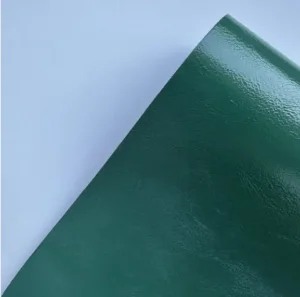
High-Performance Custom PU Faux Leather Selections
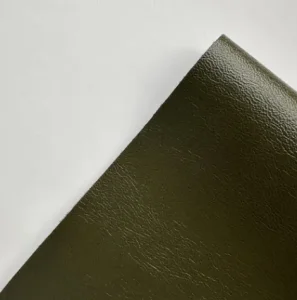
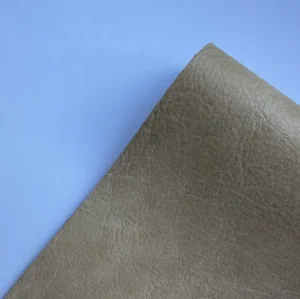
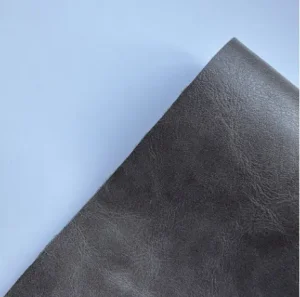
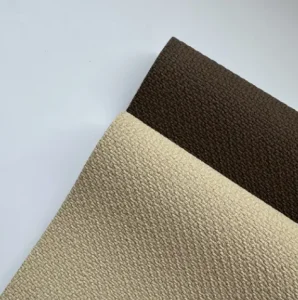
RCS Recycled, Bio-Polyol, and Eco-PU solutions ready for worldwide bulk shipment.
Frequently Asked Questions by Global Sourcing Directors
Clear, technical clarity for brand developers, materials engineers, and QA directors.
What is the structural difference between Waterborne PU, Solvent-Free PU, and Biobased Leather?
Waterborne PU replaces organic solvents with water during polyurethane dispersion (PUD), eliminating hazardous vapors. Solvent-Free PU utilizes 100% solid reactive prepolymers with zero dilution media for massive durability and zero shrinkage. Biobased PU substitutes fossil petro-polyols with renewable biomass polyols (corn, soy, castor) up to 70% bio-carbon content verifiable under ASTM D6866.
How does your factory facilitate RCS & GRS Chain of Custody for international border clearance?
We maintain an unbroken chain of custody through Textile Exchange certified systems. Every certified bulk batch is issued an official Transaction Certificate (TC) directly tracking post-consumer or post-industrial PET substrate inputs from polymer source to completed artificial leather rolls, satisfying EU Green Claims directives and US Customs audits.
Can you formulate PU faux leather to withstand extreme hydrolysis and UV exposure?
Yes. By utilizing polycarbonate (PC) and polycaprolactone (PCL) polyol backbones combined with hindered amine light stabilizers (HALS), we achieve hydrolysis resistance passing 5 to 10 weeks in the Jungle Test chamber (70°C, 95% RH) and UV stability rated Grade 4-5 on the Grey Scale after 1,000 continuous hours of Xenon arc exposure.
What are your standard factory MOQs, lead times, and custom thickness capabilities?
Standard color lab dips require 3 to 5 business days; custom sample yardage takes 7 days. Our bulk roll production averages 12 to 18 days for orders of 500 to 50,000 meters. Caliper thickness can be adjusted precisely from 0.4mm (for ultra-thin apparel) up to 2.2mm (for structural saddlery and heavy transport seating).