
High-Performance Custom Patent & Eco Leather Selections
Engineered to deliver exceptional gloss retention, crack-resistant flexing, and certified environmental accountability across all fashion and industrial applications.
Global Commercial Dynamics of Custom Patent Faux Leather
Overcoming plasticizer migration, peeling hysteresis, and petrochemical dependency through advanced cross-linked polyurethane and bio-based formulations.
Mirror-Finish High Gloss & Non-Tack Technology
Traditional patent leather manufacturing often relied on toxic PVC plastisols prone to tackiness, yellowing, and brittleness in sub-zero temperatures. JX.ECO deploys aliphatic polycarbonate PU resins alongside precision calender curing, creating an ultra-clear, scratch-resistant surface with an optical mirror index exceeding 95 GU without blooming.
Bio-Based & RCS Traceability Convergence
Meeting Scope 3 decarbonization mandates demands radical transparency. By substituting fossil-derived feedstocks with renewable corn-derived polyols and post-consumer recycled substrates (rPET), our patent faux leather achieves up to 50% biobased carbon content verified under ASTM D6866, backed by full chain-of-custody Transaction Certificates.
Zero-DMFa & Green Chemical Processing
Compliance with rigorous EU REACH annexes and ZDHC Level 3 protocols is built directly into our reaction chambers. By adopting waterborne PU dispersions (PUD) and hot-melt solvent-free polyurethane laminations, our operations permanently eliminate hazardous solvents like DMFa, toluene, and methyl ethyl ketone.
Engineered for Demanding Sector Environments
From European haute couture runway footwear to Scandinavian heavy contract upholstery, our formulations adapt to distinct mechanical wear and regulatory climates.
Luxury Footwear & High-Flex Boots
Patent faux leather applied in cold-weather fashion boots requires unmatched flex durability. Utilizing tailored aliphatic elastomers, our materials withstand over 100,000 Bally flex cycles at -20°C without micro-crazing, gloss fading, or grain detachment along high-stress vamp creases.
Structured Designer Handbags & Cases
Architectural luxury leather goods demand precise edge skiving, high tear resistance, and shape memory. Our high-gloss patent synthetic leathers feature high-density microfiber backings and superior edge-paint adhesion, eliminating edge splitting and preventing inter-panel oil transfer.
Electronics & Smart Wearable Accents
As consumer tech evolves into statement lifestyle fashion, our patent synthetics serve smart watch straps, fold protective covers, and acoustic headset bands. Infused with skin-safe oleophobic coatings, they repel fingerprint sebum, facial creams, and common cosmetic solvents effortlessly.
China Factory Scalability, Resilience & Lean Velocity
Combining vertically integrated raw polyol synthesis with digital batch controls in Yingde, Guangdong to insulate global brand partners from market volatility.
Full In-House Upstream Integration
Unlike converters who rely on outsourced laminating houses, JiangXin controls resin polyol blending, dry-line casting, wet-process coagulation, precision calender embossing, and final topcoat lacquering under a single roof. This internal vertical loop drives down defects and guarantees lot-to-lot color match within Delta E < 0.6.
Rapid Prototype-to-Bulk Agile Matrix
Product lifecycles in global fast luxury require blistering turnaround speeds. Leveraging in-house computerized micro-sample reactors, we formulate, test, and ship custom color and hand-feel swatch strikes in 72 hours, with full container bulk ramp-up achieved within 12 to 15 business days.
Solar-Powered ESG Cost Hedging
Operating a dedicated 4.68 MW rooftop photovoltaic solar grid and industrial closed-loop heat recuperation plants insulates our facility from national grid power curtailments. It shields our corporate partners from rising fossil utility surcharges while generating documented carbon offset metrics.
Technical Roadmap: Next-Era Patent Polymer Innovation
Strategic development targets charting the path from petro-hybrid resins to 100% bio-circular, monomer-recyclable luxury surfaces.
Phase 1: Bio-Hybrid Gloss
Industrial scale production of 30%-50% biobased polyols replacing conventional polyether structures, achieving full REACH and OEKO-TEX Eco Passport compliance.
Phase 2: Self-Healing Patent Topcoats
Integration of reversible hydrogen-bonding covalent networks within topcoat lacquer layers, enabling heat-assisted micro-scratch healing under standard hot-air blowers.
Phase 3: 100% Circular Monomer De-Polymerization
Closed-loop waterborne PU formulations engineered with designed cleavage points, enabling separation of clear patent resins from backing fibers for true cradle-to-cradle remanufacturing.
Phase 4: Carbon-Negative Photosynthetic Polyols
Pilot synthesis using industrial capture CO2 and algae-derived polyester polyols, pushing net cradle-to-gate material emissions into verifiable carbon-negative metrics.
Localized Trade Support & Rigorous Regulatory Clearance
Eliminating customs tariff rejections, restricted substance border disputes, and brand reputational risks with institutional laboratory documentation.
European Union: REACH & CBAM Preparation
Every patent faux leather roll produced for EU export undergoes third-party chromatograph testing to verify SVHC concentrations are under 0.1% w/w. Materials conform to EU Deforestation Regulation (EUDR) animal-free guidelines and provide granular embedded emission data ready for Carbon Border Adjustment Mechanisms.
North America: US Prop 65 & USDA BioPreferred
Formulations guarantee complete elimination of bisphenol analogues, orthophthalates (6P / 8P Free), and heavy metal stabilizers (lead, cadmium, mercury). Articles qualify seamlessly for California Proposition 65 retail labeling exemptions and carry verifiable USDA BioPreferred hangtag certifications.
Customs Documentation & Chain-of-Custody
Exporting to over 50 destinations requires watertight border dossiers. JiangXin delivers localized HS code classification, certified Bills of Lading, Certificate of Origin paperwork, and Textile Exchange approved Transaction Certificates (TCs) for complete peace of mind.
Specialized Bio-Derived & Recycled Formulations
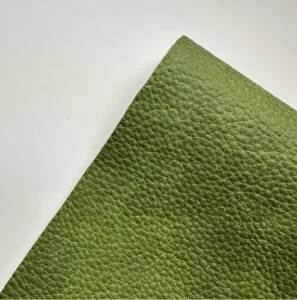
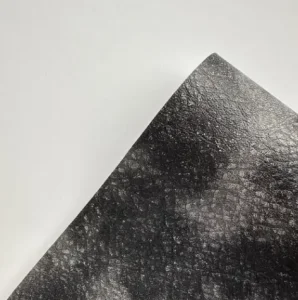
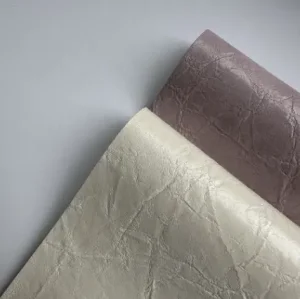
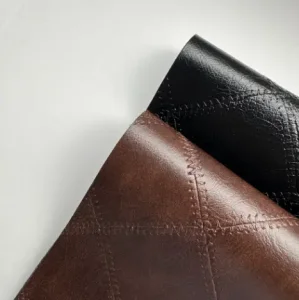
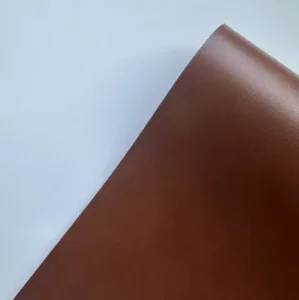
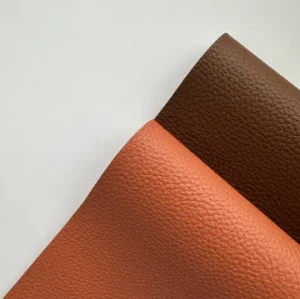
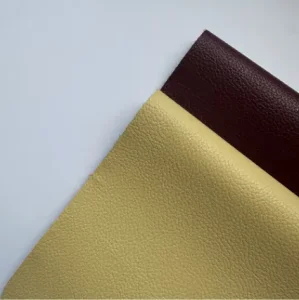
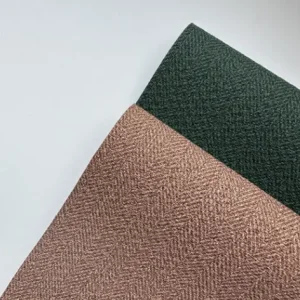
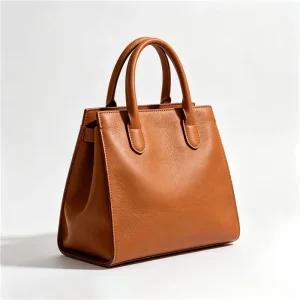
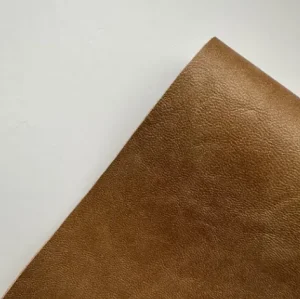
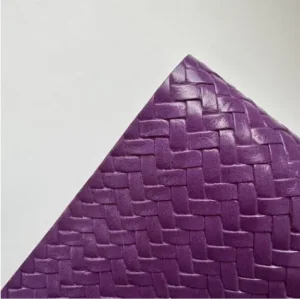
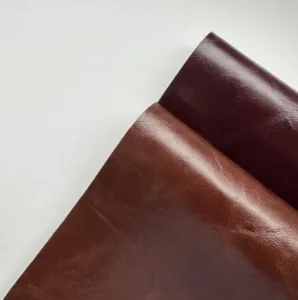
Browse additional custom engineered patent and synthetic leather roll references available for immediate sampling and container-scale production.
Frequently Asked Engineering & Sourcing Questions
Direct answers from our senior polymer chemists and export compliance specialists on Custom Patent Faux Leather procurement.
What distinguishes your custom patent faux leather from common PVC patent fabric?
Traditional PVC patent fabric depends on volatile monomeric phthalate plasticizers that evaporate or migrate over time, resulting in surface tackiness, edge curling, and rapid cracking along flex zones. In contrast, JiangXin manufactures custom patent faux leather using cross-linked aliphatic polyurethane (PU) formulations. Our structure contains zero plasticizers, provides superior flex endurance (>100,000 Bally flex cycles), resists UV yellowing, and guarantees compliance with REACH and OEKO-TEX safety thresholds.
How do you eliminate surface tackiness and blocking during humid oceanic freight?
Marine shipping containers routinely exceed 85% relative humidity and 55°C temperature swings, which triggers surface plasticization and roll blocking in lower-grade patent leathers. We incorporate cross-linking isocyanate curing agents and specialized silicone-modified polycarbinol additives into the final high-mirror lacquer. This shields the mirror layer from moisture absorption and allows clean unwinding at shoe manufacturing plants without paper interleaf sticking or surface haze.
Can you manufacture patent faux leather with recycled (RCS) backing textiles?
Yes. We specialize in circular composite matrices where high-gloss solvent-free PU layers are bonded to 100% post-consumer recycled PET (rPET) woven backings, microfiber bundles, or split-leather scrap composites. Certified under the Recycled Claim Standard (RCS), every bulk shipment is supported by complete official Transaction Certificates (TCs) detailing traceable batch origins from accredited yarn spinning facilities.
What test methods verify your biobased carbon content claims?
Biobased carbon ratios are rigorously measured using Accelerator Mass Spectrometry (AMS) radiocarbon dating in accordance with ASTM D6866 standards. This methodology accurately quantifies the ratio of contemporary carbon-14 derived from renewable plant oils (such as industrial corn and castor polyols) versus fossil petrochemicals, validating consumer-facing environmental claims on shoe and bag hangtags.
What are your Minimum Order Quantities (MOQs) and sampling lead times for custom colors?
For custom PMS or Pantone color matching in patent finishes, our standard laboratory strike-off sampling timeframe is 3 to 5 business days. Pilot roll trials (50 to 100 meters) can be completed within 7 business days. For bulk commercial manufacturing runs, our baseline MOQ starts at 500 linear meters per color/thickness, allowing brand developers flexibility across multi-color capsule collections.
How does your factory handle solvent emission regulations and chemical safety audits?
JiangXin's facility in Yingde, Guangdong operates fully licensed regenerative thermal oxidizers (RTOs) with solvent recovery efficiency rates above 98%. We are audited under amfori BSCI and ISO 14001 guidelines, and our manufacturing tracks ZDHC MRSL guidelines. For brands targeting zero chemical footprint, our waterborne (PUD) patent line contains non-detectable levels of DMFa, DMFu, and NMP.