
Bio-Derived & Traceable Recycled Leatherette PU Catalog
Explore our top-tier polymer surface fabrications formulated with plant-derived polyols and post-consumer recycled substrates matching stringent brand RSL criteria.
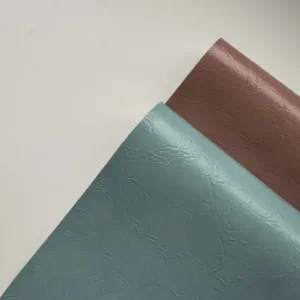

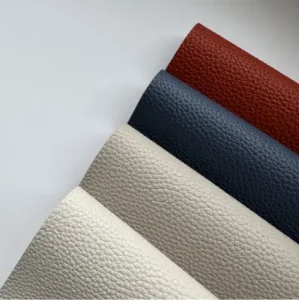

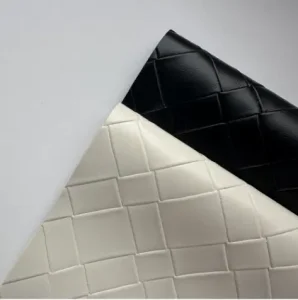
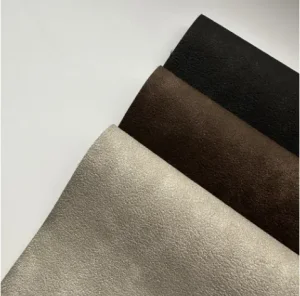
Industry White Paper: The Evolution of High-Performance Leatherette PU
Modern PU synthetic leather represents a fundamental shift in macro-molecular polymer chemistry. The market has evolved past commodity faux leathers to engineered surfaces prioritizing biocompatibility, decarbonization, and extreme durability.
Bio-Polyol Substitution
By synthesizing polyols derived from agricultural waste, industrial cornstarch, and castor crops, our bio-based formulations reduce fossil carbon extraction by up to 55%. These formulations are verified under strict ASTM D6866 radiocarbon analytical metrics, ensuring authentic Scope 3 emission mitigation.
Zero-DMF Solvent-Free PU
Eliminating dimethylformamide (DMF) and toluene at the raw resin mixing phase removes hazardous volatile organic compounds (VOCs). Utilizing water-borne dispersions and hot-melt solvent-free polyurethane processing guarantees zero toxic off-gassing for cleanroom indoor applications and automotive cockpits.
Engineered Micro-Structure
High-density coagulation combined with precision structural backing substrates (including ultra-fine microfiber, woven rPET, and recycled tricot) ensures that tensile resilience, tear elongation, and flex endurance outlast traditional PVC leatherette while achieving superior thermal breathability.
Localized Compliance Frameworks & Global Certifications
We insulate international procurement teams from regulatory friction through verified cross-jurisdictional compliance protocols and third-party verified environmental auditing.
EU REACH & RoHS
Exhaustive screening against SVHC (Substances of Very High Concern) under the EU 1907/2006 annex, verifying non-detectable levels of heavy metals and prohibited phthalates.
RCS Chain of Custody
Textile Exchange Recycled Claim Standard verification from post-consumer PET flake suppliers through extrusion to final coating, paired with verifiable Transaction Certificates (TC).
OEKO-TEX & 6P Free
Certified Class I/II safety thresholds protecting apparel, infant footwear, and wearables against plasticizer migration (DEHP, DBP, BBP, DINP, DIDP, DnOP) and skin allergens.
Higg Index & BSCI
Verified Higg FEM (Facility Environmental Module) and amfori BSCI social compliance auditing demonstrating energy decarbonization, fair labor metrics, and water circularity.
China Factory Scale: Cost Efficiency & Supply Chain Resilience
Located in Yingde Industrial Park, Guangdong, JiangXin leverages vertical polymer formulation and advanced automated roll-to-roll coating to optimize landed costs.
Upstream Resin Synthesis
In-house resin compounding allows customized crosslinking density, tensile strength, and color dispersion without relying on intermediary polymer formulators, ensuring cost stability.
Solar Thermal Heat Recovery
Our 4.68 MW rooftop solar installation provides renewable energy for dry and wet process coating lines. Closed-loop exhaust heat exchangers recover up to 45% of thermal energy during drying.
Pearl River Delta Logistics
Direct proximity to Guangzhou, Shenzhen, and Hong Kong deep-water ports reduces container transit times. Integrated export clearing handles DDP, CIF, and FOB terms seamlessly.
Agile Lab-to-Bulk Scale
Computerized color spectrophotometers and lab casting machinery enable rapid sample turnaround within 5-7 business days, scaling directly into 5,000-meter production batches.
Localized Application Scenarios & Sector Solutions
Different end products present distinct failure modes. Our synthetic leather matrices are specifically compounded to match mechanical, thermal, and chemical stress vectors.
Automotive & Transit Seating
Engineered for high-traffic environments, our mobility-grade leatherette features specialized polycarbonate-PU hybrid chemistry. Formulated to resist 100,000+ Martindale cycles, UV solar degradation (Florida exposure testing), and extreme -30°C cold cracking without stiffening.
Athletic Footwear & Sneaker Uppers
Designed for athletic movement, this material offers high dynamic flex fatigue endurance (over 150,000 Bally flex cycles in humid environments). Its micro-porous structure balances water impermeability with vapor breathability for performance footwear uppers.
Luxury Handbags & Accessories
Emulating high-end calfskin, lambskin, and structured exotic textures (such as Toothpick, Saffiano, and Nappa grains), our bespoke fashion series offers supple drape, smooth skiving properties, and clean, burnishable edges for edge-paint applications.
Global Sourcing Realities: Total Cost of Ownership (TCO) & Macro Trends
International procurement leaders balance unit price against compliance liabilities, yield losses, and delivery lead times. Our supply strategy is engineered around three global purchasing requirements:
Yield Rate Optimization
Traditional bovine hides yield only 65-75% usable cutting surface due to anatomical defects, neck wrinkles, and brand marks. Continuous-roll synthetic leather PU provides a 98.5% precision cutting yield across automated CNC and laser tables, immediately lowering per-unit production costs.
CBAM & Carbon Accounting
With the European Union Carbon Border Adjustment Mechanism (CBAM) expanding across technical industrial goods, our factory provides verified life cycle analysis (LCA) data. We calculate cradle-to-gate emissions, facilitating seamless Scope 3 carbon compliance for Western importers.
Supply Continuity
Geopolitical turbulence requires reliable supply partnerships. Our on-site reserve stocks of non-woven and microfiber base fabrics, coupled with dual polymer reaction autoclaves, safeguard enterprise programs against single-source raw material disruptions.
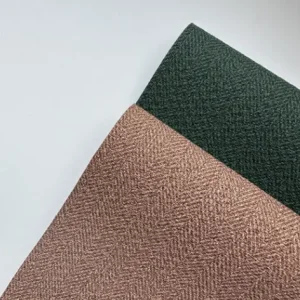
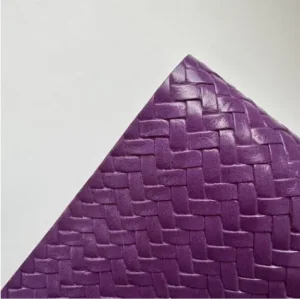
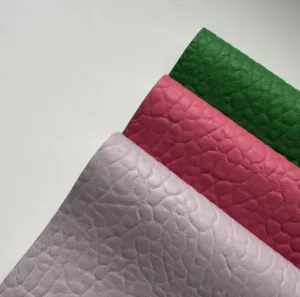
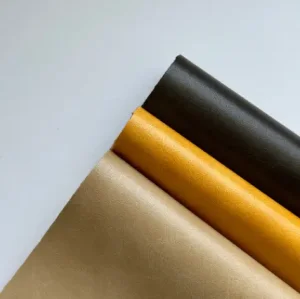
Advanced Eco-Certified & Technical PU Leatherette
Explore our specialized performance series, featuring customized surface textures, abrasion resistance, and sustainable backing textiles.


Procurement & Technical Engineering Q&A
Direct answers to common technical, compliance, and logistical inquiries from enterprise material sourcing managers.