
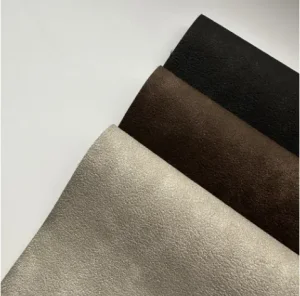
 Bio-PU / Green
Precision Engineering · Batch 01
Advanced Biobased & Recycled Product Portfolio
Direct factory configurations available for custom emboss grain, mechanical tensile tolerances, and carbon-reduction compliance. Access technical swatches from our certified collection.
Bio-PU / Green
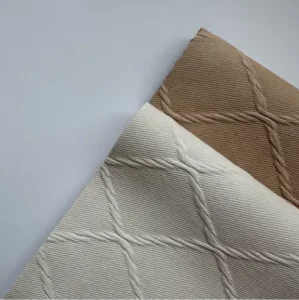 USDA Certified Polyols
Wholesale Bio-Based Renewable Synthetic Leather -9016
Configure Specifications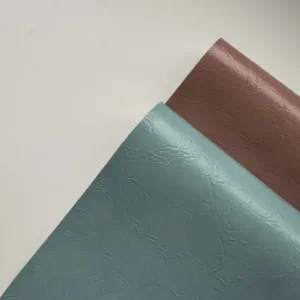 Industrial Tensile
OEM Industrial‑Grade Bio‑Derived Renewable Synthetic Leather-0177
Configure Specifications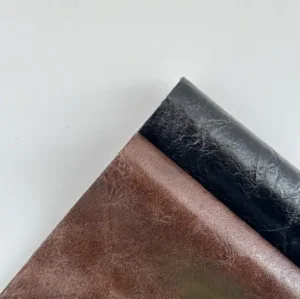 Water-Based PU
Wholesale Eco-Friendly Sustainable Synthetic Leather-0212
Configure Specifications Botanical Feedstock
OEM Plant-Derived Renewable Bio-Based Synthetic Leather-2071
Configure Specifications RCS Certified Substrate
High-Quality RCS Certified Recycled Synthetic Leather-0138
Configure Specifications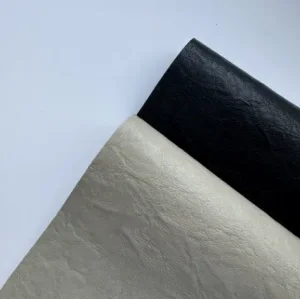 Circular Microfiber
Custom RCS Recycled Substrate Synthetic Leather-9193
Configure Specifications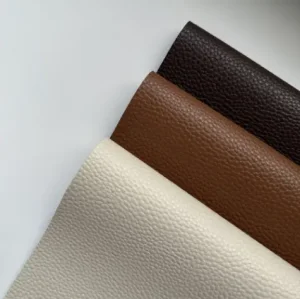 Upcycled Polymer
High-Quality Sustainably Upcycled Synthetic Leather-9027
Configure Specifications16M+
Annual Meter Capacity
135,733m²
Eco-Campus Footprint
4.68MW
Rooftop Solar Array
50+
Global Export Markets
300+
Enterprise OEM Partners
Industrial White Paper: Decoupling Luxury & Performance from Petrochemical Dependency
The commercial imperative for custom biodegradable leather suppliers has shifted radically from voluntary sustainability posturing to mandatory supply-chain compliance. Driven by the European Union’s Corporate Sustainability Due Diligence Directive (CSDDD), extended producer responsibility (EPR) schemes, and aggressive brand Scope 3 decarbonization commitments, industrial manufacturers must deliver materials that reconcile mechanical indestructibility during consumer use with verifiable biodegradability at post-consumer end-of-life.
At JiangXin New Material Co., Ltd. (JX.ECO), our synthesis methodologies replace conventional fossil-based polyols with bio-based alternatives derived from agricultural byproducts, castor oil, and non-food starch crops, evaluated via ASTM D6866 radiocarbon dating. Concurrently, our proprietary dry-process coating technologies eliminate toxic DMFa (dimethylformamide) solvents, reducing greenhouse gas emissions by up to 48% across the cradle-to-gate lifecycle.
Vertical Scale & Engineering Edge
Why Global Tier-1 Enterprises Source from JiangXin
Direct access to raw synthesis, solar-powered clean energy infrastructure, and an uncompromised supply chain moat located in Yingde, Guangdong.
Full-Chain Upstream Synthesis
Unlike downstream converters who merely laminate purchased foils onto base fabrics, JiangXin formulates our own biobased prepolymers and waterborne PU dispersions (PUDs) in-house. This gives tier-1 OEM clients microscopic control over molecular weight distribution, cross-linking density, softness hysteresis, and thermal stability.
Solar-Integrated Mega Facility
Spanning 135,733 square meters in Yingde, Guangdong, our factory incorporates a 4.68 MW rooftop photovoltaic solar system that powers continuous automated drying ovens and regenerative thermal oxidizers (RTOs). This low-emission industrial model guarantees defensible Scope 1 and Scope 2 emission metrics for your annual ESG filings.
16M+ Meter Throughput Security
With an annual delivery capability surpassing 16 million running meters, we protect multinational brands against raw material volatility and production bottlenecks. Rapid color match formulation in under 72 hours, customized backing integrations, and certified laboratory roll inspections guarantee predictable bulk lot consistency.
Audited Integrity & Global Assurance
Compliance Architecture: Engineered for Global Scrutiny
International luxury conglomerates and footwear corporations require irrefutable lab documentation. Our compliance ecosystem clears strict customs and restricted substance inspections across 50+ sovereign markets.
USDA BioPreferred & ASTM D6866
Our bio-based leather series features certified carbon percentages ranging from 30% to over 75% renewable agricultural carbon, authenticated via third-party Accelerator Mass Spectrometry (AMS) isotopic radiocarbon tracking.
ASTM D6866BioPreferredRenewable Carbon
Textile Exchange RCS / GRS
Complete Chain-of-Custody (CoC) visibility from post-consumer PET bottles and reclaimed ocean plastics to precision-spun microfiber base substrates. Transaction Certificates (TCs) accompany every standard shipment.
RCS VerifiedTraceable ChainrPET Substrate
EU REACH & 16P Phthalate-Free
Engineered in compliance with Annex XVII of EU REACH regulations, eliminating regulated orthophthalates, organotin compounds, short-chain chlorinated paraffins (SCCPs), and Azo colorants for total human dermatological safety.
REACH SVHCRoHS 2.0Phthalate-Free
Higg Index FEM & amfori BSCI
Audited under the Sustainable Apparel Coalition's Higg Facility Environmental Module (Higg FEM) for verified water stewardship, zero-effluent hazardous discharge, and verified amfori BSCI ethical labor benchmarks.
Higg VerifiedBSCI Grade-AZero Discharge
Material Science Innovations
The Technical Roadmap of Biodegradable Synthetic Leather
Navigating the divergence between oxo-fragmentation, biological enzymatic breakdown, and circular mechanical polymer loops.
Solvent-Free Waterborne Polyurethane (WPU)
Traditional wet-process PVC and PU manufacture requires massive quantities of toxic DMFa, DMFc, and toluene solvents. JX.ECO champions high-solid-content aqueous polyurethane dispersions that rely purely on deionized water as the carrier medium, achieving zero volatile organic compound (VOC) emissions while yielding a plush, micro-cellular leather hand feel.
Microplastic-Free End-of-Life Digestion
Synthetic leathers historically faced critique for releasing persistent microfibers into marine environments. By introducing biodegradable ester linkages, bio-based succinic acids, and polyhydroxyalkanoates (PHA) alongside compostable cellulose backing matrices, our R&D team targets ISO 14855 / ASTM D5338 aerobic degradation under controlled composting environments.
Circular Upcycling vs. Chemical Depolymerization
True circularity requires closed-loop reclaim capability. JX.ECO's next-generation architectures enable mechanical dissociation of the polyurethane skin layer from the needle-punched backing, ensuring that production waste and industrial offcuts can be remelted, repolymerized, and reintroduced into secondary consumer product packaging.
Application Engineering
Custom Formulations for Specialized Global Industries
We do not supply generic rolls. Every formulation is customized to balance elongation, tear strength, hydrolysis resistance, and finishing aesthetics.
Luxury Handbags & Small Leather Goods
Engineered for luxury houses requiring deep grain definition, buttery hand feel, and immaculate edge-creasing performance. Formulated for excellent thermal edge-paint bonding and zero dye-bleeding across humid climates.
- Toothpick, Nappa & Epsom embossed grains
- High flex fatigue resistance (>200,000 Bally cycles)
Athletic Footwear & Trail Running Uppers
Extreme durability without dead weight. High-density bio-based microfiber substrate delivers phenomenal stitch-holding tenacity, high abrasion resistance, and cold-flex elasticity down to -30°C for winter outdoor endurance.
- Martindale abrasion >100,000 revs
- Hydrolysis resistance: 7-10 Year Jungle Test
Next-Gen Automotive & EV Cockpits
Strict compliance with OEM cabin standards: low fogging, ultra-low odor emissions, and zero bloom under intense UV exposure. Integrated with halogen-free flame retardance satisfying FMVSS 302 and ISO 3795.
- UV Aging: Grade 4-5 (Xenon Arc 1200 kJ)
- Flame Retardant: FMVSS 302 self-extinguishing
Consumer Electronics & Wearables
Micro-thin thicknesses (0.45mm – 0.70mm) with dimensional stability for high-speed automated thermoforming and die-cutting. Skin-safe hypoallergenic coatings resistant to artificial sweat, sebum, and isopropyl alcohol disinfection.
- Oleophobic & Anti-Fingerprint top finishes
- Non-cytotoxic ISO 10993 skin tolerance
Technical Clarifications
Frequently Asked Technical & Sourcing Questions
Clear chemical explanations directly from our engineering team regarding biobased versus biodegradable synthetic leathers.
What is the explicit chemical distinction between "Biobased" and "Biodegradable" leather?
Biobased refers strictly to the feedstock origin: it measures the fraction of modern atmospheric carbon (derived from renewable botanicals like corn, sugarcane, or castor oil) incorporated into the polymer backbone, verified through ASTM D6866 radiocarbon C14 dating. Biodegradable refers exclusively to the end-of-life disposal mechanism: the ability of microorganisms to metabolize the chemical bonds into water, carbon dioxide, and biomass under specific environmental conditions (ASTM D5338 / ISO 14855). A material can be 100% biobased without being rapidly biodegradable, or conversely, derived partially from fossil sources engineered with hydrolytically cleavable ester bonds that promote microbial digestion. At JX.ECO, we offer customized formulations aligning with your brand’s specific circularity claims.
Does your biodegradable synthetic leather degrade spontaneously during warehouse storage?
No. Degradation requires a synergistic combination of active thermophilic microflora, elevated relative humidity (>85%), warmth (>50°C), and enzymatic presence found in industrial composting or anaerobic digestion facilities. In commercial retail or warehouse environments, JX.ECO's synthetic leathers exhibit world-class stability, resisting ambient microbial decay, mold formation, and standard hydrolysis for 5 to 10+ years depending on the grade selected.
How does JiangXin manage transaction certification (TC) for RCS-certified recycled orders?
Because our Yingde campus operates under the verified Recycled Claim Standard (RCS) and Global Recycled Standard (GRS) chain of custody, every certified bulk purchase is backed by third-party certification body documentation. Upon shipment approval and bill of lading generation, our compliance department files for an official Transaction Certificate (TC) specifying the exact volume of traceable post-consumer recycled polyolefin or polyester incorporated.
What minimum order quantities (MOQ) and lead times apply for custom technical developments?
For bespoke color matching, custom emboss roller tooling, or tailored functional properties (e.g., flame retardancy or cold-crack resistance), our standard trial batch MOQ is 500 running meters per colorway. Catalog references and running production items can be accommodated at 300 meters. Lab swatches and sample yardages typically dispatch within 3 to 5 business days; full container production cycles average 15 to 20 days.
Can you formulate materials compliant with specific Restricted Substance Lists (RSL)?
Yes. We routinely engineer formulations to pass proprietary corporate RSLs that exceed regional legal minimums (such as Nike RSL, adidas A-01, ZDHC MRSL Level 3, and Apple Regulated Substances Specification). Prior to sampling, clients provide their testing protocol, and our analytical laboratory conducts in-house gas chromatography-mass spectrometry (GC-MS) screenings before dispatching materials to accredited bodies like SGS, TÜV, or Intertek.
Precision Engineering · Batch 02
Circular Substrates & Low-Carbon References
Explore our full line of solvent-free PU, certified post-consumer recycled substrates, and plant-derived performance materials.
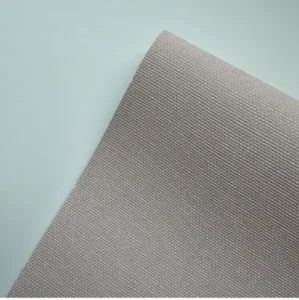 Carbon Offset
Custom Low Carbon Impact Eco Synthetic Leather-9362
Configure Specifications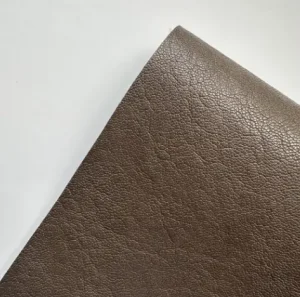 DMFa-Free System
Wholesale Low-Impact Sustainable Synthetic Leather-9301
Configure Specifications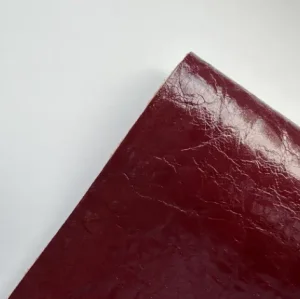 PETA Vegan Ready
High-Quality Green Grade Vegan Synthetic Leather-9261
Configure Specifications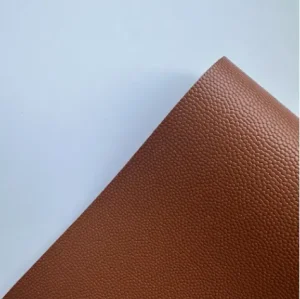 Eco-Conscious PU
Wholesale Sustainable Eco-Conscious Synthetic Leather-9142
Configure Specifications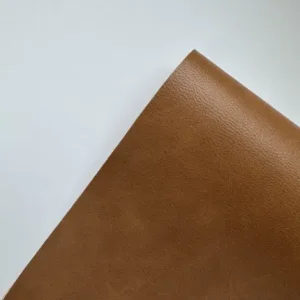 Renewable Carbon
OEM Renewable Bio-Based Synthetic Leather-9020
Configure Specifications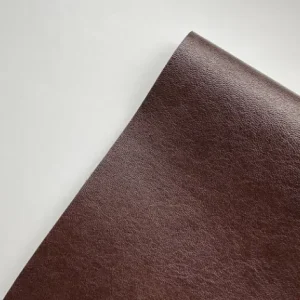 Verified Recycled
Custom RCS Verified Recycled Synthetic Leather
Configure Specifications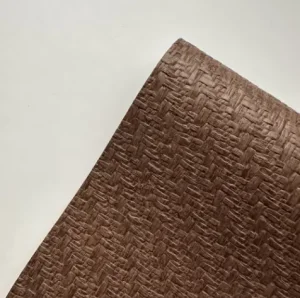 Bio Polyol Synthesis
Wholesale Bio‑Based Renewable Synthetic Leather-9339
Configure Specifications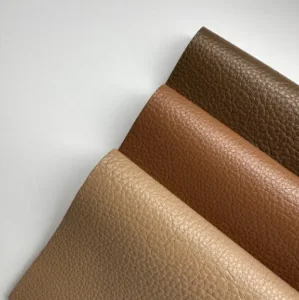 RCS Certified 9078
Custom RCS Recycled Synthetic Leather-9078
Configure Specifications
Technical Protocol
Five-Stage Technical Material Specification Process
From digital material definition to bulk container landing: a transparent, audit-ready development cycle for global sourcing teams.
Design Brief & RSL
Submission of physical target standards, target bio-content percentage, substrate preference, and brand restricted substance limits.
Formula & Grain Match
Our lab formulates pilot aqueous resin dispersions and matches custom textures using our proprietary library of over 800 steel casting rollers.
Lab Qualification
Pre-production swatches undergo stress tests: Bally flex, Taber abrasion, cold crack, tensile elongation, and third-party isotopic testing.
Locked Continuous Run
Formulation lock and roll execution across our automated dry coating lines, powered by 4.68 MW rooftop photovoltaic solar clean energy.
Inspection & Customs Pack
100% optical camera surface inspection, roll tagging, and complete export documentation packaging: COA, REACH declarations, and TCs.