
Custom Sustainable Polyurethane & Bio-Circular Synthetic Leather
Direct factory production supporting custom grain matching, post-consumer recycled (PCR) substrate integration, low volatile organic compound (VOC) emissions, and full Transaction Certificate (TC) traceability.
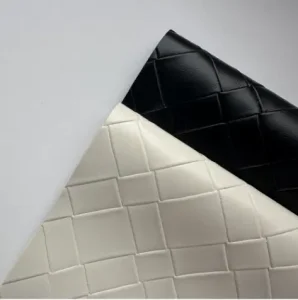
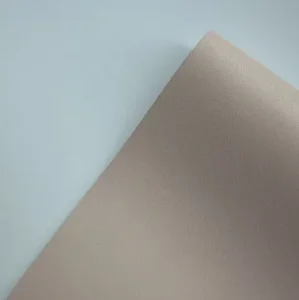
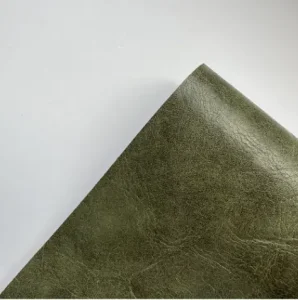
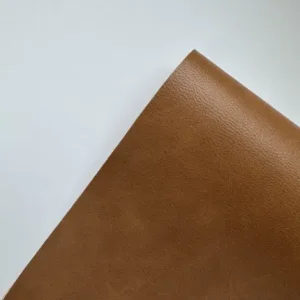
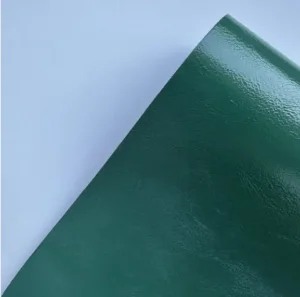
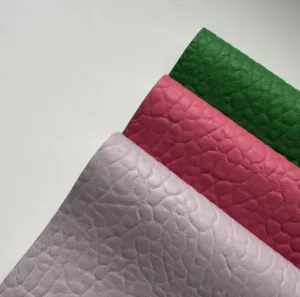
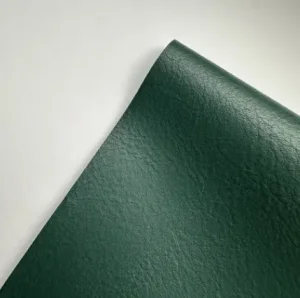
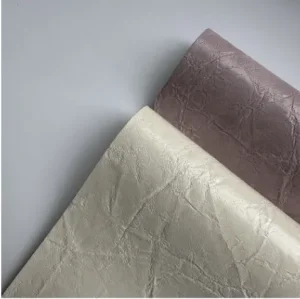



GRS Certified Synthetic Leather: Material Science, Chain-of-Custody & Life Cycle Assessment
A detailed examination of how Global Recycled Standard (GRS 4.0) and Recycled Claim Standard (RCS) frameworks eliminate virgin petrochemical dependency in high-durability polymer composites.
1. The Paradigm Shift: Transitioning from Virgin Polyurethane to GRS-Certified Circular Elastomers
In modern industrial procurement, synthetic leather (polyurethane and microfiber composites) is scrutinized not only for physical characteristics such as peel strength, tensile modulus, and flexural fatigue, but also for its upstream carbon pedigree and circular chemical inputs. Conventional polyurethane synthetic leather relies predominantly on petroleum-derived polyols, isocyanates, and virgin polyester knit backings. The emergence of the Global Recycled Standard (GRS 4.0) has codified rigorous standards ensuring that synthetic leather formulations integrate verifiable post-consumer recycled (PCR) polyester substrates, pre-consumer recycled polyurethane elastomers, and solvent-free waterborne resin networks.
As a premier GRS certified synthetic leather manufacturer based in Yingde, Guangdong, JiangXin New Material (JX.ECO) integrates up to 100% recycled backer yarns (derived from post-consumer PET bottles and circular textile waste) and recycled resin matrices. This engineering approach achieves an immediate 35% to 58% reduction in Scope 3 greenhouse gas emissions across the composite's cradle-to-gate life cycle. This reduction is achieved without compromising critical properties such as Martindale rub resistance (>100,000 cycles), Jungle Test hydrolysis endurance (10+ weeks at 70°C and 95% relative humidity), and UV yellowness resistance (Grade 4.5+ under Xenon arc exposure).
| Physical & Chemical Parameter | Standard Virgin PU Leather | JX.ECO GRS 4.0 Recycled PU | Testing Methodology |
|---|---|---|---|
| PCR / Recycled Content (%) | 0% (100% Virgin Petrochemical) | 30% – 70% Certified Recycled Content | GRS 4.0 / RCS Chain of Custody Audit |
| Hydrolysis Resistance (Jungle Test) | 3 – 5 Weeks (standard DMF base) | 7 – 10+ Weeks (Waterborne / Polycarbonate) | ISO 1419:1995 (Tropical Room 70°C, 95% RH) |
| VOC / DMFa Emissions | < 30 ppm to 100 ppm | ND (Non-Detectable < 2 ppm) / Zero-Solvent | EN ISO 18218 / GC-MS Volatile Analysis |
| Bally Flex Resistance (-10°C) | 30,000 Cycles without cracking | > 80,000 to 100,000 Cycles | DIN 53351 / ISO 5402 Low-Temp Flex |
| Taber Abrasion (H-18, 1000g) | 1,000 Cycles before substrate exposure | > 3,500 Cycles before wear-through | ASTM D3884 Wheel Wear Index |
| Carbon Footprint Reduction (LCA) | Baseline Benchmark (100% Impact) | -42.6% Cradle-to-Gate CO₂e Reduction | ISO 14040/14044 Life Cycle Assessment |
Beyond mechanical parity, GRS 4.0 mandates strict chemical input criteria. Standard synthetic leathers frequently incorporate processing solvents such as N,N-Dimethylformamide (DMFa), toluene, and methyl ethyl ketone (MEK). JX.ECO operates specialized zero-solvent dry transfer lines and multi-stage waterborne polyurethane dispersion reactors. This guarantees that all finished rolls are compliant with ZDHC MRSL Level 3, completely free of restricted alkylphenol ethoxylates (APEOs), heavy metals, organotin compounds, and ortho-phthalates.
Vertical Integration & China Manufacturing Ecosystem Competitiveness
How our centralized production campus in Yinghong Industrial Park leverages scale, renewable photovoltaic power, and upstream circular integration to mitigate supply chain volatility for tier-1 global brands.
Total Upstream Verticalization
Unlike converters or coating facilities that purchase raw semi-finished substrates on the spot market, our 135,733 m² campus maintains in-house yarn spinning alignment, GRS-certified circular knitting, micro-fiber sea-island splitting, polyurethane polymerization, and surface micro-embossing. This unified control eliminates third-party markups and secures batch-to-batch physical uniformity.
4.68 MW Clean Energy Independence
Environmental sustainability must be built into production operations, not just added via material claims. Our facility features a 4.68 MW rooftop photovoltaic solar system. Combined with automated thermal oxidizers and closed-circuit waste heat recovery loops, over 40% of our daily production energy is self-generated green electricity, reducing Scope 2 emissions and shielding clients from regional energy price fluctuations.
Lab-to-Line Sampling Velocity
Global fashion and footwear development cycles require rapid turnaround. Our on-site R&D center formulates custom color lab dips within 48 hours, executes CNC texture release paper trials in 3 days, and delivers production-representative meterage sample rolls within 5 to 7 working days. Bulk production orders of 20,000+ meters ship within 14 calendar days.
Meeting Tier-1 Enterprise Procurement Demands & ESG Governance
From digital material passports to immutable chain-of-custody documentation, we address the specific compliance, quality control, and regulatory risk factors required by Fortune 500 procurement teams.
Chain-of-Custody Transaction Certificates
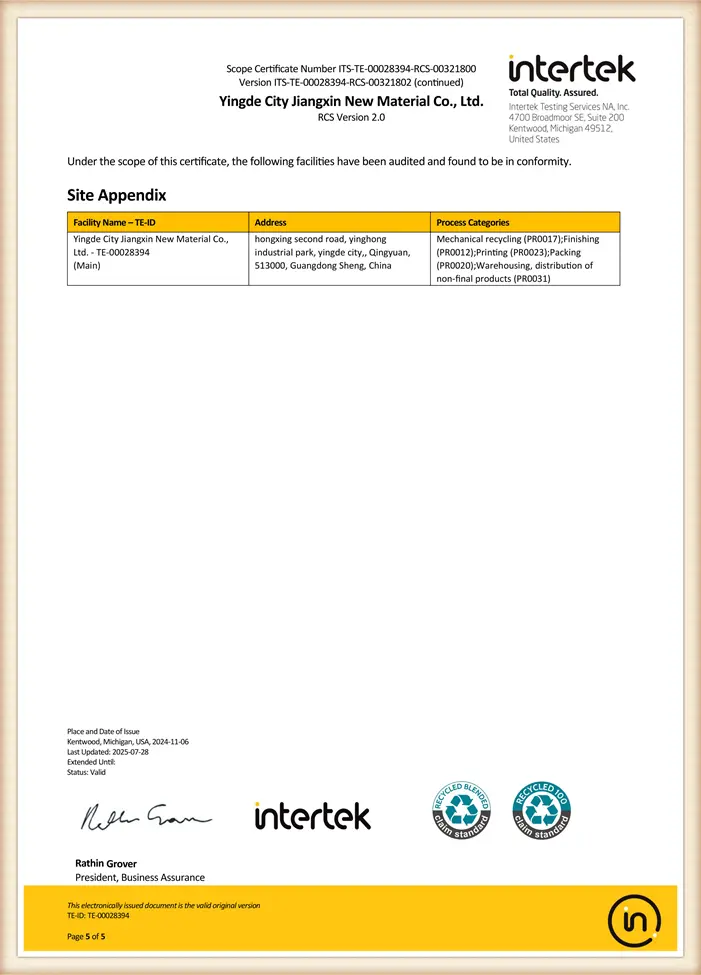
Every export lot of GRS or RCS certified material is issued an official Transaction Certificate (TC) authorized directly by third-party certification bodies (e.g., IDFL, Control Union). We link our GRS Scope Certificate to your downstream tier-1 cut-and-sew factories, establishing auditable traceability for customs clearance and corporate ESG reporting.
Comprehensive RSL Chemical Dossiers
Modern buyers cannot risk supply chain halts caused by unexpected chemical bans. Our materials are pre-tested by accredited laboratories (SGS, TÜV Rheinland, Intertek) to confirm compliance with EU REACH SVHC (240+ substances), California Proposition 65, CPSIA, and AFIRM Group RSL requirements before shipping.
Consistent Yield & Width Stability
Automated computerized CNC cutting lines demand reliable width stability and low defect rates. Our rolls feature edge-to-edge functional widths of 137 cm to 142 cm (54" – 56") with edge thickness variances within ±0.03 mm. This uniformity increases automated cutting yields by up to 12% compared to lower-spec synthetic rolls.
Technological Trajectories Shaping Synthetic Leather Formulation
Explore our research and production roadmap as the global technical textiles industry moves toward monomaterial recyclability, plant-derived non-food biomass, and closed-loop circular systems.
1. Next-Gen Biobased Polyols
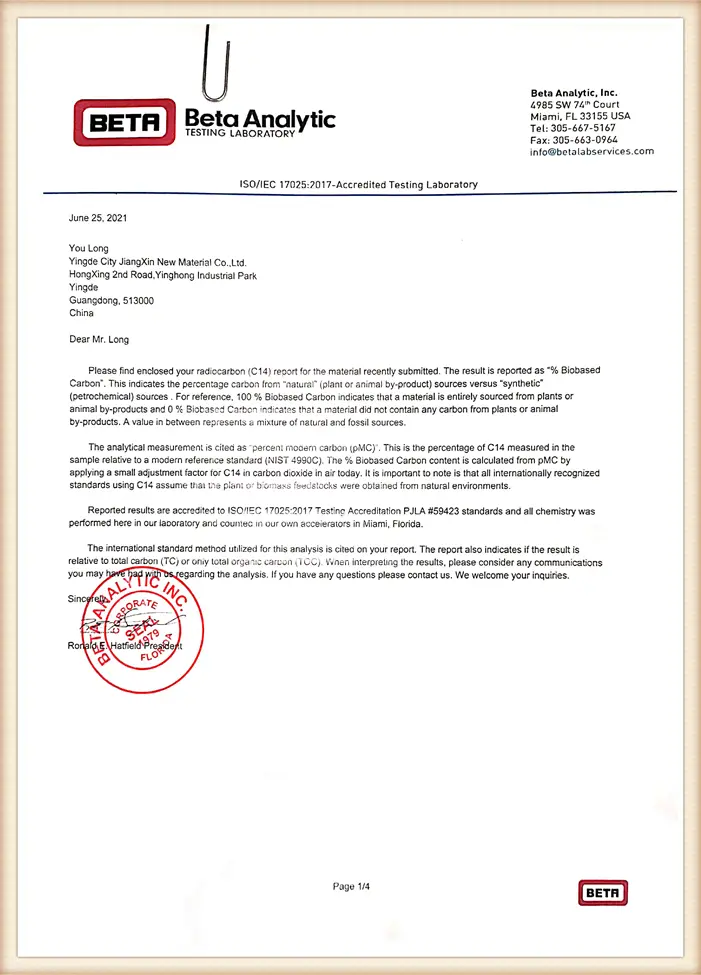
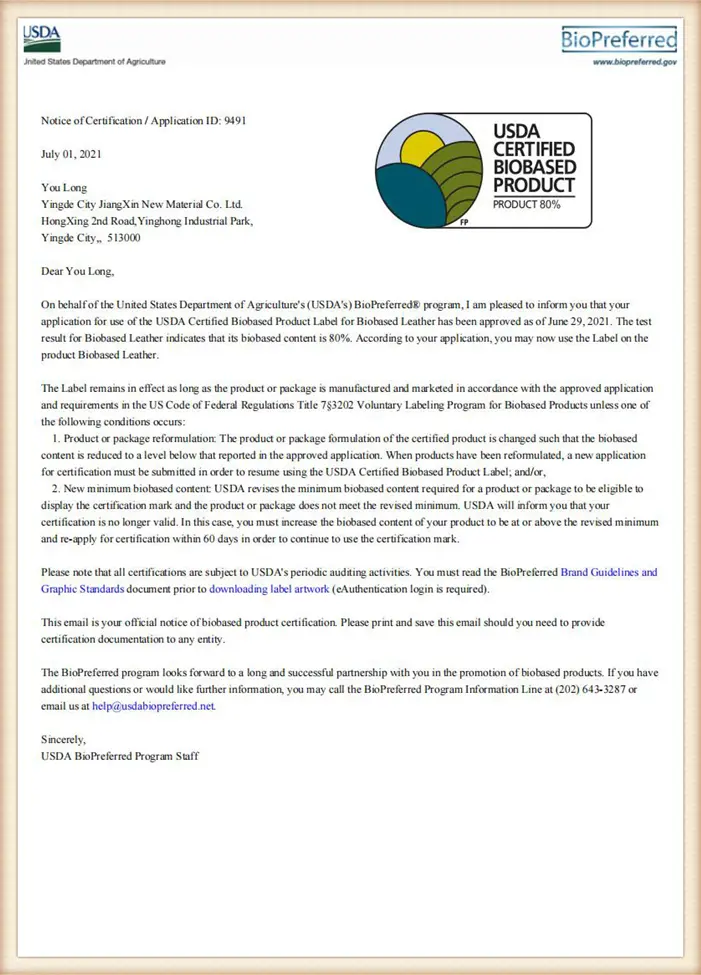
Moving beyond first-generation starch derivatives, JX.ECO formulates high-molecular-weight polyether and polyester polyols derived from non-edible agricultural side streams (industrial dent corn, castor oil seed residues). This plant-derived carbon content ranges from 30% to over 75%, certified via radiocarbon analysis under ASTM D6866 and USDA BioPreferred standards.
2. Monomaterial Circular Architecture
The primary technical barrier to recycling traditional synthetic leather is separating the PU skin from the polyester backing. JX.ECO is advancing 100% Thermoplastic Polyurethane (TPU) monomaterial systems, matching a recycled TPU face skin with a 100% rTPU yarn woven base. This enables end-of-life products to be mechanically pelletized and re-extruded without delamination.
3. Zero-Solvent Hot Melt & Waterborne Coatings
With strict international regulations on chemical residues, solventless hot-melt and high-solids waterborne polyurethane systems are rapidly replacing DMF-based wet-coagulation processes. Our production facility operates dedicated solvent-free continuous coating lines, completely eliminating DMFa, DMAC, and toluene from the manufacturing environment.
Localized Application Scenarios for Global Tier-1 Industries
Our engineering team customizes surface wear formulas, base elasticity, cold crack thresholds, and hand feel to meet the distinct functional requirements of multiple end-use categories.
Athletic Footwear & Sneaker Uppers
High flex-stress zones on lifestyle and performance shoes require enhanced fatigue resistance. JX.ECO combines GRS-recycled microfiber substrates with resilient waterborne skins, achieving over 100,000 cold bally flex cycles at -10°C, high stitch-tear strength (>35 N/mm), and clean edge-skiving compatibility.
Luxury Handbags & Fashion Goods
Demanding leather goods applications require a supple, full-bodied hand feel, natural break, and precise edge finishing. We offer custom roller textures, including fine toothpick, saffiano, pebbled, and lambskin grains, paired with anti-fouling topcoats that prevent denim dye transfer and surface scratching.
Automotive Seating & EV Interiors
Automotive interiors require low fogging, flame retardancy, and UV stability. JX.ECO manufactures specialized polyurethane formulations that meet DIN 75201 fogging limits (< 2 mg gravimetric), pass FMVSS 302 flammability tests, and resist thermal aging up to 120°C for electric vehicle seating and door trim panels.
Contract Upholstery & Hospitality Furniture
High-traffic public seating in hospitality and commercial interiors demands extreme durability. Our contract-grade synthetic leathers deliver Wyzenbeek abrasion resistance exceeding 100,000 double rubs, bleach-cleanable surfaces (10:1 water/bleach solution), and permanent antimicrobial protection passing ASTM G21 standards.
Consumer Tech Sleeves & Wearables
Smart device cases, tablet folios, and watch bands require thin profiles, smooth skin textures, and skin-safe chemical profiles. We produce lightweight 0.5 mm to 0.8 mm polyurethane composites that are non-cytotoxic, pass ISO 10993 skin sensitization tests, and remain stable against human sweat and cosmetic oils.
Industrial Production Infrastructure: Yingde, Guangdong
Established on June 2, 2017, Yingde City JiangXin New Material Co., Ltd. operates a petrochemical-compliant manufacturing site built to modern standards for worker safety, thermal efficiency, and environmental controls.
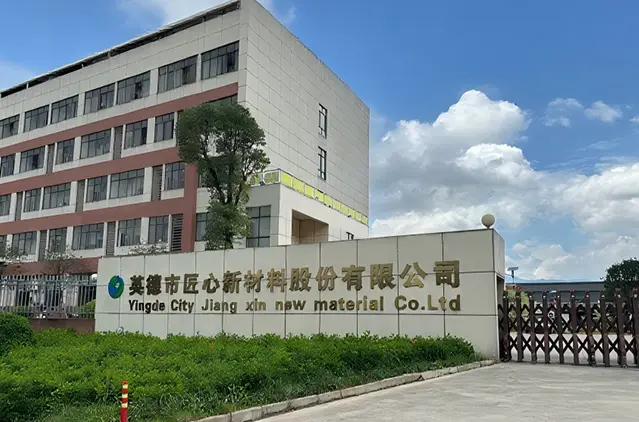
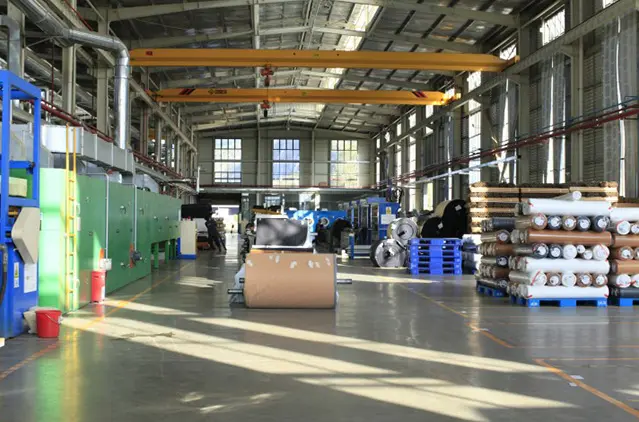
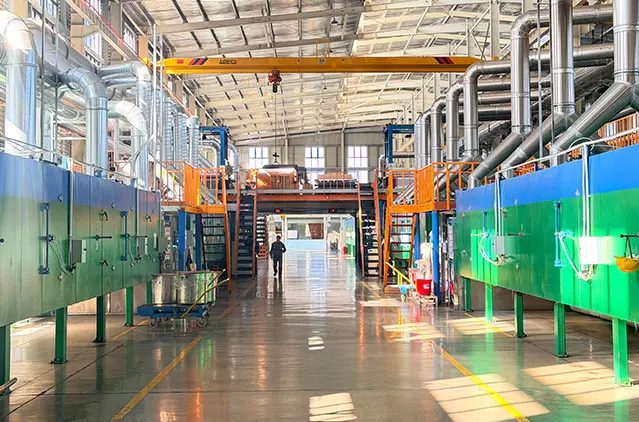
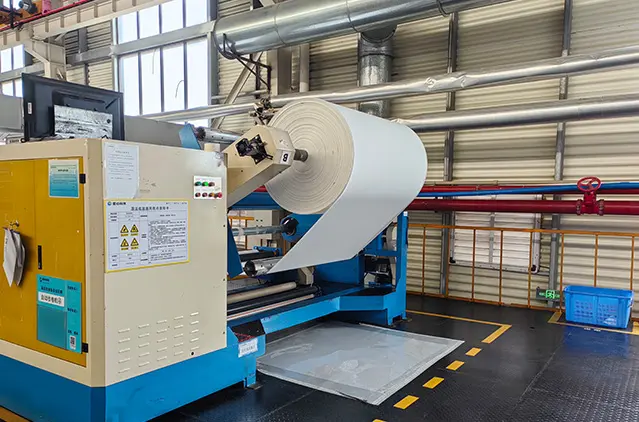
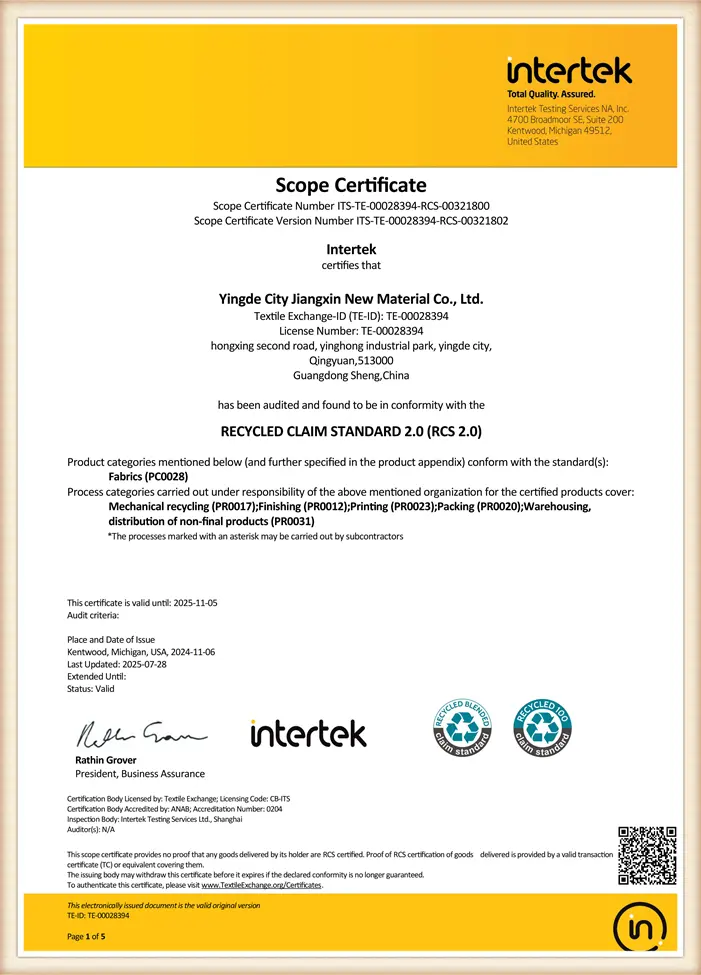 DOC 01
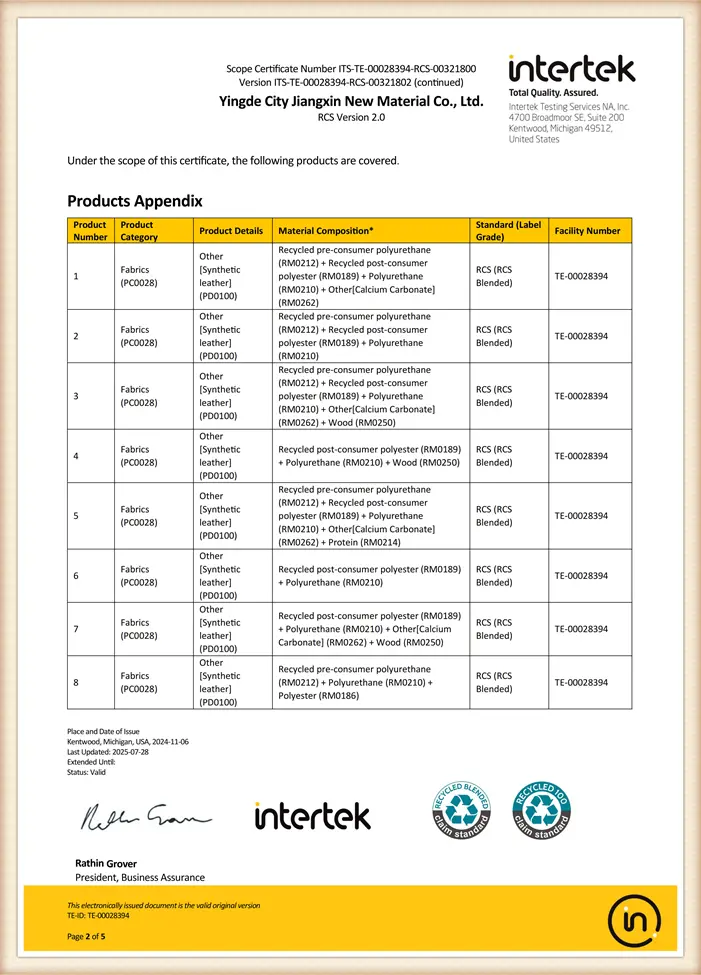 DOC 02
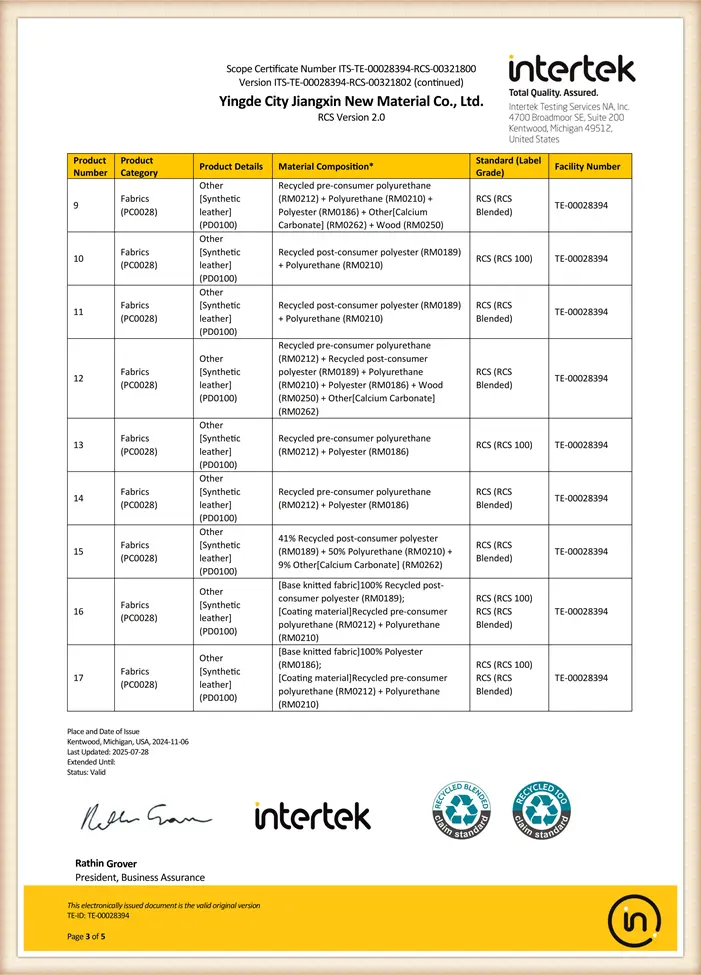 DOC 03
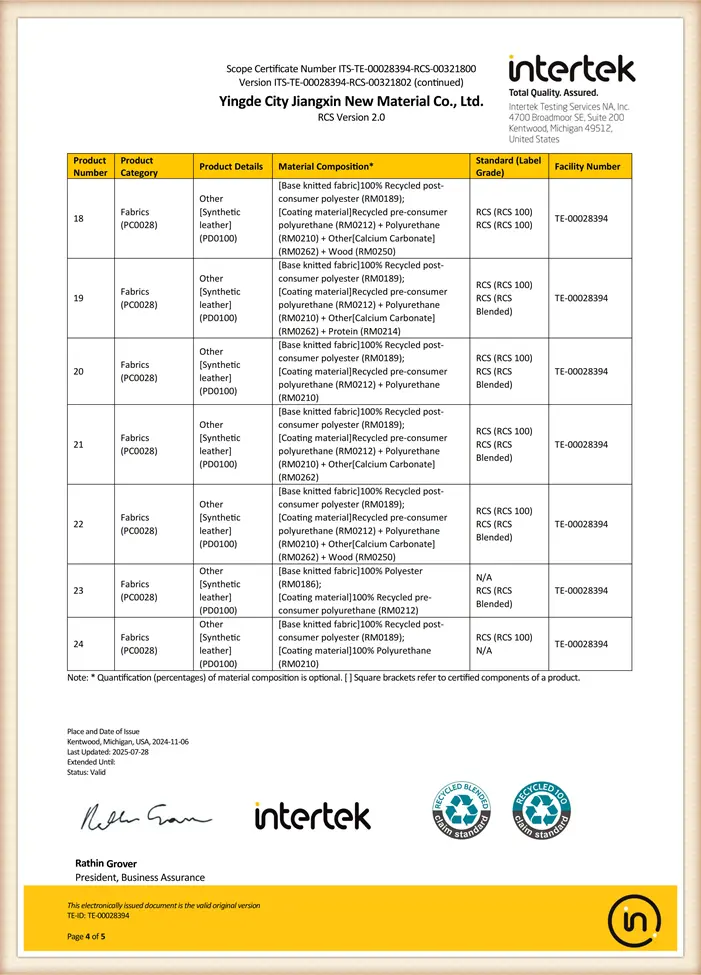 DOC 04
 DOC 05
 DOC 06
 DOC 07
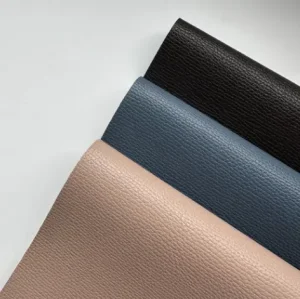
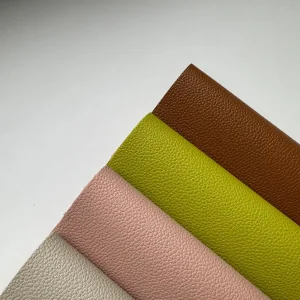
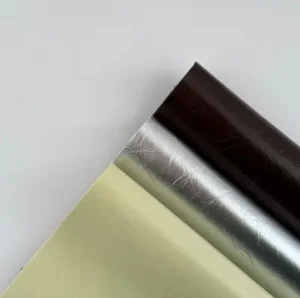
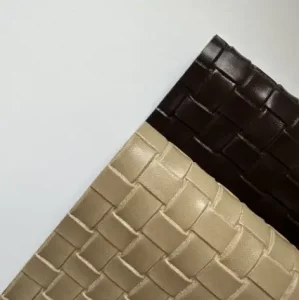
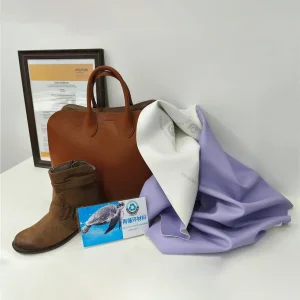
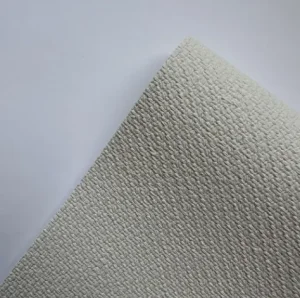
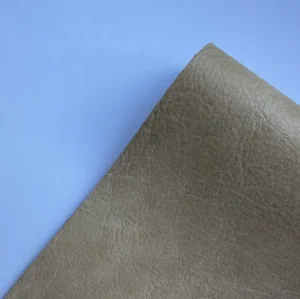
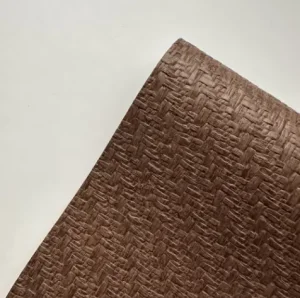
Specialty High-End Bio-Based & Circular Leather Series
Explore our bio-content synthetic leathers, circular regenerated PU materials, and specialized embossed surfaces for demanding designer collections.
Frequently Asked Questions by Material Engineers & Sourcing Heads
Clear, technical answers to common questions regarding certification validation, test protocols, Minimum Order Quantities (MOQ), and custom development parameters.
What is the difference between GRS and RCS certification in synthetic leather?
Both standards are governed by Textile Exchange. The Recycled Claim Standard (RCS) focuses exclusively on chain-of-custody tracking of recycled content (minimum 5% to 100%). The Global Recycled Standard (GRS) has a higher minimum recycled content threshold for labeling (at least 20%) and mandates strict chemical management (ZDHC MRSL alignment), environmental effluent controls, water treatment standards, and amfori BSCI/social audit compliance. JiangXin is certified under both standards.
How does JX.ECO verify the biobased carbon content in plant-derived leather?
We do not rely on rough chemical estimations. Biobased content is verified by independent laboratories (such as Beta Analytic) using ASTM D6866 standard radiocarbon (Carbon-14) dating. This method precisely distinguishes between modern renewable biological carbon and fossil fuel-derived petrochemical carbon, providing the quantitative data required for USDA Certified Biobased labeling.
Can you provide batch-level Transaction Certificates (TCs) for export shipments?
Yes. Upon confirmation of bulk orders produced with GRS or RCS certified materials, we submit full production batch data, raw material invoices, and bills of lading to the third-party certification body. An official batch-specific Transaction Certificate (TC) is issued within 10 to 14 business days, naming your designated entity or manufacturing subcontractor as the recipient.
What is the standard production lead time and sample turnaround time?
Catalog standard swatch books and A4 color swatches ship via DHL/FedEx within 24 hours. Custom color matching (Pantone TPX or physical swatches) and lab dip development take 3 to 5 business days. Pilot yardage rolls (50 to 100 meters) take approximately 7 days. Commercial bulk production (5,000 to 50,000 meters) typically ships within 14 to 20 calendar days from our Yingde factory.
What are your standard Minimum Order Quantities (MOQ) for custom developments?
For custom colors using our standard GRS-certified backing and existing release paper textures, our MOQ is 500 linear meters per color. For fully custom formulations—such as custom-extruded backing yarns, specialized fire-retardant chemistry, or proprietary engraved silicone roller textures—the standard MOQ is 1,000 meters per production run.
How does solvent-free PU perform in high-humidity tropical climates?
Standard solvent PU leathers are prone to hydrolysis in warm, humid conditions due to DMF residue and weak ether-linkage degradation. JX.ECO's zero-solvent waterborne and high-solid polyurethane formulations utilize aliphatic polycarbonate polyol backbones. This architecture resists hydrolysis breakdown, easily exceeding 7 to 10 weeks in Jungle Test chambers (70°C, 95% RH), equivalent to 8+ years of real-world use.