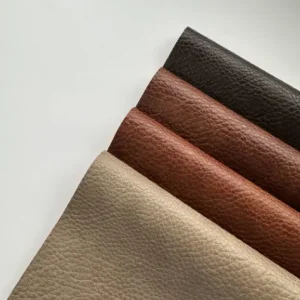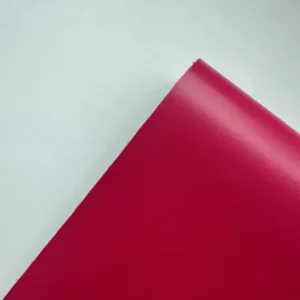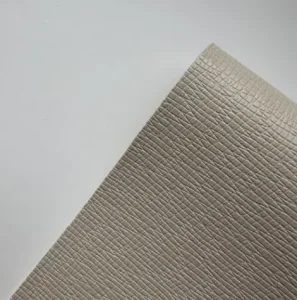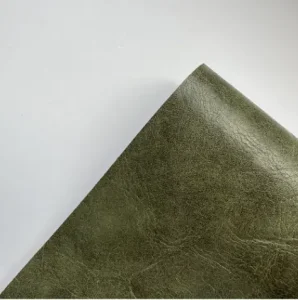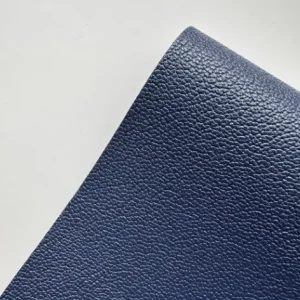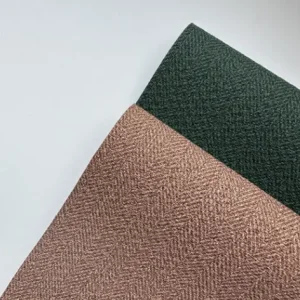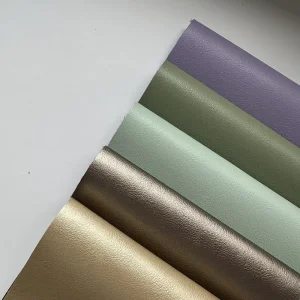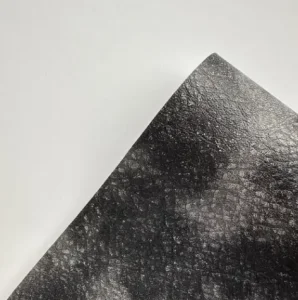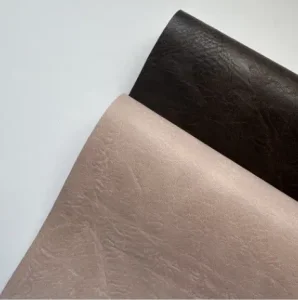
Certified Material Series · Batch A
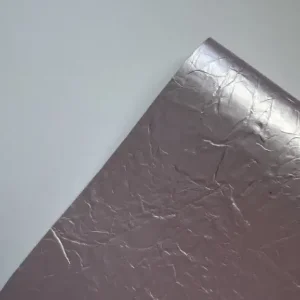
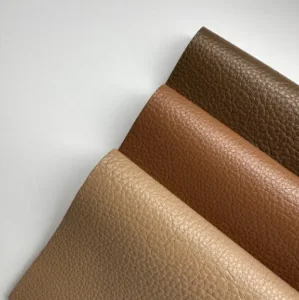
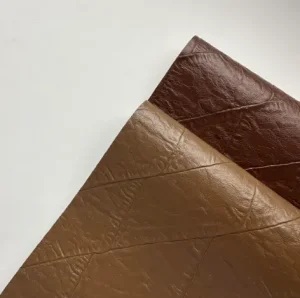
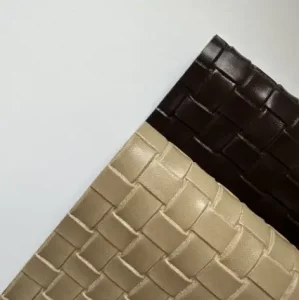
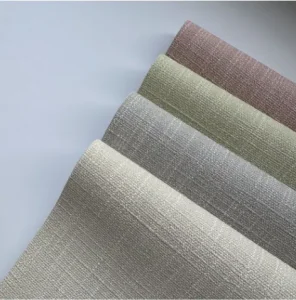
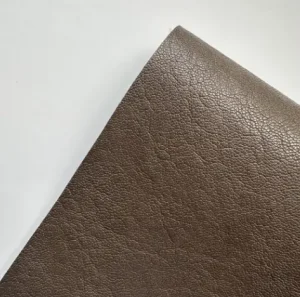
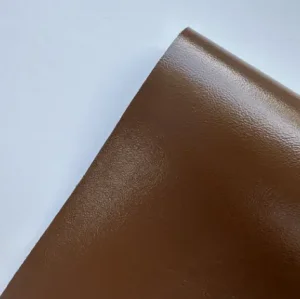
Featured Engineering Substrates & Synthetic References
Precision engineered base materials ready for bespoke custom ostrich follicle embossing, calibrated tensile strengths, and circular certifications.
16,000,000+
Linear Meters Annual Capacity
135,733 m²
Solar-Powered Clean Manufacturing Campus
50+
Global Export Economies Served
4.68 MW
Rooftop Photovoltaic Clean Energy Array
Industrial Economics & Trade Transition
The Global Industrial Landscape of Faux Ostrich Leather
Examining supply chain vulnerabilities in exotic skins, ethical market compliance, and the micro-topographical manufacturing renaissance.
CITES Regulatory Pressure
Strict sanctions, import tariffs, and complex traceability mandates surrounding wildlife conservation have driven premium brands away from wild-harvested and farmed Struthio camelus pelts toward deterministic laboratory synthesis.
- Elimination of Lacey Act & CITES permits
- Guaranteed border transit clearance speed
- Absolute zero animal cruelty audit flags
Cutting Yield Efficiency: 42% vs 98%
Natural ostrich hide yields are notoriously inefficient due to irregular quill feather distribution, neck scars, and flank stretch defects. Synthetic continuous roll systems optimize automated CNC nesting yields up to 98%.
- Consistent 1.37m - 1.40m workable roll width
- Uniform crown quill pore geometry
- Elimination of manual hide grading stages
Decarbonization Demands
Global apparel and luxury conglomerates face stringent Science Based Targets initiatives (SBTi). Substituting traditional intensive chrome tanning with solar-manufactured bio-synthetic leather achieves up to 74% carbon footprint mitigation.
- Clean solar production at JX Yingde site
- Elimination of heavy metal effluent discharge
- Complete life cycle assessment (LCA) data
Technical Reality: Genuine ostrich leather's distinctive "quill follicle" look is formed by the empty socket where feathers were plucked. In bespoke synthetic engineering, achieving authentic quill "quill-dimple depth" and tactile "crown rebound" without causing micro-cracking across polyurethane skins requires precise vacuum multi-roller calendaring and microcellular foam stabilization.
Material Science Roadmap
Engineering Architecture & Future Technology Trajectory
From legacy solvent-borne PVC/PU coatings to 4th generation bio-circular and waterborne molecular matrices.
Phase I · Base Matrix
RCS Microfiber Skeleton
Three-dimensional non-woven microfiber matrices composed of post-consumer recycled PET, delivering hyper-dense isotropic tensile resilience that mirrors natural dermal collagen bundles.
Phase II · Chemical Core
100% Waterborne Polyurethane
Total phase-out of DMF (Dimethylformamide), toluene, and MEK solvents. Zero hazardous VOC volatilization during high-temperature thermal calendaring and crosslinking.
Phase III · Grain Optics
3D Photolithographic Tooling
Sub-micron laser-etched embossing cylinders generate mathematically randomized quill pore nodules, replicating natural grain randomness while preserving batch repeatability.
Phase IV · Circular Horizon
Bio-Polyol Synthesis
Incorporation of non-food agricultural biomass and castor bean polyols, lifting certified ASTM D6866 bio-carbon content past 40% while preserving hydrolytic stability.
Application Engineering
Localized Application Scenarios & Physical Specifications
Tuning synthetic ostrich tactile mechanics, elongation ratios, and rub fastness for divergent industrial stress vectors.
Footwear Uppers & Western Boots
High-stress vamp creasing demands superior flex crack resistance. Our custom faux ostrich substrates sustain over 100,000 cycles on Bally flexometer testing under cold conditions (-20°C).
- Thickness: 1.2mm – 1.4mm
- Backing: Knitted micro-elastic interlock
- Feature: Hydrolysis resistance > 5 years
Luxury Handbags & Small Leather Goods
Focuses on buttery, silken drape with a pronounced quill projection that stays dimensionally stable during edge-skiving, fold gluing, and high-frequency RF heat stamping.
- Thickness: 0.8mm – 1.0mm
- Backing: Brushed spunlace microfiber
- Feature: Edge-creasing and skiving stability
Automotive Cockpits & VIP Aircraft Interiors
Formulated for rigorous UV radiation resistance (QUV-A accelerated weathering) and stringent low-fogging limits to eliminate windshield film deposition under direct solar heat.
- Thickness: 1.1mm – 1.3mm
- Backing: Flame-retardant recycled scrim
- Feature: ISO 6452 low-fogging & FMVSS 302
End-to-End Enterprise Solutions
Macro-Level Sourcing Strategies for Procurement Leaders
Mitigating supply volatility through vertically integrated manufacturing, closed-loop reclamation, and strict regulatory clearance.
Turnkey Spec Match & Color Labs
In-house spectrophotometer color formulations calibrate bespoke Pantone, metallic, or two-tone tipped finishes over custom follicle textures with Delta E < 0.7 precision.
Global RSL & REACH Compliance
Every synthetic batch is screened for banned aromatic amines, DMFa, organic tin compounds, alkylphenols, and total heavy metal limits to ensure seamless clearance across the EU, US, and Japan.
Chain-of-Custody Transaction Certs
All RCS and bio-based orders are backed by accredited Transaction Certificates (TC), giving brand sustainability directors verifiable third-party documentation for marketing disclosures.
Technical & Commercial FAQ
Frequently Answered Sourcing Inquiries
In-depth technical answers addressing follicle fidelity, backing customization, minimum orders, and sustainable validation.
How does faux ostrich leather replicate the distinctive quill follicle pattern of real ostrich skins?
Our manufacturing facility utilizes high-precision micro-carved steel embossing cylinders and negative vacuum tooling. These replicate both the macroscopic quill dome and the micro-scale follicle pore craters. By combining this physical emboss with an elastic PU microcellular top layer, the quill returns to its natural three-dimensional profile after compression, avoiding the flat look of conventional embossing.
What backing fabrics are paired with custom faux ostrich leather for structural balance?
Substrates are matched directly to your tech pack:
• Microfiber Non-Woven: High-density, multidirectional drape matching real leather flesh side for footwear and luxury accessories.
• Circular Knitted / Terry Fabric: Engineered two-way stretch for contoured automotive seats and tight upholstery wrapping.
• Woven Twill & Canvas: Zero-stretch dimensional rigidity for structured luggage, briefcases, and carry cases.
Can JiangXin provide official RCS transaction certificates for faux ostrich orders?
Yes. Our RCS (Recycled Claim Standard) facility certification ensures full material traceability from post-consumer PET flake suppliers to final coated rolls. On delivery, our export compliance office coordinates with our certifying body to provide official Transaction Certificates (TC) verifying the precise percentage of recycled content.
What are the minimum order quantities (MOQ) and lead times for custom texture matches?
For standard catalog references with existing ostrich tooling, sample swatches require 3 to 5 business days, with production MOQs at 500 meters per colorway. For custom tooling developments (proprietary quill layouts, custom logos, or specific sheen contrasts), custom cylinder engraving requires 10 to 14 days, with bulk production timelines around 15 to 20 days.
How does the material perform against hydrolysis and chemical sanitization?
Formulated using high-grade polycarbonate (PC) and polyether-modified polyurethane resins, our materials achieve 5 to 10 years of accelerated Jungle Test hydrolytic resistance (70°C, 95% RH). Furthermore, our crosslinked surface shield resists hospital-grade 75% ethanol wipe-downs, mild detergents, and chlorine sanitizers without surface dissolution or loss of color fastness.
Certified Material Series · Batch B
Bio-Renewable & RCS Verified Synthetic Leather Series
High-performance bio-based and eco-friendly artificial leather architectures ready for custom ostrich leather manufacturing.