
High-Performance Custom Faux Leather Products
Direct OEM & ODM supply chain specifications. Bio-formulations engineered to replace petro-polymers with uncompromised tensile and Martindale abrasion resilience.
Global Transformation of Vegan & Faux Leather Manufacturing
A macroeconomic analysis of corporate ESG mandates, chemical decarbonization, and the shift from toxic solvent-based polymers to circular, bio-engineered structures.
Bio-Based Polyol Integration
The global synthetic leather industry is moving away from purely fossil-fuel derivatives. Modern vegan leather leverages plant-derived renewable carbon (extracted from non-food agricultural waste and castor oil) verified by ASTM D6866 radiocarbon testing.
This molecular shift reduces Cradle-to-Gate emissions by up to 45% compared to conventional petrochem PU, delivering tangible Scope 3 abatement data directly to enterprise corporate carbon accountants.
Circular RCS Closed-Loop Systems
Global apparel and automotive OEM requirements mandate verifiable post-consumer and post-industrial inputs. Through the Recycled Claim Standard (RCS), our microfiber substrates incorporate traceable rPET yarn from verified coastal and post-consumer plastics.
This unbroken chain of custody ensures zero structural compromises in tear strength while preventing plastic waste accumulation across global marine and terrestrial biomes.
Clean Chemistry & Zero-VOC Solvents
Regulatory frameworks such as EU REACH, RoHS, and California Proposition 65 enforce stringent limits on volatile organic compounds. Our aqueous (water-borne) and 100% solid solvent-free PU lines eliminate DMFa, toluene, and formamide.
By removing toxic volatile plasticizers and chemical skin-irritants, our materials guarantee high consumer safety benchmarks for intimate skin contact and ultra-low cabin VOC emissions.
Physical & Chemical Benchmarks: Bio-PU vs. Petro-PU vs. Conventional Leather
Empirical data extracted from Yingde testing laboratories under standardized ISO conditions (23°C ± 2°C, 50% ± 5% RH).
| Evaluation Parameter | JX.ECO Biobased Vegan PU | RCS Recycled Microfiber PU | Traditional Solvent PU | Animal Hide Leather |
|---|---|---|---|---|
| Renewable / Recycled Ratio | 30% – 75% USDA Certified | Up to 60% GRS / RCS Certified | 0% (100% Fossil Derived) | N/A (Livestock Origin) |
| Martindale Abrasion (ISO 12947) | > 100,000 Dry / 50,000 Wet Cycles | > 120,000 Dry / 60,000 Wet Cycles | 30,000 – 50,000 Cycles | Variable by hide topography |
| Hydrolysis Resistance (Jungle Test) | 5 to 10 Weeks (10-Yr Equivalent) | 5 to 8 Weeks | 2 to 3 Weeks | Subject to rotting & stiffening |
| Volatile Organic Solvents (DMFa) | 0 ppm (Non-detectable) | 0 ppm (Non-detectable) | < 30 ppm to 500 ppm | Chromium VI & formaldehyde traces |
| Tensile & Tear Yield | > 45 N / mm² (Uniform grain) | > 55 N / mm² | > 30 N / mm² | Inconsistent (Flank vs Butt yield) |
China Factory 4.0: Engineering Precision & Infrastructure
Operational resilience, closed-loop industrial recycling, and automated formulation scaling from Yingde City JiangXin New Material Co., Ltd. (JX.ECO).
4.68 MW Clean Solar Grid
Established on June 2, 2017, in the Yinghong Industrial Park, Yingde, our 135,733 m² mega-campus features a 4.68 MW rooftop photovoltaic solar farm. This system offsets over 4,200 tons of carbon dioxide emissions annually.
Energy-intensive coating processes are powered by on-site clean renewables, protecting Tier-1 global brands against emerging cross-border carbon border tax mechanisms (CBAM).
Closed-Loop Waste & Heat Recovery
Our facility runs an advanced industrial-grade sewage processing array combined with high-efficiency catalytic recuperative oxidizers and regenerative thermal oxidizers (RTO). More than 98% of thermal waste energy is recycled directly back into the curing lines.
Effluents achieve zero-discharge standards, aligning fully with Higg FEM benchmarks and global amfori BSCI audit compliance frameworks.
AI Colorimetry & Automated Coating
Using in-line spectroscopic continuous inspection and computer-controlled dosage pumps, formulation variance is locked down across roll batches (ΔE < 0.5 under standard illuminants D65 and TL84).
This automated quality assurance eliminates edge-to-center shading variances and guarantees stable lot-to-lot replication across ultra-large scale purchase orders.
Enterprise Commercial Applications & Material Adaptations
Engineered substrate matrices designed specifically to answer the mechanical and chemical stresses of disparate global industries.
Athletic Footwear & Performance Uppers
Engineered with micro-porous polyurethane skins combined with resilient elastomeric backings. Tested for >100,000 flexes at -20°C (Bally Flexometer test), ensuring cold-crack resilience, waterproof protection, dynamic tensile endurance, and high moisture vapor transmission (MVTR) for marathon running and hiking boots.
Luxury Handbags & Fashion Accessories
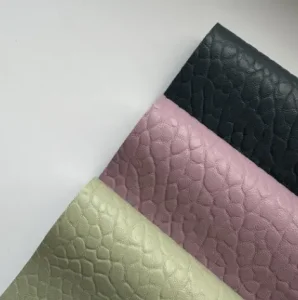
Custom-embossed tactile profiles including Toothpick, Saffiano, Nappa, and Pebble grains. These formulations deliver a supple lambskin-like touch, tight break upon folding, uniform edge-inking adhesion, and superior oil and UV resistance to prevent yellowing in humid environments.
Automotive Seating & EV Interiors
High-spec, low-fogging vegan PU and silicone hybrid composites formulated to meet automotive standards (including FMVSS 302 flame resistance and ISO 105-B02 accelerated UV aging). Guaranteed free of heavy metals and phthalates to maintain clean cabin air indices in electric vehicles.
Architectural & Contract Upholstery
Engineered for high-traffic hospitality, aviation, and healthcare interiors. Topcoats are fortified with non-migrating antimicrobial agents and anti-graffiti finishes that resist harsh hospital-grade disinfectant wipes, alcohol cleaning, and continuous abrasion without degradation.
Consumer Electronics & Tech Sleeves
Precision-calibrated thin gauges (0.5mm – 0.8mm) engineered for smart device enclosures, laptop sleeves, and wearable wristbands. Provides oleophobic surface finishes that resist fingerprints, hand lotions, and sweat exposure during prolonged physical contact.
Sustainable Packaging, Watch Boxes & Displays
Foldable, zero-crease, low-thickness faux leather substrates suited for automated box wrapping and thermo-molding. Low smell profiles ensure zero organoleptic contamination of packed luxury goods, perfume caps, or fine jewelry collections.
Enterprise Procurement & Technical Solutions FAQ
Critical answers addressing compliance, carbon accountability, minimum order quantities, and custom formulations directly from our chemistry and export teams.
What precisely classifies custom faux leather as genuine "Vegan Leather"?
How is bio-based content quantitatively validated in our factory?
How does JiangXin facilitate RCS & GRS chain-of-custody documentation for brands?
Can your synthetic leather formulations pass EU REACH, RoHS, and California Prop 65?
What are the typical lead times, prototyping cycles, and Minimum Order Quantities (MOQ)?
How does your hydrolysis and aging resistance compare to genuine calfskin?
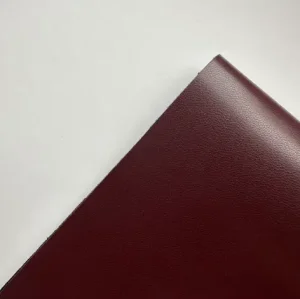
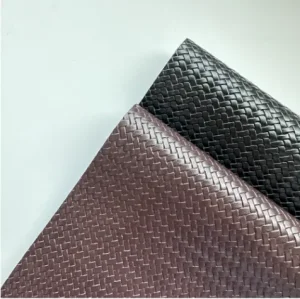
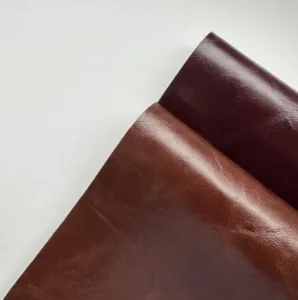
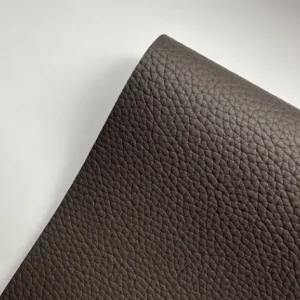
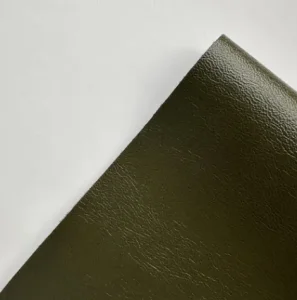
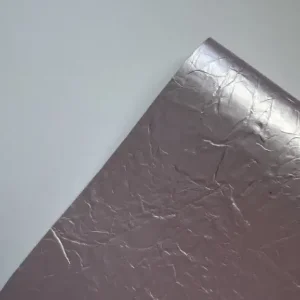
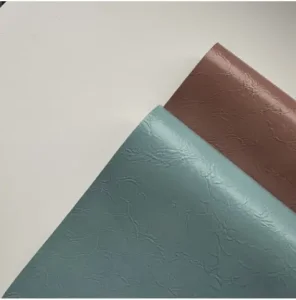
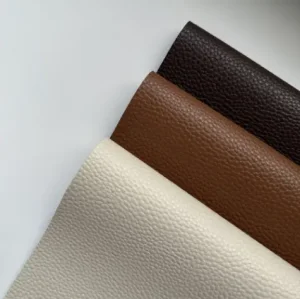
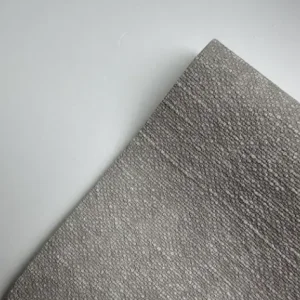
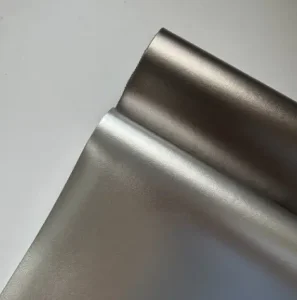
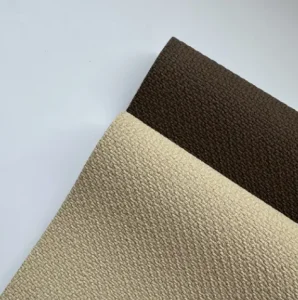
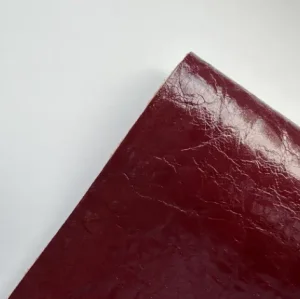
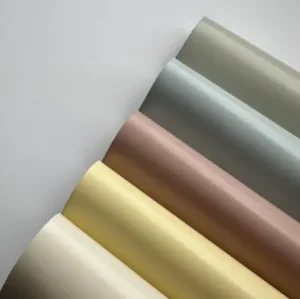
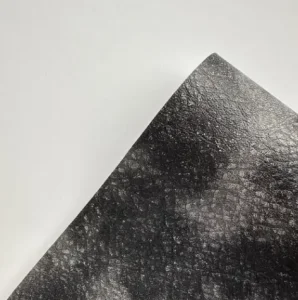
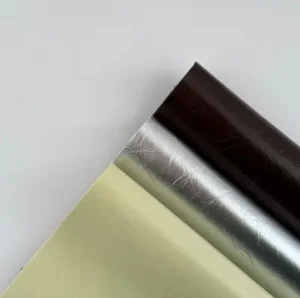
Traceable Recycled & Upcycled Vegan Surfaces
Complete structural roll-outs ready for sampling. Select below to review physical tensile yields, backing fabrics, and technical certifications.
Enterprise Direct Procurement Workflow
A systematic OEM/ODM path from preliminary technical brief to certified high-volume container dispatch.
Phase 01: Parameter Formulation
Developers submit precise physical targets: thickness (0.4mm – 2.0mm), backing substrates (woven microfibers, jersey circular knits, non-wovens, or recycled fleece), color targets (Pantone / physical swatch), and target environmental certificates (USDA, RCS, REACH).
Phase 02: Pilot Curing & Testing
The JiangXin R&D lab produces pilot trials to verify surface hardness, gloss, hand-feel, and grain break. Physical swatches undergo accelerated hydrolysis, Bally flex tests, and Taber abrasion evaluations to confirm alignment with your internal brand specifications.
Phase 03: Scaled Clean Manufacturing
Upon golden-sample sign-off, production formulations are locked into the automated industrial batch mixers. Production runs on our continuous lines under automated heat and tension calibration, backed by roll-to-roll continuous optical defect mapping.