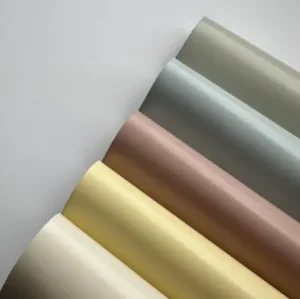
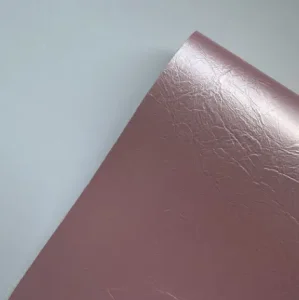
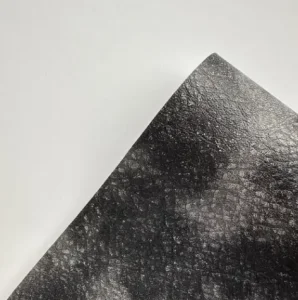
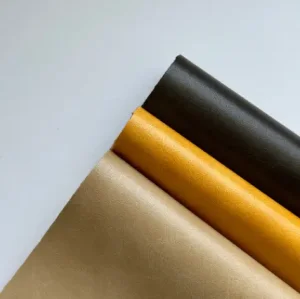
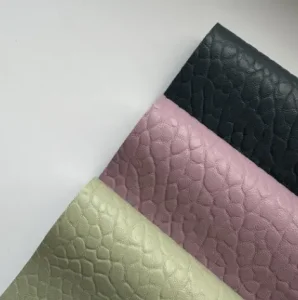
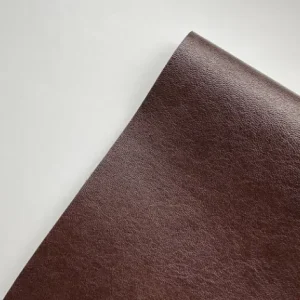
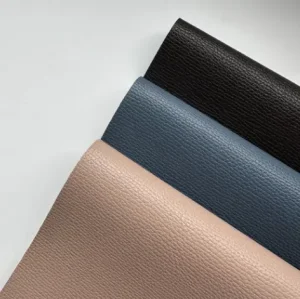
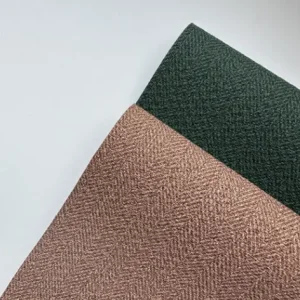
High-Performance Eco Leather Series
Explore our industrial-tested synthetic polymers engineered to comply with strict international restricted substance lists (RSL) and sustainability frameworks.
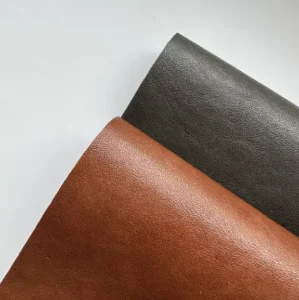
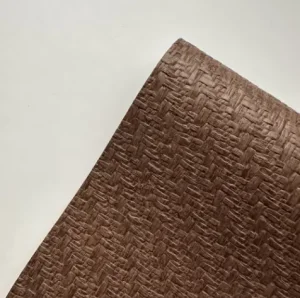
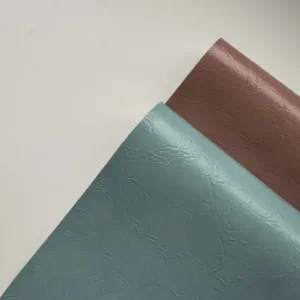
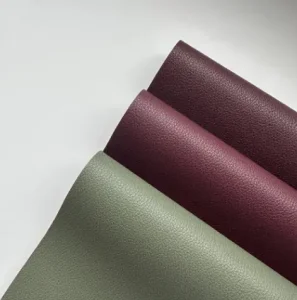

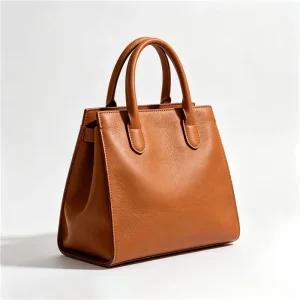
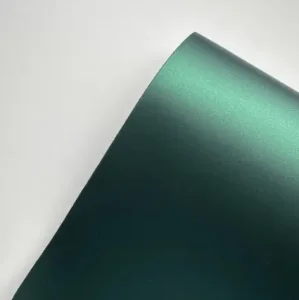
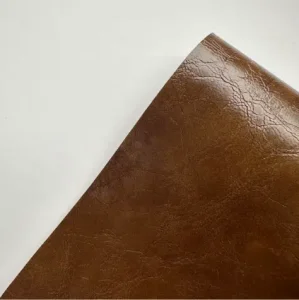
Global Landscape & Commercial Realities of Eco Leather Alternatives
The transition from legacy petrochemical polyvinyl chloride (PVC) and standard polyurethane (PU) to validated low-carbon synthetic leathers is being driven by regulatory mandates, corporate scope-3 emissions targets, and consumer demand for cruelty-free circular materials.
Regulatory Carbon Pressures & CSRD
With the European Union’s Corporate Sustainability Due Diligence Directive (CSDDD) and Corporate Sustainability Reporting Directive (CSRD), enterprises cannot rely on unverifiable claims. Eco-friendly leather alternatives must demonstrate clear carbon offset reductions, life cycle assessments (LCA), and non-toxic chemical formulations to clear border scrutiny.
Decoupling from Petrochemical Feedstocks
Traditional synthetic production consumes immense volumes of non-renewable fossil fuel resources. Industrial-scale biobased synthetic chemistry utilizes polyols synthesized from agricultural by-products such as industrial corn, sugarcane, or castor bean starch, directly reducing greenhouse emissions by up to 45% to 65% per square meter.
Closing the Circular Loop via Traceability
The post-consumer landscape requires verifiable supply chains. Materials certified under the Recycled Claim Standard (RCS) and Global Recycled Standard (GRS) ensure that recycled polyester (rPET) backings and recovered polymer bases retain documented provenance throughout all batch transactions.
China's Manufacturing Efficiency & Supply Chain Dominance
Operating from Yinghong Industrial Park in Yingde, Guangdong, Yingde City JiangXin New Material Co., Ltd. (JX.ECO) integrates raw resin synthesis, backing weaving, precision knife-coating, and surface embossing into an agile vertical cluster.
Full-Chain Vertical Integration
Unlike regional compounders who outsource backing fabrics and base polyurethane resins, our Guangdong facility centralizes knitting, polymer modification, casting, and grain transfer. This shortens prototype sample turnaround from weeks to under 72 hours while maintaining rigorous lot-to-lot color constancy.
Solvent-Free & Water-Based PU Lines
By shifting from volatile organic solvents (DMF, DMAC, and toluene) to waterborne polyurethane dispersions and 100% solid solvent-free polymers, our production lines completely eliminate hazardous air pollutants. Clean emissions are paired with automated closed-loop wastewater recovery stations.
Renewable Microgrid Infrastructure
Equipped with a 4.68 MW rooftop photovoltaic array and energy-recycling thermal heat pumps, our facility offsets a major portion of manufacturing power consumption with clean solar electricity, allowing international OEMs to slash their upstream Scope 3 embedded product footprint.
Comprehensive Eco-Material Comparison Matrix
Scientific selection of leather alternatives requires evaluating tensile performance, carbon derivation, and regulatory clearance against baseline legacy materials.
| Material Category | Feedstock Source | VOC & Solvent Content | Bio/Recycled Ratio | Tensile & Flex Life | Compliance Accreditations |
|---|---|---|---|---|---|
| Biobased Synthetic Leather | Agricultural plant polyols + rPET backing | Zero DMF / Trace VOC | 20% – 75% Bio-carbon (ASTM D6866) | >100,000 Bally flex cycles | USDA BioPreferred, REACH, RoHS |
| RCS Certified Recycled Leather | Post-consumer recycled PET bottles / yarn | Low VOC / Waterborne systems | 30% – 100% Traceable recycled core | High tear resistance (>35 N/mm) | RCS Chain-of-Custody, OEKO-TEX 100 |
| Solvent-Free Eco PU | 100% High-solid polyurethane resins | 0% Volatile Organic Solvents | Engineered mineral/polymer base | Exceptional scratch & cold resistance | REACH SVHC free, 6P Phthalate-free |
| Traditional Fossil PU (Legacy) | Petrochemical crude oil fractions | DMF / Organic solvents present | 0% Renewable / 0% Recycled | Baseline standard performance | Prone to regulatory phase-outs |
| PVC Leather (Legacy) | Chlorinated hydrocarbons + Phthalates | High emissions / Toxic plasticizers | 0% Circular content | Susceptible to hardening & micro-cracking | Banned in many juvenile/skin applications |
Localized Scenarios & Tailored Specifications
Each commercial vertical imposes precise mechanical, thermal, and haptic demands. We calibrate polymer viscosity, backing density, and top-coat crosslinking to specific manufacturing constraints.
Athletic Footwear & Sneaker Uppers
Demands dynamic flexing endurance, cold-crack resistance (-20°C), and water vapor permeability. Our plant-derived microfibers provide seamless toe-puff molding, laser perforation stability, and tensile recovery suited for athletic running shoes, vulcanized lifestyle sneakers, and outdoor boots.
Luxury Handbags & Fashion Leathergoods
Focuses on tactile warmth, edge-paint adhesion, and authentic grain definition without plastic shine. Available in our signature Toothpick grain, smooth nappa, and dimensional stitched patterns that offer unmatched cutting yields (>95%) compared to irregular natural animal hides.
Automotive Cockpits & Ergonomic Seating
Requires extreme UV colorfastness, anti-fogging characteristics, and flame retardancy complying with FMVSS 302 and ISO 3795. Our solvent-free formulations avoid low-molecular plasticizer volatilization, preventing windshield haze and cabin chemical odors.
Enterprise Sourcing Mandates & Future Material Roadmaps
Procurement directors at Tier-1 brands manage strict ESG scorecards. Discover how modern supply contracts evaluate supplier viability and where next-generation leather alternatives are headed.
Audited Chain of Custody (Transaction Certificates)
Global retailers will not accept unsubstantiated green claims. Sourcing requires valid Transaction Certificates (TCs) generated per shipment by verified registrars (such as Textile Exchange for RCS/GRS), confirming the percentage of post-consumer recycled plastic woven into base scrims.
Zero Hazardous Discharge (ZDHC Level 3)
Compliance teams require complete chemical transparency. Our raw feedstocks exclude REACH Substances of Very High Concern (SVHC), comply with the European RoHS directive, and respect strict 6P phthalate-free thresholds for consumer skin-contact goods.
The Next Era: Mycelium, Microbial Cellulose & Bio-Recyclability
The industry is rapidly developing non-fossil coating matrices combined with agricultural fibers (pineapple leaf, apple pomace, cactus) and mycelium scaffolds. JiangXin’s R&D center actively tests hybrid biological cross-linkers designed to optimize end-of-life compostability without sacrificing industrial abrasion resistance.
End-to-End Custom Engineering Workflow
A rigorous, milestone-driven development process from laboratory color matching to full roll inspection and global container transport.
Technical Scoping & Specification
Clients submit tech packs including substrate type, thickness (0.5mm – 2.2mm), backing preference (recycled fleece, twill, microfiber), target certifications, and grain styling.
Lab Dip & Sample Synthesis
Our chemical engineers prepare rapid strike-offs, adjusting polyurethane gloss, color under D65/TL84 lighting, and haptic softness for formal physical review.
Physical & Chemical Validation
Material specimens undergo rigorous mechanical stress testing: Taber abrasion, Martindale cycles, hydrostatic head pressure, flame retardancy, and ASTM D6866 bio-content verification.
Continuous Bulk Production
Locked chemical masterbatches are transferred to our high-speed automated casting lines under computerized tension, viscosity, and curing temperature regulation.
Automated QC & Chain-of-Custody Shipping
Rolls are verified via optical surface scanners, yield-tested, packed in protective barrier membranes, and issued alongside comprehensive inspection certificates and export clearance papers.
Frequently Asked Questions on Eco-Friendly Leather Sourcing
Straightforward answers regarding certifications, testing standards, factory capabilities, and operational minimums for enterprise supply chain professionals.
What distinguishes biobased synthetic leather from conventional polyurethane (PU) leather?
How is renewable biobased content measured and verified for brand compliance?
Can JiangXin provide official Transaction Certificates (TC) for RCS-certified materials?
What restricted substance standards and export chemical regulations do your leathers pass?
What is your annual manufacturing capacity and factory floor area?
Which functional mechanical properties can be customized during production?
RCS-Recycled & Specialized Eco Synthetic Articles
Select specialized certified articles below for customized physical swatching, tech pack integration, and commercial bulk production runs.